Last week I’d been discussing house prices etc with a couple of friends whose kids are a bit older than mine, of an age where they might in years gone by (not that long ago) have been thinking of buying a house. As one noted, they didn’t know what to advise their kids. Another talked of the seeming inevitability of parental assistance – which, in many families, isn’t much of an option. I know of another friend who decided that parental assistance was probably inevitable, so bought another house himself so that at least his position was hedged – if house prices went down, so would the needs of his kids, and if they stayed high or rose further, there would be some additional wealth in the inflated value of the additional house. When this week’s Listener reports yet another poll suggesting housing is the most important issue going into this year’s election, we can’t be the only one having these sorts of conversations.
And then I found a Labour Party election pamphlet in my letterbox. There was a lot of text, but on only two issues – health and housing.
Jacinda says everywhere she goes, one topic keeps coming up: the housing crisis. “National has failed on housing. People are worried that they or their kids won’t ever be able to get on the property ladder.
Andrew can relate – he’s concerned about what the future holds for his 16-year-old son, Cam. “I want Cam and his generation to have the same opportunities I had, and more. But it’s getting so much harder for young people to buy a house. I worry that Cam and other young New Zealanders won’t ever be able to afford their own homes.”
That struck a chord with me. Partly because my (slightly younger) son knows his son. But also because my own first house was about 50 metres from Little’s current house which, according to a recent Herald article, is approximately valued at $920,000. I walk past both houses most days. It isn’t a fancy neighbourhood by any means – pleasant, but not fancy.
I bought my own first house in December 1988 – which I guess is almost thirty years ago, although in many ways it seems just yesterday. I paid $152000 for it, which at the time was less than twice my income. The Reserve Bank’s inflation calculator says that is roughly $287000 in today’s money. I looked up the same website the Herald used to get a value for Little’s house. It estimates – who knows how accurately – that my old house is now worth around $800000. The current owners have extended it a bit, but it is still a three bedroom house, and the bottom outside walls of the garage have rusted a bit more than they had in 1988. But then productivity has risen since then – real GDP per hour worked is up around 35 per cent – and with it earnings across the economy.
I’m not sure what the Reserve Bank now pays people who’ve been managers in their economics areas for just over a year (that was me in December 1988), but I’m quite sure it isn’t anything like $400000 a year – recall that I paid less than twice my then income for the house. In fact, in the Reserve Bank’s Annual Report last year, only four people were getting paid at least that much – the Chief Economist looked to be receiving just over $400000 per annum. It brings back memories of a training course I did at the Swiss National Bank in 1990, where they told us that house prices in Berne were so high that only the most senior managers could afford to purchase their own house. I still recall the astonishment I felt, and never imagined it would be like that in New Zealand.
On Monday the Herald ran their regular supplement of QVNZ house values across all the different suburbs and localities in the North Island. Island Bay median prices have now, apparently gone just over $800000. No doubt that still seems quite cheap to Aucklanders – although I did find one North Shore suburb (Birkdale) that was cheaper – no one much else in likely to find them so. In the whole of fast-growing Hamilton and Tauranga, only one suburb is that expensive.
Which brings me back to Andrew Little and the Labour Party. I’m quite happy to take him at his word on his concern for his own son. But what does it amount to? It isn’t that long since Little told us (and here) he didn’t want house prices to fall.
But asked if he welcomed signs Auckland house prices were falling, Little said no.
and
“Having the right number of houses, or closer to it, stabilises prices, it doesn’t collapse prices.”
Labour has a list of policies on housing (I’ll come to them in a minute) but are they simply supposed to stop already unaffordable houses getting ever-more unaffordable?
As I’ve noted before, if nominal house prices stayed flat from here, then even if productivity growth picks up quite a bit, it would still be 20 years before house price to income ratios halved from here. It isn’t much of an answer for today’s generation of twenty-somethings, let alone 16 year old Cam.
Flat house prices – while better than what we’ve had – just shouldn’t be regarded as an acceptable outcome after the house price inflation of the last 25 years. I know people who have bought recently, taking on lots of debt to do so, get very uneasy about house prices falling but (a) that is a minority, (b) an increasing number of those buying recently have been quite tightly constrained by LVR limits, and (c) perhaps most importantly, there has never been an economic reform where there were no losers. Yes, the more people who have entered the market on prices that assume the continuance of regulatory restrictions, the harder it is to undo those restrictions, but the restrictions themselves are pretty morally indefensible in the first place (just like those that had us assembling TVs or cars, or making kids clothes, in New Zealand at vast expense to consumers).
I suspect there is an element of the concern is a worry – derived from, say, the US and Irish experience last decade – that any significant fall in house prices is somehow economically disastrous. When a sharp fall in house prices results from massive over-building, and a serious misallocation of credit, that is probably a quite reasonable concern, especially when (as in Ireland) the authorities have no monetary policy leeway to offset the fall in demand associated with the housing slump. It is a quite different prospect if the falls in house and land prices arise because regulatory restrictions are unwound – if anything that would be likely to stimulate building activity – in a country which has its own monetary policy and exchange rate. That is what could, and should, be done in New Zealand. We certainly don’t have a problem of an oversupply of new houses.
But what is Labour proposing? After the Labour Party conference last month, I expressed concern that in a speech largely devoted to housing, Andrew Little had not mentioned at all freeing up the urban land market. Labour’s housing spokesperson, Phil Twyford has been good on this stuff (and there is still reference to it in the policy documents on the website)
But in the entire speech – and recall that most of it was devoted to housing – there was not a single mention of freeing up the market in urban land, reforming the planning system etc. Not even a hint. I understand that giving landowners choice etc probably isn’t the sort of stuff that gets the Labour faithful to their feet with applause. But to include not a single mention of the key distortion that has given us some of the most expensive (relative to income) house prices in the advanced world, doesn’t inspire much confidence. Planning reform isn’t going to be easy. Few big reforms are under MMP. It probably isn’t something the Greens are keen on. And if the putative Prime Minister isn’t on-board, hasn’t yet internalised (or even been willing to simply state it openly) that this is where the biggest problems lie, it is hard to believe that a new government would really be willing to spend much political capital in reforming and freeing up the system, no matter how capable, hardworking and insightful a portfolio minister might be.
So when the Labour pamphlet landed in the letterbox, I looked to see what Labour was going to do about housing. The four point plan from Little’s speech, was now reduced to a two point plan (ok, so it is a pamphlet and there is less space)
- building more houses themselves (“affordable” ones)
- crack down on foreign speculators
There was also a pledge on “healthy rentals” but, whatever the merits of that, it isn’t going to make housig more affordable.
Perhaps I just don’t get out much, but I’ve seen very little talk of “foreign speculators” playing much of a role – any in fact – in the Island Bay market. They explain, almost certainly, precisely nothing about why my humble first house is valued at roughly three times (in real terms) what I paid for it.
But more importantly there is nothing, not a hint, in the entire pamphlet of freeing up the urban land market. Sure, one could mount an argument that it might be hard to put that sort of promise into catchy phrases that attract the attention of potential voters. But that is why you employ marketing people isn’t it? And successful political leaders find ways of putting their vision into language that resonates with ordinary people.
It all leaves me deeply discouraged about the prospects for meaningful change. No one else seems to have managed it, and now Labour – after toying with ideas of reform – seems to be getting cold feet, and won’t campaign on freeing up the land market. The outlook for 16 year old Cam isn’t great, and neither it seems is that for my kids. As I reflected on the friend who wasn’t sure what to advise his kids, I noticed in the Herald house prices supplement that median prices in my old childhood home, Kawerau, were still only $181000. My younger daughter wants to be a primary school teacher. She has been hanging around me too long because when we were in the Bay of Plenty on holiday over Christmas I was reading out Kawerau house prices, and her immediate reaction was “Daddy, I want to live there when I grow up”. Perhaps in time that’s what I’ll have to advise her – after all, there are national salary scales for teachers. Kawerau, for all its problems, isn’t all bad as a town, but New Zealand kids surely deserve better than that.
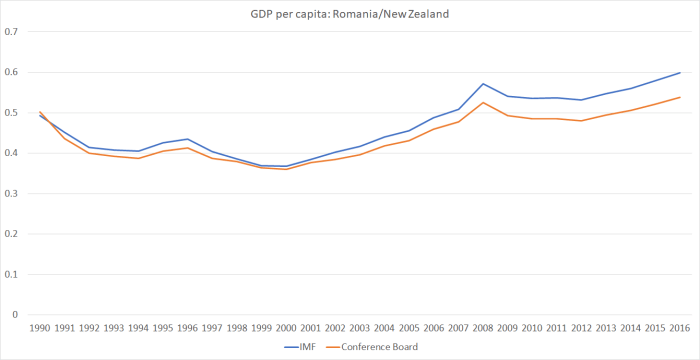
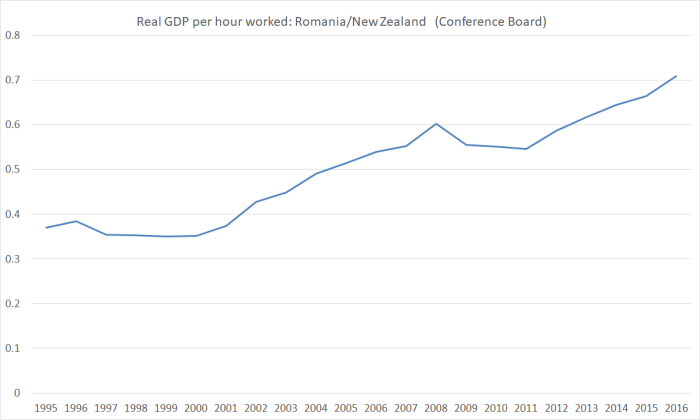
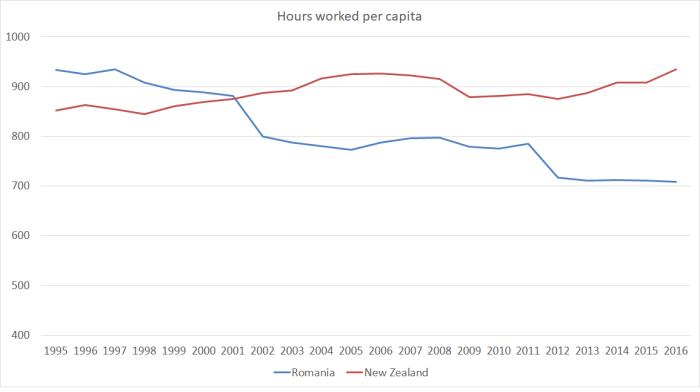
 (You will recall that New Zealand has been going