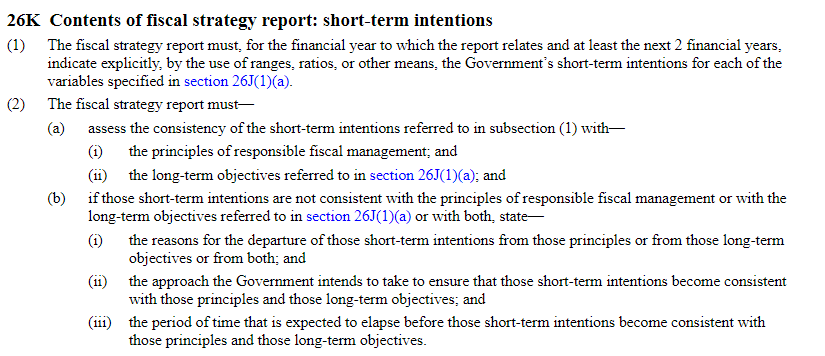
(a) real interest rates, and (b) NZers’ migration

No, I’m not getting back into some routine of daily posts, and on this occasion the two topics don’t even have anything to do with each other, but are just a couple of a leftovers from things I was looking at over the last couple of days.

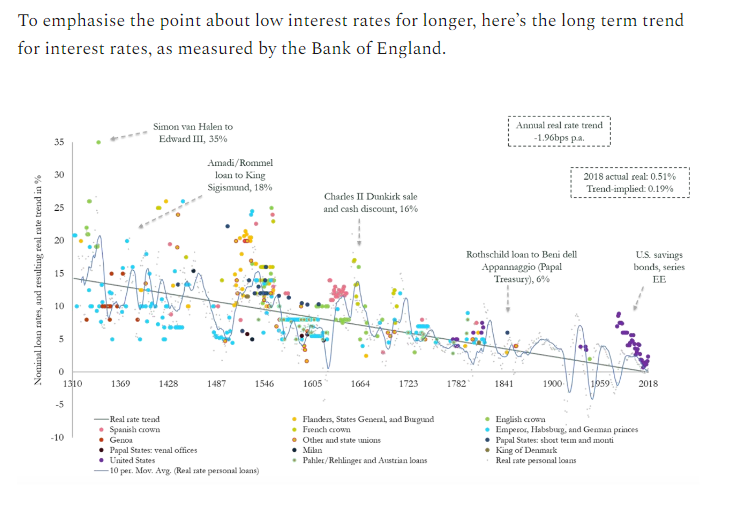
In my fiscal posts this week I’ve noted that the government is consciously and deliberately choosing to run cyclically-adjusted primary fiscal deficits in the coming year larger (probably much larger) than we’ve seen at any time since the end of World War Two. I noted in passing that although people are conscious of stories of large fiscal deficits under Robert Muldoon’s stewardship, in fact a large chunk of those deficits was interest payments, and this in an era when inflation was high, sometimes very high. When nominal interest rates are high just to reflect high inflation, the resulting “interest payment” is really more akin to a principal repayment. Back in the day, various people – especially at the Reserve Bank – did some nice work inflation-adjusting various macro statistics.

But just to check my point I put together this graph

real NZ bond yield since 70

What have I done here?

  • got the OECD’s series for long-term nominal bond rates that goes back to 1970 (this will mostly be 10 year bonds or thereabouts, although for a time in the late 80s we were not issuing bonds that long),
  • for the period since 1993, subtracted the Reserve Bank’s sectoral factor model measure of core inflation,
  • for the period up to 1993, subtracted a three-year centred moving average of the CPI inflation rate.

So for almost entire period prior to 1984 real New Zealand government bond yields were negative.

This is, of course, not testimony to different patterns of desired savings and investment, but (mostly) to financial repression. Until 1983 government bond yields were administratively set and – much more importantly – most financial institutions were simply compelled by law to buy and hold government securities (often 25 per cent of more of total deposits). The costs were borne by depositors.

It is also worth noting that pre-1984 the government was also borrowing, at times heavily, directly from the retail market, at times offering real interest rates well above those shown here. And the government was also borrowing, again at times quite heavily, from abroad. In some of those markets, inflation was a big chunk of the headline interest rate, but in none of the major borrowing markets were government borrowing rates by then as repressed as they were still in New Zealand.

Finally, note that in the chart I have compared a 10 year bond yield to a one year inflation rate. But at least since 1995 we have had a direct read on real government bond yields through trading in government inflation indexed bonds. As this chart shows, the pattern over that period is very similar,

IIB yields since 95

Developments in the last few months are interesting, but that is something for another day.

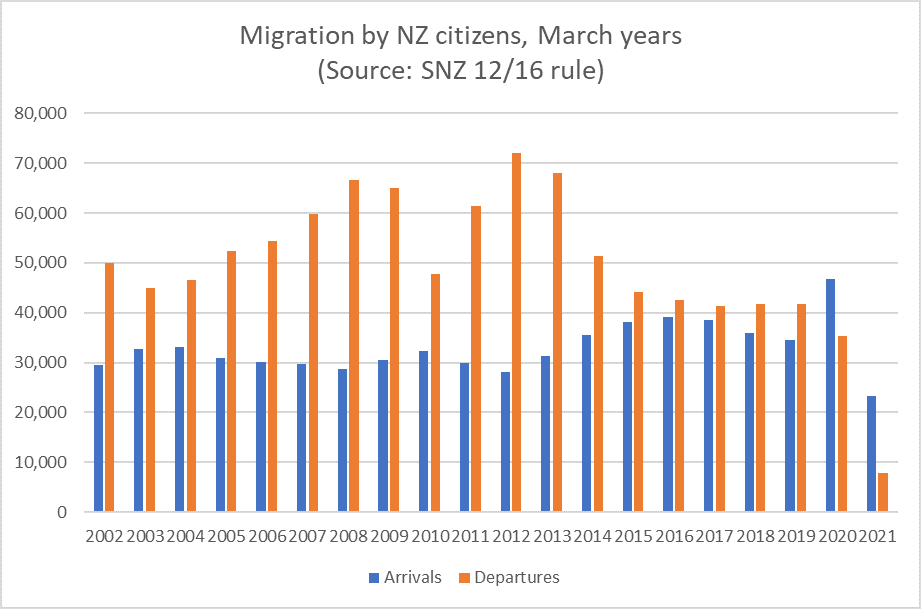
My second brief topic this morning was sparked by a strange quite-long article in the New York Times yesterday headed “New Zealanders are Flooding Home: Will the Old Problems Push Them Back Out”. A lot of work seemed to have gone into it, and some of the individual anecdotes were not uninteresting (and in the small world that is New Zealand, one of the recent returnees was even someone I’d once worked with) but…….no one (do they have factcheckers at the NYT?) seemed to have stopped and checked the numbers. It took about two minutes to produce this graph that I put on Twitter yesterday.

NZ citizen migration

Using the official SNZ estimates, the problem with the story was that arrivals of New Zealanders had not really changed much at all – a bit higher than usual in the March 2020 year, and then lower than usual in the most recent year. There has, of course, been a big change in the net flow of New Zealand citizens but……..that is mostly the very steep fall in the number of New Zealanders leaving. That reduction – over the March 2021 year – is, of course, not surprising in the slightest given (a) travel restrictions to Australia for much of the year, and (b) travel restrictions and/or bad Covid in much of the rest of the world.

But, on official estimates, there simply is no flood of New Zealanders returning home. None.

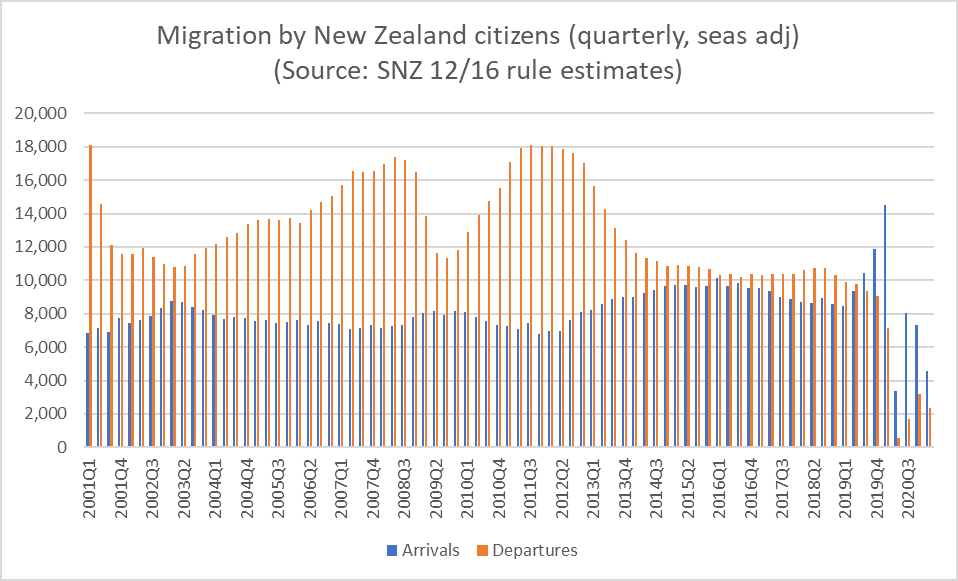
This morning I looked a little more closely, and dug out the quarterly (seasonally adjusted) version of the data.

nz citizen migration quarterly

It is, of course, much the same picture, but what surprised me a little was the upsurge in (estimated) arrivals back in late 2019, pre-Covid. Here it is worth remembering that until a couple of years ago our PLT migration data was based on reported intentions at the time of arrival, but the 12/16 approach now used looks at what actually happened. It looks as though some New Zealanders who had come to New Zealand in late 2019, probably not intending to stay, ended up doing so, voluntarily or otherwise, once Covid hit. So they are now recorded as migrant arrivals in late 2019 even though at the time they would not have thought of themselves as such.

But it does not change the picture: there is no flood, or even a little surge now, in returning New Zealanders. A problem with the 12/16 approach is that the most recent data is prone to quite significant revisions (and that is particularly a risk when the normal patterns the models use aren’t likely to be holding, but there is nothing to suggest there is a significant influx of returning New Zealanders happening.

There will be always be natives who’ve spent time abroad returning home. It happens even in rather poor and downtrodden countries, and it happens here – always has, probably always will. That adjustment isn’t always that easy, plenty of people often aren’t sure for a long time that they’ve made the right choice. Covid means a few different factors have influenced some of those choices for some people. But there is no “flood”, just a similar to usual (or perhaps now smaller than usual) number of returnees, coming back to a New Zealand of extraordinarily high house prices and productivity levels and incomes that increasingly lag behind a growing number of advanced economies. Those persistent failures – and the indifference of our main political parties – should be worth a story. But not the non-existent flood.

A bit more on fiscal policy

In yesterday’s post I outlined some of my concerns about the government’s Budget, from a macroeconomic perspective. Not only did it seem to be built on rather optimistic medium-term economic assumptions, but several years out – on current policy advised to it by the government – The Treasury still expects a fairly significant cyclically-adjusted primary deficit (which means, once finance costs are added in, a larger-still overall cyclically-adjusted deficit).

CAB primary

There was a good case for such deficits last year, and perhaps even in the year that ends next month. But there is no obvious macroeconomic reason for running larger deficits in this coming year, and still having cyclically-adjusted deficits four years hence (by which time The Treasury numbers project a non-trivial positive output gap). It is now simply a splurge – a government that, unnecessarily, is simply choosing to take on more debt to fund its new spending, rather than fund core operating spending with taxes. In a climate when risks abound.

And all this is an environment where fiscal policy now appears to be unanchored by any specific fiscal goals a government is committing itself too.

I’ve never been one of those who put huge weight on the Fiscal Responsibility Act 1994, now (as amended) incorporated as Part 2 of the Public Finance Act. There are some good aspects to the legislation but I was never really convinced that asking governments to set out their specific short and long-term fiscal objectives, or articulating in statute “principles of responsible fiscal management” would make much difference to anything that mattered about the conduct of fiscal policy. (Here is a post on the 30th anniversary of the Public Finance Act critiquing some rather over the top claims then made for the framework.) In my take, there was a shared commitment across the main parties to balanced budgets (in normal times) and low debt, and the legislation reflected that rather than driving it.

And I guess I take this year’s Budget as vindication of that stance. There was a shared commitment to such things, and now it appears there is not. And the legislation still sits on the books, lonely and overlooked. Check out the requirements of Part 2 of the Public Finance Act, and then compare it with this year’s Budget documents. In particular, have a look at the statutory principles for responsible fiscal management, and the requirements that a Fiscal Strategy Report brought down on Budget day has to contain outlining both short-term and long-term fiscal objectives.

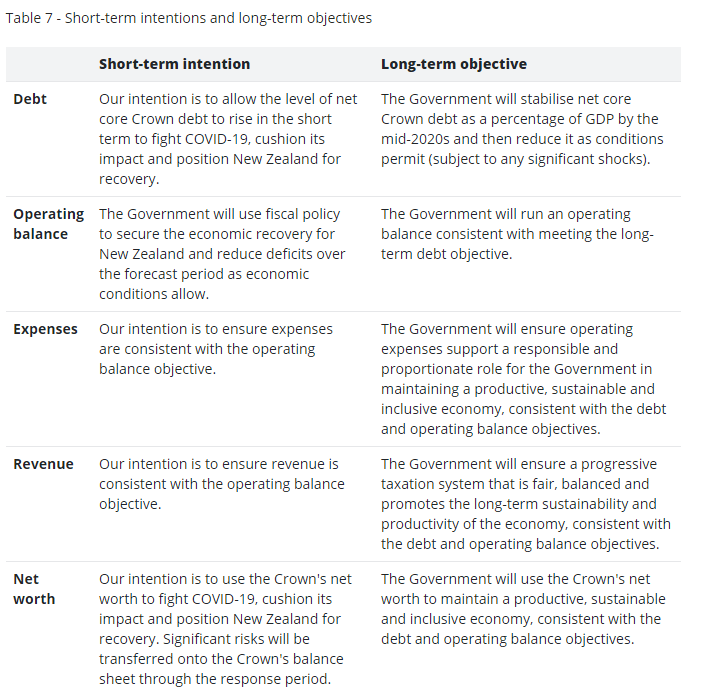
And then go and check out the vestigial thing the Fiscal Strategy Report appears to have become. Here is the statement of the government’s fiscal intentions.

fiscal intentions 21

Take the long-term intentions first (if you can find them). For debt, the government offers no numbers at all – either as to the level they aim to first stabilise the debt at or the longer-term level they would aim to then reduce it to (not even whether that level is higher or lower than the current level). Not even anything conditional on, say, us avoiding future Covid outbreaks and new lockdowns.

And then what about the operating balance? Well, they assure us they will run an operating balance consistent with the long-term debt objective, but (a) isn’t that obvious?, and (b) it tells us nothing at all, since they give us no medium to long term debt objective. And all the rest of it is equally or more vacuous. Now, sure, the Act does not formally require the government to put numbers on their objectives in these areas, but I’m pretty sure the drafters of the Act – the Parliament that passed it – did not think that simply stating “we’ll do whatever we like to pursue our political objectives” (all that “productive, sustainable and inclusive economy” mantra) would meet the bill. The whole section of the Act is rendered empty and futile.

It is even worse when we get to the short-term intentions. The Act is somewhat more prescriptive there

short term fiscal

And there is simply none of that content at all.   No objectives, no serious discussion reconciling with the (non-existent) long-term objectives, and just this explanation for why the government is (for now anyway) abandoning the statutory principles for responsible fiscal management

Doing so in this case for the short-term operating balance intention is the right thing to do, given the unprecedented size of the global economic shock caused by COVID-19 and the need for the Government to provide a strong ongoing fiscal response to protect lives and livelihoods in New Zealand as we secure the economic recovery. 

But as I suggested yesterday, that argument probably made sense (at least the first half) at the time of last year’s Budget and FSR. It doesn’t today when New Zealand’s unemployment rate is under 5 per cent.

There is no rationale – grounded in the Act – no analysis, and no short or medium goals. Simply structural deficits for years to come (see first chart above) – discretionary deficits actively chosen by today’s government larger than any such cyclically-adjusted deficits run in New Zealand at any time since at least the end of World War Two. It hasn’t been the New Zealand way. But it appears to be so now.

As I noted yesterday, maybe it will all come right. Maybe Robertson and Ardern really are at heart a bit more responsible than this Budget suggests and future new spending splurges (which are, I guess, what one expects from a party whose MPs and leader have now taken to openly calling themselves “socialists”) will be funded by persuading the electorate to stump up with increased taxes.

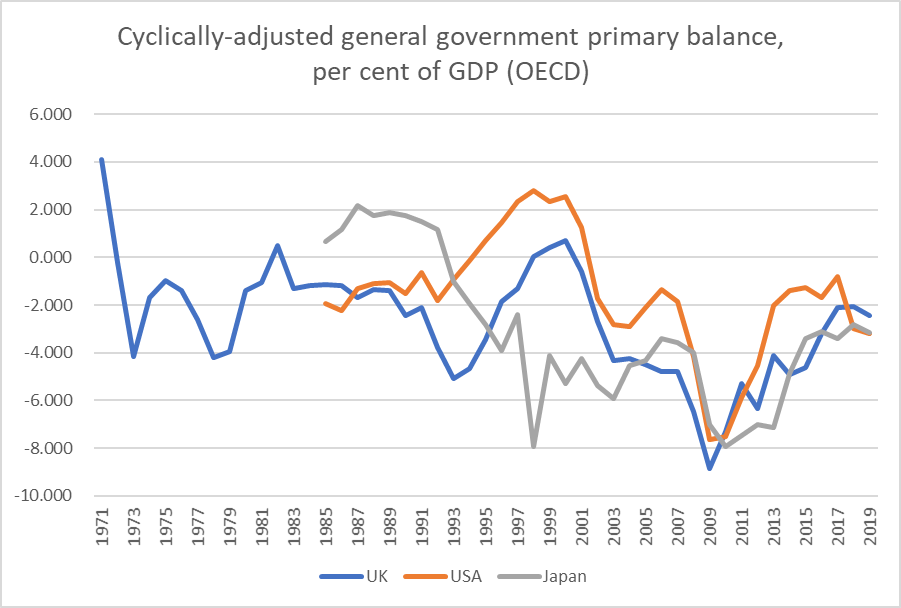
But bad fiscal outcomes – high debt, and little obvious prospect of reversals – don’t arise overnight. And the sort of thing that concerns me is what has happened in some other advanced countries. Here are the cyclically-adjusted primary balances for the US, the UK, and Japan. Remember, a positive number should be a bare minimum for prudent fiscal management (higher the higher are your accumulated debts and the prevailing real interest rate).

uk and us balances

30 years each had relatively low levels of government debt (OECD data for net general government liabilities as per cent of GDP), the UK and Japan in particular. And now they are all among the OECD countries with the highest levels of (net) public debt.

It can happen here too. And if those on the left are celebrating this week their own government “breaking free” of the shackles, they need to remember that political fortunes come and go. The other parties will form governments again, and the precedent this government is setting may guide them in how constrained they feel about increasing spending or cutting taxes or whatever (see the US as an example). In a floating exchange rate economy the disciplines on fiscal policy are more political than market in nature. If your party believes in bigger government, that’s a choice but then insist that bigger government means higher taxes. If your party believes in much lower taxes, that too is a choice, but then insist that smaller revenue have to mean much lower spending. But don’t toss out the window a hard-won consensus around balanced budgets and low public debt – one of the few real achievements of the last 30 years – and substitute for it feel-good politics (whether from the left or right) that avoids confronting choices about who will pay.

I’m still reluctant to believe that Robertson is quite as reckless as this Budget suggests, but for now at least the evidence is tilting against my optimistic prior. And, disconcertingly, there isn’t much sign of the Opposition calling him out.

This, incidentally, is the sort of analysis and discussion that a Fiscal Council provides in many countries.

A questionable Budget

As far as I can see reaction to last week’s Budget seems to be split between those on the government side who thought it was great – in some cases just a start – and on the other side of politics those noting that there was no sign of any sort of plan or set of policies that might lift the economy’s productivity performance, and in turn lift the capacity – whether or individuals or governments – to spend on personal or collective priorities. Those critics are, of course, right.

But what I really wanted to focus on in this post is the size of the deficit the government is choosing to run.

Little more than four years ago the Labour and Green parties published the Budget Responsibility Rules that, they told us, would guide them should they take office (I wrote about them here). They were seeking to persuade us that in office they would prove to be responsible macroeconomic and fiscal managers.

The first of the rules they offered up was this one.

BRR1

Note especially that second sentence: they expected to be in surplus every year “unless there is a significant natural event or a major economic shock of crisis”. Pursuing other policy priorities wasn’t going to be an excuse either: if they thought they needed to spend more on this or that, they’d fund it by taxes.

It sounded pretty good.

Even before Covid, if they were sticking to their own “rules” it is was a pretty close run thing. In the HYEFU for December 2019, for example, the total Crown OBEGAL measure in (very) slightly in deficit was for 2019/20 and exactly in balance in 2020/21. The same set of forecasts showed the economy running just a bit above potential in those two years. It wasn’t exactly the spirit of the Budget Responsibility Rules.

And then, of course, Covid came along. I don’t think anyone is going to dispute the idea that deficits (even large deficits) made sense for much of last calendar year, particularly to support the incomes of those unable to work because of lockdowns etc, Not many people are disputing the case for the wage subsidy, and of course when people couldn’t work and businesses couldn’t trade tax revenue was also going to be down. You’ll recall that the worst of all that was in the March and June quarters of last year (part of the fiscal year 2019/20). Consistent with that core Crown expenses in 2019/20 was 34.4 per cent GDP, compared with 28 per cent the year previously. Whichever deficit measure you prefer, the 2019/20 deficit was large. And few will quibble about much of that.

Right now we are coming to the end of the fiscal year 2020/21. Wage subsidies and similar measures have been used at very stages, especially early in year.

But as everyone also knows, the economy has bounced back more strongly that most (including me) had expected – notably, much faster than the official agencies had forecast. It is, of course, entirely right to note that the borders are still largely closed, global supply chains are disrupted, and prospects in parts of the wider world still look pretty shaky. On the other hand, the terms of trade are doing really well. In total, Treasury does the forecasts, and they reckon that when we finally get the nominal GDP data for the year to June 2021 it won’t be much different in total than they had thought back in late 2019 pre-Covid. The comparison is a little unfair, since there were some historical SNZ base revisions, but they also reckoned (when they did the forecasts in late March and early April) that the June quarter unemployment rate this year would be less than 1 percentage point higher than they’d been forecasting for that date back in late 2019.

That’s great, something to celebrate. But it doesn’t have the look or feel of a “major economic shock or crisis” – Labour’s 2017 words. There was one, especially in the first half of last year, but from a whole economy perspective it has an increasingly been a stretch to make such a case as 2020/21 drew on. And yet core Crown expenses in 2020/21 are expected to have been 33.1 per cent of GDP, not much lower than in the previous year, and more big deficits have been racked up.

But 2020/21 is really water under the bridge now. There is only five weeks of that year to go, and the Budget is about policy for 2021/22 (in particular) and beyond.

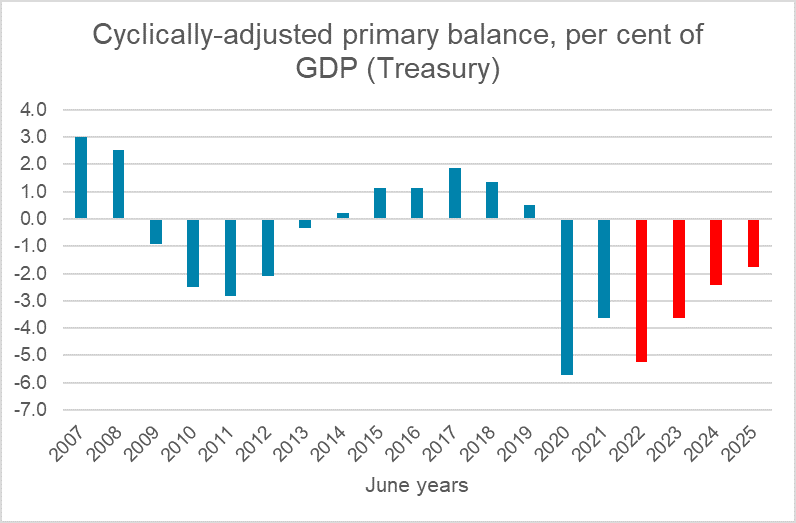
And in 2021/22 not only is the government planning to run large deficits but ones that even larger than those for 2020/21. The Budget documents this year were rather light on the analytical material that Treasury usually publishes, but they put in this year a chart of the cyclically-adjusted primary balance.

CAB primary

Cyclical-adjustment here involves Treasury adjusting for the state of the economic cycle (recessions dampen tax revenue quite a bit and raise spending a bit, as the automatic stabilisers play out). In this chart, the Treasury also exclude the EQC/Southern Response Canterbury earthquake costs. And the primary balance excludes finance costs – it is a standard measure used in fiscal analysis, with a common rule of thumb being that if your primary balance is positive, at least you aren’t borrowing simply to pay the interest on the accumulated debt. Labour’s 2017 commitment re surpluses would have implied running positive primary balances almost every year.

There were significant cyclically-adjusted primary deficits in the years following the 2008/09 recession – the twin consequence of the fiscal splurge at the end of the previous Labour government’s term and the unexpected (by Treasury, whose forecasts governments use) shortfall in potential output. But those cyclically-adjusted deficits over 2010-2012 look small by comparison with the deficit the current government plans to run in 2021/22 (and still smaller than what they are planning for next year).

Perhaps you might think the state of the economy in some sense warrants this, but (a) recall that these are cyclically-adjusted numbers, and (b) check out the state of the economy in the two periods. Over the coming year Treasury expects an average output gap of 1.7 per cent of GDP, coming back to zero in 2022/23. They expect the unemployment rate to be about 5 per cent next June, dropping to around (their view of the NAIRU) 4.4 per cent the following June. By contrast, Treasury now estimates that the output gaps in the 2012/13 and 2013/14 years were each around 1.5 per cent, and the unemployment rate in both years was also higher than they expect in the next two years.

What about some longer-term perspectives? I can’t see a Treasury version of this series going further back but (a) the OECD publishes estimates of the cyclically-adjusted primary balance at a general government level, and (b) the Treasury has primary balance (not cyclically adjusted) back to 1972. Neither series is fully comparable – the OECD numbers aren’t done on an accrual basis, and include local government (but it is small in New Zealand), and the older Treasury numbers aren’t cyclically adjusted. But together they can still create a useful picture.

Here is the OECD chart, back to 1989

CAB OECD

Cyclically-adjusted primary surpluses have been the New Zealand norm in modern times – even (a propaganda line Grant Robertson could have chosen to use, but preferred not to for obvious reasons) in 1990.

And here is the not cyclically-adjusted primary balance numbers back to the year to March 1972, using the data from the Treasury’s long-term fiscal time series.

Tsy primary balance

Note that although these numbers are not cyclically-adjusted, even in quite severe recessions the cyclical-adjustment procedure Treasury uses makes a difference of less than 2 percentage points of GDP.

So, one might reasonably note that over the next couple of years when, on Treasury’s numbers, the economy will be running increasingly close to full employment, the government is choosing – wholly as a matter of discretionary policy – to run a primary deficit bigger than any that have been run in the past 50 years, with the exception only of the accrual effect of the government’s EQC obligations post-Christchurch, obligations that were not discretionary or voluntary at that point. To be pointed, one might reasonably note that the primary deficits are (far) larger than any run under Robert Muldoon’s stewardship (the first two years on the chart, as well as 1976-84), and are in contrast to the primary surpluses run in every single year of the Lange/Palmer/Douglas and Clark/Cullen eras.

(What about those big Muldoon era deficits you keep reading about? Actually, a huge chunk of that was interest costs, and much of that was just inflation – real interest rates themselves were often quite low. Another way of looking at the issue is an inflation-adjustment to the deficits.)

It seems like pretty irresponsible opportunistic fiscal policy to me. It is certainly inconsistent with those mostly-admirable Budget Responsibility Rules Labour campaigned on – since not only are they running large deficits with no macroeconomic crisis, but debt is above their own targets.

Of course, from supporters of the government I expect there will be two responses.

The first might be to celebrate – Robertson and Ardern have thrown off the shackles, scrapping (as they formally have) any references to surpluses or balances budgets now or in the future. What is not to like, surpluses or balanced budgets being things for people like Clark, Cullen, Kirk, and Rowling, but not for our brave new leaders. After all, don’t we know that interest rates are low – even if long-term rates now are no lower than they were pre-Covid. If so, it is a dangerous path they are treading: their cyclically-adjusted primary balance outlook now looks a lot more like the sort of ill-disciplined approach to fiscal management we’ve seen in places like the UK, the US, and Japan over recent years. That was already underway with the various permanent fiscal measures the government put in place as early as last March (under the guise of a Covid package) and has continued since.

The second, more moderate, stance might be to acknowledge my point but to argue that (a) the economy is only doing as well as it is because of macroeconomic stimulus, and (b) better fiscal policy than monetary policy. I’m not going to dispute that policy stimulus is likely to have helped achieve the welcome economic rebound, and (more specifically) if the government had taken steps in this Budget to (say) cut the cyclically-adjusted primary deficit to 2 per cent of GDP in 2021/22, closing to zero the following year (while reserving the need for possible fresh intervention if Covid got loose here), the economic outlook would – all else equal – be worse than is portrayed in The Treasury’s forecasts.

But all is not equal. The primary tool for macroeconomic stabilisation is monetary policy. A tighter fiscal policy – getting back to balance quickly now that last year’s shock has passed – would naturally and normally be offset by monetary policy, doing its job. The Bank stuffed up going into Covid and wasn’t then able to take the OCR negative (or so it claimed), but even they tell us that is an issue no longer. For those who believe in the potency of the LSAP – and I think all the evidence is against it – there is that tool too. And the beauty of monetary policy is threefold:

  • it costs the taxpayer precisely nothing (relative price shift instead and those best placed to respond do),
  • it can be adjusted very quickly as the outlook and circumstances change, and
  • using monetary policy tends to lower the exchange rate while reliance on fiscal policy feeds an overvalued exchange rate, skewing the economy further inwards.

Monetary policy is, of course, no good at income relief. That is what fiscal policy did so well last year. But that was last year’s need not – as Treasury’s forecasts – the need now or for the next couple of years.

My unease about the Budget is not helped when I dug into some of the macroeconomic numbers.

For example, The Treasury’s forecasts for growth in the population of working age show expected growth in the five years to June 2024 exactly the same now as in the projections for the 2019 HYEFU. Perhaps, but it seems a bit of a stretch, when we know – from Customs data – that there has been a significant net outflow of people (migrants, tourists, New Zealanders, foreigners) over the last 17 months.

And then there are the Treasury’s productivity growth assumptions that seem heroic at best.

productivity growth budget 21

And this even though their text explicitly refers to some degree of permanent “scarring” as a result of Covid. Perhaps they could enlighten us as to what about the economic environment or economic policy framework is likely to generate such strong productivity growth (by New Zealand standards) in the next few years? Covid isn’t something the government can do much about, but nothing else in their policy programme now or in recent years seems likely to begin to reverse the lamentable New Zealand productivity performance. Without that productivity growth, future revenue growth would also be weaker than this Budget is built on.

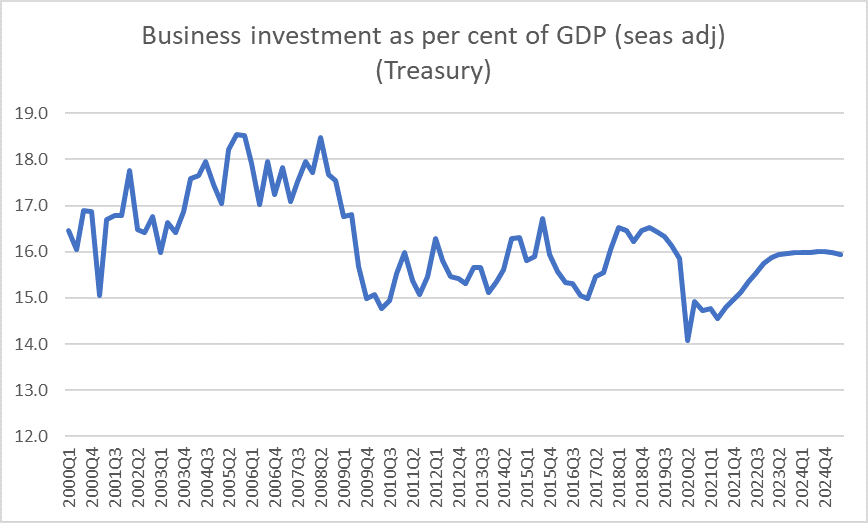
It isn’t as if The Treasury expect business investment to soar. At best The Treasury seems to think we limp back to the rates of business investment seen in the previous half decade (when the Governor of the Reserve Bank was exhorting firms to invest more, as if he knew better than them where the profit opportunities lay).

bus investment 21

And then there is one of my favourite, but sad, charts

export import shares

Exports and import shares of GDP both rebound, of course, but only to settle at even lower levels than we’ve seen in New Zealand for decades. Successful economies tend to be ones that are exporting successfully lots of stuff to the rest of world and importing lots of stuff from the rest of the world. That isn’t New Zealand. But then we haven’t been a successful economy for a long time now.

Perhaps fiscal policy will come out okay in the end. But when the government isn’t expecting to be back in cyclically-adjusted primary surplus even by 2025, and when the medium-term economic projections seem to rest on some rather rosy assumptions (these and others), it is difficult to be optimistic. Thirty years of sound fiscal management – one of the few real successes New Zealand economic managers could claim – looks to be at risk. And yet the grim fiscal outlook seems to have had astonishingly little coverage, as if last year’s (appropriate) mega-deficit numbers have disoriented people so far that they’ve lost interest in the hard slog of delivering balanced (cyclically-adjusted) budgets. The appropriate size of government – perhaps even the appropriate degree of dependence on government – is rightly the stuff of political debate, but what is spent should be paid for, not simply grabbed from the population – reducing their future spending options – without the normal political conversations around what tax rates are tolerable and acceptable.

Much better analysis needed

That heading probably describes a great deal of what goes on in the numerous public policy agencies in the central Wellington (well, no doubt local authorities as well) but this post is about the Reserve Bank’s latest.

Last week they released a paper headed “An overview of the distributional effects of monetary policy”. It was under the name of one their young analysts, and carries a standard disclaimer that “views expressed are those of the authors, and do not necessarily represent the views of the Reserve Bank”, but we can safely discount that. No paper on a topic this potentially contentious is going to have got out the door without the explicit imprimatur of (a) the author’s manager, (b) the Reserve Bank’s Chief Economist (that voiceless government-appointed member of the MPC, from whom we’ve had not a single speech in his entire time in office), and most probably the clearance and comfort of the Governor and the Assistant Governor responsible for monetary policy. If the (apparently largely toothless) external members of the MPC didn’t get to sign it off, equally it isn’t likely that it would have been published if they’d had any major concerns. All in all, it is only reasonable to take this document as the official view of the Bank’s hierarchy, reflecting that same hierarchy’s view of acceptable standards of analysis and argument.

It is a strange and inadequate document in a variety of ways. First, and perhaps least important, is the spin. In the previous paragraph I gave you the official, and rather neutrally expressed, title of the Analytical Not. But if you were signed up to the Bank’s email notification service you got this at the head of the email from one of their myriad comms staff.

AN211

Immediately followed by this sentence, which doesn’t appear in the Analytical Note itself, and is clearly the responsibility of the more politicised part of the Bank.

There are winners and losers when interest rates are cut, but the international evidence is not clear that this always means the rich get richer and the poor are worse off.

Note that “always”. Whoever wrote this seemed to have in their mind – or to want to feed into readers’ minds – a sense that “when interest rates are cut” it is mostly – just not “always” – a bad thing in which, typically, “the rich” get richer and “the poor” get poorer. It is about the standard one expects from a Year 10 Social Studies teacher, not from those actually charged with the conduct of the country’s monetary policy.

I didn’t want to skip over the spin, because it tells you about the standards of those at the top of the organisation. But in the end it is spin, and on this narrow point the Analytical Note itself is less bad. It is doesn’t contain those block-quoted words at all, and in fact the very first sentences of the paper, highlighted as Key Findings are

Monetary policy easing and tightening can potentially affect the distribution of wealth and income through
several channels. The overall effect of monetary policy on inequality is indeterminate and depends on the
strength of each channel, which may reinforce or offset each other.

Much less inflammatory. It is followed by the second Key Finding

International empirical evidence on the distributional effects of monetary policy is inconclusive. It is not clear
that monetary policy easing, be it through reductions in policy interest rates or by central bank asset
purchases, necessarily reduces or worsens wealth inequality and income inequality.

In other words, not the slightest suggestion that mostly – if not “always” – interest rate cuts make the rich richer and poor poorer.

I haven’t read all, or probably even most, of the international empirical studies they summarise here

AN212

and there is not even a hint of any Reserve Bank of New Zealand empirical research in the Analytical Note, so my comments in the rest of the post are really about how the Bank discusses the issues, and the evidence that reveals for how carefully and comprehensively they think through things. It isn’t a long paper – about five pages of text – but that is their choice: unlike say the Monetary Policy Statement (where we might expect this to be touched on next week) there was no practical limit to them taking just as much space as they thought was needed to give a careful treatment of the issue.

There are plenty of individually reasonable sentences in the paper, and a variety of charts (several designed to show that distributions of income/wealth in New Zealand are similar to some of the other countries that formal studies have been done for). The problem is the lack of a disciplined framework.

For example, it isn’t even clear whether what they are focused on is monetary policy actions – which they (and their models) usually conceptualise as discretionary actions taking as given developments in the (changing and not directly observable) neutral or natural rate of interest – or all changes in interest rates. There is a huge difference in the two.

Twenty five years ago, very long-term real interest rates in New Zealand (eg), proxied by indexed bond yields, were touching 6 per cent, and now they are just under 1 per cent (about the same as they were just prior to Covid). Understanding why real interest rates have fallen that far – and similar trends are evident in other countries – or even why our real interest rates are still quite a bit higher than in most advanced countries – is a challenging and contested issue. Understanding the full implications isn’t that easy either. But few seriously suppose that the cause is monetary policy – and the Reserve Bank (in all its past published material) has never been among those few. One can debate the relative contributions of demographics, productivity growth slowdowns, or whatever – again, both causes and implications – but they aren’t things that have anything more than the most peripheral connection to monetary policy as typically conceived (as conceived by Parliament in setting out the Bank’s powers and mandate).

Now, there can be some confusion in the general public mind because if the longer-term neutral real interest rate falls from 6 per cent to 1 per cent then – given that the Reserve Bank chooses to peg the OCR (it needn’t, but it generally a sensible and practical way to conduct policy – over time the Bank will need to cut the OCR by more or less the same amount. Those adjustments are announced as part of Monetary Policy Statements and OCR reviews undertaken by the Monetary Policy Committee. But if you are wanting to think and talk about the impact of monetary policy choices – and much of this discussion, at least in a New Zealand context, has been sparked by events of the last year – you want to talk about discretionary monetary policy actions: things the Bank thinks it is doing to push actual interest rates below (or above for that matter) what it thinks of at the time as the neutral rate. Anything else just conflates two quite different things. And since long-term interest rates will move about whether or not we have an active central bank, while discretionary monetary policy is a choice, if we are thinking about what value discretionary monetary policy adds we – and the Bank – should focus on the implications (all of them) of those discretionary choices.

So one of the other things that is almost entirely missing from the Analytical Note is any sense that discretionary monetary policy actions are temporary in nature. Monetary policy is about keeping unemployment as low as possible consistent with inflation staying in check (that isn’t quite the way the law is written but it is what it amounts to, and is a better framing). Most of the shocks that monetary policy responds to – although this distinction isn’t made in the paper either – are what are thought of as “demand shocks”: some events, perhaps a slump in overseas economic activity, weakens demand, activity and employment here, tending to push unemployment up and inflation down. Monetary policy is about leaning against those pressures with the aim of getting back to a full employment/inflation at target outcome faster than otherwise. But these are temporary events. As the unemployment rate gets back to sustainable/full levels, you want interest rates to be back around neutral. The temporary nature of monetary policy actions is consistent (a) with a standard view of the long-run neutrality of money (in the long run, monetary policy can affect inflation, but not materially anything else), and (b) the experience in past decades, when short-term rates went and down, through quite large cycles. The Bank’s note acknowledges this point in passing in discussing the overseas papers but not in discussing New Zealand.

There is also no discussion in the Analytical Note of the difference other regulatory regimes may make. Thus, if you are bothered by house prices developments – as you probably should be – you might want to recognise that house prices behave differently when governments intervene to restrict land use and make new building harder and slower than in markets where new land and housing supply is more responsive. But even here there is an important distinction that the Bank’s paper just does not make: even if you believe that monetary policy developments in the last year have contributed materially to the recent further rise in house prices, unless you think that Covid has driven the neutral interest rate materially lower, those effects should be short-term in nature. If you are one of those who, for example, think that within the next 12-18 months the OCR will be back to where it was at the start of last year. you should presumably think that any monetary policy effects on house prices will also be short-lived. The Bank however – not noted in this paper, but quietly in MPSs and FSRs – thinks the biggest long-term issue is land use law. If so – and assuming such regimes influence expectations and how markets react to demand shocks – they shouldn’t be taking responsibility themselves for higher house prices. Lets have some analysis on the distributional effects of land use restrictions, but you wouldn’t really expect that to be coming from the Reserve Bank – or for the Bank somehow to be taking the blame for medium-term changes in a key relative price (as it seems to by implication in, for example, the brief discussion of Figure 6).

Perhaps worse, there is almost no mention in the Analytical Note as to how the characteristics of the initial adverse shock might influence conclusions, and very little mention (I think only one) of counterfactuals – what might have happened if, given the neutral rate, monetary policy had done nothing in response to these shocks. For example, even just to take house prices again, in the last New Zealand recession house prices fell quite a bit, and if discretionary monetary policy actions limited those falls – as seems plausible and likely, directly and indirectly – I guess one think of monetary policy making home owners “richer”, but really it is simply limiting losses in those specific circumstances. And strangely there is no mention of any of the past actual monetary policy cycles in New Zealand – lots of high level handwaving but not much engagements with the specific experiences. Same goes for share prices – in this episode they are higher than they were at the start but in, say, 2008/09 it took five years for the nominal NZSE50 index to get back to the pre-recession peak. Monetary policy limited losses – in much the same way it did in the labour market – but that generally isn’t regarded as troubling, so much as the point of having the tool in the first place.

In a New Zealand context in particular, it was very odd to see no discussion of the exchange rate. In most discretionary monetary policy cycles in New Zealand, the exchange rate has done a lot of the adjustment (down and up). Over the last year or so that hasn’t been so – then again, monetary policy hasn’t done much – but surely any serious discussion of distributional effects of monetary policy in New Zealand would want to think about the exchange rate channel?

One could go on. For example, they suggest that older people are wealthier than younger cohorts, and while perhaps that is conventional it takes no account of human capital (by far the largest source of lifetime wealth for most people). And although they do talk about the labour market and unemployment it is all curiously bloodless – involuntary unemployment is a great social evil and can scar the prospects of some people for life, and so if – as it claims – monetary policy can assist in getting unemployment back down more quickly to the structural rate (while keeping inflation in check), that is a huge gain that a central bank should be shouting from the rafters, not burying in a discussion that seems overwhelmed by what has happened to house prices – monetary policy or not – in one recession in five.

Perhaps in fairness to the Bank one should repeat a couple of their concluding remarks.

In the absence of formal empirical evidence, we emphasise that we do not take a stance on how monetary policy actions by the Reserve Bank of New Zealand influence these distributions.

While noting that they could have done much more in these document to help frame discussion of the issues. And

The study of the distributional effects of monetary policy in New Zealand remains an avenue for future research. This Note is the first in a series of analytical papers that the Reserve Bank will publish in this domain.

I guess I will look forward to any future papers, but this scene-setting Analytical Note doesn’t leave one very optimistic about the overall quality of what they are likely to come up with. We deserve better: the Bank has the largest collection of macroeconomists in the country, its claim to operational autonomy really rests on perceptions of technical expertise, and yet – for what are not remotely new issues – so far this seems to be the best the Orr Bank can come up with. It simply isn’t good enough.

At least 60 per cent

Dating back to before they took office in 2017, Labour’s stance on New Zealand immigration policy hasn’t been particularly clear. There was the 2017 policy, announced under then-leader Andrew Little, that was sold as being likely to make a big difference, but once one looked into the details (see link earlier in the sentence) it was clear it was designed not to do so. But then the leader changed, and little was heard of the policy on the campaign trail (people close to Labour told me that Ardern had made clear that she wasn’t that keen on the policy). Labour and New Zealand First then became government, explicitly agreeing to operate on Labour’s immigration policy, but apparently – so a NZ First minister told me – with an agreement to revisit the policy mid-term. If so, not that much of substance ever seemed to flow from that, although in early 2019 there was (ill-advertised) agreement in principle to changes down the track in how the residence programme was designed and run.

Then, of course, Covid intervened. There hasn’t been much non-citizen immigration at all since then, but no one envisaged that as a permanent model. And, of course, Labour secured an absolute majority at the last election, and selected a new Minister of Immigration.

Last month, the government finally got round to asking the Productivity Commission to do an inquiry into immigration policy. (I say “finally” because whether or not one approves of something like the current approach to immigration policy, that policy has clearly been one of the largest government economic policy interventions over several decades now, and the evidence-base around the economic effects of this large intervention, in the specific circumstances of the New Zealand economy, is disconcertingly light.) But then we are given to understand that the government has made up its mind anyway (which is, of course, their right as the elected government, but seems an odd ordering, when you’ve been in government for getting on for four years).

Here was the Prime Minister in her speech last week (emphasis added)

In terms of immigration going forward, last week we announced that the Productivity Commission will hold an inquiry into New Zealand’s immigration settings.

The inquiry will focus on immigration policy as a means of improving productivity in a way that better supports the overall well-being of New Zealanders.

The inquiry will enable us to optimise our immigration settings by taking a system-wide view, including the impact of immigration on the labour market, housing and associated infrastructure, and the natural environment.

This will sit aside existing work being led by the Immigration Minister around reforms to temporary work visas and a review of the Skilled Migrant Category visa.

In fact this Monday Minister Faafoi will be outlining the case for change in New Zealand’s immigration policy in a speech in Wellington.

But let me be clear. The Government is looking to shift the balance away from low-skilled work, towards attracting high-skilled migrants and addressing genuine skills shortages in order to improve productivity.

So I looked forward to reading the Faafoi speech, with interest tinged with scepticism. Specially invited guests, some from out of town, must have looked forward to it too – even if for some their interest might have been tinged with apprehension. There are a lot of champions of large-scale non-citizen immigration out there – from the Green Party (who seem keen on importing supermarket workers) to much of the “big end” of town.

As it happens, Mr Faafoi was apparently sick yesterday, and so the Minister for Economic Development Stuart Nash got the job of reading Faafoi’s speech, and was reportedly then unable to answer most questions.

The speech itself seemed to have been downgraded – the PM had trailed it as making the “case for change”, but the minister’s heading was simply “Setting the Scene”. But it was barely even that. I guess we came away with the message that “we are determined not to return to the pre-Covid status quo”, but there was almost nothing of the how – no specifics at all – and very little, in any sustained sense, about the why. There was no evidence in the speech of any rigorous thinking, analysis or research from officials – the sort of work one might normally hope for (especially for a government four years in) in advance of policy decisions and announcements. Particularly unkind observers suggested that the speech was more in the nature of “an announcement about an announcement”, of the sort that has become all too familiar. In fact, we were told that “we’ll be engaging with you [who?] over the coming months to test our thinking”, suggesting there just isn’t much there yet.

And I say all this as someone who might, possibly, be somewhat sympathetic to some elements of the broad direction the government might be heading in around immigration (even while being highly sceptical of Stuart Nash’s statist centralised approach to business and the economy, and prone to scoff every time I read another reference to the vaunted Industry Transformation Plans, in which bureaucrats take the lead in (purporting to) shaping the future of one industry after another (a tourism one got a mention last night)).

There isn’t much point trying to unpick Faafoi/Nash’s speech bullet point by bullet point (for some unaccountable reason it appears on the Beehive website with every sentence a bullet point). But in this post I just wanted to address a claim made in the speech.

High levels of migration have contributed to 30 per cent of New Zealand’s total population growth since the early 1990s.

The “early 90s” is not only when the current broad approach to immigration was being introduced, but it is also when the current official population series begins.

Now I’m sure that one of the first things MBIE officials tell each Minister of Immigration is that to talk of “migration” isn’t very helpful in a policy context. There are inflows and outflows of New Zealanders and non-New Zealanders and the only bit policy controls is about the movement of non-citizens (arrivals, and departures for those on limited term visas). So in a speech on immigration policy, one might expect that the Minister of Immigration would focus his analysis on the movement of non-citizens. And that offers a quite different picture than the one Faafoi/Nash painted in the speech.

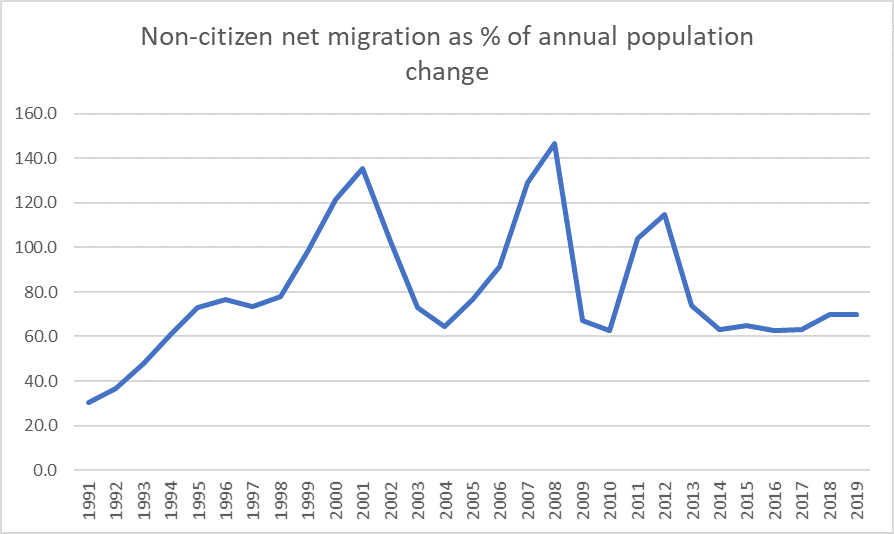
Here is a chart showing net non-citizen migration as a percentage of New Zealand’s population growth for each calendar year from 1991 to 2019 (I left off 2020 because the net migration numbers for that year are still estimates and the SNZ model for estimating these things for very recent periods isn’t great in normal times, yet alone Covid times)

non-citizen contrib

Not even in 1991 was the contribution of non-citizen net migration quite as low as 30 per cent, and 1993 was the last time the contribution (to a first approximation, the contribution of immigration policy) was below 60 per cent. Of the year to year variation, some represents variation in the number of non-New Zealand migrants, but much represents variability in the (net) out-migration choices of New Zealanders (mostly to Australia).

There are plenty of people who will think the numbers in the chart are a good thing. I don’t, given what we know about the continuing long-run bleak underperformance of the New Zealand economy. But whether or not you welcome these trends, they are the (relatively) hard data. For decades now – well, prior to Covid – New Zealand’s pace of population growth, which is among the highest of the OECD countries, has been largely an immigration-policy-driven phenomenon. No OECD country envisages a larger share of population growth coming from non-citizen immigration, and most envisage a far smaller share. And if anything, these data are likely to understate the true population consequences of immigration, since the median migrant tends to be relatively younger, and the children of those migrants – themselves New Zealand citizens – will have further contributed to the growth of the population.

Rapid (policy-led) population growth in such a remote location appears to have impeded the prospects for any reversal of the decades of productivity underperformance. It has skewed the economy inwards, persistently overvaluing the real exchange rate and thus crowding out potential export industries. Wage growth in New Zealand has been weak, but that isn’t directly some immigration phenomenon – such discussions, including the Minister’s, consistently ignore the demand effects of high immigration – and the data show that, for the economy as a whole, wage growth has tended to run quite a bit ahead of growth in the economy’s earnings capacity (nominal GDP per hour worked).

When the government finally gets round to specifics one can only hope their policy decisions are based on better analysis, including the some robust economic analysis of the specific New Zealand experience, than was evident in the speech last night.

And when the champions of mass-migration splutter at the general thrust of the government’s aspirations, perhaps they might offer some thoughts on what it is about New Zealand that means that – in their view – we need to be uniquely heavily dependent on large scale non-citizen immigration.

Productivity growth: failures and successes

As a parent I find it particularly disheartening to observe the near-complete indifference of governments and major political parties that might hope to form governments to the atrocious productivity performance of the New Zealand economy. If the last National government was bad, the Labour or Labour-led governments since 2017 have been worse. It is hard to think of a single thing they’ve done to improve the climate for market-driven business investment and productivity growth, and easy to identify a growing list of things that worsen the outlook – most individually probably quite small effects, but the cumulative direction is pretty clear. Before I had kids I used to idly talk about not encouraging any I had to stay in New Zealand, so relatively poor were the prospects becoming. It is harder to take that stance when it is real young people one enjoys being around, but…..at least from an economic perspective New Zealand looks like an ever-worse option, increasingly an inward-looking backwater.

One of the ways of seeing the utter failure – the indifference, the betrayal of New Zealanders – is to look at the growing list of countries that are either moving past us, or fast approaching us. Recall that for 50 years or more New Zealand was among the handful of very highest income countries on earth.

For doing those comparisons I prefer to focus on measures of real GDP per hour worked, compared using purchasing power parity (PPP) exchange rates. It is, broadly speaking, a measure of how much value is being added by firms – mostly in the private sector – for each unit of labour those firms are deploying. Real GDP per capita can be useful for some purposes – actual material living standards comparisons – but can be greatly, directly, affected, by demographics, in ways that don’t reveal much about the performance of the economy and the environment for business investment.

When I run charts here about productivity comparisons across countries I mostly use OECD data. Most – but not quite all – of what we think of as advanced economies are in the OECD (as well as a few new entrants that aren’t very advanced at all, and seem like “diversity hires”, incidentally making New Zealand look a bit less bad in “whole of OECD” comparisons). But once in a while I check out the Conference Board’s Total Economy Database, which has a smaller range of series for a rather wider range of countries, advanced and emerging. The latest update was out a few weeks ago.

As regular readers know I have highlighted from time to time the eastern and central European OECD countries – all Communist-run until about 1989 – that were catching or moving past us. I first noticed this when I helped write the 2025 Taskforce’s report – remember, the idea that we might close the gaps to Australia by 2025, when in fact policy indifference has meant they’ve kept widening – in 2009, so that must have been data for 2007 or 2008. Back then only Slovenia had matched us, and they were (a) small and (b) just over the border from Italy and Austria. The OECD and Conference Board numbers are slightly different, but by now probably four of the eight have matched or exceeded us (and all eight managed faster productivity growth than us over the last cycle). Turkey – also in the OECD – has also now passed us.

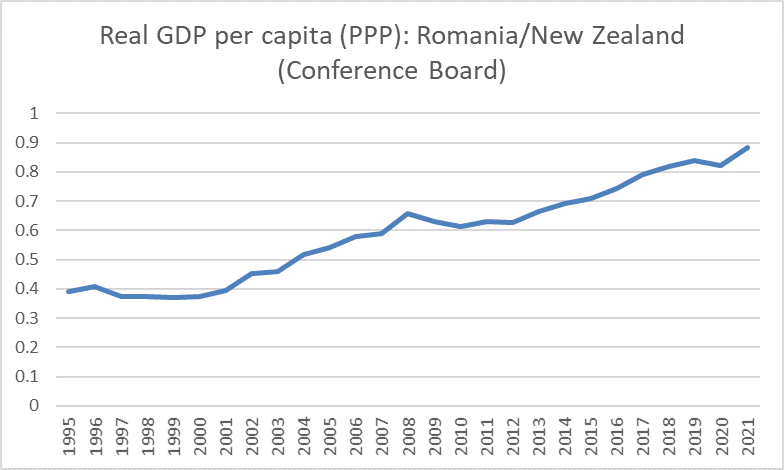
But what about the central and eastern European countries that aren’t in the OECD? As I glanced down the tables I remembered a post I’d written four years ago about Romania and comparisons with New Zealand’s economic performance. Romania had been achieving quite strong productivity growth prompting me to note

….one of the once-richest countries of the world is on course for having Romania, almost a byword in instability, repression etc for so many decades, catch us up.  It would take a while if current trends continue.  But not that long. Simply extrapolating the relative performance of just the last decade (and they had a very nasty recession in 2008/09 during that time) about another 20 years.

So how have things been going?

romania 21

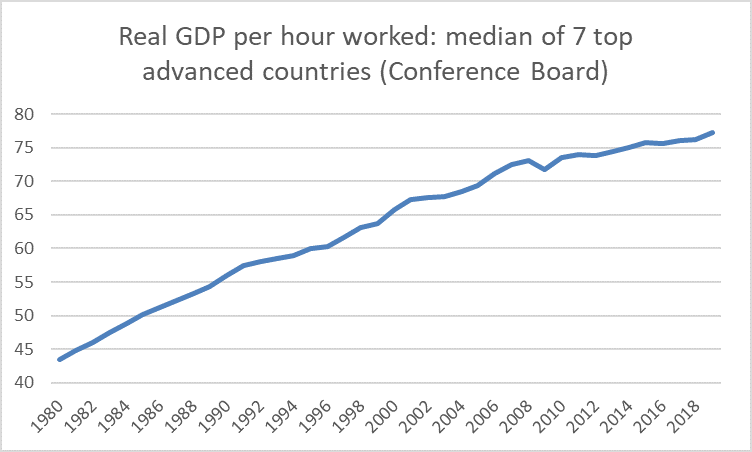
Even if we focus just on the last hard pre-Covid estimate (for 2019) they were up to about 84 per cent of average New Zealand labour productivity. If these trends continue, they’d catch us by about the end of the decade.

To be clear, it is generally a good thing when other countries succeed. It is great that these central and eastern European countries moved out from the shadow of the USSR and non-market economies and are now achieving substantial lifts in living standards. The point of the comparisons is not to begrudge their successes – which have a long way still to run to match most of western Europe – but to highlight the failure New Zealand governments have presided over. We were richer than all these countries for almost all of modern New Zealand history, and soon our economy will be less productive than all or most of them. We were also richer and better off than most or all of today’s most productive advanced economies, and now we just trail in the their wake. Even as the most productive advanced economies have experienced a marked slowing in their productivity growth in the last 15 years or so

prod growth advanced

we’ve really only managed little more than to track their slowdown – and recall that the median of these countries has average labour productivity two-thirds higher than New Zealand’s so – as in the central and eastern European countries – there were big gaps that might have been closed somewhat. Most of those countries did so, but not New Zealand.

To revert to Romania for a moment, it is not as if it is without its challenges. It ranks about 55th on the World Bank’s ease of doing business index, and has been slipping down that ranking (although still doing very well on a couple of components). Corruption seems to be a major problem. The neighbours aren’t the best either – including Ukraine and Moldova. Reading the latest IMF report (pre-Covid) there were signs of some looming macro imbalances but the latest IMF forecasts suggests a pretty optimistic outlook still, including investment as a share of GDP climbing back to about 25 per cent of GDP. Perhaps something is going to derail that productivity convergence (with New Zealand) story but it isn’t there in the forecasts at present. And if corruption has to be a drag of some sort (but how large can that effect be?) government spending and revenue are both smaller as a share of GDP than in New Zealand.

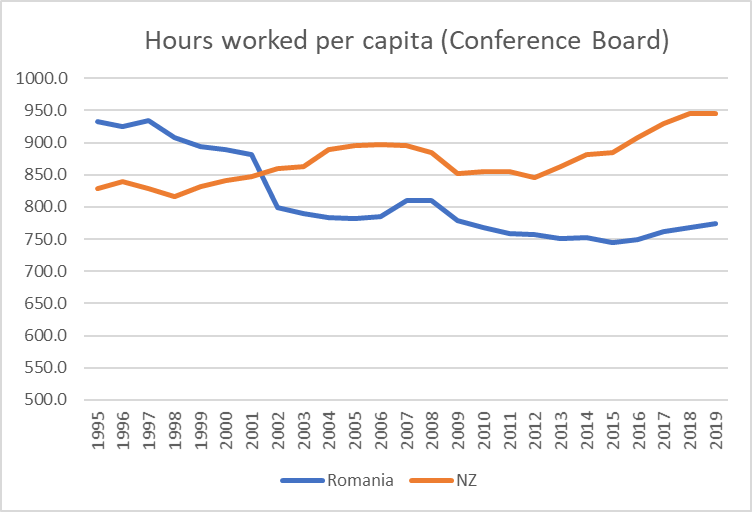
In GDP per capita terms the picture (Romania vs New Zealand) is not quite as grim. That mostly reflects differences in hours worked

Romania hrs

Some of that is demographics, some not. Either way, hours worked are an input – a cost – not (mostly) a good thing in their own right. New Zealand struggles to maintain upper middle income living standards for the population as a whole by working a lot more hours (per capita) than many other advanced countries.

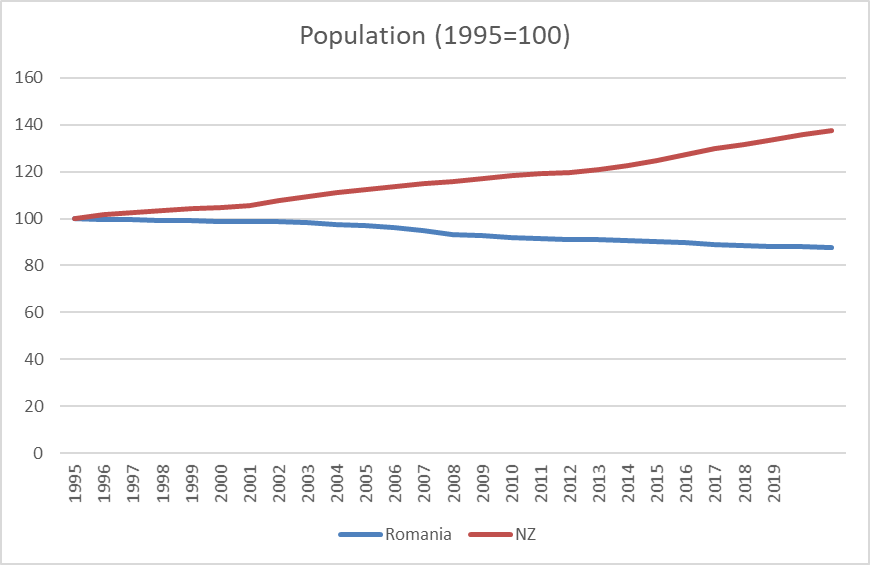
And then of course there is the difference that must be quite uncomfortable for the political and bureaucratic champions of “big New Zealand” – those politicians (both sides) just champing at the bit to get our population growing rapidly again.

romania popn

Romania is a pretty big country. When this chart started it had almost six times our population. 25 years on Romania’s population is a bit under four times ours. I mentioned earlier the investment share of GDP: Romania’s is averaging a little higher than ours, even with these massive population growth (shrinkage) differences, so just imagine how much more of those investment resources are going to deepen capital per worker (even public infrastructure per citizen). (For those interested the total fertility rates of the two countries are now very similar: the differences in trend population growth are largely down to immigration/emigration.)

Now, of course, I haven’t mentioned being in the EU or being located not too far from many of the most productive economies on earth (although Bucharest to Zurich isn’t much less than the distance Wellington to Sydney). Those are advantages. Of course they are. But then why do New Zealand officials and policymakers continue to champion a (now) purely policy-driven “big New Zealand” when (a) almost nothing has gone right for that story in (at least) the last 25 years, and (b) when so much else of policy choices only reduces the likelihood of the future under such a strategy being any better?

Romania really is a success story, and I’d like to understand a bit better why (for example) it has been doing so much better than Bulgaria and Serbia. But it isn’t an isolated success story: in addition to the OECD eastern and central European economies, Croatia isn’t doing too badly either.

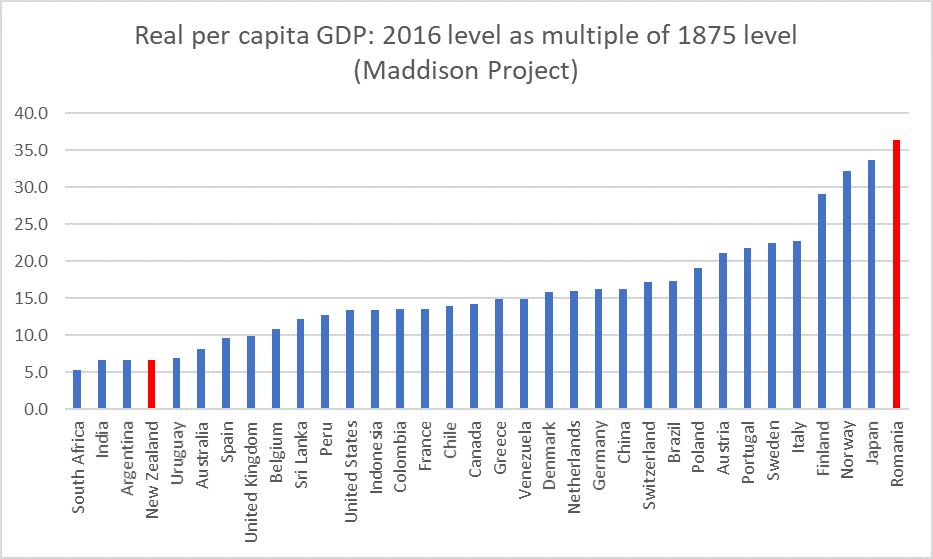
But – and taking a much longer span – this chart still surprised me. It draws on different database – the Maddison Project collection of historical real GDP per capita data. Since it is per capita data it includes all those differences in hours worked per capita (data which simply isn’t available for most countries in the distant past). I’ve started in 1875 simply because that is when the Romania data start. I’ve shown only the countries for which there is 1875 data (the last observations are 2016 simply because that is when this particular database stops), with the exception of China and India which I’ve added in for illustrative purposes because there are a couple of estimates for years between 1870 and 1887 which I’ve simply interpolated. The chart shows the ratio of real per capita incomes in 2016 as a ratio of those in 1875.

romania maddison

Best of them all. New Zealand not so much (and yes we were about the top of the class in 1875, but the New Zealand story is submergence not convergence, given how many of these countries are now richer than us).

To be clear, over the last 140+ years New Zealand has been a far better – safer, more prosperous, fairer, more open – country in which to live than Romania. Whether it will still be so for most the next century is increasingly a very open question. Our politicians seem unconcerned, and if any of them have private concerns they do nothing about them – no serious policies in government, so no serious policy reform options in Opposition. Nothing. They seem to just prefer nothing more than the occasional ritual mention.

Still on matters productivity, I finished reading last night an excellent new book on productivity: Fully Grown: Why a Stagnant Economy is a Sign of Success by Dietrich Vollrath, a professor of economics at the University of Houston. It is incredibly clearly written, and is a superb introduction to economic growth and productivity for anyone interested (I”ll be commending it to my son who has just started university economics). I’m not really persuaded by his story about the US, but it is well worth reading if you want to think about these issues as they apply to one of the highest productivity economies on earth. It suffers (as so many US books) do from being exclusively US-focused, even though there is a range of northern European economies with productivity levels very similar to (a bit above, a bit below) those in the US and one might think that their data, their experiences, might be a cross-check on some of his stories. To be clear, his focus is on a frontier economy, not ones – whether New Zealand or the central and east European ones, or even the UK and Australia – which start so far inside the frontier. But it is a very good introduction to how to think about sum of the issues, and a summary of many of the papers that the research-rich US economy generates.

Banks, housing lending, and fixing housing

In my post yesterday about the Reserve Bank’s FSR and the subsequent press conference conducted by the Deputy Governor I included this

The sprawling burble continued with questions about whether banks should lend more to things other than housing – one veteran journalist apparently being exercised that a large private bank had freely made choices that meant 69 per cent of its loan were for houses. Instead of simply pushing back and noting that how banks ran their businesses and which borrowers they lend to, for what purposes, was really a matter for them and their shareholders – subject, of course, to overall Reserve Bank capital requirements – we got handwringing about New Zealand savings choices etc etc, none of which – even if there were any analytical foundation to it – has anything to do with the Bank. 

Someone got in touch about the 69 per cent line and suggested that it must be a sign of something being wrong, going on to suggest that the Reserve Bank’s capital framework and associated risk weights was skewing lending away from agricultural and (in particular) business lending.

My summary response was as follows:

I guess where I would come close to your stance is to say that if we had a properly functioning land market producing price/income ratios across the country in the 3-4 range (as seen in much of the US, incl big fast-growing cities) then the share of ANZ’s loan book accounted for by housing lending would be much less than 69%, and in fact the total size of their balance sheet would be much smaller.  But my take on that is that the high share of housing loans is largely a reflection of central and local govt choices that drive land prices artificially high, and then we need financial intermediaries for (in effect) the old to lend to the young to enable houses to be bought.  The fault isn’t the ANZ’s and given the capital requirements in NZ there is little sign that the overall balance sheet is especially risky, and therefore should not be of particular interest to the RB (except perhaps in a diagnostic sense, understanding why balance sheets are as they are).  I’m (much) less persuaded that there is a problem with the (relative) risk weights, given that every comparative exercise suggests that our housing weights are among the very highest anywhere (and, in effect, rising further in October).

But to elaborate a bit (and shift the focus from one particular bank) across the depository corporations as a whole (banks and non-banks) loans for housing are about 62 per cent of total Private Sector Credit (and total loans to households are about 64 per cent). A large chunk of the balance sheets of our financial intermediaries are accounted made up of loans for housing.

The gist of my response was that that shouldn’t surprise us at all, given the insanity of the land use restrictions that central and local government impose on us, rendering artificially scarce – and expensive – something of which there is an abundance in New Zealand: land. If, from the perspective of the economy as a whole, relatively young people are buying houses from relatively old people (or from developers) the higher house/land prices are the more housing credit there needs to be on one side of banks’ collective balance sheets and – simultaneously – the more deposits on the other. If median house prices averaged (say) $300000 – as they do in much of the (richer) US – there would be a great deal less housing credit in total.

One other way to look at the stock of housing credit is to compare it to GDP – in effect, all the economic value-added in the entire country. Since the GDP series is quarterly and the credit data are monthly, I haven’t shown a full time series chart here. The data start from December 1990, and then only for an aggregate of housing+personal loans (but personal loans are small in New Zealand). So I’ve shown lending to households in Dec 1990, in mid-97 (roughly the peak of the business cycle), Dec 2007 and Dec 2019 (two more business cycle peaks), and March 21 (for which we have credit data, but only an estimate for GDP).
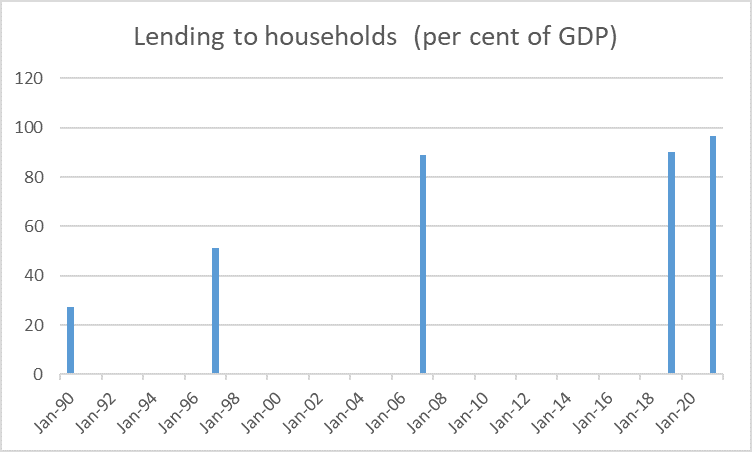
lending to households

There was a huge increase in the stock of lending, as a share of (annualised) GDP over the first 17 years of the series. What I’ve long found interesting is how little change there was over the following full business cycle (there were ups and downs in between the dates shown), and then we’ve had a bit of a step up in the last year or so (and even if house prices stay at this level, future turnover will tend to further increase housing debt expressed as a share of GDP).

Since real house prices have more than tripled since 1990 it is hardly surprising the stock of housing debt (share of GDP) has increased hugely. Were real house prices to, for example, halve then we might over time expect to see the stock of housing debt drift gradually back – it could take decades – towards say the 1997 sort of number.

Implicit in the journalist’s comment was a suggestion that lending to housing somehow limits how much lending banks do for other things. That generally will not be so. Banks (as a whole) are generally not funding-constrained – not only do loans create deposits (at a system level) but international funding markets are available (and used to be very heavily used, when NZ had large current account deficits). Of course, there is only so much capital devoted to New Zealand banking at any one time, but in normal circumstances capital flows towards opportunities.

But what has the empirical record been? The Reserve Bank publishes data for business lending from banks/NBDTs (which isn’t all business borrowing by any means – between funding from parents and the corporate bond market) and for agricultural lending.

Here is how the full picture looks
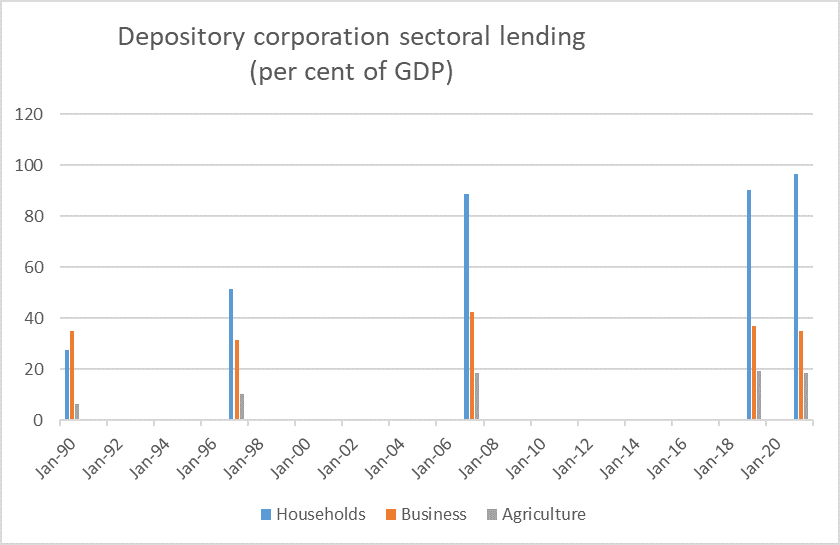
sec lending

For what it is worth, intermediated lending to business in March was exactly the same as a share of GDP as it was in December 1990. For younger readers, December 1990 was just a couple of years into banks working through the massive corporate debt overhang that had built up in the few years immediately following liberalisation. Farm credit, of course, has increased very substantially – again particularly over the years leading up to 2007/08 with the wave of dairy conversions and higher land prices.

On the business side of things, it is worth bearing in mind that business lending (share of GDP) was consistently weak throughout the last business cycle. Some will argue that banks had some sort of structural bias against business but even if so (a) over that decade or so there was no growth in the stock of housing lending as a share of GDP, and (b) there is little compelling evidence that systematic and large unexploited profit opportunities were going begging over that decade. It seems more likely that the markets – including banks – financed the profitable opportunities that were around, but there just weren’t many of them.

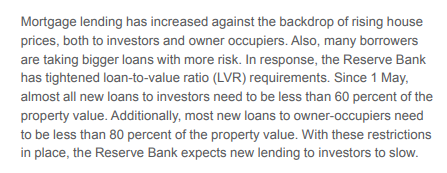
So my story remains one that if central and local government were to free up land markets and house price to income ratios dropped back to, say, 3-4 then over time the stock of housing debt (share of GDP) would shrink, a lot. There are some stories on which much cheaper house prices generate fresh waves of business entrepreneurship etc with workers able to flock to those opportunities, but I don’t find those stories convincing in New Zealand (in the aggregate). But simply repressing the financial system some more – the agenda the Reserve Bank and the government have been pursuing for several years now – will not change those business opportunities one iota.

(This post hasn’t tried to deal with the riskiness of the housing loans. My take on that is really the same as the Reserve Bank’s – at least when it isn’t champing at the bit to intervene. Capital requirements (and actual ratios) are high – materially higher than they were – and they are calculated in a fairly conservative way, with risk weights on housing that are fairly high, including by international standards. For what it is worth, the ratings issued by the agencies seemed aligned with that interpretation. )

That we have such a large share of total credit for housing isn’t, prima facie, a banking system problem – banks will follow the opportunities that (in this case) bureaucratic distortions create, and our central bank has demanding capital standards and in APRA one of the better banking regulators around – but rather just another indicator of how warped our housing market has been allowed – by governments – to become. But we knew that already. In fact, governments knew it to, but they prefer to try to paper over cracks, hide behind ever more pervasive RB controls, rather than tackle the core issue.

On which note, a couple of months ago the Wellington magazine Capital asked if I would contribute an article on what might be done to fix the housing market, with a Wellington focus. I wasn’t really familiar with the magazine – having previously seen it only in hairdressers, takeaway outlets and the like, for readers to glance through while they wait – but I said yes, and looking through the edition I picked up this week it looks like a mix of fairly geeky material (eg a whole article on lead-rubber bearings) and the lifestyle stuff.

Since I didn’t give them my copyright, many readers are out of Wellington. and the issue with my article seems to have been on sale for a while now here is the piece I contributed.

Free up the land: unravelling the unnatural housing disaster

Michael Reddell[1]

April 2020

New Zealand house prices, even adjusted for inflation, have more than tripled over the last 30 years.  The persistent trend was unmistakeable even before the latest surges.   Million-dollar houses were once the rare exception in Wellington, but now are almost the norm in too many suburbs.  The Wellington region median house price is now perhaps 10 times median income, putting home ownership increasingly beyond the reach of an ever-larger share of those in their 20s and 30s.

Most of the talk is loosely about “house” prices but what has really skyrocketed is the price of land in and around our urban areas; whether land under existing dwellings, or potentially developable land.  And this in a country with so much land that all our urban areas cover only about 1 per cent of New Zealand.

It is scandalous, perhaps especially because it is an entirely human-made disaster.   Land isn’t scarce, and hasn’t become naturally much more scarce, even as the population has grown.  Instead, central and local governments together have put tight restrictions on land use.  They release land for housing only slowly and make it artificially scarce, not just in and around our bigger cities but often around quite small towns.   And if there is sometimes a tendency to suggest it is “just what happens”, citing absurdly expensive (but much bigger) cities such as Melbourne, San Francisco or Vancouver, nothing about what has gone on is inevitable or “natural”.   

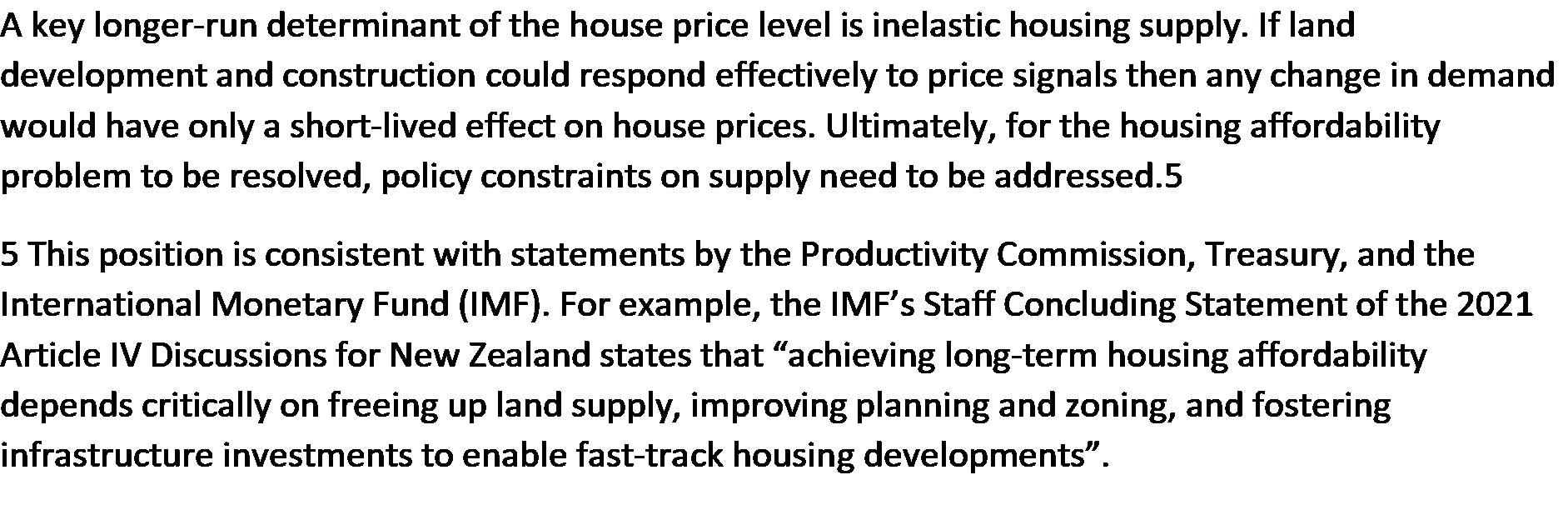
The best way to see this is to look at the experience in the United States, where there are huge regions of the country – often including big and growing cities – where price to income ratios are consistently under 4.    Little Rock, for example, is the state capital of Arkansas. It has a growing metropolitan population of just under 900,000, and a median house price of about NZ$300,000 –  little changed, after allowing for inflation, over 40 years.    The US also helps illustrate why it is wrong to (as many do) blame low interest rates:  not only are interest rates the same in both San Francisco and Little Rock, but US longer-term real interest rates are typically a bit lower than those in New Zealand.  The same goes for tax arguments: they have much the same tax code in both the high-priced growing US cities as in (much) more affordable ones.  High real house prices are a policy choice;  not necessarily the desired outcome of central and local government politicians, but the inevitable outcome of the land use restrictions they choose to maintain.

Both central and local government politicians sometimes talk a good game about making housing more affordable, but neither group seems to have grasped that in almost any market aggressive competition among suppliers is what keeps prices low.   People sometimes suggest there isn’t enough competition among, for example, supermarkets or building products suppliers, but if we really want widely-affordable housing again in New Zealand what we need is landowners aggressively competing with each other to get their land brought into development.  And that has to mean an end to local councils deciding where they think development should happen, whether within the existing footprint of a city or on its periphery.    We need a presumptive right for owners to build, perhaps to two or three storeys, on any land (and, of course, councils need to continue to be able to charge for connecting to, for example, water and sewerage networks).   It could be done now.  That it isn’t tells us that councils are the problem not the solution.  Too many –  including in Wellington –  seems to think it is their role to use policy so that in future lots of people are living in townhouses and apartments, even as experience suggests that what most (but not all) New Zealanders want, for most of their lives, is a place with a backyard and garden.  And they seem to fail to understand that simply allowing a bit more urban density, perhaps in response to a build-up of population pressure, hasn’t been a path anywhere else to lowering house prices. Instead, such selective rezoning simply tends to underpin the price of those particular pieces of land. 

Sometimes people suggest that even if this sort of approach would be viable in Hamilton or Palmerston North, it isn’t in rugged Wellington.    But as anyone who has ever flown into or out of Wellington knows there is a huge amount of undeveloped land in greater Wellington.    And if the next best alternative use should be what determines the value of land that could be used for housing, much of the land around greater Wellington simply does not have a very high value in alternative uses (not much of it is prime dairying or horticulture land).  Unimproved land around greater Wellington should really be quite cheap, although the rugged terrain would still add cost to  developing it to the point of being ready to build.

Some worry about, for example, the possibility of increased emissions.  But once we have a well-functioning ETS the physical footprint of cities doesn’t change total emissions, just the carbon price consistent with the emissions cap.  And for those who worry about traffic congestion, congestion charging is a proven tool abroad, which should be adopted in Wellington (and Auckland).

I’m not championing any one style of living.  The mix between densely-packed townhouses and apartments on the one hand, and more traditional suburban homes on the other, shouldn’t be determined by the biases and preferences of politicians and officials but by the preferences of individuals and families, exposed to the true economic costs of those preferences.  Similarly, policymakers should respect the (changing) preferences of groups of existing landowners what development can, or cannot, occur on their land.

The behaviour of councils over many years reveals them as, in practice, the enemies of the sort of widely-affordable housing which the market would readily provide (as it does in much of the US).  If councils won’t free up the land, to facilitate the aggressive competition among land providers that would keep prices low, central government needs to act to take away the blocking power of local councillors.

And this need not be the work of decades.  Of course, it takes time to build more houses, but the biggest single element of the housing policy failure is land prices. Once the land use rules look as though will be freed up a lot, expectations about future land prices will adjust pretty quickly, and prices will start falling.   We could be the boutique capital city with widely-affordable housing.  The only real obstacles are those who hold office in central and (especially) local government.


[1] Michael Reddell was formerly a senior official at the Reserve Bank, and also worked at The Treasury and as New Zealand’s representative on the board of the International Monetary Fund. These days, in additional to being a semi-retired homemaker, he writes about economic policy and related issues at http://www.croakingcassandra.com
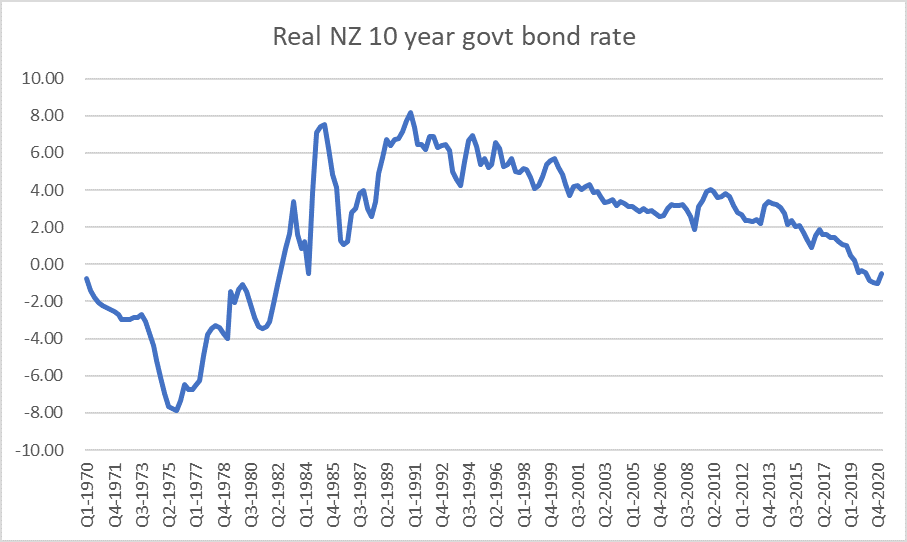
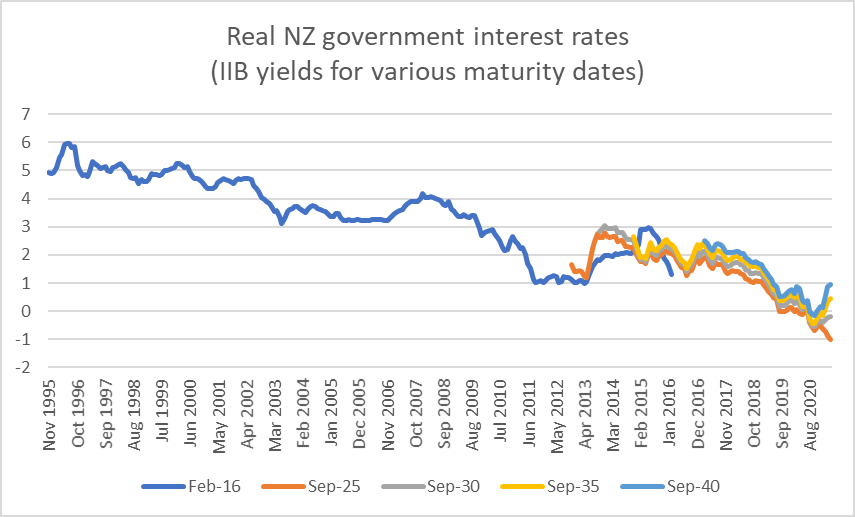
Lacking in serious analysis, not well-grounded in law

Yesterday was the Reserve Bank’s six-monthly Financial Stability Report. It might these days almost be almost better labelled the “Make the financial system ever less efficient report”, and with little real challenge or scrutiny from the assembled media.

With the Governor off sick it was left to the Deputy Governor Geoff Bascand to front the press conference. He seemed ill-at-ease and a bit uncomfortable in the spotlight – surprising in one who has held senior positions for so long – and often offered answers that were longwinded without actually saying much.

One of the questions he was asked on several occasions was about the reforms announced last week, and whether they reduced or increased the powers of the Minister of Finance and/or the Bank when it came to imposing direct controls on lending. Bascand never once answered the questions directly, delivering lines about how the new law would provide “greater clarity” but in what he said, and in what he didn’t say, he more or less confirmed the interpretation I ran in a post last week that the de facto powers of the Minister will be reduced – since the Minister will have no say on which tools the Bank can use, whereas under the ad hoc convention of the last decade the macroprudential Memorandum of Understanding between the Bank and the Minister governed that. Under the planned new legislation the Minister will be able to stop the Bank putting in place controls on broad classes of lending (eg residential mortgages) but at least under this government that will be an empty power, since the government is already content with the Bank having LVR restrictions, and the Bank will be free to apply any other controls it likes, whenever it likes. You might think that is a good thing. The Bank probably does. But it hands over much too much power to an unelected unaccountable Board.

But what I really wanted to focus on in this post was the area the Bank itself (and much of the media coverage) focused on: housing. 

You would barely get the idea from any of the material that the Bank has no responsibility for housing at all.  Its financial regulatory powers over banks have to be exercised to promote the maintenance of a sound and efficient the financial system.   And that is pretty much it.     The government is in the process of reforming the law to downplay the efficiency dimension, but (a) the law today is as it is, and (b) even under their new law the focus is supposed to be on the soundness of the financial system.   A couple of months ago, as is his right, the Minister of Finance issued a direction to the Bank requiring them to “have regard to” this government policy:

But this direction alters neither the statutory purposes the Bank must exercise its powers for, nor alters the Bank’s statutory powers.   The Governor promised that the Bank would explain quite what import this section 68b direction actually had, but it appears that that would have been embarrassing or awkward, because no such explanation is offered or attempted in the FSR.  In fact, they both misrepresent the substance of the direction, and then do more than suggest that it “aligns well with the Reserve Bank’s objective to promote the maintenance of a sound and efficient financial system”.   But bear in mind that not even the Cabinet paper that discussed this direction (and the equally empty change to the monetary policy Remit) envisaged much effect on anything much.

So we are simply left with those twin goals of maintaining a sound and efficient financial system.    But amid all their talk of housing financing restrictions, old, new, and foreshadowed, there is barely a mention of the efficiency of the financial system.   Which is probably just as well (for them) as there is no conceivable way that there most recent restrictions, described here, do anything but seriously impede the efficiency of the financial system.

The Bank hasn’t even attempted to make an efficiency case for almost completely banning any loans to residential rental property providers in excess of 60 per cent of the value of the property (all the while allowing much easier access to credit for owner-occupiers). If there are any real differences in the riskiness of such loans, not already factored into pricing and capital requirements, they are small relative to these differences in rules. So what we have isn’t a set of rules that is about either soundness (which capital requirements already manage) or efficiency – in a banking system that has proved itself robust over many years – but purely political interventions, resting on no sound statutory foundations, to attempt to skew the playing field in the housing market, consistent with Labour Party wishes and political preferences. Thanks to the Reserve Bank the market in houses will function less well, and the market in housing finance will be much less efficient and effective (and that without even addressing the “new homes” carve-outs, which again are all about politics and not at all about risk – new developments tend to be riskier – or efficiency).

Now, on a good day there are still some shreds of economic rationality and logic buried somewhere in the Bank. Deep in the FSR we find this good paragraph

I especially liked that slightly desperate footnote “see it isn’t only us”.

Now the Reserve Bank can’t fix any of that stuff – it is all about central and and local government failure – but they are nonetheless quite happy to operate beyond their legitimate sphere and powers to feed a government narrative and paper over symptoms. providing aid and comfort to the government doing little to get to the heart of the issue (the government that disavows any suggestion that perhaps house/land prices should fall). But that’s Orr for you.

Now perhaps you are thinking “but isn’t the financial system imperilled by these higher house/land prices?” Well, the Bank itself doesn’t think so and in the rest of the report they are at pains to stress how resilient the system is, how sound the banks are – even while being just about to resume their never-well-justified drive to push further up capital ratios that are, in effect, already among the very highest in the world. At the press conference, the Bank was at pains to note that the system could cope quite well with even a large fall in house prices. The Deputy Governor rightly highlighted that if prices fell recent borrowers might be in a difficult position, especially if for some reason the unemployment rate was to rise a lot at the same time but…….that simply isn’t a financial system soundness issue.

Much of the discussion in the document and in the press conference etc was about what fresh horrors – housing finance interventions – the Reserve Bank might be cooking up, in league with the government. Unsurprisingly perhaps – since they’ve wanted this tool for years – their preference seems to a debt to income limit (or a series of them, perhaps further impairing the efficiency of the system by picking favourites). Even the Bank seems to recognise that LVR limits are already so tight, especially on residential rental providers, that it might be embarrassingly inconsistent with their mandate to go further, and (sensibly) they don’t seem at all keen on banning interest-only mortgages. It is all a bit hypothetical at present – since as they note the latest LVR controls only came into effect last week – but there is no stopping a bureaucrat with an agenda (Bascand used to be regarded as a fairly pro-market economist), so we heard lots of talk about what they’d be prepared to do “if needed”. There were no criteria outlined for what might warrant further interventions, let alone criteria grounded in the Bank’s act. It really was handwaving stuff, of the sort we might once have been familiar with under people like Walter Nash or the later Muldoon.

You will note that the Minister’s direction referred to the government’s desire to support “more sustainable house prices”. The Bank has picked up that line and has clearly been toying with how to give it substance – but appeared to have made little or not progress, one of their staff even suggesting it was a new phrase and there wasn’t much research around about it. All the FSR itself says is this

FSR 21 2

And that’s it. And it didn’t seem to have taken them far. Bascand claimed to be optimistic that in time the Bank would be in a position to opine regularly on whether house/land prices were above, below, or close to sustainable levels, but he offered no real hint of what he thought sustainability might mean in this context, let alone attempting to tie it back to the Bank’s actual role, around the soundness of the system. For now – clearly keen not to get out of step with his political masters – he couldn’t even bring himself to suggest that lower house prices would be a good thing, although for some reason he did claim (on RNZ this morning) that a gradual fall would be better than a sharp one (offering no clue on why the death from a thousand cuts might be preferable, and for whom).

And, from the few hints he offered, his concept of sustainability seemed idiosyncratic to say the least. Apparently if the population was trending up it was okay for house prices to rise and stay up – quite why was never stated (and he ran this population line several times). We heard a lot about interest rates, but no real suggestion as to why low long-term global neutral interest rates supposedly mean higher house prices (they don’t seem to in much of the US, places where it is easy to bring land into development). It was just a muddle. I guess he couldn’t bring himself to say that no sustained fall in house/land prices was likely unless/until the government sorted out the regulatory dysfunction around land use, nor could he easily own up to the fact that if such laws seemed set to remain problematic then, with well-capitalised banks, what was any of this to do with the Reserve Bank.

It really was all over the place, not well-grounded in any of the Bank’s statutory roles, and yet…….these are the people the government wants to hand more discretionary power to, to further mess up access to finance. It was all too characteristic of the pervasive decline in the quality of policymakers (political and official) and policy advisory institutions in this country.

The sprawling burble continued with questions about whether banks should lend more to things other than housing – one veteran journalist apparently being exercised that a large private bank had freely made choices that meant 69 per cent of its loan were for houses. Instead of simply pushing back and noting that how banks ran their businesses and which borrowers they lend to, for what purposes, was really a matter for them and their shareholders – subject, of course, to overall Reserve Bank capital requirements – we got handwringing about New Zealand savings choices etc etc, none of which – even if there were any analytical foundation to it – has anything to do with the Bank. (He did, in fairness, note that there wasn’t much sign of strong business credit demand.) But I guess once you start down the path of the highly regulatory and intrusive state, it is hard to get free of the tar baby – in fact, bureaucratic life then selects for the sort of people who relish this stuff.

On a quite different topic, there was a box in the FSR on what was described as “Maori access to capital”. The Bank has apparently decided that, with no evidence whatever that there are distinctive Maori issues around either monetary policy or financial stability, to spend scarce public resources promoting this sort of stuff. Again, it is all highly non-analytical – no sense, for example, of why these ill-identified so-called Maori issues (in the ambit of the Bank’s functions) might be different than those of (say) ethnic Indians or Chinese, Catholics or atheists, left-handers, ethnic Samoans, women, men or whoever. It is all just a political whim, pursuing the personal ideological agendas of the Governor and at least some of his senior management (one of his offsiders has an extraordinarily political speech out this morning).

Anyway, we are told that

This work aims to use the Te Ao Māori strategy to incorporate a long-term, intergenerational view of wellbeing into the Reserve Bank’s core functions. It will also inform the Reserve Bank’s financial inclusion work and the allocative efficiency elements of its monetary policy and financial stability mandates. The Reserve Bank is treating this work as a high priority within its strategic work programme.

So with no serious problem identification, no serious grounding in the Bank’s statutory functions (which incidentally have no “intergenerational” character at all) all this is – in the Governor’s view – a high priority use of scarce public resources.

One can’t help feel that the Bank’s core functions might be in need of any spare resources they happen to have.

Fearful or values-free?

In many respects one doesn’t even need to read the speeches of government ministers on the PRC to know the stance they are taking; one need only look at the audiences they choose to speak to.

Nanaia Mahuta’s speech a couple of weeks ago was to the New Zealand China Council, the heavily government-funded body set up to help out the China-focused bits of the business community, champion ties with the PRC, and never ever say anything critical of the regime. And yesterday the Prime Minister chose to share a platform with the PRC Ambassador – host last week of the egregious propaganda event in defence of the regime’s record in Xinjiang – in speaking to the China Business Summit – a commercial event organised by one of the council members of the China Council, and heavily oriented to trying to do lots (and lots) of business with PRC entities. Invited speakers tend not to set out to upset their hosts, and in this case both lots of hosts would clearly prefer business above all, and a government operating in the service of those specific business interests. And that is, largely, what they get. From accounts of yesterday’s event, only the visiting Australian speaker (former senior DFAT official) appeared to offer a discouraging word, a dose of geopolitical realism on the nature of the regime. From our political “elite”. leaders past and present, more or less crass (more in John Key’s case) opportunism and spin.

There were, perhaps, a couple of things to be said in favour of the Prime Minister’s speech, at least relative to Mahuta’s. There was no invocation of assorted deities or suggestion that she herself was one (“I bestow a life-force upon this gathering“), and the weird taniwha stuff was nowhere to be seen. More substantively, whereas Mahuta talked several times about the government’s plans to “respect” the PRC, that word appeared not once in the Prime Minister’s speech. At the margin, her framing seemed slightly less gruesome, even if – like some abused wife unable or unwilling to break free – she keeps talking, of one of the most heinous regimes on the planet, of how “areas of difference need not define a relationship”.

We are told that the Labour caucus is this morning going to discuss its approach to the ACT notice of motion to declare the situation in Xinjiang a genocide. Perhaps they will surprise us by allowing a debate, perhaps they will really surprise us and vote for it, or some substantively similar preferred government wording. But there was not the slightest hint of a change of tone or stance in yesterday’s speech. Here is the whole of what the Prime Minister said on the Xinjiang situation

We have commented publicly about our grave concerns regarding the human rights situation of Uyhgurs in Xinjiang. 

I have raised these concerns with senior Chinese leaders on a number of occasions, including with the Guandong Party Secretary in September 2018, and then with China’s leaders when I visited in 2019. 

Note first that all of these references are in the past tense. But more importantly, not how she describes the situation. Like Mahuta ( “the treatment of Uyghurs in Xinjiang”) it is depressingly neutral language (“the human rights situation”), and “grave” is only used to qualify the extent of her concerns. It isn’t much better on Hong Kong where she will only go as far as to refer to “negative developments with regard to the rights, freedoms and autonomy of the people of Hong Kong”. It is the sort of language bureaucrats and MFAT diplomats love.

Oh, and do note the observations about when the Prime Minister has allegedly raised these concerns previously. It is a bit of a stretch to take seriously the 2018 episode, when after that same meeting we were told that the Prime Minister and the Guangdong Party Secretary had agreed to strengthen “party to party exchanges”, and we know how effusive her own party president (and the National’s) was being about Xi and the regime at the time. It must have been a fearsome telling off….or not.

The contrast is striking with the stance taken by a growing number of legislators around the world. From the Prime Minister’s own side of politics, for example, take this recent statement from US House of Representatives Speaker Nancy Pelosi

“The Biden Administration’s coordinated sanctions on China are a strong and resounding step to hold China accountable for its barbaric atrocities against the Uyghur people.  These sanctions make absolutely clear that America and the international community stand as one to defend the rights and dignity of the Uyghur people from China’s abuse.

“China’s persecution of the Uyghur people – including its imprisonment of more than one million people in labor camps and the torture and extrajudicial killings of many more – is an outrage that challenges the conscience of the world and that demands action. 

I’m pretty sure that not once has Ardern ever uttered those sorts of words.

One could go on. The media like to report the line – also in Mahuta’s speech – that

As a significant power, the way China treats its partners is important to us.

Code, or so it is suggested, for “we don’t really like what the PRC is trying to do to Australia or Canada”. But what feeble words, so vague and general they aren’t going to bother the PRC, or given aid and comfort to anyone else.

Unlike, for example, President Biden and Prime Minister Suga, our so-called leaders are too feeble, scared of their own shadow, to even name economic coercion for what it is.

President Biden and Prime Minister Suga exchanged views on the impact of China’s actions on peace and prosperity in the Indo-Pacific region and the world, and shared their concerns over Chinese activities that are inconsistent with the international rules-based order, including the use of economic and other forms of coercion.

And so it went, No reference to the wider and brutal domestic repressions, nothing about the South or East China Seas, nothing about the threats to Taiwan, and nothing (of course) about the PRC’s influence and intimidation activities here.

But we did get a new line from the Prime Minister yesterday, although only in the question and answer session for which there is no transcript. I first saw it reported this way

finny 21

And a Reuters story reported it thus

When asked if New Zealand would risk trade punishment with China, as did Australia, to uphold values, Ardern said: “It would be a concern to anyone in New Zealand if the consideration was ‘Do we speak on this or are we too worried of economic impacts?'”

So we are left with a choice. Either the Prime Minister is speaking the truth, and she is shocked, nay scandalised, that anyone could even think that economic considerations played a part in her government’s choice to say little. In which case we would have to conclude that she and her government really have no values and principles when it comes to anything to do with China. I’m not an Ardern fan at all, but I simply don’t believe that. But the alternative interpretation is that yesterday’s comment was just an outright lie, made up to get round an awkward question. There really isn’t a middle ground I can see. And no serious observer is going to believe that she was telling the truth.

Her government’s stance is craven and cowardly, and all too many people – especially in the business community – commend her for it, even if they’d use different words to describe the policy (perhaps “realistic” or invoking that vapid cover for opting out of the world, “an independent foreign policy”).

Foremost among those champions of turning a blind eye, or just trading eyes wide open, were the former Prime Ministers John Key and Helen Clark, who also spoke at yesterday’s event. Both have a record of cosying up to the PRC regime, in Key’s case more recently as a lobbyist for the US company Comcast in advancing its business interests in China – not a role you get if you are known to be a robust defender of human rights, the rule of law and so on. Now perhaps in fairness to both, when they were in office (perhaps especially Clark) the regime was perhaps a little less egregious (and less evidently so) than it is now. But if times have changed, their approaches do not appear to have. Indeed, in his Politik newsletter this morning, Richard Harman – who has previously provided a platform for the PRC Ambassador’s propaganda – described Key and Clark as “taking direct aim” at the government and calling it back from a concern about the PRC and to a true “independent foreign policy”,

The weirdest of the comments from the former PMs came from Key. He was quoted as suggesting that heightened concern about the PRC was really all Trump’s doing (this was a bad thing) and not something New Zealand should get caught up with. What isn’t clear is whether he believed this nonsense (see Biden or Pelosi, for example) or was also just making things up on the day (or which interpretation reflects more poorly on him). He went on to suggest that really we are much more likely to have an influence on the PRC if we are good friends with them and only ever raise concerns privately. This time, not even he can believe that, but it is a good line to use to sway those who want to be swayed, and don’t want the government doing or saying anything. No one supposes that anything any democratic country – least of all tiny New Zealand – says is going to deflect Xi from the regime’s approach to Xinjiang, Hong Kong, Falun Gong, religious and political freedom, the South China Sea, or whatever. It isn’t as if these are little misunderstandings and a good friend can helpfully get them back on the right course. It is that not speaking – playing along and acting as if the PRC is some normal country run by decent people – directly serves the regime’s interest.

These New Zealand political figures really are despicable, and never worse than when chanting the mantra of the “independent foreign policy”, an empty phrase that at present just seems an excuse for moral abdication, burying the values and principles most New Zealanders champion in some hobbit hole in the south seas, free-riding in the hope that the trade, the trade, can be kept up a little longer, and life not made tougher for firms that voluntarily choose to sup with the devil.

In many ways, I thought the best piece on yesterday’s attempt at circling the wagons was one that appeared on the Guardian Australia website by Bryce Edwards.

edwards

It was pretty much the line I’ve run here, that both speeches were carefully crafted efforts to look and sound – to the general New Zealand market -a bit tougher than usual (and ministers have even found one or two erstwhile sceptics to suggest a real shift in tone), while actually saying little or nothing that would disconcert Beijing, and not being remotely in line with the global shift in opinion on the threat the PRC increasingly poses. Edwards – from the left – appears to think this a good approach, going so far as to note that “[Beijing] will be very happy with today’s speech”

He ends with an observation that seems, sadly, mostly accurate about New Zealand domestic opinion

What foreign observers might see as Ardern kowtowing to Beijing, will be seen domestically as her successfully swimming in turbulent global waters between China and the west.

Helped along, of course. by a National Party that at its upper levels is quite as dreadful on the PRC as Ardern and Mahuta.

(On the National Party, Monday’s Politik newsletter reported that at the National Party’s northern regional conference at the weekend party members “voted overwhelmingly” to call for an inquiry into CCP/PRC interference in New Zealand”. Assuming this is true – I’ve not seen it reported anywhere else – it seems quite significant, in a party led by Judith Collins and Peter Goodfellow, both with a record of being all-in with Beijing, And yet, welcome as the call might be, one couldn’t help thinking that any such inquiry might start with – or be preceded by – full disclosure by the National Party about, for example, what it knew about Jian Yang when they put him into Parliament and why they kept him on and promoted him after his past became known, about ties with CCP figure Yikun Zhang, and so on.)

Central bank independence

Bernard Hickey – fluent and passionate left-wing journalist – had a piece out the other day headed thus

hickey rbnz

with a one sentence summary

TLDR: Put simply, the sort of true independence enjoyed by the Reserve Bank of New Zealand as it pioneered inflation targeting for the last 30 years is now over, and that’s a good thing.

I found it a strange piece on a number of counts, and I say that as someone who (a) does not think financial regulatory policy (as distinct from the implementation and enforcement of that policy) should be handed over to independent agency, and (b) is probably less compelled now than most macroeconomists by the case for operational independence for monetary policy. So I’m not responding to Hickey’s piece to mount a charger in defence of central bank independence. Mostly I want to push back against what seems to me quite a mis-characterisation of the effect of the Robertson Reserve Bank reforms – those already legislated, those before the House now, and those the government has announced as forthcoming. But also about the responsibility of central banks for the tale of woe Hickey sets out to describe.

It is worth remembering that, by international standards, the Reserve Bank’s monetary policy independence – de facto and de jure – was always quite limited by international standards. Under the 1989 Act the Minister and the Governor jointly agreed the target, but every Governor largely deferred to the Minister in setting – and repeatedly changing – the objective, even if details were haggled over. And with a fairly specific target, and explicit power for the Governor to be dismissed for inadequate performance relative to the target, it was a fairly constrained (operational) independence. The accountability proved to be weaker that those involved at the start had hoped, but it could have been used more.

The monetary policy parts of the Act were overhauled in 2018. There were some good dimensions to that, including making the Minister (alone) formally responsible for setting the monetary policy targets. The Minister got to directly appoint the chair of the Bank’s (monitoring) Board. And a committee was established by statute to be responsible for monetary policy operational decisions. But setting up the MPC didn’t change the Reserve Bank’s operational independence, and if it had been set up well could even have strengthened it de facto over time. The Minister did not take to himself the power – most of his peers abroad have – to directly appoint the Governor or any of the other MPC members. As it is, the reforms barely even reduced the power of the Governor – previously the exclusive holder of the monetary policy powers – who has huge influence on who gets appointed to the MPC (three others are his staff) and who got the Minister to agree that no one with any ongoing expertise in monetary policy and related matters should be appointed as a non-executive MPC members. Oh, and got the Minister to agree that the independent MPC members should be seen and heard just as little as absolutely possible (unlike, say, peers in the UK or the USA).

Hickey cites as an example of the reduced independence the Bank’s request for an indemnity from the Minister of Finance to cover any losses on the large scale asset purchase programme the Bank launched last March. I’d put it the other way round. The Bank did not need the government’s permission to launch the LSAP programme – indeed it is one of the concerns about the Reserve Bank Act that it empowers the Bank to do things (including fx intervention and bond buying) that could cost taxpayers very heavily with no checks or effective constraint. It seemed sensible and prudent of the Bank to have sought the indemnity, partly to recognise that any losses would ultimately fall to the Crown anyway. Operational independence never (should meant) operational license, especially when (unusually) the Bank is undertaking activities posing direct financial risk to the Crown. (And I say this as someone who thinks that the LSAP programme itself was largely pointless and macroeconomically ineffectual.)

What about the other reforms? I’ve written previously about the bill before the House at present, which is mostly about the governance of the Bank. It will make no difference at all to the Bank’s monetary policy operational independence (although increases the risk that poor quality people are appointed in future to monetary policy roles). That bill transfers most of the Governor’s remaining personal powers to the Board. The Minister will appoint the Board members directly (unlike the appointment of the Governor) but even then the Minister will first be required to consult the other political parties, so it is hardly any material loss of independence for the Bank. The Minister will, in future, be required to issue a Remit for the Bank’s uses of its regulatory powers – and we really don’t know what will be in such documents – but those provisions don’t even purport to diminish the Bank’s policy-setting autonomy (notably since it is much harder, probably not sensibly possible, to pre-specify a financial stability target akin to the inflation target).

Details of the next wave of reforms were announced last week. Of particular note is the provisions around the standards that the Bank will be able to issue setting out prudential restrictions on deposit-takers, including banks. I wrote about that announcement last week. Since then more papers, including the (long) Cabinet papers and an official sets of questions and answers has been released. We do have the draft legislation yet, so things might change, but as things stand it is clear that what the government is proposing will amount to no de facto reduction in the Bank’s policymaking autonomy, and only the very slightest de jure reduction.

Why do I say this? At present, the Bank regulates banks primarily by issuing Conditions of Registration (controls on non-bank deposit-takers, mostly small, are set by regulation, which the Minister has control over). Under the new legislation is proposed that Conditions of Registration will be replaced by Standards, which will be issued (solely) by the Bank, but will be subject to the disallowance provisions that are standard for regulations via theRegulations Review Committee. In between the Act (which will specify – loosely, inevitably – objectives and principles to guide the use of the statutory powers) and the Standards, the Minister will be given the power to make regulations specifying the types of activity the Bank can set standards for. Note, however, that empowering the Bank to set standards in particular areas does not compel the Bank to do so (in practice, it is likely to be a simultaneous process)

There was initially some uncertainty about how specific the Minister could get – the more specific, the more effective power the Minister would have. But the Cabinet paper removed most of the doubt.

standards 1

Backed up in the relevant text of the official questions and answers released on The Treasury’s website.

standards 2

That isn’t very much power for the Minister at all; in effect nothing at all in respect of housing lending (since once the new Act is in force the Minister will simply have to regulate to allow a Standard on residential mortgage lending, if only to give continuing underpinning to LVR restrictions). Perhaps what it would do is allow a liberalising Minister to prevent the Bank setting specific standards for specific types of lending but……that doesn’t seem like the Labour/Robertson approach. And once a Minister has allowed the Bank to set standards for residential lending, the Minister will have no further say at all: the Bank could ban lending entirely to particular classes of borrowers, ban entirely specific types of loans, impose LVRs, impose DTI limits, perhaps impose limits of lending on waterfront properties (we know the Governor’s climate change passion). For most practical purposes it is likely to strengthen the independence of the Bank to make policy in matters that directly affect firms and households, with few/no checks and balances, and little basis for any formal accountability. Based on this government’s programme, the age of central bank policy-setting independence is being put on more secure foundations (since the old Act never really envisaged discretionary use of regulatory policy, which crept in through the back door).

Hickey argues that the introduction of LVR controls in 2013 by then-Governor Graeme Wheeler required government consent. In law, it never did. If the law allowed LVR controls – a somewhat contested point – all the power rested with the Governor personally. It may have been politically prudent for the Governor to have agreed a Memorandum of Understanding with the Minister on such tools, but he did not (strictly) have to. At best, it was a second-best reassertion of some government influence of these intrusive regulatory tools.

Now perhaps some will argue that there might be something similar in future too: the Minister might have no formal powers, but any prudent central bank might still seek some non-binding agreement with the government. But I don’t believe that. If the government had wanted any say on whether, say, DTI limits were things it was comfortable with, or what sorts of borrowers they might apply to, the prudent and sensible approach would be to provide explicitly for that in legislation. The old legislation may have grown like topsy, but this will be brand new legislation. The Minister is actively choosing to opt out and given the Bank more policy-setting independence (including formally so for non-banks) on the sorts of matter simply unsuited to be delegated to an independent agency, that faces little effective accountability (see the table from Paul Tucker’s book in last week’s post).

Whether independence should be strengthened or not, the Ardern/Robertson government has announced plans that will do exactly that, while at the same time weakening the effective accountability of the Bank (since powers will be diffused through a large board, with no transparency about the contribution of individual members).

That was a slightly longwinded response to the suggestion that actual central bank independence (monetary policy or financial regulation) is being reduced, in practice or by this goverment’s reforms. I favour a reduction in the policymaking powers of the Bank around financial regulation (the Bank should be expert advisers, and implementers/enforcers without fear or favour, not policymakers – the job we elect people to do).

What about monetary policy. Hickey reckons not only (and incorrectly so far) that monetary policy operational independence has been reduced, but that it should be reduced.

As it happens, I’m now fairly openminded on the case for monetary policy operational independence. One can mount a reasonable argument – as Paul Tucker does – for delegation to an independent agency (since a target can be specified, there is reasonable agreement on that target, there is expertise to hold the agency to account etc). But it has to be acknowledged that much of the case that was popular 30 years ago – that politicians could not be trusted to keep inflation down and would simply mess things up on an ongoing basis – is a lot weaker after a decade in which inflation has consistently (in numerous countries) undershot the targets the politicians (untrustworthy by assumption) set for the noble, expert and public-spirited central bankers.

What I’m not persuaded by is any of Hickey’s case for taking away the operational autonomy. Five or six years ago, I recall him – like me – lamenting that New Zealand monetary policymakers were doing too little to get the unemployment back down towards a NAIRU-type rate (it lingered high for years after the recession) and core inflation back up to target. But now, when core inflation is still only just getting back to target, unemployment is above any estimate of the NAIRU (notably including the Bank’s) Hickey seems to have joined the “central banks are wreaking havoc, doing too much etc etc” club.

One can debate the impact of the Bank’s LSAP programme. Personally, I doubt it has any made material useful macroeconomic contribution over the last year (good or ill – I don’t think it has done anything much to asset prices generally, and not that much even to long bond prices), and as I’ve argued previously it has mostly been about appearing active, allowing the Governor to wave his hands and say “look at all we are doing”. But even if you believe the LSAP programme has been deeply detrimental in some respect or other – Hickey seems to be among those thinking it plays a material part in the latest house price surge (mechanism unclear) – why would anyone suppose that a Minister of Finance running monetary policy last year would have done anything materially different to what the Bank actually did. After all, as Hickey tells us the Minister did sign off on the LSAP programme anyway, and a decisionmaking Minister of Finance would have been advised primarily by…..the Reserve Bank and the Treasury (and recall that the Secretary to the Treasury sits as a non-voting member of the MPC, and there has been no hint that Treasury has had a materially different view).

I think the answer is that Hickey favours a much heavier reliance on fiscal policy – even though he laments, and presents graphs about, how much additional private saving has occurred in many advanced economies in the last year, the income that is being saved mostly have resulted from….fiscal policy. Again, I think the answer is that he wants the government to be much more active in purchasing real goods and services – not just redistributing incomes. I suppose it comes close to an MMT view of the world.

But again there is little sign of anyone much – not just in New Zealand but anywhere – adopting this approach, or even central bank independence being restricted in other countries (what there is plenty sign of is central bankers getting out of their lane and into all sorts of trendy personal agendas – be it climate change (non) financial stability risks, indigenous networks or whatever.

None of this agenda seems to add up when it comes to events like those of the last 15 months. We know that monetary policy instruments can be activated, adjusted, reversed almost immediately. We know that governments are quite technically good at flinging around income support very quickly. But governments – this one foremost among them – are terrible at, for example, wisely using money to quickly get real spending (eg infrastructure) going in short order, and such projects once launched are hard to stop or to adequately control. Monetary policy is simply much much better suited to the cyclical stabilisation role.

Hickey is a big-government guy, and there are reasonable political arguments to have about the appropriate size and scope of government, but they haven’t got anything much to do with stabilisation policy – and nor should they. One doesn’t want projects stopped or started simply for cyclical purposes – brings back memories of reading of how the Reserve Bank wasn’t able to build its building for a long time because the governments of the day judged the economy overheated.

The (unstated) final part of his story seems to relate to a view that perhaps monetary policy has reached its limits. It would be a curious argument, given that much of his case seems to rest of the damage monetary policy is doing (impotent instruments tend to be irrelevant, even if deployed). He repeat this, really nice, long-term Bank of England chart

hickey 2

The centuries-long trend has been downwards, and many advanced country rates are either side of zero. But interesting as the chart genuinely is, including for questions about the real neutral interest rate (something monetary policy has little or no impact on), it tells one nothing about (a) who should be the monetary policy decisionmaker, or (b) the relative roles of fiscal and monetary policy. After all, the only reason why nominal interest rates can’t usefully go much below zero yet is because of regulatory restrictions and rules established – in much different times – by governments and central banks. Scrap the unlimited convertibility at par of deposits for bank notes – not hard to do technically – and conventional monetary policy (the OCR) immediately regains lots more degrees of freedom, able to be used – easily and less controversially – for the stabilisation role for which is it the best tool.

To end, I wouldn’t be unduly disconcerted if the government were to legislate to return to a system in which the Bank advised and the Minister decided on monetary policy matters. It might just be an additional burden for a busy minister, but it would be unlikely to do significant sustained harm (and one of the lessons of the last 30+ years is that central bankers and ministers inhabit the same environment, have many of the same ideological preferences etc) in a place like New Zealand. But to junk monetary policy as the primary cyclical stabilisation tool really would be to toss out the baby as well as the bathwater, no matter how big or active you think government tax and spending should be.