When it comes to Long-term Insights Briefings (LTIBs) I sympathise with the public service, I really do. The requirement to produce these documents was introduced by the previous government in fiscally expansive times (core government agency staffing growing rapidly). Even then, it was a fairly flawed idea but if agencies were awash with cash I guess they might as well try to do some analysis. These days, even if the fiscal deficit is not being cut, core government department spending is under considerable pressure, and we have a track record in which the LTIBs that have been produced have rarely added much value. I gather the current amendments to the Public Service Act will eliminate the requirement to produce LTIBs but…..for now government department CEs and acting CEs still have to comply.
A year or so ago MBIE and MFAT decided to get together and produce a joint LTIB this time round. As the law requires they consulted on the proposed topic
I put in a short but fairly sceptical submission on the topic
Anyway, the bureaucrats have beavered away and last month come up with a draft LTIB (on which submissions close next Monday). They must have refocused their efforts somewhat following consultation on the topic as it is now presented this way.
Having made a submission last year they’d included me on their general email inviting submissions on the draft. I’ve been away and otherwise busy and hadn’t really intended to even look at the thing, but there was another reminder yesterday so I took an initial look. It was the “accelerate the growth of high productivity activities” that prompted me to look a little further: the focus apparently was not economywide productivity and policy settings but the sort of “smart active government” stuff MBIE has long championed, involving clever officials and politicians identifying specific sectors to focus on and specific interventions to help those sectors. And, of course, lots of preferential trade, investment, etc agreements (the ones MFAT likes to call Free Trade Agreements). On a day when the dysfunctions of our public sector were on particularly gruesome display it seemed even less appealing and persuasive than usual. In a month when the government had been a) buying a rugby league game, b) increasing (again) film subsidies, and c) subsidising expensive New Zealand restaurants (via the Michelin corporate welfare), all in the name apparently of “going for growth”.
So I decided to sit down and read the draft document after all. It isn’t that long (45 pages or so excluding Executive Summary, glossary, references etc), reflecting no doubt the fact that LTIBs are a compliance cost for agency CEs rather than really core top priority claim on resources. Before reading it I heard on the grapevine last night of a smart person who had opened the document, read the first page, rolled their eyes, and closed the document again. But I persevered….and there is 25 minutes of my life I won’t get back.
Sadly, but perhaps not surprisingly, the draft report is unlikely to be any use to anyone looking for illumination rather than support (the old two uses of a lamppost line).
On New Zealand, we get a fairly long list of symptoms of our relative economic failure, but no serious attempt at analysis of the causes. If you don’t understand the causes, including the roles (positive or negative) of past policy interventions/choices, it is really difficult to see how you tell a compelling story about solutions, unless the document is just a prop for a longstanding predetermined narrative and set of policy preferences.
They then introduce a series of four small advanced economy “case studies” – a page each on Denmark, Finland, Ireland, and Singapore. Not only do they not engage with a really important difference between New Zealand and these countries – ie extreme remoteness – but there is no attempt to understand what drove the successes of these economies either. In each case there is a list of types of interventions that have been or are being used in these countries but no effort at all to assess what role (positive or negative) these interventions have played in contributing to medium-term productivity growth. It certainly isn’t impossible that some might have been helpful, some will almost certainly have been harmful (just consider the range of interventions our governments have tried over the decades), and perhaps many will have just been ornamental or redistributive – not really making much difference at all to the productivity bottom line. And I’m pretty sure that not once in the entire document is there any suggestion of the possibility of government failure, capture etc.
Then the draft report moves on to four domestic case studies (this time roughly two pages each), looking at the dairy industry, space and advanced aviation, biomanufacturing, and the Single Economic Market (mostly Australia but also beyond) with a focus on sector-specific interventions. None of it seems to display any scepticism, only a sense that we (governments) haven’t been sufficiently focused or willing to persist with particular sector supports. Strikingly, in the dairy “case study” there is no mention of the rather large role the government played in enabling the creation of Fonterra, and how the results have, to put it mildly, not exactly lived up to the promised hype.
And the whole document ends with a question that shouldn’t even be being asked by government departments.
But perhaps it is all music to the ears of governments that like specific announceables from week to week? (Whether MBIE or MFAT like those specifics is another matter – quite possibly not, but their mindset and fairly shallow analysis in documents like this helps provide cover for governments more ready to paper over symptoms, toss out some cash to favoured firms/sectors, and avoid insisting that the hard structural issues are identified and addressed).
And this sort of stuff helps keep lots of officials busy and feeling useful.
To any MBIE/MFAT readers, no I won’t be submitting, but I’m sure you get the gist. The sooner the LTIB requirement is removed from the law the better, but eliminating that won’t change the mindset. As far as MBIE is concerned, my ongoing unease was only reinforced when on the page with the consultation document on it, this was the list of tabs/items down the side of the page under the heading “Economic Growth”.
We were away for a month and it has taken time to work through the backlog that inevitably builds up over such a mid-year absence. In the meantime, a fair bit more detail has emerged about the Orr/Quigley/Willis saga, between various OIA responses to me, one I’ve seen to another person, a bit more on the Bank’s extravagant new Auckland premises, the Bank’s Annual Report, and the pro-active (but very belated) detailed disclosures about the Orr golden payoff (other OIA responses are still being slow-walked by the Bank). And, of course, we’ve had the announcement of the new Governor and the, perhaps predictable and certainly appropriate, notice of resignation by the temporary Governor (and substantive Deputy Governor). I may eventually get to writing about some of that material, but I have updated my timeline of the Orr/Quigley/Willis saga where relevant.
The Reserve Bank isn’t exactly, in the jargon, a “learning organisation”, but more akin to one determined never to acknowledge a mistake (in a field in which, with the best will in the world, uncertainty means mistakes are pretty much inevitable). The last of the old guard – the Orr team – was at it again last week. Orr may have gone months ago, but Christian Hawkesby (who was the DCE responsible for monetary policy throughout the Covid period itself) is serving out his last few weeks, the other foundation MPC member (Bob Buckle) left just a few weeks ago, and no one expects the manifestly unqualified Karen Silk, the Orr DCE responsible for monetary policy for the last few years, to survive much longer. (There is the old and problematic board too, but monetary policy isn’t their field.) But the face of the latest effort in defence was the chief economist, another Orr groupie, Paul Conway (among many, the line that sticks with me was his closing remarks at the Bank’s early March conference, about having “lost a much-loved Governor”). Time is moving on but they seem determined to defend the Orr legacy, in which they’d all played greater or lesser parts. Specifically, the hugely expensive and risky LSAP.
There were a number of pieces released last Wednesday (links to them all here), headlined by a speech in Australia by Conway, supplemented by some comments from Conway in a Herald article on the Bank’s case (that really the LSAP paid for itself and, what’s more, it is really hard to assign any blame). Of the Bulletin article, “Pandemic lessons on the monetary and fiscal policy mix” by a couple of staff economists I haven’t got much to say: it is wordy and despite 10 pages of references offers little or no insight on the issues or the institution. Perhaps the only line in it that really caught my eye was a heading that claimed that fiscal and monetary policy “Coordination is an intricate and dynamic challenge”, a claim which not only seemed quite wrong, but also at odds with the thrust of Conway’s comments on that issue in his speech (where he seemed, rightly in my view, to be suggesting that what was needed was independence in operations, but keeping each other informed, and exchanging views on what works, what limitations there might be etc). As it ever was, but perhaps now institutionalised in that the Secretary to the Treasury is a non-voting member of the MPC. (Of course, the Treasury is also charged formally with monitoring the performance of the Bank, but the last 18 months suggests how hopeless they’ve been in that role.)
The centrepiece of what the Bank released last week is an Analytical Note by some of their researchers and some IMF staff which uses a model developed at the IMF to attempt to show that really the LSAP was a great success – macroeconomically and that it paid for itself (notwithstanding the $11 billion or so of direct losses incurred). It is a more elaborate version of the framework used by the IMF in a brief early note attached to their 2023 Article IV report (and talked up at the time by the former Governor as offering the “proper story” not some “piecemeal accounting story”), a piece whose claims I unpicked in a post at the time (link a couple of lines up).
So much money has been lost by central banks in the Covid QE interventions – in countries across the advanced world – that too many of those institutions, and their institutional allies (places like the IMF), now seem determined to try to prove a very weak case, that it was really all worthwhile (a case only made harder given the inflation mess that many advanced countries then went through, and which we are still living with the aftermath of). The effectiveness of generalised QE in government bonds – as distinct from specific interventions in dysfunctional markets – has been debated for 10-15 years now but my prior going into Covid was pretty much that of the eminent UK economist Charles Goodhart who in a Foreword to a book I reviewed some years ago (book completed just prior to Covid) opined that in his judgement:
“the direct effect on the real economy via interest rates, with actual or expected, and on portfolio balance, was of second-order importance, QE2, QE3 and QE Infinity are relatively toothless”.
It seemed to be pretty much the Reserve Bank’s approach then too (see this substantive interview with Orr in August 2019, and even just prior to the launch of the LSAP the then chief economist was quoted as playing down the likely impact of such policies), with an explicit preference from the Governor to use negative interest rates (as in Europe and Japan) instead.
I don’t want to bore readers with an interminable critique of all the papers (having already run various posts – eg here in response to some of their earlier claims – over the years of my scepticism that this big asset swap – all it was – made much useful difference to anything, to justify the risk and losses the Bank incurred for the Crown).
So I’m going to work backwards, responding to some of the easier-to-rebut assertions, and only at the end coming back to specific concerns about the particular model they are using in support (recall the distinction between support and illumination).
First, some Conway claims reported in the Herald article
“Conway said it was difficult to isolate the impact of a single tool the Monetary Policy Committee used at a time the Reserve Bank and Government were throwing a lot at the economy to keep it buoyed. He also recognised the collective response caused prices to soar. However, he cautioned against people assuming money printing was largely to blame for the economy overheating.”
You might easily forget reading that that the way our system is set up the Reserve Bank moves last. If the economy overheated – and on everyone’s reckoning it did (both IMF and Reserve Bank positive output gap estimates were very large) – it is the MPC’s fault. It is their job to, as far as possible, lean against the economy overheating (or the opposite) and keep core inflation near the target midpoint. They failed, and that is on them not on the government of the day (which might have run bigger deficits than many were comfortable with, but those deficits weren’t kept secret – most especially from the MPC). Whether or not the LSAP made much difference to demand (Conway believes it did), the responsibility clearly rests with the overall package of monetary policy measures – OCR setting, LSAP, and the Funding for Lending programme (that went on offering cheap loans to banks until the end of 2022). There is no sign in his speech, press release, or interview that Conway – and presumably his bosses – ever really accept that responsibility/blame. Nor is there any real mention of what was actually at the root of the problem: an egregious forecasting failure. Like many/most other forecasters – but unlike them actually wielding power and responsible for outcomes – the MPC badly badly misread the state of demand and resource pressures through Covid, and the result was the inflationary mess that followed. It was hard to get right – few did – but when you take the role you need to take the responsibility. All too few central bankers have. Conway wasn’t there when the worst mistakes were being made, but he now speaks for the institution (and, currently, specifically for Hawkesby, who held the critical role of DCE responsible for monetary policy when it mattered).
But if the forecasting mistakes were pretty common and widespread (inside and outside central banks, here and abroad), the most evident costly failure is purely on the Reserve Bank itself. This is from Conway’s speech
In other words, even granting for the moment the Bank’s view that the LSAP did a lot of good to justify the large losses, really they would prefer not to have used it at all, because a modestly negative OCR would have achieved the same (claimed) benefits without the massive financial risk and actual $11 billion in losses to the taxpayer. Last week’s papers use quite a bit of the passive voice, suggesting that the inability to use negative rates had been something quite out of their control, perhaps something banks were to blame for. Someone, anyone, no one…but certainly not the Bank.
Actually, it was all on the Reserve Bank. An internal working party in 2012 had recommended (I chaired it) that the Bank ensure our own systems and those of banks were able to cope with negative rates should they ever be needed. The then Governor accepted those recommendations, but it seems that nothing happened until it was far too late (it wasn’t until Covid was almost upon them that the Bank realised nothing had been done and some banks – apparently it wasn’t even all – weren’t operationally capable). It is all the more extraordinary because in the second half of the decade the Bank had clearly been doing preparatory thinking for coping with the next severe downturn – there was a thoughtful Bullletin article on options in 2018, and of course that serious interview of Orr’s I’d linked to earlier. But no one seems to have done the basic engine-room sort of work, reviewing with banks their ability to cope with an instrument used in other countries for many years by then. There was turnover at the top – Orr came on board in March 2018, Hawkesby in March 2019 – but it isn’t as if in mid 2019 these should have been remote issues (the OCR had been cut to its then lowest ever level of 1 per cent, and it wasn’t going to take a particuarly savage shock to put zero in view). And yet nothing was done and – on the Bank’s own telling – the cost to the taxpayer was the full $11 billion or so (since they themselves now say they could have had the macro benefits they claim without the risks/losses if only they – Orr, Hawkesby, the 2019 MPC – had ensured basic operational readiness). That was on them, and only them. (Incidentally, the Bank reckone that by Q42020 those issues were sorted out, and yet they went on taking additional LSAP risk – and then incurring further losses – well into mid 2021.)
A learning organisation, the sort that acknowledges mistakes and learns from them, would be quite open about the cost of their own failure. The Hawkesby/Conway Bank, not so much.
All that was on the assumption the Bank was right and there were huge gains achieved through their monetary policy efforts, notably including the LSAP purchases/punt.
And that rests on two propositions. The first is that there were substantial boosts to GDP, and second that government tax revenue was permanently higher as a result.
Conway used this chart (from the Analytical Note modelling effort)
(No, they aren’t saying tax revenue got to 42 per cent of GDP; it is just an illustrative device).
In principle, if there had been a very deep hole in economic activity which monetary policy choices had closed much quickly than otherwise, there’d also be a windfall gain in tax revenue. (That was the scenario for the highly questionable little IMF exercise in 2023 linked to earlier.)
Unfortunately, while in 2020 the Bank thought there was such a hole (eg as late as the November 2020 MPS the Bank thought there was a negative output gap of about 2.5 per cent, which would persist around those levels for the whole of 2021), they are now quite clear in there view that there was no such hole. In their most recent projections, they estimate that even in the September quarter of 2020 (ie straight after the first and longest severe lockdown) the output gap was (barely) positive. And in the real world monetary policy actions (starting from late March) just don’t have such large and immediate real effects as to have made a big difference to activity as soon as mid-August (ie halfway through the September quarter). With hindsight – albeit only with hindsight – monetary policy choices, including the LSAP if it had real effects, were driving the economy further away from a balanced position (ie into a substantially positive output gap, now estimated to have peaked at almost 4 per cent of GDP, and the associated surge in core inflation).
And this is where the Bank’s package last week gets borderline dishonest. Conway uses this chart
which a casual reader might think was all gain. But the chart ends just around the point where the output gap crosses into negative territory, and thus completely – and deliberately (we must assert for a senior policymaker) – ignores the more recent period, in which the Bank estimates that we are now in a materially negative output gap, and will in time have had three years of a negative output gap (ie GDP tracking below potential, with government tax revenue consequences). Pretty much all observers ascribe that negative output gap to the necessary working off of the earlier, marked, RB-allowed/enabled overheating (ie dealing with the inflation). Any honest reckoning of the fiscal consequences needs to take into account the entire period. There probably were some fiscal gains from the Bank’s monetary policy choices – surprise inflation reduced the real debt burden, and resulting fiscal drag picked up some extra revenue – but I doubt the Bank really wants to claim credit for that inflation they weren’t supposed to be aiming for and did not forecast.
Most likely, over the full period, there were modest – but largely unsought and undesired – revenue gains (achievable, see above, with conventional instruments if only the Bank had done its preparatory job – and for central banks, like airport fire brigades, preparation for crises is a core part of the job), but large and easily identifiable losses from the risky punt made on the LSAP.
But all that assumes that the LSAPs made a material difference at all. That has long seemed quite unlikely to me. You can – as the Bank and IMF staff have done – construct a stylised model in which the LSAP makes a material difference, but that model doesn’t really seem to fit very well what was going on, here and abroad, and the LSAP simply isn’t necessary to explain almost everything that did go on.
To be clear, I think most economists will agree that if the LSAP worked it wasn’t as (in the Herald’s unfortunate term) “money-printing”. The volume of settlement cash created – all reimbursed at the OCR – was simply not a material channel. If the LSAP made a difference it did so by one of two (perhaps mutually reinforcing) mechanisms: altering market interest rates in ways that had macro consequences (this is the Reserve Bank’s own story going back to 2020), and/or reinforcing market convictions/views that the OCR will be kept extraordinarily low for a protracted period.
This is from the model Conway hung his hat on, in which he
cites the modelling exercise – not an empirical estimation but a stylised representation – in which the choice not to use the LSAP (in New Zealand) makes at peak about 150 basis points of difference to long-term government bond rates (relative to the counterfactual in which only the actual OCR cut was done) and a 20 per cent difference to the exchange rate. In this modelling exercise we are told that most of the work is being done by the exchange rate adjustment (itself responding to changing interest rate differentials), noting that long-term interest rates themselves aren’t a material part of the New Zealand domestic transmission mechanism.
But we are also told that the LSAP was roughly equivalent in its economic impacts to a 100 basis points cut in the OCR. And we’ve had plenty of swings in the relative policy rate spreads of 100 basis points or more (including since 2021) and none of them has resulted in a 20 per cent change in our exchange rate (which has been astonishingly stable over the last 15 years or so).
Another chart from Conway’s speech is this
where you’ll see (red bars) that New Zealand’s use of government bond purchases was one of the largest among advanced countries (similar to the UK and Canada). But you will also see quite a group of countries to the left of the chart that seem to have done little or no QE over this period. Korea, for example, also cuts its policy rate by 75 basis points, but is there any sign of its real exchange rate rocketing upwards because they did no QE? Well, no. And one can run through the other countries and you will search in vain for such large effects (and yes each country has its own idiosyncrasies). Australia did no material QE until the end of 2020 (for much of the year they relied on policy rate cuts and an announced target for a three year rate) and there isn’t any sign of the AUD appreciating sharply against the NZD (where our central bank was actively pursuing QE).
And there are similar problems with the long-term bond yield story. Eyeballing that chart Conway cited, you’d have to think that advanced countries that did no little or QE in government bonds would have seen their long-term government bond yields rise sharply (and, to be clear, the New Zealand OCR was about middle of the pack for how much advanced country central banks cut in 2020). But again, evidence of such effects is sparse indeed. Take Korea again, their long-term bond yields didn’t fall as much as New Zealand’s did, but they certainly didn’t rise in 2020. Nor did Norway’s or Iceland’s – or, indeed, any advanced country. I don’t find it implausible that the scale of New Zealand’s LSAP might have made a bit of difference to longer-term bond rates, but eyeballing the cross-country experiences something like 20-40 basis points looks more plausible – eg our long-term bond rate did fall more than Australia’s in mid 2020.
And that is for a 10 year bond. What matters in the domestic economy is mostly 1 and 2 year rates (including through the mortgage lending and refinancing channel). And so the important question is likely to be whether the LSAP did anything much – directly or by signalling reinforcement effects – to affect those short-term rates. And there I think champions of the effect of the policy will find themselves on the backfoot. Those shorter-term bond and swap rates certainly fell very low (some were briefly slightly negative for a few weeks around September 2020, although by the end of 2020 all the short-term bond yields were at or above the 25 basis points that was then the OCR), but is there good reason to suppose those rates would have been much different absent the LSAP (or with an LSAP brought to an end in say December 2020)?
What else was going on? By late 2020 the Reserve Bank told us the operational issues around negative rates had been sorted out. In the Survey of Expectations (semi-expert respondents), the December quarter survey remarkably – looking back now – had the mean expectation for the OCR a year ahead at -0.16 per cent (with inflation two years out nonetheless still expected to well undershoot the midpoint). The MPC itself had pledged back in March 2020 (rashly) not to change the OCR for a year. And what of the Bank’s own forecasts? With all the stimulus already built in the Bank in the November 2020 MPS was projecting that inflation would stay at or marginally below the bottom of the target range through 2021 and 2022, and that the output gap would remain deeply negative at least through all of 2021. The Bank published “unconstrained OCR” numbers – where the OCR would go if deeply negative OCRs were possible, to get inflation back towards target – getting down to -1.5 per cent by the end of 2021. The fact that those forecasts and expectations were deeply wrong – as we know now – is irrelevant to the fact that that was the air people were breathing (and markets were trading) in late 2020. The prospect of any rise in the OCR any time soon seemed remote, and cuts couldn’t be ruled out (remember that only the MPC pledge to March 2021 had ever prevented the OCR being cut to at least zero).
Is it plausible that the LSAP had some effect on these rates? Well, perhaps. I wouldn’t quibble if someone was suggesting 20 or 30 basis points but…..short-term rates were always going to be much more heavily influenced by expectations of future OCR moves, and – independent of any LSAP announcements – the macro forecasts at the time were very very weak (as actually they were in Australia – check the RBA November 2020 inflation projections).
What of the stylised modelling results themselves? Well, I’d take them with a considerable pinch of salt. You might have hoped that someone in the Reserve Bank with an instinctive feel for NZ business cycles etc (surely there are still one or two of them) might have interjected and asked at some point how it was that this model posited near-instantaneous real economic effects from a change in the real exchange rate (the usual stylised view has been that those lags are particularly long, longer than those for interest rate effecs)
Or someone might have asked how it was – so very convenient – that the model produces only helpful effects on inflation from the LSAP (with no LSAP and a higher exchange rate perhaps direct price effects hold up inflation in 2020), and no unhelpful ones, despite the large positive impact on the output gap. And, as a reminder, it is the standard view that the real economic effects of monetary policy take more like 6-8 quarters to be substantially seen in inflation. If the LSAP made a real and material difference, it should have made one also to inflation – exacerbating the problems – in mid-late 2021, but this exercise somehow manages to tidy away any such effect.
Who can know quite what is driving the people at the top of the Reserve Bank. Perhaps they genuinely believe all this stuff, but I guess if you’d been a prominent part in the loss to taxpayers of getting on for $11 billion you’d have a fairly strong incentive to convince yourself it had all really been worthwhile. And I guess with the current more-moderate personalities at least we’ve moved on from those claims Orr used to make that the benefits had actually been multiples of the cost.
But whatever now drives them, these are lessons I think you should take away:
had the Bank done its basic crisis preparedness job in the years leading up to Covid, LSAP would probably never have been deployed at all (or used only on a much smaller and briefer scale – the Bank also likes to claim they helped settle markets in late March 2020 although the evidence suggests any effect was small and entirely incidental to the Fed addressing problems at source). Orr’s instincts on preferred policy instruments (effective and with much lower financial risk) were correct,
ultimately the major failure was a forecasting one. On the path of forecasts as they were in 2020, 2021 and early 2022, the Bank would still have wanted to be providing lots of monetary policy stimulus for a long time (that is what forecasts of very low inflation and large negative output gaps tell central banks to do – and contrary to Conway’s claim, this had nothing to do with the 2019-2023 specification of the Bank’s target; it would be the same today). Thus, the path of inflation would have been very much as we actually experienced it.
but at least if we were going to experience the consequences of a major macro forecasting failure, the taxpayer wouldn’t have been facing almost $11 billion of losses in addition (to the inflation and the dislocation, still being experienced, in getting rid of it).
responsibility for the substance rests with those in office over 2019-2021 (Orr, Hawkesby, Bascand primarily – and the rest of the then MPC)
responsibility for the spin now rests with Hawkesby, Conway, and (presumably) Silk. Who knows if the rest of the MPC even saw this stuff before it went out. It would be interesting to hear perspectives from some of them – not involved over 2019 to 2021.
Finally, in fairness one might note that central banks generally have not been great at acknowledging failure and mis-steps. But being in bad company really is no defence. Recall that the quid pro quo for central bank operating autonomy was supposed to be serious transparency and accountability, built on demonstrable expertise. All appear to have been lacking at 2 The Terrace.
A couple of weeks ago the editor of Central Banking magazine (something of an house journal for central bankers, and for whom I’ve done book reviews for some years) invited me to write a fairly full article for a non-NZ audience on the extraordinary events of recent months. The request/invitation was for a piece along the following lines:
“The aim would be to provide readers with an insight into how a highly respected institution (internationally, too) ended up in a position where both its top two officials were forced to resign and (perhaps) what steps could to be taken to redress the matter and restore the RBNZ’s reputation for sound governance?”
Having been so caught up in the unfolding detail, writing something like that proved to be a useful discipline, trying to stand back just a little and tell a story.
I wrote the article in the couple of days before we left on holiday, answered the follow up questions, and then Central Banking published the final version on their website yesterday morning (there is a paywall but registration should provide access)
[Link deleted as no longer relevant – see below]
There are only trivial differences between draft below and the final version, mostly the addition [UPDATE: by Central Banking] of various references/footnotes to the published version.
[UPDATE: Both I and Central Banking magazine have received demands to retract and apologise for the article under threat of legal proceedings by Adrian Orr, who appears to have objected to aspects of how his time in office, as a senior public figure and Governor of the Reserve Bank of New Zealand, was characterised. Central Banking has for now removed the article (link above) for further review. I posted the article here initially mainly to help readers who had had difficulty getting free access to the original via registration on the Central Banking website. As I’m currently travelling and cannot easily modify the text to make clear and extensively document a few points I have chosen to delete the article here as well.]
[FURTHER UPDATE 1 Oct: I have now been advised that there has been a “confidential settlement” between Orr and Central Banking magazine’s owner, under which they have agreed to remove the article permanently. The following statement now appears on the Central Banking website.]
UPDATE 21 October
I have decided that I will not republish the text of the article I wrote for Central Banking here, even with amendments. The piece had been written for an overseas audience, and through the sort of lens the magazine had requested. There is copious material on my blog on the events of the last two years, pre and post Orr’s exit, and more snippets have emerged in recent weeks. I hope at some stage to produce a NZ-focused summary account and analysis of those events.
UPDATE: 24 November
Among Orr’s claims has been that in my opinion piece I had alleged that he had “bullied his staff”. I was surprised by this claim. Several weeks ago I asked my lawyers to communicate with his to make clear that I had not made any such claim (and had not intended to do so and did not intend to do so now) and expressed my regrets if Mr Orr had read the text in the way suggested.
A couple of nights ago, shortly after the Minister and Treasury finally released the suite of texts between Willis and Rennie, ZB featured interviewer Heather du Plessis-Allan talking to Herald journalist Jenee Tibshraeny (who has been over the Orr/Quigley/Willis saga issue from day one). There wasn’t anything concrete that was new in the conversation but it was the ending that struck me.
Tibshraeny: In this instance I’m disappointed by the lot of them. I can’t even distinguish who is most culpable and feel like as a member of the public I’ve been misled and it is disappointing.
Du Plessis-Allan: It just looks like a giant cover-up doesn’t it?
Neither of them seem like zealots, let alone anti-government zealots with an agenda. So what a sad state of affairs we’ve come to in this country.
But the Minister has clearly found herself some supporters in The Post (their journalists have also been a bit sympathetic to Orr) with an article this morning where they claim – it must have been music to Willis’s ear – that “overall, Willis appears to have helped rather than hindered the fuller facts going on record while not at any point seeming to defend the Reserve Bank’s own miscommunications”. Which would be an extraordinary claim anyway, but it was belied by the fact that a few paragraphs earlier they had reminded readers that on 5 March, after the deeply problematic Quigley press conference, Willis told The Post journalists that she was satisfied with the explanation Quigley had given for the Governor’s departure. And, of course, none of the explanations given that day (and there were several, mostly designed to have us accept something like “inflation is in the target range, time to do something different, nothing to see here”) were at all convincing, and the Minister – who had urged Quigley to do the press conference – knew that the public had been actively misled then. And if perhaps she coulddn’t predict quite how badly Quigley was going to do when she got him to go out there, there is no sign – not the slightest – that she either expected or wanted him to tell the truth. And, of course, over the subsequent months she did occasionally wring her hands in public, regretting eventually that the Bank wasn’t being a bit more open. But…..she is the Minister of Finance, with knowledge and leverage, not “helpless mother from Karori” putting her thoughts in Letters to the Editor of The Post. She could have acted, she chose not to do so, and if it hadn’t been for the Ombudsman we might still have been dealing with official denial and avoidance, enabled by her. That she enabled the obstruction and coverup for months is nicely captured in this exchange with Heather du Plessis-Allan just six weeks or so ago.
Of course as I noted last Friday there are still material unanswered questions about how the choices – big picture and detailed – of communication of the Governor’s departure (and supportive messaging etc) came together. Statements of that sort don’t emerge in half an hour, and there were material choices to be made. It is hard to believe that no one in the Minister’s office had any involvement, or that they and the Minister were not actively thinking through the issues and risks and options pretty much from the time the Minister got that text from Rennie on the evening of 27 Feb suggesting things would now come to a head fairly quickly. I’ve lodged one more OIA on those matters this morning.
And then of course there is the Reserve Bank itself. The temporary Governor turned up yesterday to speak at the Financial Services Council and began this way
I suppose we should give him a little credit for even mentioning the “test of trust and confidence in us as an organisation”, except that….having giving it a passing mention he went on to talk about inflation.
There are still serious questions for all those involved at the top level of the Bank (temporary Governor, board members, key communications staff etc). Rather than write it all again here is a paragraph from last Friday
I’ve also lodged an OIA on those issues those issues this morning. But the wider questions for the Board become even more pointed now that we know they were so intent on getting Orr out that they were likely to recommend the Minister to dismiss him just a few days after their formal process had begun (predetermination and all that?). And yet they still apparently thought it just fine to deceive the public – approving Quigley’s actions presumably – and to go on doing so for months. People of integrity would resign at this point.
Late yesterday after my short post with former Deputy Governor Peter Nicholl’s article on the Reserve Bank shambles (and specifically the governance failures), Auckland university professor of economics Robert MacCulloch left this comment
Taking his point about the questionable legitimacy of the Quigley-led (and rest of Board) process for selecting a nominee, I’m not sure I’d go quite as far as he does. Time is moving on, and there is a pressing need to have permanent new management in place. On the other hand, quality really matters. So my stance is probably that the Minister (and the wider Cabinet) need to ask themselves very seriously whether any nominee they have settled on really reaches the standard needed now: a first rate independent highly credible person of gravitas, management capability, and some intellectual stature. If they have, well and good. If not, then there would be a case to reopen the process (preferably after sorting out the board members themselves). Rumour hath it (well, a journalist told me) that the nomination has already gone out to the other political parties for consultation. Here the role of Barbara Edmonds becomes really quite important. If she can really be persuaded that a nominee is not just “any warm body, because the job needs filling” but a serious credible and respected figure, then that could be quite persuasive (and recall that the legislative provision Labour introduced requiring consultation with other parties was presumably done in the spirit of the notion that a person appointed as Governor really should command at least grudging respect across the spectrum). But if Edmonds isn’t convinced – and the situation has deteriorated further in the last couple of weeks – she and her leader need to be willing to take Willis aside and say so.
And finally for now on this issue, this is the closing paragraph of a piece I wrote earlier this week on the whole grim saga.
And is that for a while. My wife are heading off on a month’s holiday tonight so it will be at least a month before there is anything more from me here. By then, one hopes, there might have been announcements of strong credible independent people to take up the two key roles, Governor and board chair (and, actually, a new MPC member too). Perhaps some new commitments to greater monetary policy transparency too, along the lines Kelly Eckhold at Westpac suggested last week. But we’ll see.
And that means that among the various other things I just never got to in recent weeks was making a submission and a substantive post on the Reserve Bank’s consultation on the capital requirements review that the Minister prompted them to initiate once Orr had gone. As it happens, I don’t have much problem with what they are proposing, and I really strongly welcome the fact that the interim guard (Hawkesby/Quigley) did go to the effort of commissioning a decent external consultant to review bank capital levels in New Zealand and those in a bunch of other somewhat comparable advanced economies (a measurement exercise rather than a policy one). Orr refused to commission anything of the sort when he was still unilaterally in charge in 2019. This was the conclusion of that new report.
My own issue with the entire framework – 2019 (eg here and here) and now – is that it is built on assumptions about the (GDP) cost of banking crises (themselves, the bits able to be ameliorated by capital buffers) that bare no relationship to reality in advanced economies, no matter many decades one looks back. The Bank now justifies sticking with this assumption – which is crucial to any serious cost-benefit analysis – on the grounds that it is “internationally conventional” in such work. No doubt “Internationally conventional” provides a safe harbour for bureaucrats, but it is no substitute for serious thought and critical review.
It is arguable that this unsafe assumption may not matter unduly at present, if market demands (shareholders, bondholders) mean that banks would choose to hold quite high capital ratios even if regulatory requirements were set lower. And of course – another thing not mentioned in the consultation – is that for our largest banks it would be APRA rules that would still be binding even if the Reserve Bank were to adopt an even less demanding model. But we really should be able to expect a higher standard of analysis – including such basics as the ability to distinguish the costs of misallocating credit and real investment in the preceding boom from those narrowly from actual bank failures or near-failures themselves – from our financial stability and bank regulatory agency.
Peter Nicholl was the Reserve Bank’s chief economist back when I joined the Bank and later oversaw (from the Bank’s side) the entire overhaul of the Reserve Bank Act in the late 1980s that culminated in the model that governed the Bank for decades (and more recent changes are mostly in the nature of refinements). Peter served as Deputy Governor, on the policy side of the Bank, for a number of years in the 1990s before heading off to be Executive Director (for NZ and a bunch of other countries) at the World Bank. He then became Governor of new central bank of Bosnia. Peter seemed to be in his element there (I’ve heard a few of his stories at times over the years), and after serving as respected Governor there for seven years was a part-time consultant to that central bank for a number of years. He has also been adviser to a number of other central banks. These days, retired in the Waikato, he writes a regular column for a couple of the local papers, and tells me quite a few of them in recent years have touched on Reserve Bank issues.
This is his column for today’s Cambridge News, focusing on the very-evident governance failures for which the entire board is responsible. As he notes, it isn’t written for a geeky economists or Wellington policy nerds but for ordinary heartland readers. It is also focused on the Reserve Bank players rather than the interactions involving the government. He has given me permission to share it.
RBNZ has gone Third World.
I have written two columns previously on stories about what is happening in NZ that I would expect to see in a third world country but not in NZ. As someone who worked in the RBNZ for twenty-two years and was proud of the institution, I never expected to be able to add the RBNZ to my list of NZ third-world stories. In fact, describing what has happened to the governance of the RBNZ over the last few years as third-world is unfair to most third-world countries.
The governance saga came to a dramatic point in March when the Governor, Adrian Orr, suddenly resigned. It hit the headlines again recently when the Chairman of the RBNZ Board, Neil Quigley, also resigned suddenly. But the problems had started building up some years earlier. During the period that Adrian Orr was Governor the staff of the RBNZ rose from 250 to 650. In the early stages, the growth of the public sector was being actively encouraged by the then-Government. But with the change of Government in 2023, the public sector began to be down-sized. Somehow the RBNZ didn’t hear that message-or didn’t think it applied to them. They continued to increase their staff numbers. This is the organization which had been raising interest rates in order to constrain oher people’s expenditure and bring inflation back within its target range. They certainly weren’t saying to people ‘do as we do’. They were saying ‘do as we say’. The spending spree has been largely blamed on Adrian Orr and his empire-building. But the governance question that needs to be asked is where were the Board? Did they agree or were they steam-rolled?
The RBNZ isn’t part of the annual budget cycle. It negotiates a funding agreement with the government every five years. The latest five-yearly negotiations took place early this year. Like Oliver Twist, the RBNZ asked for more – about $ 200 million more. But unlike Oliver Twist, the RBNZ had not been hungry. It was in fact over-weight. The Treasury objected to the request for more and Orr lost his cool and resigned. The Chairman said then that Orr’s sudden departure had nothing to do with the funding negotiations.
It has now become clear that Orr’s departure was caused by the arguments over RBNZ funding and the first arguments were within the RBNZ. Orr and the Board had different views. Despite this, the proposal the RBNZ first put to the government was Orr’s view – a request for $ 200 million more and a further 100 staff. When that was rejected and Orr resigned, I was surprised by how quickly the RBNZ Board was able to come up with a lower request. But it has since been revealed that that was the number the Board thought was appropriate in the first place. The fact that they initially went along with the request for more reflects very poorly on the Board.
The next few months will reveal who will be the next Governor and the next Board Chairman of the RBNZ. They will come into an organization with its reputation in tatters. It is another example of the old adage that good reputations take a long time to gain but can be lost very quickly.
Yes, Orr/Quigley/Willis again. For everyone’s sake now – well, perhaps except her own – one can only wish that the Minister of Finance would finally decide, more than six months on, to make a full and complete disclosure of what actually went on around the exit of Orr and the aftermath.
Instead, the snippet by painful snippet process continues. Since my post yesterday we’ve learned some more things:
First, questioned by Barbara Edmonds in the House yesterday, the Minister finally gave the gist of texts between her and Iain Rennie on 27 Feb re the commencement by the Bank’s Board of an “employment process”. She and Treasury have withheld these texts for many months, long after she herself was the first to formally disclose (to FEC on 18 June) that there had indeed been an “employment process” prior to Orr’s departure. That in turn lead her to realise – what she’d have known if only she were an assiduous reader of this blog! – that in fact on 18 June she had also told FEC, three times with Rennie sitting next to her, that she’d first heard from him about the “employment process” on 24 February. Last night just before the House rose she made a personal statement correcting this point. No doubt it was an honest, if careless, mistake in June, although it doesn’t reflect very well that there was no earlier correction (when Rennie must have known, or suspected and should have quickly checked afterward, that his minister has mis-spoken).
Second, and much more importantly, just prior to 2 this afternoon Treasury finally released the set of texts in full. There are a couple about the funding agreement stance from 14 Feb, which are useful but don’t materially add to the information we already have (although do make clear that Rennie had only spoken to Quigley about the funding agreement bid on the morning of the special 14 Feb board meeting). There is a mysterious one from Willis to Rennie on 17 Feb “Are you coming to the 230”, which has no obvious significance but Treasury must think it is somehow in scope. And then there are the crucial 27 Feb texts.
The first of those adds nothing new, but the second does (going beyond what Willis told the House yesterday). Note that fourth sentence: “Neil’s current thinking is that you could receive recommendation later next week unless decision is taken to go down voluntary exit route”. In context – and given the range of the Minister’s power – this could only be a possible recommendation to dismiss. So not only did the Board envisage their process culminating in a dismissal recommendation (NB an interesting pre-judgement before hearing Orr’s response), but the Minister was fully informed of that (and actually tossed in the observation that the board would need good legal advice, apparently approving of the lawyer Rennie advised her the board was using. (Incidentally, she would also have needed good legal advice had it come to a recommendation to dismiss, given that any decision could have been challenged in the courts). This completely undercuts the line Willis herself has run for months about how it was all nothing to do with her because it was an “employment process” when, as I’ve stressed and the Board, she, and the Treasury clearly knew, she was the one with the (hiring and) firing powers, and only her.
The third development was a question to Willis from Edmonds in the House this afternoon. She asked whether the Minister considered that Quigley’s characterisation of the exit from 5 March (and beyond) as “a personal decision” was misleading. The Minister said that she had relied on Quigley’s judgement that that was all that he could say. Edmonds could have strengthened the question, because Quigley also said on the day that “the Governor had got inflation into the target range and felt it was time to go” and denied that there were any conduct, policy, or performance disputes at the heart of the exit. The Minister is just making up stuff if she believes that any of those lines were really satisfactory, unless “satisfactory” involved keeping the substantive truth from the public. We still do not know – and MoF claims not to either – what NDA provisions there actually were, and nor do we know why the Minister (operating in the public interest supposedly) did not insist on (a) finding out in advance, and b) tightly constraining them so that the public was not misled.
Edmonds moved on to ask why the Minister also didn’t correct the record on/after 11 June (the Bank’s deeply misleading selective release and statement, which tried actively to avoid suggesting there had been any employment issues – even though it was implicit in the existence of an exit agreement). The Minister responded that she had not been aware of the Board’s specific concerns, or of Orr’s responses, or of the terms of the exit, she did not want to expose taxpayers to legal risk, and (supposedly highmindedly) did not “want to politicise a sensitive employment process”). None of this really stacks up. As it is, on 18 June, at FEC (but barely if at all reported at the time – I hadn’t noticed it) she noted, what Quigley had sought to obscure, that there had in fact been an “employment process”, and of all the answers she didn’t have she could – and probably should – have insisted on them. She was aware the Board was driving the Governor out but had no idea what the concerns were? Yeah right. And, of course, decisions around funding, and decisions to fire the Governor were – by Parliament’s design – ones made by politicians. Willis concluded that she had relied on Quigley and he should have done better. Well, of course, but he was her man, and she covered for his approach for months, deceiving the public in the process.
On the final question, Edmonds asked if (rhetorically no doubt) if Willis really believed New Zealanders could trust her when she had withheld information, had known she might receive a recommendation to dismiss etc and (with a final flourish) when it fact it was Willis who had driven Orr out. Willis attempted (rather laughably) the high road, suggesting that Edmonds was free to be the great defender if Orr if she wished, but as for her (Willis) she wouldn’t deign to “politicise” Orr’s exit.
And those were the new developments.
But there are so many questions still outstanding. For the Board, at what point did they engage external counsel to advise on a process that (it is finally clear) they envisaged leading to an unprecedented recommendation to dismiss the central bank Governor? And was this prompted mainly by Orr’s behaviour at the 20th and 24th meetings or had it been brewing even before that? Also for the Board, given that clear direction, how can any of them with any integrity remain in office having been collectively responsible for the 11 June release, which was now even more clearly deliberately deceptive (under a guise of pseudo-transparency).
As for the Minister (and Treasury) it remains inconceivable that we have had the whole story. You, as senior minister, don’t just get a text out of the blue suggesting the part-time (mostly Labour appointed) board might recommend firing the Governor without wanting to know more, unless of course you already knew more. It is beyond belief that there were no discussions after Orr’s walkout from the 24 Feb meeting, and not very likely that – given that Rennie was being used as the comms intermediary (why?) – that no one at Treasury was looking into legal processes, grounds etc.
And, of course, why did she take no steps to ensure that a reasonably honest (not necessarily full or complete) statement was given to New Zealanders on a) 5 March, b) 11 June or c) at any other time up to and including the Ombudsman determination a couple of weeks ago? Whose interests was she serving then? Was her stance more about distancing herself from a process than legitimate legal/privacy issues for Orr?
Someone who doesn’t follow these things much commented to me recently “how can anyone now trust anything the Reserve Bank says?” A good question, but as information continues to seep out from Willis, much the same might, unfortunately, be asked about her. I remain convinced the ousting Orr was well-warranted and welcome, to her credit given the opening Orr’s behaviour created. But not the cover-up, the active misleading, and the obstruction. Or the lack of full disclosure to this day.
It isn’t impossible that you, readers, are getting tired of the still-unfolding Orr/Quigley/Willis saga. You wouldn’t be alone in that. I have many more intrinsically interesting things to do (spent yesterday writing a review of new academic history of US banking supervision from 1798 to 1980, and am reading a history of little-known sovereign borrowing scandal from the early 19th century) but…..we are still short on answers and on accountability, notably from the Minister of Finance, who may have authorised but certainly enabled the systematic efforts led by Neil Quigley to mislead New Zealanders for months as to what went on. At any point, from and including 5 March (the day Orr’s resignation was announced) she could have a) insisted and b) personally ensured that the truth came out. She didn’t and still hasn’t given us a complete and straight story, or expressed any contrition for anything she was party to in the last six months. Deliberate efforts by, and enabled by, a senior minister to mislead New Zealanders would once, and once brought to light, have been treated as a very serious offence (but then, as I noted here repeatedly, MPs never seemed very bothered when Orr made a mockery of their place in the system and actively misled – or worse – them repeatedly). The rot runs quite deep.
Yesterday saw another OIA response from the Reserve Bank dribble in, and with it one more snippet of information. It exposed, once again, my tendency to look for the least-worst explanation, which has been quite unhelpful in making sense of the mess of recent months.
A couple of weeks ago, the Reserve Bank released to me a Letter of Expectations that the Minister of Finance had sent to the chair of the Bank’s board (Quigley) last year, outlining how the Minister expected that the Board would approach bidding for and negotiations on the next (2025-30) Funding Agreement. The Reserve Bank has a website page where it publishes ministerial letters of expectations. They simply never published this particular letter of expectation on that page, or on the website page gathering together material on the 2025-30 Funding Agreement. Par for the course you might reasonably think, given how obstructive and then slow and partial the Bank has been.
As I noted in that post a couple of weeks ago, the Funding Agreement letter of expectation had made it clear that the Minister was looking for cuts. This was the relevant snippet.
But the version of the letter the Bank was released was undated. The Bank had been quite open about the general 2024 Letter of Expectation, which was dated 3 April 2024. It was fine, but fairly general, noting that further detail relating to the next funding agreement would be coming “in due course”.
I guess I had in mind that perhaps that letter hadn’t been written until much later. After all, the existing Funding Agreement didn’t expire until 30 June 2025 (and when Treasury actually got the Bank’s bid in September 2024, the papers suggest they did nothing with it for months anyway, considering it mainly in the context of this year’s wider government budget)
But what the Bank disclosed to me yesterday was that the funding agreement letter of expectation had also been received by the board chair on 3 April 2024.
And that matters because it was well before the Reserve Bank board made final decisions about the Bank’s 2024/25 budget. Quite possibly, the Governor was already encouraging the Board to agree to a grand spend-up in 2024/25 anyway – on the dubiously legal, but morally outrageous, basis that their total spending over the five years of the 2020-25 Funding Agreement would still be under the total allowed spending in that term (even though a) the agreement and Act specifically referred to individual year limits, b) the limits for each of the last two years had been reset by Grant Robertson just before the 2023 election, and c) there was a wider climate of spending restraint being driven by the Minister of Finance). Perhaps he already planned that such a spend-up would lock in a level of spending/staffing that might make it hard for the Minister to cut much when the new Funding Agreement was finally determined.
But, on 3 April 2024, he had the Minister’s own words for an interpretation that a Funding Agreement bid would be okay if it involved a 7.5 per cent cut relative to the Bank’s budget for 24/25. Wherever that budget happened to be set, apparently. Talk about dangerous incentives….in a system where the Bank sets its own budget, not directly constrained by (eg) parliamentary appropriations…..and the board signed up to this and went along, setting a budget for 24/25 about 23 per cent above what the Robertson Funding Agreement variation had allowed for that year, and then pitching a new Funding Agreement bid just 7.5 per cent below that level (and far above what even Grant Robertson had approved for 24/25). It was a try-on that really amounted to spitting in the face of the Minister, operating in total disregard to the times (let alone to the wellbeing of the staff, if the double or quits gamble went wrong, as eventually it did).
It is breathtaking all round. The Governor and Board attempted to drive a cart and horses through dangerously loose wording. Neither the Treasury nor the Minister of Finance seem to have had the measure of the people they were dealing with, and both were so asleep at the wheel that (a) when the Bank came back with a draft Statement of Performance Expectations in late April 2024 that deliberately left the budget numbers blank, neither followed this up and insisted on straight answers, and b) when the inflated Funding Agreement bid came in a few months later they sat on it for months and did nothing. No one was dismissed, no one was even severely wrapped over the knuckles. A senior political journalist told me last week that in an interview on 30 October the Minister had, unprompted, indicated that she was going to cut Reserve Bank spending……but she’d done absolutely nothing as the board had run rampant for months, including staff numbers still growing markedly. It wouldn’t be until mid-February that things would finally come to a head. As any parent knows the time to deal with bad behaviour is firmly and early, not leaving the offender with the implicit message that Mum and Dad don’t care too much, only to make a fuss belatedly.
Realising that this Funding Agreement letter of expectation had been received as early as 3 April prompted me to dig out the published minutes of Board meetings from the March and June quarter of last year (from which we are told nothing has been withheld) and the Board chair’s response to the (general) 2024 Letter of Expectations (for some mysterious reason known as the Strategic Issues Letter).
Rereading those documents in the light of what we now know, it is interesting how early both the Bank and Treasury had started work on the next Funding Agreement issues (the February 2024 minutes record that a very senior Treasury official – deputy secretary Leilani Frew, now departed – had been named as relationship manager for the funding agrement process, and the board had approved a memo to Treasury “to establish and agree foundational interpretations relating to the funding agreement and the principles underlying our approach to setting our baseline expenditure forecast”). The May Board minutes record Frew and the macro deputy secretary visiting the board and noted that ‘the work towards the next funding agreement, noting that there has been constructive engagement between RBNZ and Treasury an that baseline savings are in the process of being identified” (but presumably neither Frew nor Board, nor their staff, asked the questions that would have revealed the spending spree the Bank was just about to go on with the draft 24/25 budget – the immediately previous item on the Board’s agenda).
You might have supposed that having (a) had two letters of expectation from the (new) Minister of Finance on 3 April, and b) having a deadline to submit to the (new) Minister of Finance, just about to bring down her first government budget in straitened fiscal times, for consultation/comment a draft Statement of Performance Expectations (including budget numbers) by the end of April, that these sets of documents would be the subject of serious discussion by the Board at its April meeting.
But the Board didn’t meet in April 2024 at all. Now, the March minutes record that there was an (unminuted) “workshop” on 23 April “to discuss the next iteration” of the Statement of Performance Expectations and Statement of Intent Refresh, but those minutes also just delegated to the Governor and chair the authority to sign out to MoF for consultation the draft SPE at the end of April. As it happens, the document was signed out by neither, but by one of Orr’s many deputies. Was the Board aware they weren’t planning to tell the Minister about the planned size of the 24/25 Budget? We don’t know, and the (published records) conveniently don’t show. Did they engage with the two letters of expectation then? We don’t know.
But it seems unlikely, because even if it came up at the 23 April workshop, Quigley had already sent his Strategic Issues Letter back to the Minister on 19 April, purporting to respond to both letters.
Note that he avoided the specifics from the Minister’s letter on the next Funding Agreement and gave only the vaguest indication of a more general approach (“we will consider and respond to”). Surely Treasury (Frew) and the Minister and her advisers should have been put on notice when they got such a vague response? But apparently not, given that they raised no questions/concerns when the budget numbers weren’t included when the draft Statement of Performance Expectations was sent in 10 days later?
There is no suggestion in any of the June quarter minutes from 2024 that the Board ever discussed the Letters of Expectations or thought hard about the implications, or the environment against which they were written. The May minutes do mention the Strategic Issues Letter but only “The Board noted the Strategic Issues Letter”. They seem to have been out on another planet, perhaps led by the nose by Orr, but with no one – Board, Treasury, Minister – providing the sustained vigilance (protecting the public interest and public purse) that was needed. The only Board questions noted in the minutes were looking for assurance that the 24/25 budget was going to be legal – and perhaps Orr’s tame in-house provided some such dubious assurance, as lawyers (in-house and external) are so ready to do for clients – but with not even a hint of a question as to whether such a Funding Agreement blowing budget was right or responsible or was likely to prove sustainable, no stress testing (for example) of what the implications (for people and for the organisation) might be if they did later hit a wall.
It really astonishing (or perhaps not; this is modern NZ) how little serious accountability there is in New Zealand public life. Of course, Orr has gone, but not because of anything he was doing mid-late last year, and Quigley eventually went too – again not because of what he led and did last year but because eventually the post-Orr coverup got a bit embarrassing. I guess too that the relevant Treasury Deputy Secretary has moved on, although there is no hint of that having anything to with being asleep at the (leadership) wheel when the egregious foundations were being laid for the Feb/Mar blowup this year. No board member has been dismissed, or as we understand it even reprimanded, and one was even reappointed this year. The board deputy chair – fully party to last year’s decisions – is holding the fort post-Quigley.
And then there is the Minister of Finance. By far her worst offence was enabling the deliberate deception of New Zealanders for months, when she could have cleared things up at any time she choice (Quigley may have become a nuisance to her, but he was her man, she empowered and enabled him). She still hasn’t been fully straight with New Zealanders. But her role last year – both directly, and in insisting on a more active engaged performance from Treasury – looks pretty culpable. Perhaps if she’d taken a stronger stance from when she first took office, Orr and Quigley would have been reined in much earlier, and the chaos and dishonesty of this year – and damage to her own standing (and the disruption of staff lives) – might have been avoided (many of us were probably glad to see Orr gone in the abstract, but…..no one wanted this).
Remarkably, one other snippet in the May 2024 board minutes is a brief note “the Board discussed the chair’s first meeting with the Minister of Finance”. The government had been sworn in on 27 November 2023, the Minister had been on record with her concerns about Orr personally, and Bank bloat, she’d even promised an independent review of monetary policy. She knew the Funding Agreement had a year to run, but was insisting on immediate cuts elsewhere. It was hardly a quiet and easy corner of her domains and yet she seems not to have bothered meeting with the board chair – her agent, and board wielded the power on prudential policy, where she also had concerns – for months after taking office. You can only shake your head and wonder what she was thinking, and why she made so little effort for so long to use the tools – formal and informal – at her disposal.
It was six months ago this afternoon that the resignation of the Governor of the Reserve Bank was announced, and with it the tangled and ongoing web of deception and obstruction.
I wasn’t planning to write anything today, but information continues to seep out – occasionally proactively, sometimes involuntarily, and sometimes (apparently) through journalists’ sources. In just the last day or two, we’ve learned a whole lot more about the largely unknown – eg the Minister of Finance says she wasn’t aware of it at all – special Board-members-only Reserve Bank Board meeting on 14 Feb, when the Board finally has to stare in the face the reality that their fanciful bid for resources for the next five years was utterly unacceptable to Treasury and the Minister. It also turns out that Treasury’s first advice on the bid that had been lodged back in September, and which is still described as only a “preliminary assessment”, had only gone to the Minister the previous day (that paper was finally released by the Minister yesterday afternoon, Treasury having previously withheld it). None of this had made any of the Reserve Bank’s previous statements (11 June or 29 August).
This morning The Spinoff has a piece with material new details, apparently from an inside source. They don’t change the overall characterisation of the story but they flesh out the picture a bit more. The new snippets I spotted included
Days after that crucial special board meeting (I’ve now requested both papers from the RB)
and on 26 Feb (and note that ongoing obstructiveness, about events that are now months old and will hopefully never recur)
Quigley may have gone but the obstructive approach from Hawkesby and the remainder of the board seems to continue.
I have updated my own more detailed timeline to take account of Spinoff’s information. As and when anything more emerges I will attempt to update it but there is a standing link here.
It is worth being reminded of others things the Bank still refuses absolutely to disclose. I had a request in a couple of months ago for just the elements of the exit agreement governing a) the process for agreeing a statement [ie for the 5 March announcement] and b) the non-disclosure terms. The Bank has refused to release that information – so the public has no idea what secrecy they committed themselves (or Orr) to, as regards the departure of one of the most powerful and controversial officials in New Zealand. The Ombudsman lived down to form and confirmed to me yesterday that their office is backing the Reserve Bank on this one, despite what would seem to be a clear public interest now (and long since) in transparency (whether through release of specific documents or summaries of them – the latter done in last week’s partial timeline).
There are two other things where nothing material has been revealed yet. The first relates to the 5 March announcement itself, and the second to the subsequent RB obstructionism.
Nothing in the selective pack of documents released on 11 June, or in any OIAs since, has revealed anything about the bringing together of the Reserve Bank statement announcing the resignation on 5 March. The Bank seems to have known for several days, probably since the previous Friday (28th) that Orr was likely to be going, and agreement on exit agreement terms appears to have been reached by Monday 3 March (although not signed until 5 March). You don’t bring together a document like that press release on such a sensitive issue in half an hour, or without multiple drafts or sets of edits. There must have been discussions about the approach that should be taken – “just how untruthful and misleading can and should we really be?” sort of thing. We know from disclosed documents that Orr and his lawyers had to clear out and they presumably had both wording requests, objections to other proposed phrasings, and probably received pushback on their own proposed lines. There is also nothing about how Quigley’s mid-afternoon two sentence addition statement (which explicitly introduced the “personal decision” bait, reinforcing the line that it was about “inflation job done, time to go, nothing to see here”) came about. Did anyone – other board members, acting Governor, senior comms managers, legal staff – raise any objections? Did they even see what Quigley was planning to say before it went out? Was there any prepping of the board chair for his press conference that afternoon? (it would seem inconceivable in general not to have – someone inexperienced in a press conference on a highly sensitive issue – but after six months of this few things would surprise any longer). Oh, and of course, what input – or visibility – did the Minister or her office have as the comms strategy and press release were formulated (loss of a major economic official etc)?
And, of course, we know nothing about how the Bank has prepared for, deliberated on, debated etc the handling of the numerous OIA requests (other than the generic “not well”). If you go back to the 11 June pack of documents, they actually seemed to start off okay, with the ad hoc committee recognising that there would be OIAs and they needed to make sure that records were properly kept etc. But it must have been downhill from there, with a mix of carelessness, obstruction, the Quigley attitude that the public had no real right to know, and of – at taxpayers’ expense – the hiring of a KC to buttress their determination to try to keep the public and taxpayers in the dark. How involved was the board as a whole in this strategy? If they were, it reinforces why they should go. If they weren’t, they were next to useless and should also go. And what of the acting Governor? Did he just go along, concerned to keep his job application alive, did he wholeheartedly endorse the Quigley strategy, or did he in fact dissent – and yet, in a strong position (they couldn’t afford to lose two Governors), do nothing? And what about the Communications Manager and senior comms staff? Perhaps they were more focused on keeping their own jobs. Precisely whose interests did the board consider was being served by their obstruction, especially once the Minister – to whom they are accountable – became belatedly aware that the misleading and the coverup was not tenable?
Questions – more questions – and perhaps the basis for further OIAs if anyone chooses to ask.
Meanwhile, six months on we still don’t have a permanent Governor. Reports suggest the process is fairly far advanced, but how much confidence can we have in someone this board – chaired by Quigley until Friday afternoon – will have come up with. There is a crying need for a first rate candidate, and not one tarred by the Orr years or the months of obstruction. We must hope the government insists on one, but given the Willis/Luxon record to date – slow and weak in dealing with RB matters, not showing that much sign of caring much – it is difficult to be optimistic. And if the government goes along with a mediocre nominee, we must hope the Opposition parties insist on excellence, and don’t just nod through someone on “any warm body” grounds. A first-rate board chair also seems vital – including to both support, counsel, and challenge the new Governor – and it seems unlikely that that person can be found among the compromised existing board.
I think my post yesterday made a pretty conclusive case that the Minister of Finance had been fully part of the choice to deliberately mislead New Zealanders about what went on with the resignation of Adrian Orr. It might, initially, have been a fairly passive involvement re the proposed comms lines – when she, as responsible minister, should have been taking the lead in the run-up to 5 March, not leaving things to Quigley and the post-Orr Bank management (who, to put it mildly, do not have a strong track record on openness and accountability, or much sense of the likely public and political interest and risks). But she and her office quickly became fully part of it – prevailing on Quigley to do a press conference, knowing that it was exceptionally unlikely he was going to tell the truth, never challenging his statements before they went out, and signalling to the media afterwards that she was comfortable that a sufficient explanation had been offered. And then for months, even as it appears she gradually realised the coverup wasn’t going to prove tenable and offered occasional rebukes of Quigley, she continued to defer to the Bank/Quigley and used none of the knowledge or leverage that she had to force a more truthful set of disclosures. When finally Quigley was tossed overboard on Friday, it was only in the wake of fresh public furore about stuff she’d known of all along, and even then her press release just (so she says) recycled Quigley’s excuses for going – “the good job, well done, time to move on” stuff, Quigley had for a long time tried to deceive us with about Orr. Yes, she got more honest in her radio interview shortly after, which was better than nothing but not a great deal.
All in all, it should be quite unacceptable behaviour from a very senior minister. And even at this late stage there is no contrition, no sense that she might ever have done anything better or different. In face of the pretty clear set of facts it is both unconvincing, and leaves her looking weak (prisoner of Quigley gone rogue, sort of thing).
When I wrote that post yesterday I hadn’t heard the interview/exchange on Radio New Zealand earlier that morning (audio here, article here). Willis was no more convincing than in any of her other defences (eg as reported by the Herald, in an article linked to in yesterday’s post). She knew, she actively deferred to the Board chair for months, and at any time she could have insisted on more truthful explanations (even if the RB persisted in its own obstructive OIA responses). But I wanted to touch just briefly on a line she used in that interview yesterday, where she claimed that the independence of the central bank needed to be respected, and it would have been quite inappropriate for her to be involved in anything around Orr’s exit.
The Minister knows very well that the Reserve Bank legislation is carefully designed to distinguish matters over which the Bank has policy-setting responsibilities (eg many areas of prudential policy, such as bank capital requirements), where the Minister sets the goal but the Bank has operational autonomy (around monetary policy: the Minister sets the inflation target, the MPC adjusts the OCR to (aim to) deliver inflation near target), and where the Minister has primary responsibility. The old mantra was that Act was designed to balance operational autonomy with accountability, and to delineate carefully where it was that ministerial powers and responsibilities should be, and needed to be, exercised. One can debate the structure of the Act – I do, in a number of respects – but it is the law, and the Minister voted for the current legislation when it went through the House in 2021.
No one, but no one, seriously suggests that the issues that prompted Orr’s departure (announced on 5 March) had anything at all to do with the conduct of monetary policy (where it is important for the Minister and Prime Minister to keep their distance, not offering OCR advice in private meetings). As far as we know – and the Minister says she hasn’t seen the letter of complaint – the issues the Board sought responses on related to Orr’s personal conduct, and issues around trust in the context of a breakdown over Funding Agreement negotiations. There has never been a hint that monetary policy decisions were in the mix.
And the Act is quite clear that hiring and firing a Governor is finally a matter for the Minister (and Cabinet). The Board has roles in some of that – the Minister can only appoint as Governor a person the Board nominates (she is not bound though to accept any specific nominee), and the board can offer thoughts on whether the Governor’s performance or conduct rises to dismissal level, but even there the Minister (and only the Minister) can act to remove the Governor without a recommendation from the Board. Orr’s resignation was, as the law requires, submitted to the Minister, just cc’ed to the Board. So the repeated claim from the Minister that it was really important that she had nothing to do with any of it (was just a passive bystander, updated only when necessary) does not stand a moment’s scrutiny. Not only did the law give her a perfectly valid role, but so – frankly – did commonsense. In Opposition she’d objected to some of board appointees Robertson had made, who were mostly still there in February 2025. She knew that Quigley’s public handling of some past Bank issues had been questionable (to put it charitably). Wouldn’t any sensible senior minister, informed (say) on Friday 28 February that it was now all but certain that the Governor was going, after “employment discussions” initiated by the Board, have been all over the proposed communications lines? She might not have wanted her hands, or those of her office, to be too visible, but to sit idly by while the Bank (and Orr) dreamed up comms line – which would inevitably face robust external scrutiny – was to (voluntarily) make herself a hostage to fortune. That would be both risky and inept.
But the real point of this post wasn’t to repeat ground from yesterday. Instead, I want to put the Minister’s highly questionable part in the events of the last few months in the context of her overall handling of Reserve Bank issues since her days in Opposition.
Anyone who watched FEC hearings prior to the election could detect the frosty (at best) relationship between Orr and Willis. At times she did ask searching questions, and Orr did not like that, and tended to treat her – as so many of those who challenged or criticised him – dismissively. But there was never much follow through from Willis.
National opposed Orr’s reappointment, when (as the new law required) the other parties in Parliament were consulted. It was good that she did, but her central argument was half-baked (at best) and thus undercut the thrust of what could have made it hard for Robertson to proceed.
The point in the first sentence of that clip from her letter was quite right – and one hopes she bears that approach in mind with the appointment to be made shortly – but she’d already undercut the case with the half-baked “it’s election year argument”. People like me, who agreed with the bottom line (it really was dreadful that Orr was reappointing, leading us to this year’s mess), had to distance themselves from such an ineptly made case.
In Opposition she made much of the need for a strong independent inquiry into monetary policy during the Covid period (pushing back against the adequacy of the Bank’s own rather self-congratulatory and premature review of the MPC). One could debate how useful it might be, but it was a strong commitment, but nothing happened. (Curiously, in the March 2025 Board minutes there is this
and yet still nothing has been seen or heard.)
They made quite a bit about the staff bloat and loss of focus in Opposition, but then what?
Even in Opposition, there was no follow-up when Quigley was caught out actively misleading the Treasury, which in turn prompted them and Robertson to mislead the public in (about the infamous ban on experts serving on the first MPC).
It was pretty clear when National was in Opposition that they’d have preferred to be rid of Orr if they could. I pointed out back then (in a post prompted by a conversation with an interested party) that he couldn’t just be removed, but that there were quite a few things that could be done to put pressure on, to encourage early change, to improve how the MPC worked, and perhaps even to prompt Orr to think it really wasn’t an environment he wanted to stay on in). Almost none of it was done.
Quigley’s term as chair expired on 30 June last year. He’d covered for Orr for years, he’d led the board that recommended the reappointment, he’d been responsible for the blackball (and the lies), and he’d been chair since 2016. It was no-brainer to replace him, and would have been entirely uncontroversial, but she didn’t. She didn’t even keep the board fully manned (she was stuck with the Labour appointees until their terms ended, but you have to use the leverage and opportunities you have).
She did nothing to overhaul the charter for the Monetary Policy Committee, to encourage greater openness and accountability, or an expectation that members would be available for speeches/interviews. She seems to have done nothing more generally to encourage scrutiny and openness – it is now almost 11 months since the Governor or any second tier Bank person gave an on-the-record speech (extraordinary by modern central banking standards).
And if she did appoint two new MPC external members when the terms of the two 2019 originals finally ended, and the new ones appear to have been an improvement…..but we can’t really tell because we hear nothing of or from them. And then, again for reasons that escape understanding, she extended for one last six month period the last and elderly external MPC member from 2019 who’d been there through all the policy mistakes and communications lurches of recent years (that position now needs to be filled in the next few weeks).
We might also give her some credit for this year appointing a bit more economic expertise to the Board, although both appointees seem stronger on macroeconomics, which the Board isn’t directly responsible for, than on the regulatory side of things which the Board has direct responsibility for.
And what about the organisational/management side of things? Given the Minister’s evident unease about Orr, and her (quite appropriate) Opposition concerns about use of resources, you’d have thought that on coming into office she’d all over this (herself, and on her behalf her office and The Treasury) making life much less comfortable for the Bank from day one, even if (as was the case) they had a generous Funding Agreement running through to 30 June 2025.
Instead what we got was little and feeble for far too long.
Take last year’s Letter of Expectation to the Board (dated 3 April) These documents can’t compel agencies to do anything in particular, but wise boards are sensitive to the emerging expectations and priorities of ministers. There is six pages of the letter but nowhere does the Minister hone in on the very rapid increase in spending and staff numbers and signal a need for cutbacks. There is just woolly generic stuff
This was written in the run-up to last year’s government budget. Most departments were facing cuts immediately, and one other independent agency – ACC – while not directly controlled by ministers decided that, reading the times, they’d make savings anyway. It wasn’t even suggested to the Bank. And although there was a reference to the future
which should have been enough for a Board attuned to the times, it was pretty thin gruel and there is no sign the Minister ever sought to use the moral authority of her office, her bully pulpit.
The Bank doesn’t include the specific Letter of Expectation they got a bit later on the next Funding Agreement with the other documents on that deal, but it is here. I pointed out last week that, reasonable as it seemed, it contained a rookie error
talking in terms of savings relative to the Bank’s 24/25 budget, rather than savings relative to the Funding Agreement limits for 24/25. And even then, you might have hoped that in an agreement reached only every five years, in an institution that the Minister knew had lost focus and discipline, you might want a zero-based case for spending rather than just trimming the last level your predecessor happened to approve.
But, of course, it was all worse than that. The Bank actually set a budget that was about 23 per cent in excess of the Funding Agreement limits for 24/25 – fully and unanimously endorsed by the board – and when they had to consult the Minister on the Statement of Performance Expectations for 24/25 they simply left out the numbers. They didn’t tell the Minister what they were planning to spend. And neither she nor Treasury insisted on finding out. It isn’t clear when they finally realised, but it looks like not until very late last year at the earliest. And even when they did there is no sign of any consequences for anyone. There is no robust letter from the Minister rebuking the Bank for such egregious excess (and even if the Bank has a KC who claims – as lawyers do for their clients – that it wasn’t strictly illegal, it was entirely out of step with the thrust of government policy, and the times), the board chair wasn’t sacked, and no board members were removed (another of them was actually reappointed this year).
And then of course there was the egregious Funding Agreement bid approved by the board (unanimously) in late August and lodged with Treasury in September 2024. In a sane and serious world, Treasury would have opened the document, realised the gamesmanship that was afoot (at taxpayers’ expense) – this was trying to set a base for the next five years using the bloated 24/25 budget as base, not the previous Funding Agreement limits – and a) sent it back immediately, with clear expectations of something much lower, and b) immediately informed the Minister of what was going on, and advised her to call in, or write to (or both), the chair and the Governor to make clear that not only was the budget itself a fundamental breach of trust, but that the new bid was egregious and utterly unacceptable.
[UPDATE: This afternoon (4/9) MOF proactively released various documents relating to the Funding Agreement. Among them is Treasury’s preliminary assessment to the Minister of the Bank’s Funding Agreement bid, which is dated as late as 13 February.]
But there is no sign that the Minister did any of that, or that her expectations of Treasury monitoring of the Bank were sufficiently clear that Treasury did anything either. It seems not to have been until very early this year that the Bank finally began to get a sense that the bid was not going to fly.
In the end, she sort of got there. The final Funding Agreement limit was a lot lower than the Bank had wanted – and involved big dislocation for the Bank and staff because of the unauthorised spree the Bank had continued on with last year, when the Minister could have acted to bring it to a halt much earlier. Even then of course, the cuts relative to the Robertson levels were modest, and the current restructuring seems to be taking staff numbers back to about 2023 levels, probably still 50 per cent above what is necessary. And the Governor and board chair are now both gone. But what a messy and inadequate way to have got there.
It isn’t as if everything she has done as regards the Bank has been bad or wrong, but most of it has been late and/or weak, when she knew from Opposition days that it was a problem institution with a highly problematic chief executive. Who knows why. I wonder if some of it was that she just didn’t care much (it was a below the radar issue with no votes in it) and perhaps she was rather out of her depth (eg the limp arguments recently about independence, showing she has no deep feel for the legislative model, or an ability to articulate it). She seems to have been poorly advised, and ill-served by his own advisers and by The Treasury (which has since cleaned out and replaced almost all its senior managers).
But all in all it is a deeply underwhelming performance from such a senior minister. And if that stuff is just regrettable, avoidable and expensive, the coverup and deliberate sustained intention to mislead New Zealanders around Orr’s departure is inexcusable: weak, inept, and dishonest.
UPDATE: While I was typing this post I had an email from a senior political journalist who passed on this snippet (with permission to use it)
“On October 30 I interviewed Willis about her role as State Service Minister. So it was not an economic interview, per se. At the end of the formal part of the interview we chatted about a few things but we did not discuss the Reserve Bank until she brought it up and said she was determined to cut back its funding.”
Which is interesting, and perhaps consistent with my story. Her instincts were sound – the funding needed to be cut back – but it isn’t clear that she did anything at the time, and it isn’t even clear that she’d yet had any advice on the bid or was aware of the egregious 24/25 budget the Bank’s board had set for itself. The “strong signals” – see this morning’s post – don’t seem to have come until February, months later.
I had an OIA response yesterday from the Reserve Bank. There is more obstructionism, so a letter will be going off to the Ombudsman this morning, but there was also some interesting information released.
A while ago the Bank’s Board started publishing proactively minutes (carefully crafted ones) of its meetings. It seemed like (and was) a welcome (if limited) initiative, including because it minimised the number of OIA requests they’d need to deal with. But they leave out a lot, and it also only slowly became clear (to me anyway) that they were only releasing minutes of what they described as the regularly scheduled meetings (more or less monthly). The minutes of the February and March Board meetings included these
Of those this year, only the 27 February meeting was a regularly scheduled one (you can read the minutes of that meeting on their website, although almost all the interesting stuff isn’t included (there is nothing about the Funding Agreement or about the Governor – to be clear, not redacted or withheld on OIA grounds, simply not included in the minutes, despite the Public Records Act). Similarly at the full meeting in late March there is no discussion or debrief on the resignation of Orr, or of communications around it, or on approaches to the various OIAs they had already received. Yeah right.
Anyway I asked for the minutes of the other meetings, and received them (in full) yesterday. There are no redactions. The 5/6 March, 10 March and 13 March ones were done by email circular confirming a) Orr’s exit agreement and b) aspects of the revised Funding Agreement proposal. The meeting of the 18th dealt with the appointment of a temporary Governor, where there appears to have been substantive discussion including on expectations of such a person, but a decision that the only person they would seek an expression of interest from would be Hawkesby.
The one that caught my eye though, and the reason for this post, was the minutes of the 14 February special Board meeting. It was a virtual meeting attended by all board members, but with no other senior management present, just a staff notetaker. Here is the substance of the minutes (not forgetting the opening prayers)
Which seems like a rather important, and deliberate, omission from the carefully chosen set of documents the Bank released on 11 June, when they were still trying to divert us from what actually happened.
What they had released included the following.
From an Orr email of 5 Feb (to senior management, cc’ed to Quigley and Finlay). (I hadn’t previously noticed the rather surprising final bracketed observation – a Governor whose MPC was charged with keeping inflation near 2 per cent worries that inflation could average 3-5 per cent per annum over five years)
And from a long email from Orr to the Board on the morning of the special Board meeting (but before it)
And then an email exchange between Orr and Quigley after the board meeting. This is from Quigley
To which Orr responds with a “Yep all good”.
But what they didn’t release was the bit in the middle, which makes the timeline a bit clearer. The Bank had submitted its original Funding Agreement bid back in September, unanimously approved by the Board. This was the egregious one (seeking $981 million over five years), presented as offering savings of 7.5 per cent, but in fact involving materially higher future spending than the Funding Agreement covering the period to 30 June 2025 (variations approved by Grant Robertson had allowed). There is no sign in the minutes of December quarter Board meetings that they’d had any serious blowback (or feedback at all) and the only mention of the Funding Agreement is a discussion of the ‘nature and structure” of the next Funding Agreement when a couple of senior Treasury officials came for a regular visit.
The (still) missing bit is what initially prompted the Bank to propose to revise down its bid. That plan was the paper in front of the Board at the 14 February meeting, in which it appears to have been proposed to lower the bid from $981 million to $900 million. Perhaps there was some initial Treasury pushback, but it cannot have been too strong or clear, because note the chairman’s introductory comments (emphasis added).
The Chair noted that since the paper had been prepared by the Bank staff he has received strong signals from the Minister and Treasury that a FYFA at $900m will not be accepted, that Treasury advice and the Minister’s initial starting position are substantially lower, and that the Bank will need to show willingness to work with a much lower FYFA funding limit if it is to have influence on the Minister’s final determination.
“Strong signals” and from both the Minister herself and from Treasury, that what was probably intended as a compromise offer would come nowhere near meeting the mark. (Which is to the credit of the Minister and Treasury, but why weren’t those messages being sent back almost as soon as the initial dropped into the Secretary to the Treasury’s inbox five months earlier? And why has none of this previously been disclosed?)
The Board’s response seems, belatedly, quite realistic (noting “RBNZ is not alone in being asked to reduce spending to a substantial extent”) but then you have to wonder how Quigley ever envisaged later that day that they would be able to “seal bilateral agreement” with Rennie at a meeting the following week. Did Orr not disclose to either Quigley or the rest of the board at the meeting on the 14th just how strongly opposed he was to having spending limits pulled back to around the levels in the expiring Funding Agreement? Did it only become clear when Orr lost his cool – and refused to apologise – at that meeting he and Quigley had with mid-level Treasury staffers on the 20th? In the end it wasn’t his call – the Funding Agreement is between the Board and the Minister, and the chief executive is responsible for working within it – but if he hadn’t put his cards on the table, in a calm and rational manner, at a special board meeting on the issue, it is hardly to his credit. And if the goal of the 20 February meeting had really been “joint advice” to the Minister, it is even more reason for Quigley to have regarded Orr’s behaviour as so unacceptable (and utterly counterproductive).
Does any of this greatly matter at this point? Probably not, but it does fill in a few more blanks (and prompt another OIA or two).
UPDATE 5/9 . There must have been quite serious and perhaps robust debate and exploration of issues/options, since the meeting ran for 105 minutes with no staff. Unsurprisingly the minutes don’t record the tenor of the debate but note that that same evening Quigley thanked Orr for the way he’d handled the meeting, so this one can’t have been explosive.

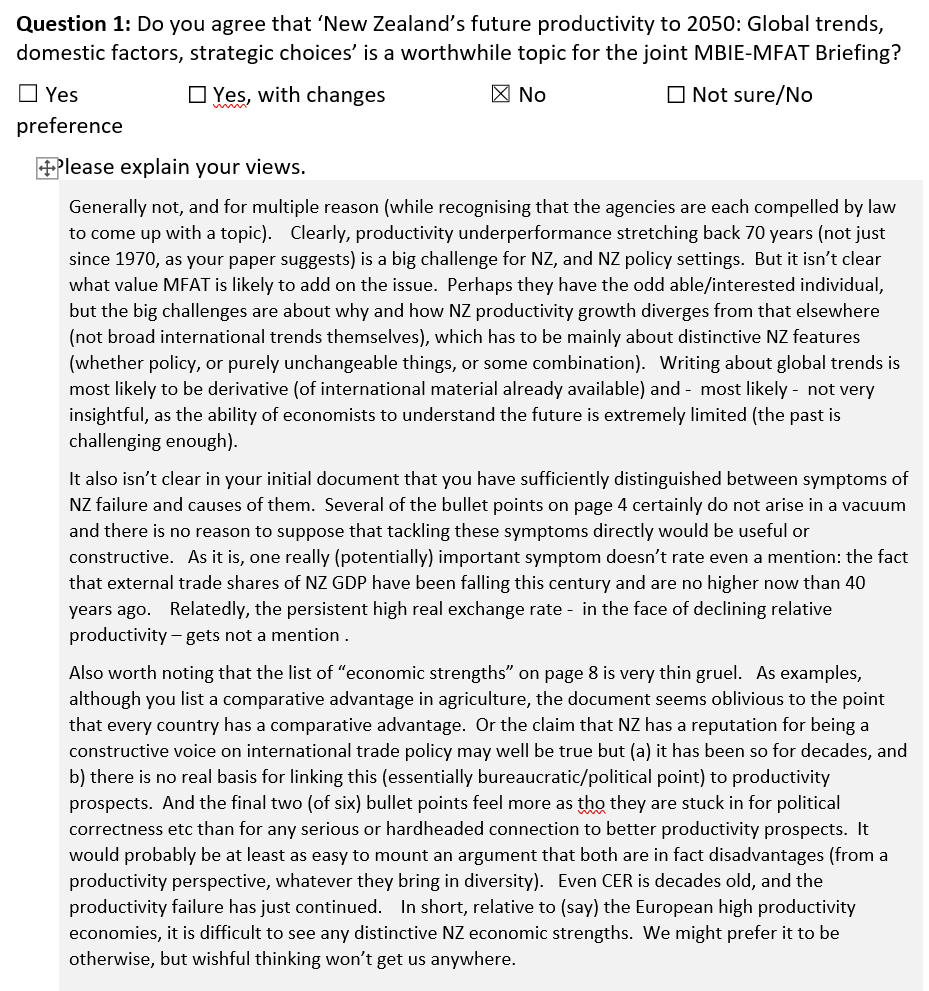
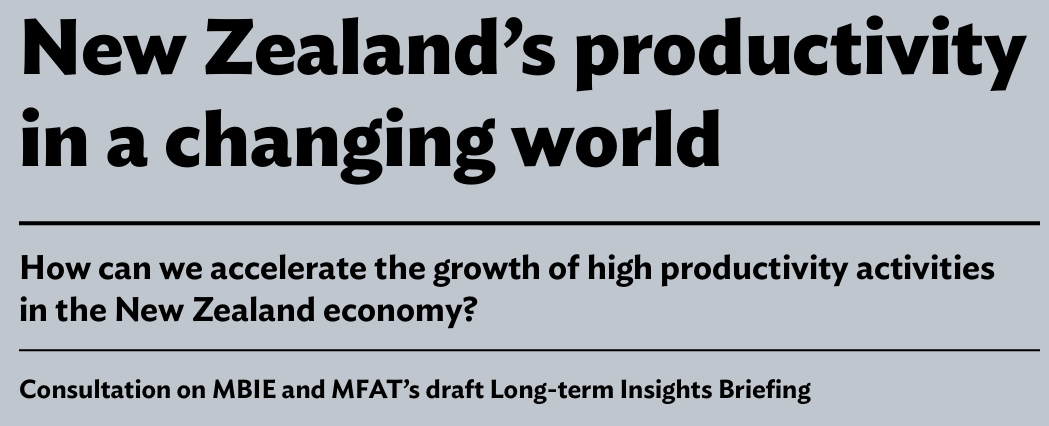
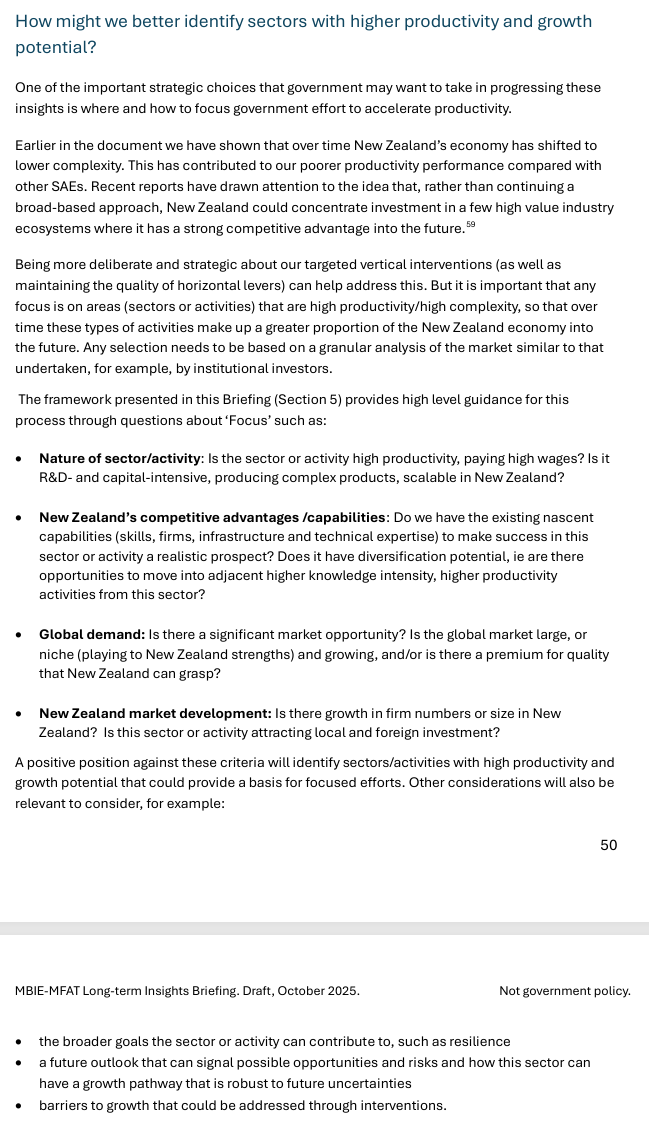
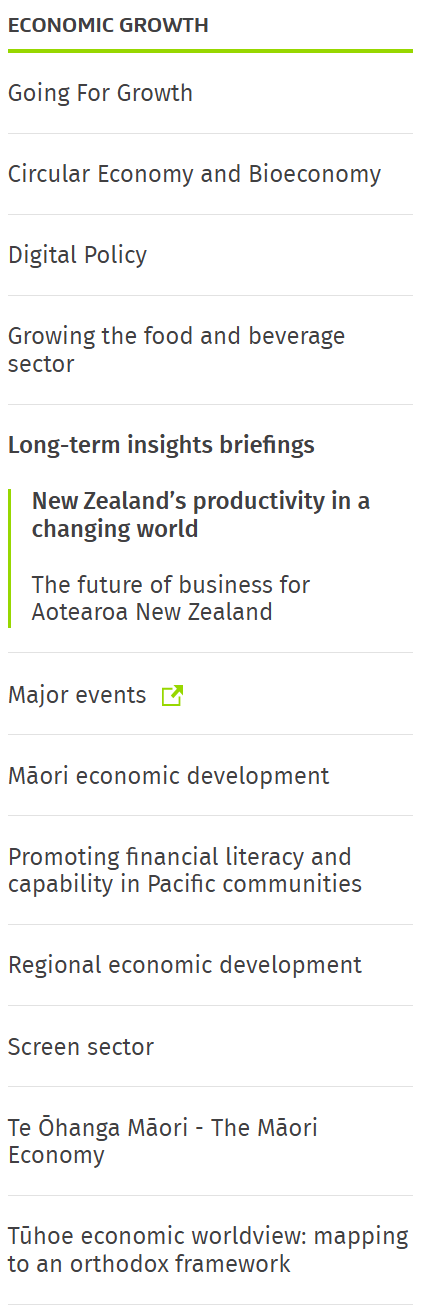
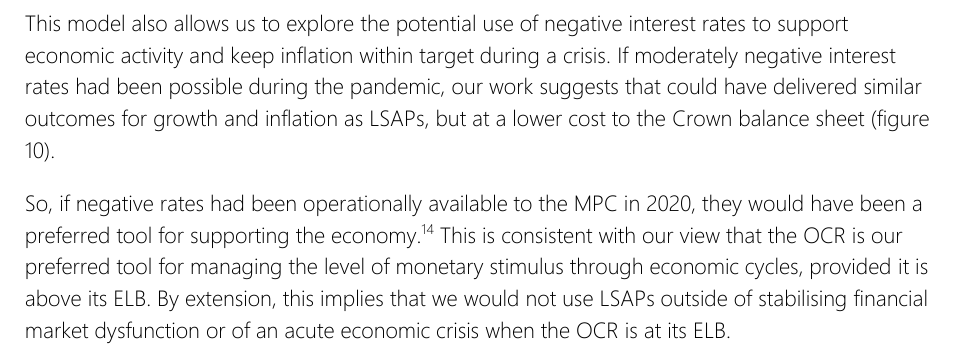
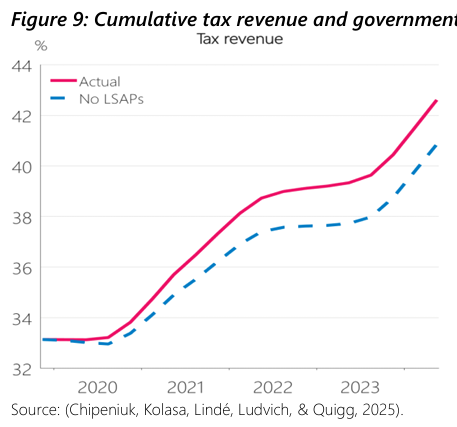
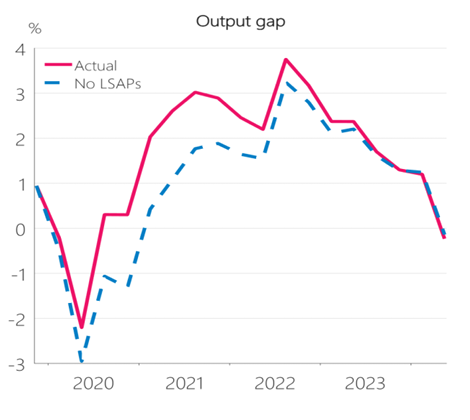
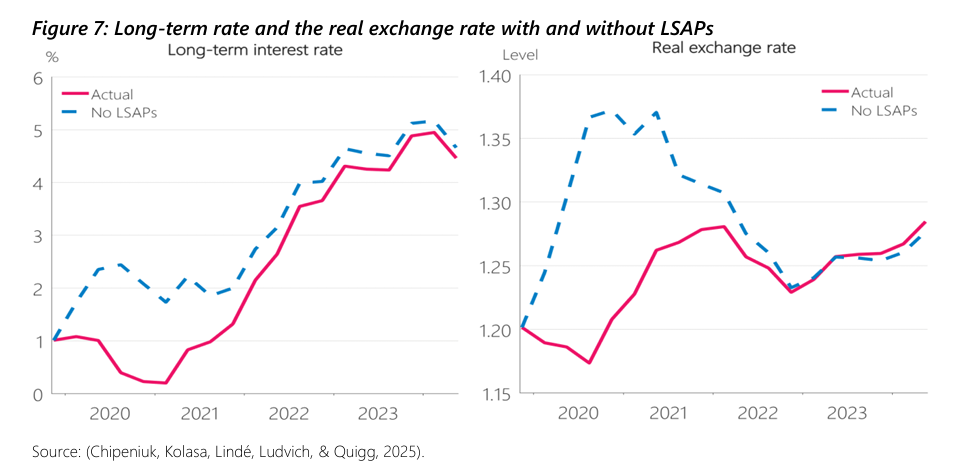
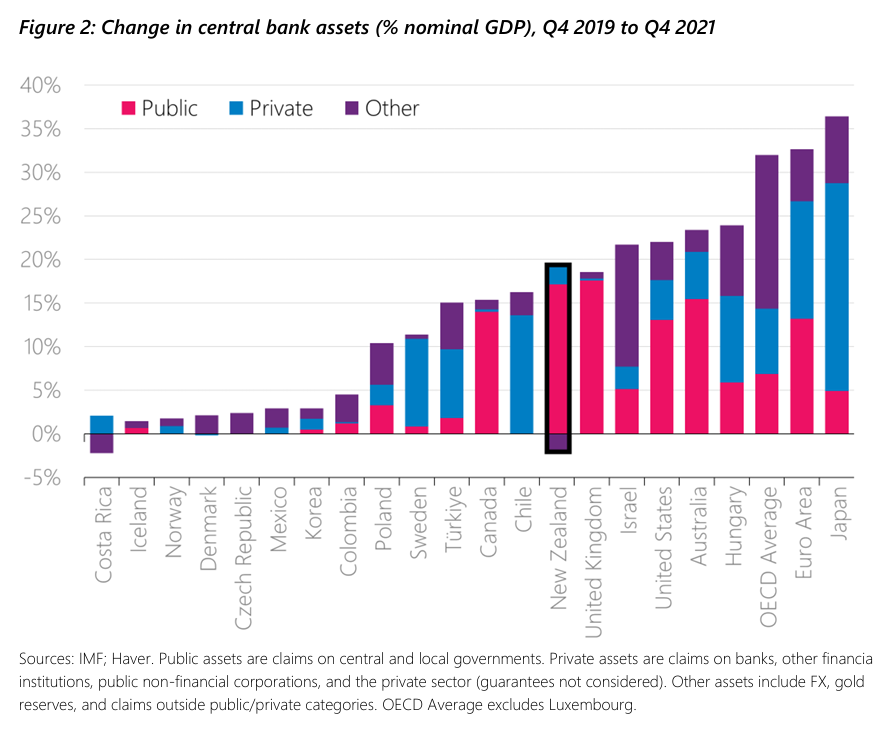
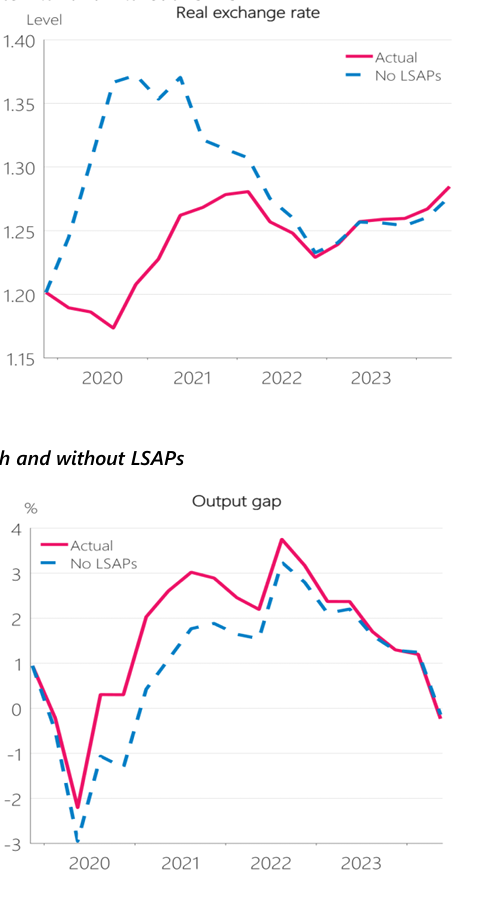
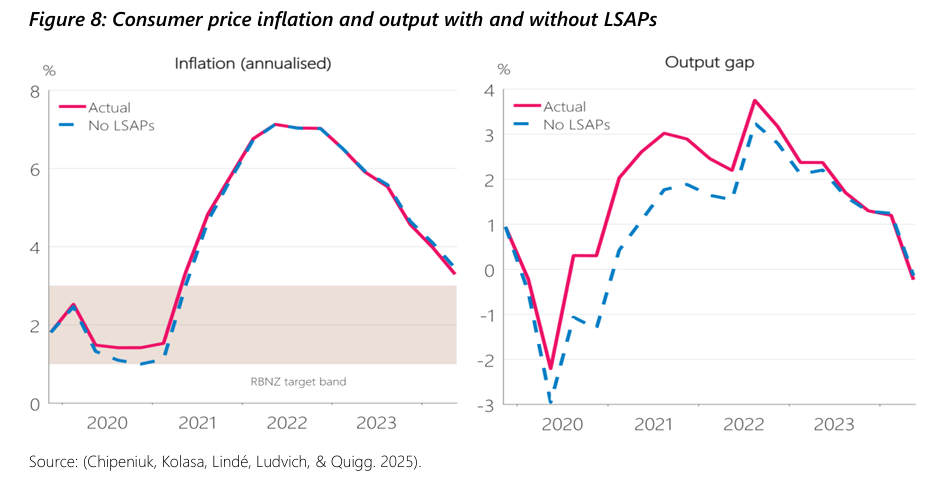

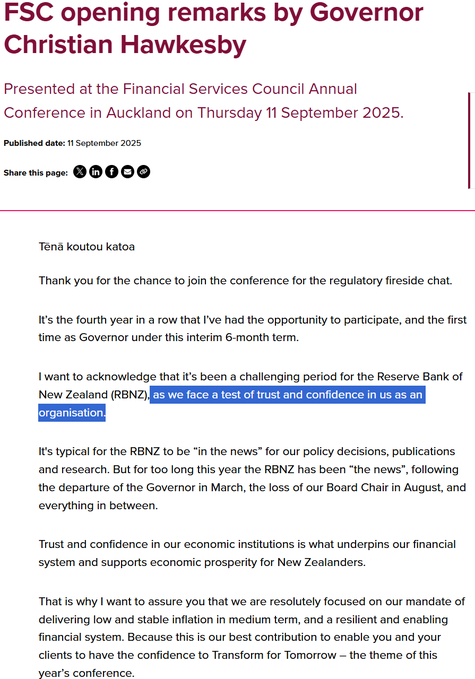
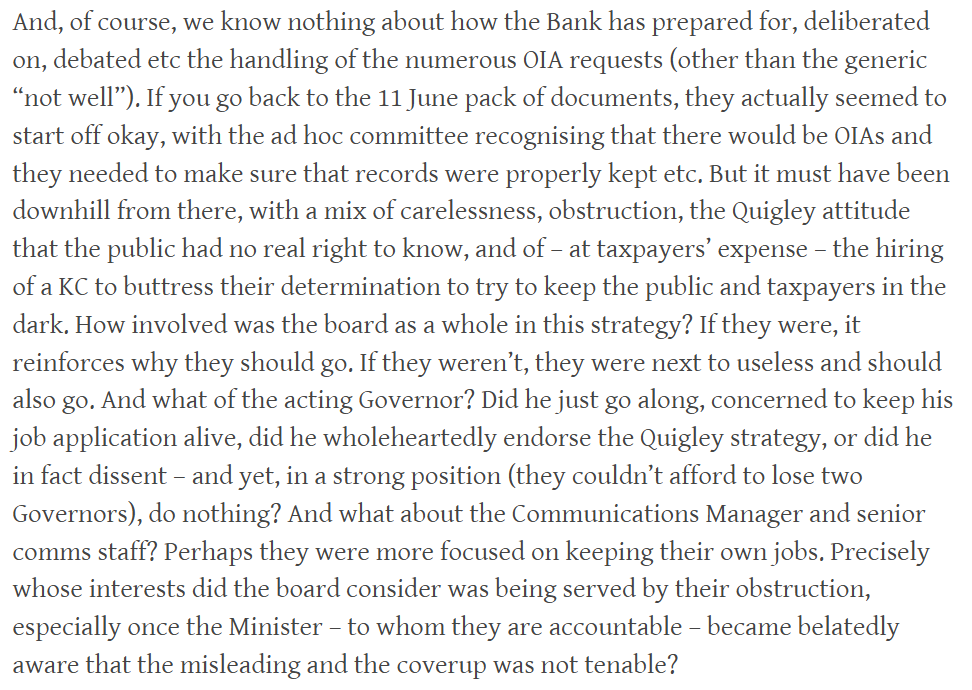
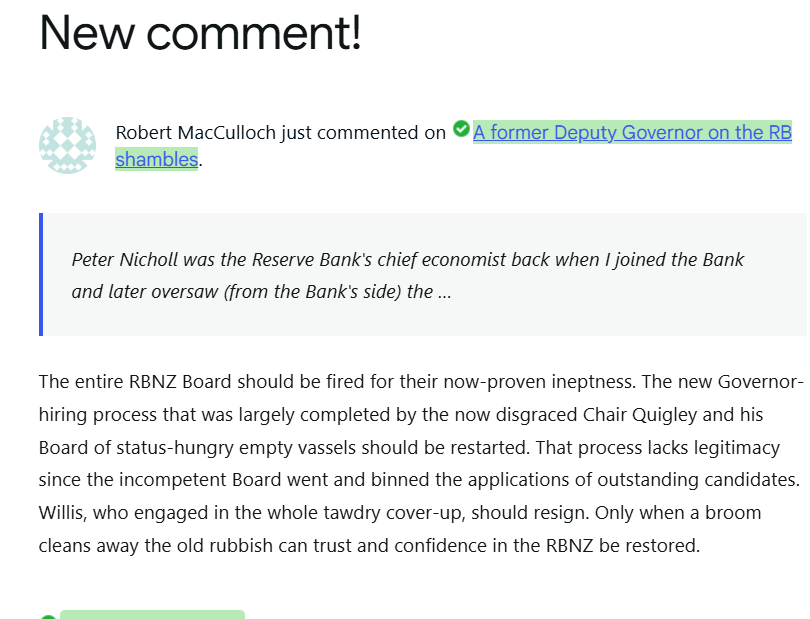
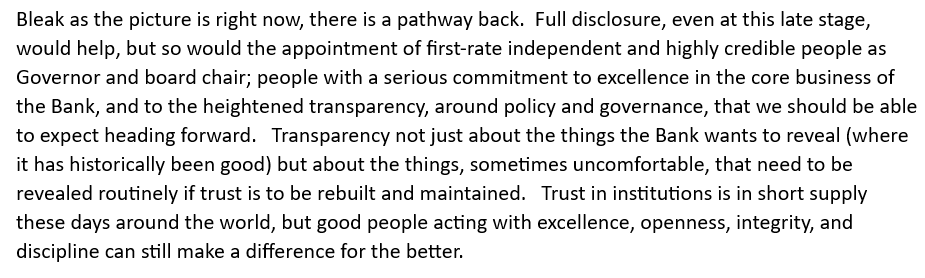
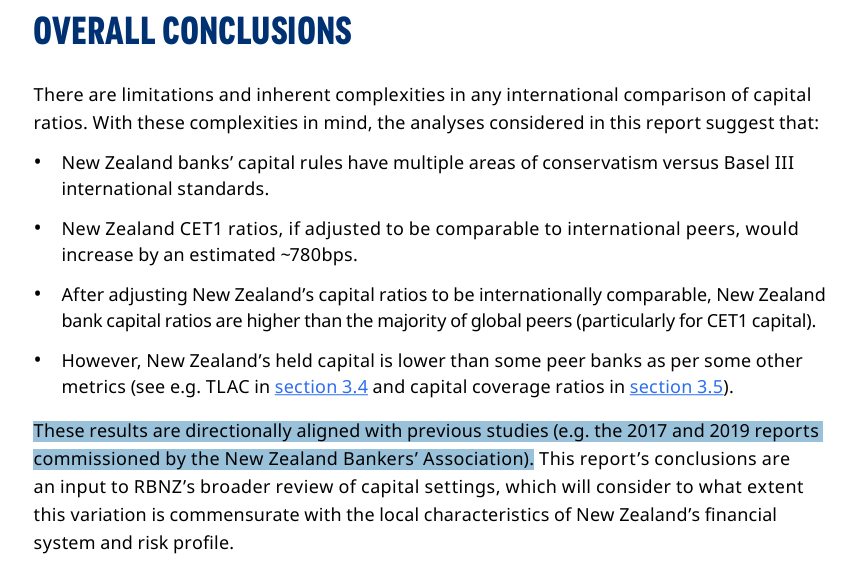



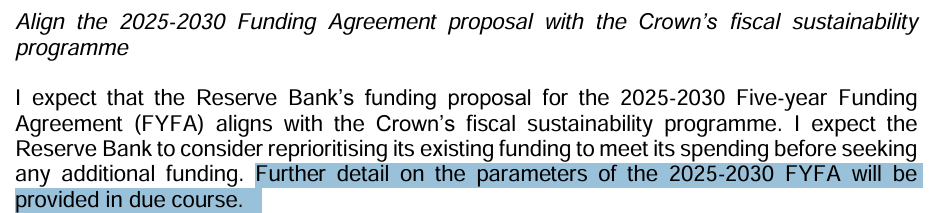
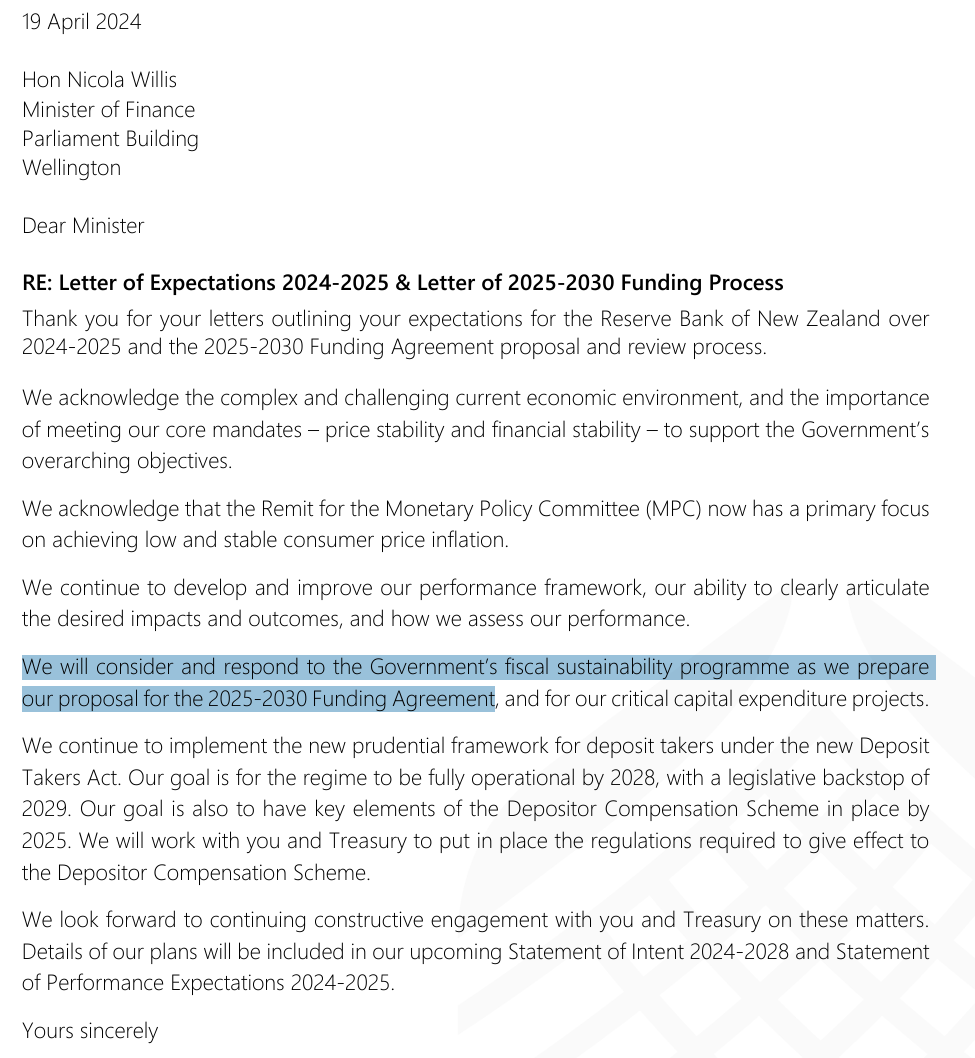
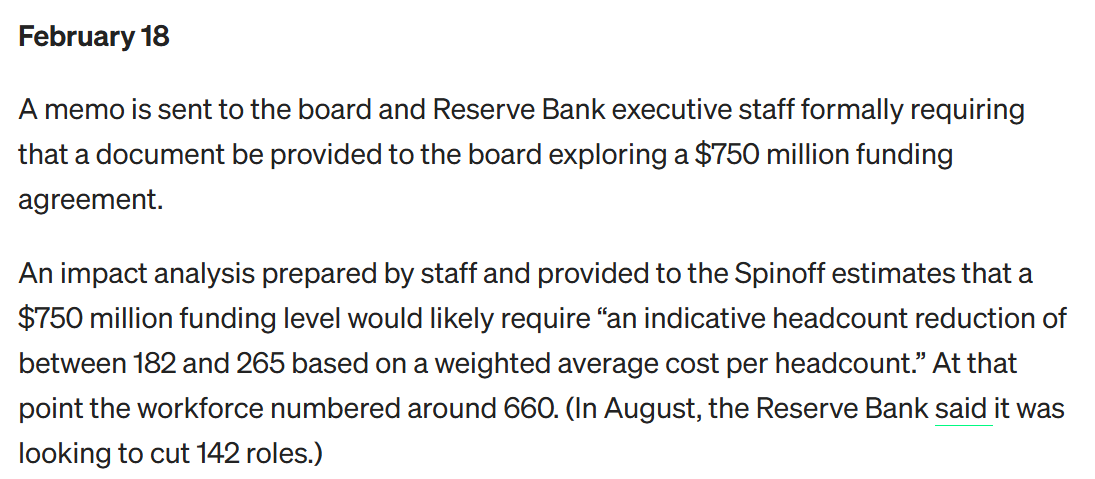
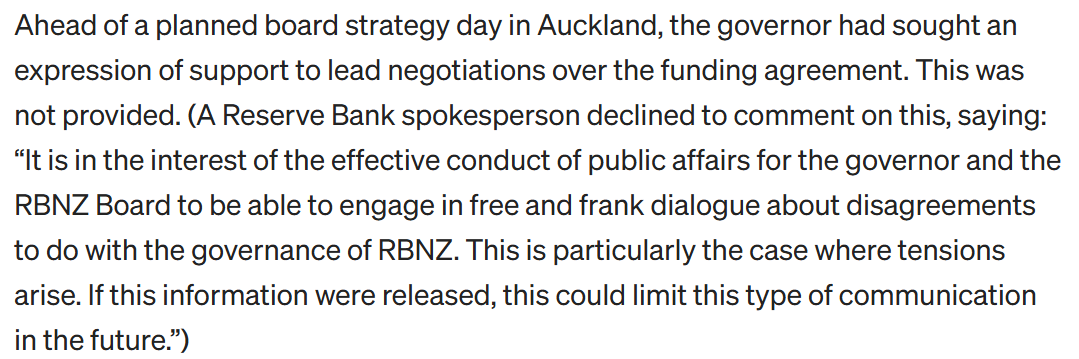



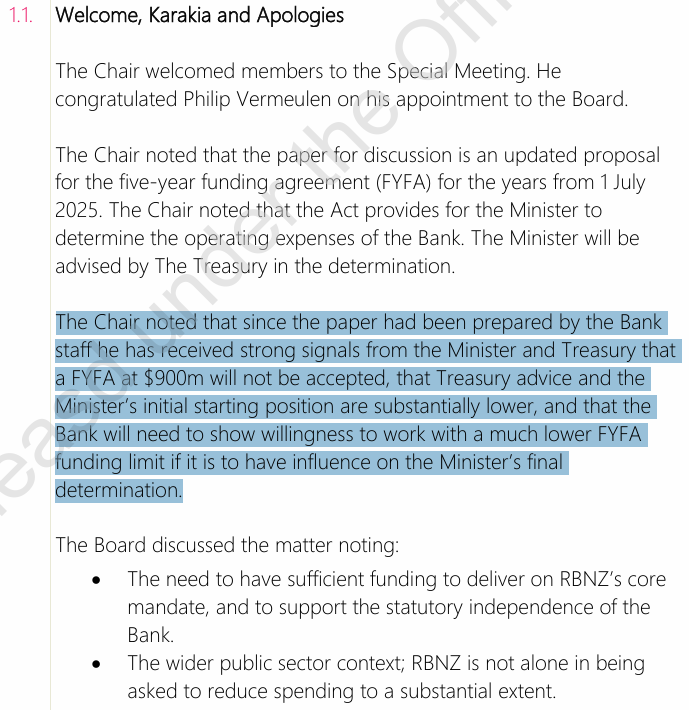
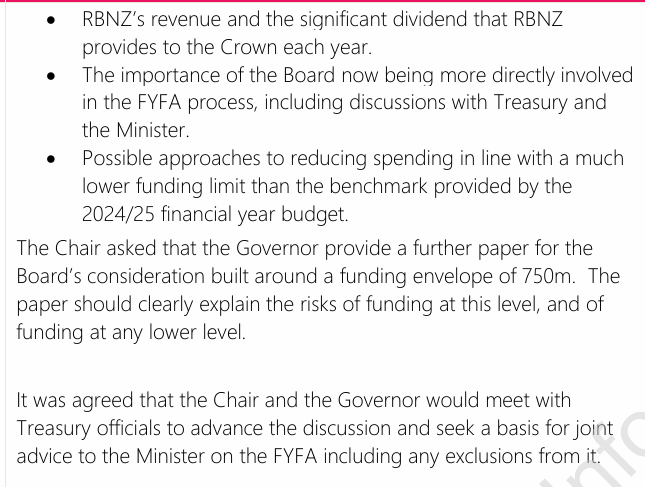
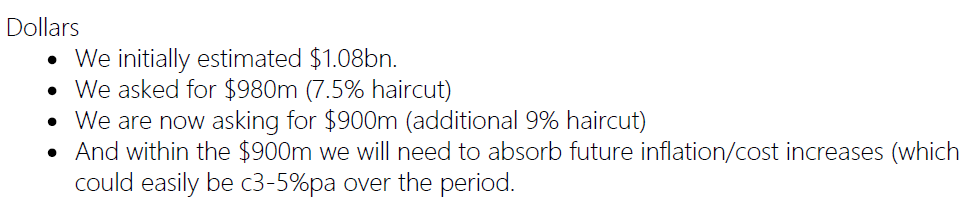

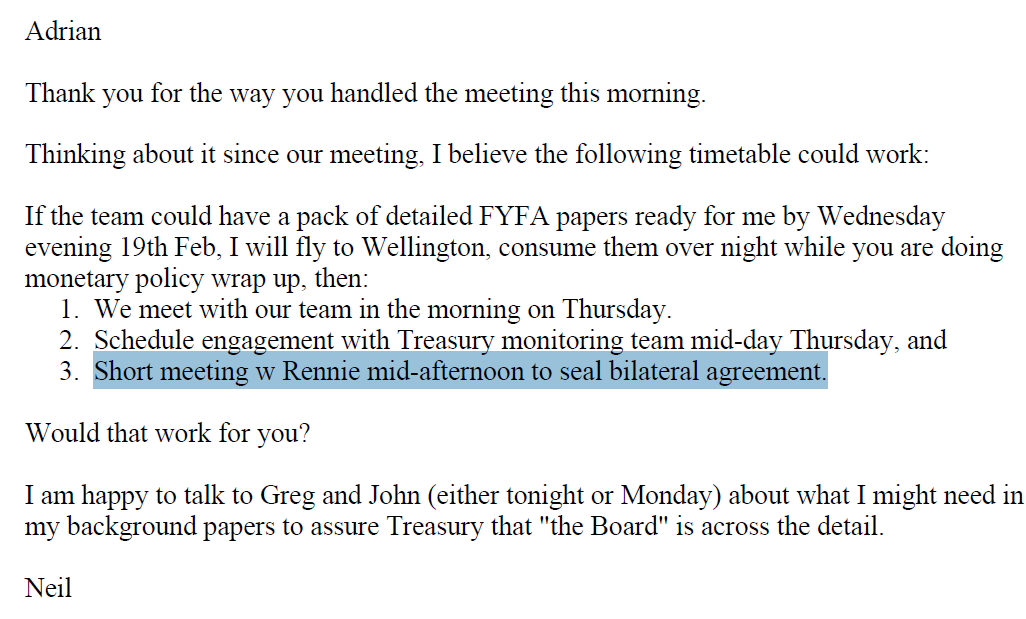
 croaking cassandra