Gift receiving at the Reserve Bank

I was following up something this afternoon, and noticed that the Reserve Bank had posted an OIA response to someone inquiring about gifts accepted by staff.

There is almost two years of data, and the overall list isn’t that long.   I’ve been the recipient of all sorts of, mostly small, things over the years –  often from visiting central bankers or the like, but including the odd corporate box invite, dinners, and so on.   If anything, I’m a little surprised the Reserve Bank’s list isn’t longer –  in my days in the Financial Markets Department, corporate hospitality was part of relationship management, particular for our dealers.   The Bank must have tightened up: there is a surprisingly small number of cases of financial markets staff accepting hospitality etc.

But one element of the list really did catch my eye.  The Reserve Bank supervises banks, non-bank deposit-takers, and insurers: in doing so, it can have a big influence on the businesss of those institutions.    So one of the things that is very important is that the Reserve Bank’s supervisory staff keep a suitable distance from the institutions they are regulating.

On the gifts list, three banks operating in New Zealand showed up.  The first was BNZ, offering hospitality (twice) to Mark Perry, the Reserve Bank head of financial markets (and a former BNZ employee).   Mark won’t be involved in the supervisory or regulatory side of things.  The second was Bank Baroda, which presented a couple of books, which were passed on to the Reserve Bank library.

The bank that showed up most was ICBC.  It showed up seven times, on each occasion offering gifts to people with a direct involvement in bank regulation.   These ranged from a wall-hanging presented to the Governor by the bank chairman from China (not kept personally by the Governor), through to a box of food, cheese boards given to four staff, three note pads and a wireless mouse, a mobile power pack (again not kept by the individual) at the end of a supervisory meeting, and another wall-hanging presented to the Deputy Governor (not kept by him personally) by “ICBC Mr Wang Lin, Secretary of Party Discipline Committee”.

There was also another gift, accepted by the relevant staff, from a foreign bank at a meeting to discuss a possible application for bank registration.

I am not, repeat not, suggesting that any Reserve Bank official will have directly changed their stance on any matter to do with ICBC because of these fairly small gifts.  But appearances matter, and so does substance.   It is simply inappropriate for Reserve Bank staff to be accepting gifts from banks they regulate, no matter how small those gifts are.  Taken together such small gifts can foster an atmosphere that makes the regulator a little less willing to ask hard questions, or to confront problems, than they might need to be.

The Reserve Bank’s rules need to be tightened up and the banks concerned need to be reminded –  in the Governor’s words –  that these are New Zealand registered banks, no matter which country the bank concerned’s shareholders and owners happen to be based in.   Regulators simply shouldn’t be taking gifts from the regulated, not even as a matter of “courtesy”.


Conduct among the regulators

As we know, the Reserve Bank and the Financial Markets Authority have been playing the populist politicians, “demanding” that banks (in particular) prove that they are not guilty of the sort of misconduct coming to light in the Australian Royal Commission.  The Governor had told us he thought New Zealand banks were different, until either he saw which way the political winds were blowing, or saw the FMA getting on the bandwagon and didn’t want to be left behind.  But proving your own innocence is simply not something anyone in a free society should be required to do.

But what about the regulatory agencies themselves?  They don’t deal directly with the general public very much, but if they are mounting their bully pulpits and demanding banks (private businesses) prove themselves, we might first reasonably expect the highest possible standards from them.  After all, the FMA and the Reserve Bank are public institutions; they work for us.

How can you say to your brother, ‘Brother, let me take the speck out of your eye,’ when you yourself fail to see the plank in your own eye? You hypocrite, first take the plank out of your eye, and then you will see clearly to remove the speck from your brother’s eye.

How, for example, do the boards of these institutions handle conflicts of interest?   This is a particularly significant issue for the FMA, where the Board has direct responsibility for all the agency’s decisionmaking (the administration of things like the Financial Markets Conduct Act and associated rules and regulations).  They make decisions directly affecting specific businesses, and interests.

It is less of a direct issue at the Reserve Bank, where the Board itself has few powers.  But Board members are still privy to considerable amounts of inside information, and have preferential access to the ear of the Governor.  The Bank runs a commercial business (NZClear), and has significant property interests (the building on The Terrace) and major commercial contracts around notes and coins.

A few months ago when the Independent Expert Advisory Panel reviewing the Reserve Bank Act reported, they included in their report this reference

114. The Board has a code of conduct. The Panel recommends that this be reviewed in light of the legislative changes.

So I asked for it, lodging a simple request

Please supply me with a copy of the code of conduct.

And the Bank responded quite quickly.   There was, I was told,

no Board document of that name, but the Charter outlines conduct expected of Directors.

The text of the “Charter” is at that previous link.   I’ve written about the so-called charter previously.  But one thing I didn’t notice then –  and recall, they say this document describes expected behaviours of directors –  is that there was nothing dealing with possible conflicts of interests, and how those should be handled.    That seems more than a little surprising.

I’ve previously had minutes of Board meetings released to me under the Official Information Act, and there was no sign in any of them that conflicts of interest are appropriately disclosed, and handled, or rules meaning that no member with a conflict is able to participate in matters relevant to that discussion. For example, one Board member is also a director of an insurance company, and the Bank is prudential regulator of insurers.  The Board, and the Bank, can’t control who ministers appoint to the Board, but they have clear responsibility to manage any conflicts.

I’m not suggesting actual impropriety –  I assume they must (surely?) have some unwritten practices –  but I wonder how they would prove their innocence to some crusading bureaucrat or politician?  Paper trails matter and, as I’ve noted previously, the Board has form in that area, being in clear breach of the Public Records Act in the way it conducts its regular business.  For a government agency, that is pretty clear misconduct.

What of the FMA Board?  They get marks for this explicit statement on their website

The FMA Board recognises conflicts of interest as serious governance issues. The FMA maintains a Board Conflicts Policy which manages how interests are to be disclosed, registered and properly managed in relation to any matter that the FMA is considering.

So I asked specifically for this document, which they released in full a few days ago.

FMA Board Conflicts Policy

For the most part, it looks pretty good. They seem to define conflicts reasonably broadly (at least in some respects), and recognise that such conflicts might arise from the interests and activities of spouses, partners, and children.   There is active requirement to disclose, and an encouragement to be open and broad in applying the policy –  members are even referred to a relevant Supreme Court case.

6. A Member who is interested in a matter:
(a) must not vote or take part in any discussion or decision of the Board or any Committee relating to the matter or otherwise participate in any activity of FMA that relates to the matter;
(b) must not sign any document relating to the entry into of a transaction or the initiation of the matter; and
(c) is to be disregarded for the purpose for forming a quorum for that part of a meeting of the Board or Committee during which a discussion or decision relating to the matter occurs or is made.

And they are required to advise the Minister of any breach of the policy.   I was quite impressed.  Until I came to this, near the end.

The Chairperson may, by prior written notice to the Board permit one or more Members to remain involved in a matter to which they have an interest if the Chairperson is satisfied that it is in the public interest to do so. Such permission may be subject to any condition which the chairperson considers necessary. All such permissions must be disclosed in FMA’s annual report.

Not even a majority of the Board has to agree, just the chair.  How can it ever be appropriate for someone with a conflict of interest to be, or remain, involved in the FMA’s determination of a matter in which they have an interest?  The Board has a range of members, and presumably can call on outside expertise on any matter on which it needs advice.  It seems almost unconceivable that there could be a circumstance in which a person’s contribution was so unique and irreplaceable that they should remain involved despite having declared and established a conflict of interest.    It is, perhaps, some small comfort that any such occasions have to be disclosed in the Annual Report (I didn’t see any in the latest Annual Report) –  but the Annual Report comes out with a considerable lag (and probably isn’t widely read).  Since making this sort of exception isn’t a breach of the rules, it doesn’t even need to be disclosed to the Minister at the time.

That rule, set up by the Board to govern its own conduct, falls well short of the sort of expectations we should have for a powerful public agency.  It should be clear and straightforward: if you have a conflict, you take no further involvement, and go out of your way to stay clear of this issue.  At very least, it is potential misconduct –  inappropriate conduct –  by the Board of the FMA, an institution content to demand that banks prove their innocence.

I could go on.  Compliance with the letter and the spirit of the Official Information Act is one of those standards of conduct we might expect from our regulatory agencies.  The Reserve Bank falls a long way short of the mark on that one (they are, for example, still fighting to keep secret their analysis, from last November, of the extent to which Kiwibuil might crowd out other construction).

And then there were some of the issues I wrote about a couple of weeks ago, whether neither the Bank nor the FMA could reasonably be considered to have met the sort of standard they expect –  under law, or not –  from others.

Misconduct

This week we’ve had the unseemly sight of leading public servants engaged in rank populism, publically demanding private companies prove their innocence of non-specific charges – and not in a court of law, but to the satisfaction of the “prosecutors” themselves, Adrian Orr and Rob Everett (with apparent encouragement from the Minister of Finance).  In the new Governor’s case, it wasn’t as if he’d even managed to keep to the same line from one week to the next: in interviews a couple of weeks ago he wanted us all to know that New Zealand was different and there wasn’t anything to worry about, but by this week he’d jumped on board –  perhaps not wanting to be left out –  with the chief executive of the Financial Markets Authority and was “demanding” answers from banks.

In the Governor’s case, the legislation he works under appears to give him no basis for such actions or demands –  his banking supervision powers are about the maintenance of a “sound and efficient” financial system, not about market conduct.   And independent central bankers –  overmighty citizens at present, with all that power in one man’s hand –  are well advised to stick to their knitting, the powers and responsibilities Parliament has specifically delegated to them.  Cheap populism is a dangerous path to take in pursuit of some faux legitimacy.    I’m much less familiar with the FMA’s statutory powers, but it is pretty unseemly to have public servants leaping into the public domain demanding that private companies justify themselves (with no specific charges or allegations) to them.   We are suppposed to be ruled by laws not by men, and just because Australian-owned banks aren’t overly popular in some quarters doesn’t exempt them from those precepts and protections.

Of course, the Governor and the FMA chief executive playing populism sets up its own equally unappealing set of responses.  The Bankers’ Association has published an open letter they sent back to Orr and Everett which is full of shameless pandering.  There was this

“Ultimately decisions about regulatory responses rightfully rest with you, and you have our commitment that we will support any response”

But

(a) none of this has anything to do with the Reserve Bank and the legislation it operates under,

(b) the FMA does not set its own regulations, but operates under legislation passed by Parliament and regulations promulgated by ministers,

(c) Royal Commissions, a la Australia, are entirely a matter for elected politicians, and

(c) no serious person is going to commit to support just any regulatory response, with no idea what form such responses might take.

There was also this

Proactive agenda of regulators: The New Zealand regulatory framework enables regulators to act dynamically and quickly before issues become significant, compared to the slower, less agile pace witnessed in Australia……We have also seen that foresign and adaptability in RBNZ’s use of loan-to-value lending restrictions, which proved effective in managing the escalating housing market and the associated economic risk.

Let me throw up now.

I’m still in the camp that thinks it inherently unlikely that matrix-managed subsidiaries of Australian parents are doing things that much differently here than in Australia (and, after all, the BNZ’s new chief executive has been part of the NAB Executive Leadership team for the last few years).  But evidence would be a good basis for regulators (those with suitable powers and responsibilities) to start inquiries, not highly-publicised populist fishing expeditions, and the associated slurs.  And evidence needs to go a bit beyond a suggestion that a bank might have suggested their Kiwisaver product to go along with your mortgage or cheque account –  akin to a burger chain encouraging you to consider fries with your burger.  If we must have populism, leave it to the politicians.  We can toss them out.

As I noted the other day, it isn’t as if the Reserve Bank and the FMA have been particularly good at dealing with specific conduct issues, on which they have detailed evidence.    The Reserve Bank’s misconduct –  and the passivity of the FMA –  doesn’t affect tens of thousands of people, but it doesn’t make it any more acceptable.  Perhaps it is a straw in the wind of the way many New Zealand institutions choose to operate?

After writing that post, into my email inbox popped the newsletter of that worthy NGO Transparency International.   Their website proclaims this mission

“A world with trusted integrity systems in which government, politics, business, civil society and the daily lives of people are free of corruption.”

The longserving chair of Transparency’s New Zealand arm is Suzanne Snively.  In this month’s newsletter she writes

The point of transparency and accountability is to strive to do the right thing in all activities.

New Zealand banks and insurance companies have been quick to distance themselves from the evidence found by the hearings before the Royal Commission.

The challenge is that New Zealand’s largest four registered banks – ANZ, ASB, BNZ and Westpac, are subsidiaries of Australia’s four largest banks. AMP is one of New Zealand’s largest insurance companies.

It is naive to believe that the New Zealand system is different without solid evidence. It is not enough to have the industry self-disclose. This after all, is what happened prior to the current Australian inquiry. Only through the process of independent scrutiny have we learnt what really is going on.

and

Based on evidence before the Commission that has to date been made public, much of the misconduct could be regarded as corruption. Corruption is the abuse of entrusted power for private gain.

The best antidote for corruption is the existence of strong integrity systems within organisations. An integrity system refers to the features of the entity’s structure that contribute to its transparency and accountability.

In high integrity organisations, transparency and accountability starts at the top, led by good governance supported by management policy and practice…….

New Zealand can own the leadership position and model good behaviour to the rest of the world.

Those are fine words.  So it is perhaps unfortunate that Ms Snively was closely involved in the abuse (misconduct at least) that I outlined the other day.

Back in the late 80s and early 90s, she was a Board member of the Reserve Bank.   Until the current Reserve Bank Act came into effect in early 1990, the Board was (in effect) the Reserve Bank –  all power and responsibility rested with them, and they delegated any powers they chose to the Governor.  After that, (in law) the Board assumed the current monitoring and accountability role.

The Bank’s Board had an active involvement in the reform of the Bank’s staff superannuation scheme (minutes from that era record substantive ongoing engagement).  Under the trust deed of the scheme, Board consent was required for any changes to the rules.   And a majority of the trustees of the superannuation scheme were either Board members themselves or appointed by the Board.  The then Governor was a trustee (ex officio), and so was Ms Snively.

And this  (extracted from the earlier post) was what happened in 1998, with Ms Snively serving as a Board member and trustee.

Suppose that the rules of a superannuation scheme explicitly required that any rules changes that could have an adverse effect on the interest of any member in that scheme could only be made with the unanimous consent of such members.

Suppose too that nonetheless the trustees of such a scheme went ahead and changed the rules of a defined benefit scheme in a way that allowed the employer to arbitrarily (ie no constraints at all) reduce the rate at which pension benefits were calculated (including in respect of periods of employment, and employee contributions, prior to the rule change).  No consent from potentially affected members was sought for this change.

Suppose that in making this change, they had the endorsement/consent of the board of directors of the employer, and of the chief executive of the organisation.

Suppose too that that new power was actually exercised by the employer, in a way which led to longstanding employees later retiring with pensions considerably lower than they would otherwise have been.  That represented a substantial wealth transfer (probably millions of dollars) to the employer.

It was an egregious abuse of power, and a betrayal of the trust responsibilities to members that all trustees had.

This wasn’t the only shady item during Ms Snively’s term as a government-appointed Board member, and as a trustee.   In 1991, a rule change was made to the scheme (not much more than a single line in a big package of changes).  It was done very late in the piece, with no consultation with members.   To this day, people argue whether it made anyone worse off, but under the law –  the Superannuation Schemes Act –  any rule changes were required to be advised in writing to members.  That simply wasn’t done.  It was an offence under the Act –  for which, fortunately for the trustees of the day, including Ms Snively, the statute of limitations has long since expired.  This point isn’t contentious: today’s trustees a few years ago issued a formal apology to members for that breach.

There is also reason to doubt that the rule change itself was ever properly made (consciously approved by the Board and trustees).  In fact, one trustee from that period has sworn an affadavit that he had no knowledge of the change (although he signed each page of the fairly-lengthy revised deed), suggesting questionable behaviour by Reserve Bank senior management.

Good governance when Ms Snively was on the Board and the trustees also appears to have involved the same law firm  (same lawyer) advising the trustees as was advising the Reserve Bank itself, despite the manifold potential for conflicts between the interests of members and those of the Bank.

These particular episodes occurred a long time ago (although, to the extent there was misconduct, the effects are still felt today –  that is nature of locked-in long-term retirement savings vehicles, one of the reasons there is a case for regulation).  And Ms Snively hasn’t been on the Board or a trustee for a long time.   But I understand that these issues were brought to her attention a few years ago, and she apparently displayed no interest in either getting to the bottom of them, or exerting the sort of moral suasion one might expect from someone who is head of Transparency International.

And it isn’t as if she is now completely detached from all things to do with the Reserve Bank.  A few months ago the new government appointed Ms Snively to head an Independent Expert Advisory Panel, listing as the first item that qualified her her former role as a director of the Reserve Bank.  She continues to play, apparently, a lead role in advising the government on the reform of the Reserve Bank Act, including the (rather large) chunks governing the Bank’s financial regulatory powers.

No doubt she has no legal powers or entitlements at this stage.  But part of leadership is a willingness to take a stand, to seek to exert some moral authority.  And particularly when you yourself are directly complicit in some institutional misconduct from years ago, all while now leading the cause of integrity in public life, one might have hoped –  perhaps might still hope? –  for more.  Integrity sometimes involves going the second mile; it isn’t just a matter of systems, processes, and bureaucratic procedures, or the attempted cover of “oh, I’ve moved on”.

Much the same might be said of today’s Reserve Bank Board.  They appoint a majority of the trustees, they appoint the chair of trustees, they have to give consent to any rule changes.  Until 2013 the then chair of the Board served as a trustee.  They are fully aware of all these issues, and until very recently the Governor himself served as a trustee.  But the Board seem to have seen their role as providing cover for the Governor, rather than ensuring that the right thing is done, and that past abuses are corrected, not kicked for touch, hoping the injured parties would just go away.   That sounds like the sort of misconduct –  not illegal, but not the sort of approach we should expect from ministerial-appointed people, explicitly there to hold management to account –  the authorities might make a start on.  There is, after all, something concrete to go on there, even if it doesn’t make such good headlines.

Perhaps the Reserve Bank (and the FMA) should heal themselves

Suppose that the rules of a superannuation scheme explicitly required that any rules changes that could have an adverse effect on the interest of any member in that scheme could only be made with the unanimous consent of such members.

Suppose too that nonetheless the trustees of such a scheme went ahead and changed the rules of a defined benefit scheme in a way that allowed the employer to arbitrarily (ie no constraints at all) reduce the rate at which pension benefits were calculated (including in respect of periods of employment, and employee contributions, prior to the rule change).  No consent from potentially affected members was sought for this change.

Suppose that in making this change, they had the endorsement/consent of the board of directors of the employer, and of the chief executive of the organisation.

Suppose too that that new power was actually exercised by the employer, in a way which led to longstanding employees later retiring with pensions considerably lower than they would otherwise have been.  That represented a substantial wealth transfer (probably millions of dollars) to the employer.

And suppose that the Government Actuary had been required to give consent to such a rule change, and in fact did so.

That looks to me a lot like serious misconduct, quite possibly illegality.

And who are the players in this tawdry drama?

Well, there was the Government Actuary, a task now absorbed by the Financial Markets Authority.

And there was the Reserve Bank of New Zealand, its Governor (appointed by the then Minister of Finance), and its Board (all appointed by the then Minister of Finance).  Serving on both the board, and the trustees of this superannuation scheme, was the Governor, and someone who is now chair of the New Zealand arm of Transparency International, an NGO allegedly committed to good governance etc.

The initial misconduct happened quite long time ago.  In 1988 in fact.    But for years now some members have been trying to get redress, and even recognition of the problem.  It has been going for sufficiently long that when Adrian Orr was last at the Bank –  as Deputy Governor and Head of Financial Stability –  he was involved, fobbing off concerns raised by some of his own staff.

Four years ago, a particularly persistent member formally raised the issues (the one I’ve outlined here isn’t the only example, although is probably the most serious) with the trustees of the superannuation scheme.  The initial response of the Board-appointed chair (and current Deputy Governor and Head of Financial Stability) was to attempt to close the issues down immediately, without undertaking any investigation. I guess if you don’t turn over stones, there is no risk of finding awkward stuff under them.  Fortunately, other trustees stymied that bid.

After a couple of years’ delay, the trustees somewhat reluctantly came to the view that probably member consent should have sought, and that the decision not to have done so was not necessarily one they themselves would today have made.  But………they weren’t going to do anything at all about rectifying the situation, claiming (on grounds almost totally without foundation) that no one had actually been adversely affected.  These are trustees who, by common law and now by statute, are required to operate in the interests of the members of the scheme (beneficiaries of the trust).  But who could easily have been misinterpreted as operating in the interests of the Reserve Bank (a majority of trustees appointed by the Reserve Bank Board –  the entity that has spent the last few decades providing cover for Bank management).  Under the (relatively) new Financial Markets Conduct Act, superannuation schemes are now required to have an independent trustee –  the one on the Reserve Bank scheme (whatever his other useful contributions) declared early on that he had no desire to be caught in the middle trying to sort out such difficult issues, and (from my memory) has barely uttered a word in all the debates since about these issues.

And what of the FMA?  It is now must be almost a couple of years since the member elevated the issue to the FMA, lodging a formal complaint with them.    And since then the FMA appears to have done almost nothing (there was a meeting with the trustees well over a year ago, but it involved little more than description of the issue –  and at the time the FMA themselves didn’t even seem to have a good grasp on their own act).   Perhaps it is typical for the FMA?  I don’t have anything else to do with them, so have no basis for knowing.  Perhaps there are legal constraints (old legislation) on their ability to actually do anything formally.  But there has been no informal action, moral suasion, either.   Indeed, their inaction could be easily be misinterpreted as having something to do with the fact that the organisation itself (as the Government Actuary) had signed off on the, almost certainly unlawful, rule change.  And perhaps too from the sheer awkwardness of having to investigate serious concerns about an entity associated with their fellow regulator, the Reserve Bank, an entity then chaired by someone who is now Head of Financial Stability (Bascand is no longer the chair, but is still a trustee).  Or from signs that the independent trustee regime they administer seems to be adding only overhead.

I don’t want to bore readers with the details of this particular tawdry episode.

But when we have the new Governor  –  with legislative responsibility only for prudential issues –  lurching from two weeks ago suggesting there were no particular conduct issues in New Zealand, because we had a quite different culture, to last week suggesting that it really wasn’t his call (on an inquiry) but he was sure banks were examining themselves, to news this morning that he and the FMA head had summoned the heads of the big banks to a meeting, demanding they prove a negative (that there is no “misconduct” going on), and (in the FMA head’s case) apparently threatening legal action against those who don’t cooperate, I could only think

Physician heal thyself

or continuing the biblical theme

And why do you look at the speck in your brother’s eye, but do not consider the plank in your own eye? Or how can you say to your brother, ‘Let me remove the speck from your eye’; and look, a plank is in your own eye? Hypocrite! First remove the plank from your own eye, and then you will see clearly to remove the speck from your brother’s eye.

(As background, I am both a member and an elected trustee of this superannuation scheme. I have recorded in the minutes my dissent from the majority view of trustees, and have expressed my own concerns directly to the FMA.  As I joined the Bank, and the scheme, not long before this particular questionable rule change was made, it probably did not materially adversely affect me.)

LVR limits revisited

The Reserve Bank was out the other day with some research on the impact on house prices of the successive waves of loan to value limit restrictions put in place from 2013 to 2016.     It was a rare Reserve Bank discussion paper –  pieces typically designed to end up in a journal publication –  to get some media attention.   That was, no doubt, because of the rather bold claims made in the non-technical summary to the paper

Overall, we estimate that the LVR policies reduced house price pressures by almost 50 percent. ,,,,, When it becomes binding, LVR policy can be very effective in curbing housing prices.

Since nationwide average house prices (QV index measure) increased by about 40 per cent over the four years from September 2013 (just prior to the first LVR restrictions coming into effect) to September 2017), you might reasonably suppose that the researchers were suggesting that, all else equal, LVR restrictions had lowered house prices by almost 40 per cent (in other words, without them house prices would have increased by around 80 per cent).  Of course, that isn’t what they are claiming at all.

The paper was written by several researchers in the Bank’s Economics Department (two of whom appear to have since moved on to other things), and carries the usual disclaimer of not necessarily representing the views of the Bank itself.  Nonetheless, on an issue as contentious as LVRs, it seems safe to assume that senior policy and communications people will have been all over the communications of the results.  Even if the Governor himself didn’t see it, or devote any time to it, it seems likely this paper carries the effective imprimatur of the Assistant Governor  (Head of Economics),  the Deputy Governor (Head of Financial Stability) and (at least in the bottom line messages) the Head of Communications too.

In the paper, the authors attempt to identify the impact of the various waves of LVR controls using (a) highly-disaggregated data on property sales, and (b) the fact that shortly after the first LVR restrictions were put in place, the Bank buckled to political and industry pressure and exempted lending for new builds from the controls (even though, generally, such lending is riskier than that on existing properties).  By looking at the relationship between prices of new and existing properties before and after the various adjustments to LVR limits, they hope to provide an estimate of the effect on existing house prices of the LVR controls.

Trying to identify the statistical effects of things like LVR controls is hard, but I’m a bit sceptical of this proposed new approach.  After all, if new and existing houses were fully substitutable a new regulatory intervention of this sort could be expected to affect prices of both more or less equally.  People who were more credit-constrained (by the restrictions) would switch to buying new houses, and those who less affected by the contros (eg cash buyers) would switch more to existing houses.

In practice, of course, the two aren’t fully substitutable, for various reasons (including that most new builds are occurring in different locations –  even in the same TLA – than most existing houses), but in the Reserve Bank research paper I didn’t see any discussion of the issue at all.  If there is no substitutability at all then the research approach looks as though it should be reasonable, but that seems unlikely too.

But I’m more interested in whether the reported results are anywhere near as impressive as the authors claim.

As a reminder, here is their chart of house price inflation developments, with the various LVR interventions marked.

LVR1

And here is their summary table of those successive interventions.

LVR2.png

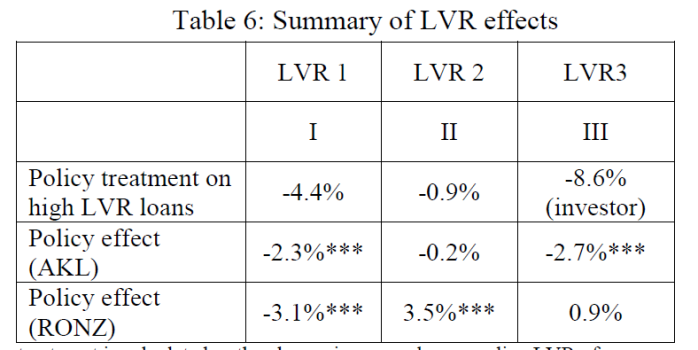
And here is their summary table of the impact of these LVR adjustments on house prices, as estimated from their model.

LVR3

My focus is on the last two lines of the table: the estimated percentage effect on the various different intervention on existing house prices in Auckland and the rest of New Zealand  (the three asterisks suggest that the results are highly statistically significant).

Take the initial LVR controls first (which had the added effect of being something out of the blue, shock effects of a tool never previously used in New Zealand).  Recall too that, at the time, the big concern was about Auckland house prices and associated financial stability risks.    On this particular set of model estimates, the effect on house prices outside Auckland –  where there wasn’t a particular problem –  was larger than the effect inside Auckland.  In both cases, the effect (2 to 3 per cent) isn’t much different to previous estimates, or (indeed) to the sorts of numbers that were being tossed around internally before the controls were imposed.  It was generally expected that the controls would have a temporarily disruptive effect, lowering house prices for a while, but the effects would wear off over the following few years. (There are some model estimates on page 9 of this paper the Bank published in 2013.)

And what about the second wave of controls (which tightened financing restrictions on investors in Auckland, and eased them for everyone outside Auckland)?  On these latest estimates, those restrictions had no discernible impact on prices in the Auckland market at all, even though they were avowedly put in place because of explicit gubernatorial concerns about investor property lending in Auckland.  On, on the other hand, the moderate easing in the rules outside Auckland was so potent that it full unwound the price effects of the first wave of controls.

And, finally, the third wave of controls.  These represented a substantial tightening in investor-finance restrictions (especially outside Auckland), and a reversal in the easing (in wave 2) of the owner-occupier financing restrictions outside Auckland.   And yet, even though the rule changes were materially larger for borrowers outside Auckland, there is no estimated effect on house prices outside Auckland at all (even though, in wave 2 the easing in owner-occupier restrictions, now reversed, was supposed to have had a large effect).  And although the Auckland rule changes are smaller those outside there is no estimated effect on Auckland prices at all.  These results aren’t very plausible and suggest that – even if the results are statistically significant –  the strategy they used to identify the effect on prices isn’t that good.

One could also note that if one added up the effects across the three columns (which isn’t kosher, but still…….) the total effect outside Auckland is basically zero (actually slightly positive).  Even in Auckland, the total is about 5 per cent.

One of the reasons why simply adding up the estimated effects isn’t kosher is because everyone has always recognised that LVR restrictions are unlikely to have long-term effects on house prices.  They disrupt established established financing patterns, and thus can dampen house prices a bit in the short-term, but the effects dissipate with time.

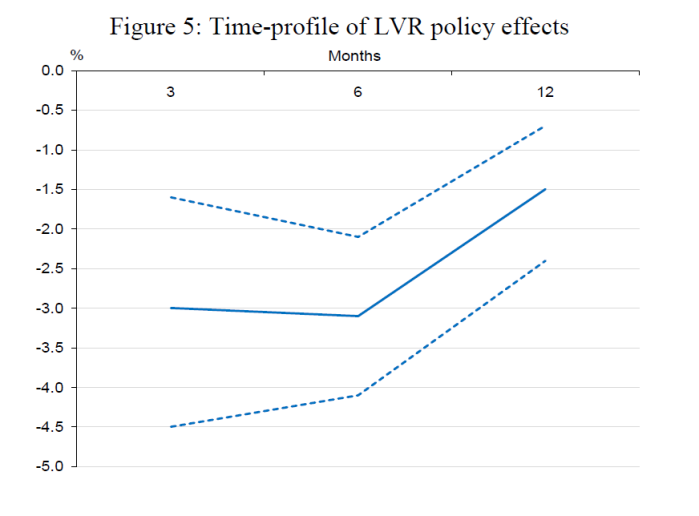
In fact, the Reserve Bank researchers illustrate exactly that point in this chart which (if I’m reading them correctly) relates to the first wave of LVR controls.

LVR4

As the authors themselves observe

Figure 5 plots the point estimates with 95 percent confidence intervals. Overall, the effect of the first LVR policy on house prices occurs within the first three months and is relatively stable over a six-month period. Thereafter, the moderating effect declines somewhat (to around 1.5 percent after 12 months), perhaps owing in part to individuals having saved up the required deposit under the policy and a price differential having opened up between existing and newly built houses.

Any substantial effects on house prices don’t seem to last long.

To be fair to the Bank, and the former Governor, they never claimed house price effects would last for long.  The argument was that LVR restrictions reduced financial system risks by altering the composition of bank balance sheets.  That is another contentious claim, but it isn’t touched on in the current paper and so I won’t deal with it further here either.

So what led them to write (and their bosses to approve) the extravagant claim that LVR policies reduced house price pressures by almost 50 per cent?    It seems to be this

The moderating effect of LVR 3 was clearly seen in Auckland with a 2.7 percent reduction in house prices. This LVR 3 effect is both statistically and economically significant, as during the same period the average house price increased by 5.8 percent.

Overall, we estimate that the LVR policies reduced house price pressures by almost 50 percent.

But

  • as the table above shows, there was no estimated effect on all (from LVR3) outside Auckland,
  • even inside Auckland, and granting their estimates, 2.7 per cent is under a third of pre-LVR price increases during that specific period (the 5.8 per cent that happened anyway, plus the 2.7 per cent they claim to have reduced prices by).
  • as the chart aboves shows, on their own estimates, the dampening effects of LVR controls seem to dissipate relatively quickly (in that case half of the effect had unwound within 12 months).
  • the estimate seems to take no account of the ongoing house price inflation outside the arbitrarily chosen period they measure.

Contrary to their claims, LVR policy is not very effective in curbing house prices.  Indeed, its staunchest advocates never really claimed otherwise (for them it was mostly about financial stability), which does leave one wondering why today’s Reserve Bank management are publishing such overblown (and undersupported) claims to be made.  As I noted earlier, over a period when nationwide house prices rose by about 40 per cent, this latest model suggests no sustained impact at all on house prices outside Auckland –  despite significant interruptions to established financial structures and effective property rights –  and probably quite limited effects in Auckland too.

Overblown claims about what LVR controls can do for house prices (especially with no discussion at all of efficiency/distributional costs etc) risk distracting attention from the real regulatory failures that explains the dysfunctional housing market.  And they also detracting from the credibility of the Reserve Bank, whose legitimacy depends in part of being authoritative when it speaks.


A mis-step by the new Governor

Seventeen years ago, in August 2001, then Reserve Bank Governor, Don Brash gave a speech to something called the Knowledge Wave conference, sponsored by Auckland university.  The speech had the title Faster growth? If we want it (at the link  for some reason it says the speech was given by Alan Bollard, who was Secretary to the Treasury at the time, but it was certainly a Brash effort –  here is the link to the version on his website ).   The speech drew a great deal of flak.  It was two years into the term of the Labour-Alliance government, and it had nothing much to do with monetary policy or financial stability (the Bank’s responsibilities), and instead offered the Governor’s views on what could or should be done to lift New Zealand’s economic performance.

According to the Governor, our culture was a big part of the problem

we seem to have some deeply-engrained cultural characteristics which are not conducive to rapid growth – surprisingly widespread disdain for commercial success, no strong passion for education, and a tendency to look for immediate gratification (as reflected in our very low savings rate and strong interest in leisure) – and it usually takes years, and perhaps generations, to change such cultural characteristics.

and the welfare system

does the present welfare system – with largely unrestricted access to benefits of indefinite duration, and with a very high effective marginal tax rate for those moving from dependence on such benefits into paid employment – provide appropriate incentives to acquire education and skills and to find employment?

we will not achieve a radical improvement in our economic growth rate while we have to provide income support to more than 350,000 people of working age – 60,000 more than when unemployment reached its post-World-War-II peak in the early nineties – to say nothing of the 450,000 people who derive most of their income from New Zealand Superannuation.


Could we, for example, drop all benefits to the able-bodied and scrap the statutory minimum wage, so that pay rates could fall to the point where the labour market fully clears, but simultaneously introduce a form of negative income tax to sustain total incomes at a socially-acceptable level? Could we introduce some kind of life-time limit on the period during which an able-bodied individual could claim benefits from the state? Could we, perhaps, gradually raise the age at which people become eligible for New Zealand Superannuation, reflecting the gradual increase in life expectancy and improved health among the elderly? One of my colleagues has suggested the idea of abolishing the unemployment benefit but introducing some kind of “employer of last resort” system, perhaps run by local authorities with support from central government, under which every local authority would be required to offer daily employment to anybody and everybody who asked for it.

and our schools

It must be a source of grave concern that so many of the people coming out of our high schools have only the most rudimentary idea of how to write grammatical English; and that while Singapore, South Korea, Taiwan, and Hong Kong occupied the top four places for mathematics in the Third International Maths and Science Study, New Zealand ranked only 21st (out of the 38 countries in the study). It can not be good for our economic growth, or for the employment prospects of many of our young people, that, according to an OECD report released in April 1998, nearly half of the workforce in New Zealand can not read well enough to work effectively in the modern economy. It must be a matter for particular concern that 70 per cent of Maori New Zealanders, and about three-quarters of Pacific Island New Zealanders, are functioning “below the level of competence in literacy required to effectively meet the demands of everyday life”.

and excessive regulation

Businesses saw the biggest single problem as the way in which the Resource Management Act was being implemented, and described dealing with that legislation as being “cumbersome, costly and complex”. It should not require two years to get all the approvals needed to set up an early child-care facility catering for only 30 children, or ministerial intervention to cut through the red-tape involved in setting up a boat-building yard. Most of us know similar horror stories.

and our tax system

Another matter relevant to how we might encourage more investment in physical capital is the tax regime. Do we need a substantial change in the tax structure to encourage investment in New Zealand by New Zealanders, by immigrants, and by foreign companies? And if so, what might that change look like? This isn’t the place to go into detail, but it would probably involve a significant reduction in the corporate tax rate (it is disturbing that New Zealand’s corporate tax rate is now the highest in the Asian region). The rate of company tax is rarely the only factor determining the location of a new investment, and indeed it is not often even the dominant factor. But it is a relevant factor, and is one of the issues to look at if we are serious about encouraging more investment in New Zealand.

There were some interesting ideas in the speech. I probably agreed with quite a few of them (I was one of those who gave comments on the draft text, which was even more radical and provocative).  It brought to mind comments about ‘save it for your  retirement”, or “stand for Parliament and make your case” –  which of course Don did a few months later.  But whether you agreed with him or not, whether the government of the day agreed with him or not, it just wasn’t appropriate for an incumbent Reserve Bank Governor.

The Governor is entrusted with a great deal of discretionary power in a limited number of areas.  Citizens need to be confident that the Governor is operating in the public interest, and not to come to suspect the Governor or the Bank of using a very powerful position –  and the pulpit it provides –  to advance personal agendas for policy in other areas.  Same goes for all sorts of key officeholders –  the Commissioner of Police, the Chief Justice or whoever.

That isn’t a novel perspective.  A few years ago Willem Buiter –  chief economist of Citibank and formerly an academic and external member of the Bank of England Monetary Policy Committee –  wrote a useful paper in which(from p286) he urged central bankers to “stick to their knitting”.

The notion that central banks should focus exclusively on their mandates and not be active participants in wider public policy debates, let alone be active players in the negotiations and bargaining processes that produce the political compromises that will help shape the economic, social and political evolution of our societies is, I believe, sound. Alan Blinder described this need for modesty and restraint for central bankers as sticking to their knitting.

As Buiter notes, central banks have often not followed that advice, but

Although always inappropriate, central banks straying into policy debates on
matters outside their mandates and competence is less of a concern when there is little central bank independence and the central bank functions mainly as the liquid arm of the Treasury. It becomes a matter of grave concern when central banks have a material degree of operational independence (and sometimes of target independence also).

Of one example of such straying he writes

Chairman Bernanke may be right or wrong about the usefulness of this kind of fiscal policy package at the time (for what it is worth, I believe he was largely right), but it is an indictment of the American political system that we have the head of the central bank telling members of Congress how they ought to conduct fiscal policy. Fiscal policy is not part of the Fed’s mandate. Nor is it part of the core competencies of the Chairman of the Federal Reserve Board to make fiscal policy recommendations for the US federal government.

And of another

Draghi’s recent address at the Jackson Hole Conference organised by the Federal Reserve Bank of Kansas demonstrates how broad the range of economic issues is on which the President of the ECB feels comfortable to lecture, some might say badger, the political leadership of the EA (Draghi (2014)). Regardless of the economic merits of Draghinomics, there is something worrying, from a constitutional/legal/political/legitimacy perspective, if unelected central bank technocrats become key movers and shakers in the design and implementation of reforms and policies in areas well beyond their mandate and competence.

All of which came to mind when I listened this morning to the interview with new Reserve Bank Governor, Adrian Orr, undertaken yesterday by Radio New Zealand’s Kathryn Ryan.   The interview went for half an hour, and had all of Orr’s accustomed fluency (and not terribly searching questions), but probably half of it was on matters that had really no connection at all to the statutory responsibilities of the Reserve Bank.

He talked at length about climate change and what governments and firms did or didn’t (in his view) have to do.  Some of this no doubt built off his former role with the New Zealand Superannuation Fund –  including the (untransparent) shift in the portfolio away from carbon-intensive assets –  but he is now the Governor of the Reserve Bank, which  has no responsibility for, and isn’t particularly affected by, such matters.  And these are all highly politicised issues.  “The transition needs to start today” he insisted: many people might agree, while others will reasonably take a quite different view, valuing the option of waiting.   The developed world had “gorged on fossil fuel” for 300 years, and now we needed to offer resources to the emerging world.  Probably conventional wisdom at a Green Party rally, but this is from the Governor of the Reserve Bank.

The Governor urged everyone – firms, societies, banks and (presumably) governments to “think and act longer-term”, lamenting the failure of society to take heed of his strictures (and offering no evidence to support his case).   When was the Governor gifted foresight beyond that available to mere mortals? Most humans find the future uncertain, and the far future very much so –  just check out prognostications and concerns from 50 years ago –  and have to plan accordingly.

He seemed to lament the fact that Western societies were growing older –  surely one of the great successes of economic development –  and then declared that it was “fair enough” that the “have-nots” should want structural change now.  How can this possibly be appropriate for the Governor of the Reserve Bank?  (Even if the government of the day happened to agree with him, he is (a) an independent actor, and (b) may well still be in office when the other side of politics once again takes over.)

And, putting a stake in the ground in a hugely contentious issue he declared himself a “huge believer that the country has underinvested in infrastructure”, claimed that our mindset around infrastructure finance was 30 years out of date, and lamented our reluctance to embrace PPPs (while addressing none of the risks of downsides of such structures).

Returning to the Green Party type of narrative, the Governor declared that in his travels he found that the world was looking to New Zealand to show leadership in transitioning to “sustainable agriculture”, declaring how “fantastic” it was when individual farmers had made such a shift.

You might agree with him or some, all, or none of that (I’m in the “none” category myself) but that really isn’t the point.   It would have been quite as inappropriate if he’d been making the opposite points, or repeating the sorts of lines Don Brash was running in 2001 –  championing large company tax cuts, or vocally opposing R&D tax credits.   He has simply gone miles off reservation, nailing his colours to political masts that will make it very hard for him to gain respect as someone operating as an non-political powerful regulator (for now, until the Act changes, the single most powerful unelected official in New Zealand). Perhaps it was a rookie error, and recognising his mistake he can pull his head in, and concentrate on the tasks Parliament has given him, and the need –  acknowledged in his Stuff interview yesterday –  to markedly lift the Bank’s own game.  If not –  if it was conscious and deliberate –  it was a dangerous lurch in the direction of politicising one of the more important offices in our system of government.

I’m not suggesting central banks should never comment on other areas of policy, but they need to be very modest and self-effacing in doing so, and need to tie their comments, and the issues, chosen, very carefully to the Bank’s own areas of responsibilities.  It isn’t, for example in my view the Bank’s place to advocate land use liberalisation, but it is quite appropriate for them to highlight the way that policy choices in that area affect house and land prices, and thus influence the risks on bank balance sheets.  It generally isn’t appropriate for the Bank to take a view on the merits, or otherwise, of particular fiscal or structural policies. But at times the Bank will need to point out the implications of such choices for, say, the mix of monetary conditions.   We should value a good independent central bank, but the legitimacy of the institution –  and its ability to withstand threats to that independence –  will be compromised if Governors play politicians or independent policy and economic commentators.

(Of the bits of the interview dealing with Reserve Bank issues, I didn’t have much to disagree with –  although he seemed far too complacent about the ability of monetary policy globally to cope with the next recession.  There was one proposal that sounded eminently sensible, if challenging to operationalise.  Remarkably the interviewer asked him almost nothing about lifting the Bank’s own game, or the results of that New Zealand Initiative survey on the Bank’s conduct as regulator and supervisor.)

Full marks to the new Governor

Earlier in the week I wrote about the New Zealand Initiative’s report on economic regulators, and in particular the scathing feedback (in survey results and interviews) for the Reserve Bank’s handling of its extensive financial regulatory and supervisory function.

I noted then

One would hope that the new Governor, the new Minister, and the Treasury and the Board, are taking these results very seriously, and using them to, inter alia inform the shaping of Stage 2 of the review of the Reserve Bank Act.  I’ve not heard any journalist report that they’ve approached the Reserve Bank  –  or the Board or the Minister – for comment on the report and the Bank-specific results.   But such questions need to be asked, and if the Bank simply refuses to respond or engage that in itself would be (sadly) telling.

But a reader drew to my attention that Hamish Rutherford of Stuff has indeed approached the Bank.  And got answers.

Adrian Orr, the new governor of the Reserve Bank, has written to the chief executives and chairs of New Zealand’s banks alerting them to a damning report fed by their anonymised comments.

An improbable star of New Zealand finance, Orr, 55, started in the role on March 27, arriving at a central bank which he acknowledges is under fire.

“This place is a diamond, but it needs significant polishing in places,” Orr said in an interview in the Reserve Bank headquarters.

“We need to think much harder about how we behave, how we roll, how we explain, how we do things. That’s a cultural challenge for the bank.”

and

As well as posting the comments of the report on the Reserve Bank’s internal intranet, Orr had written to bank bosses with the message that: “Hey, this doesn’t print well. We hear you. We need to do something about it.”

He expected that writing the letter and making public statements would elicit “free, unsolicited advice about how this place can do better”.

That is an excellent start: fronting and recognising the issue, to the public, to staff, and to the heads of regulated entities (people who completed the survey).

I’ve been critical enough of the Bank –  and have offered plenty of unsolicited advice as to how the place can be improved (by law and by culture/performance).  I’ve also been a little sceptical of Orr, prior to him taking up the role.   But this is an excellent start.  It is only a start of course, and perhaps he really had no choice but to adopt such an approach in response to feedback so dire.  And actions will need to follow, to change future outcomes. and that will take time and lot of commitment.   But I’m not going to grudge him praise today.

Well done, Governor.


A “very, very healthy economy”?

In his press conference with the Minister of Finance, the day before taking office last week, the new Governor of the Reserve Bank offered some brief and gratuitous thoughts on the state of the New Zealand economy.

Orr said he was happy with where the economy was at the moment.

“I’d say that we are running a very, very healthy economy at the moment,” he said.

In one sense, it doesn’t greatly matter what the Governor of the Reserve Bank thinks.  His primary (monetary policy) job is to keep core inflation near 2 per cent (something Graeme Wheeler failed to do).  There isn’t much connection between whether or not an economy is doing well in some medium-term fundamental sense and the average inflation rate.

Then again, Orr is now the most prominent (and powerful) public sector economist, and was sharing a stage with the Minister of Finance.  Intended or not, his comments could reasonably be seen as an endorsement of economic management and performance by past and present governments. An endorsement of the status quo in fact.

Perhaps that wasn’t the Governor’s intention. Perhaps it was just the first thing that came to mind on his big day and he didn’t stop to think what he was saying? But perhaps he genuinely believes it, which in some ways would be even more concerning.   Especially as it is presented as an unconditional, absolute, statement, with two intensifiers.  If we take the Governor seriously, things must really be doing well here.

I’m not sure what the Governor had in mind.  But when I rack my brain and look for whatever positives I could find, this is what I came up with:

  • the terms of trade are near record levels,
  • government debt is pretty low, and the government operating accounts are in surplus,
  • the financial system appears to be sound,
  • after nine years above, the unemployment rate is now finally down to around the level the Reserve Bank thinks of as the NAIRU (the non-accelerating inflation rate of unemployment).

Try as I might, I couldn’t find anything more that suggested a “very very healthy” economy.  There were a few other indicators that perhaps a lay observer might try to cite, but economists probably shouldn’t:

  • employment rates are quite high.  We don’t put too many regulatory/tax obstacles in the path of employment (a good thing), but employment is a still cost –  foregone leisure –  not a particular achievement.  Unemployment and underemployment rates are typically the better indicators (when lots of people want work and can’t find it that is a problem),
  • interest rates are low.  As they are around the world, reflecting how difficult the advanced world has found it to achieve sustained growth since the last recession.  Ours remain well above those in most other advanced countries,
  • our balance of payments current account deficit is less than it was (and the external debt –  % of GDP –  is less than it was).  This is partly a reflection of unexpectedly low interest rates –  servicing costs are less than they were, and partly of pretty subdued investment,
  • headline annual GDP growth rates have not been high –  by standards of earlier growth phases –  but have sounded respectable enough (typically with a 3 in front of them).   But much of that simply reflects unusually rapid population growth rates.

And on the other hand, and in no particular order

  • how could we go past house prices?  How can the Governor –  of all people –  consider our economy to be “very very healthy” when house and urban land prices are so far out of whack that few young can any longer afford to buy a basic first home?
  • even if, on some metrics, we’ve done less badly than some countries in the last decade, almost the whole advanced world has done absolutely poorly.  Investment and productivity growth have typically been weak, and interest rates have needed to be astonishingly low for prolonged periods (not yet over) simply to support demand and activity.
  • real per capita GDP growth, even at peak, has been weaker than in previous recoveries,
  • if most of the advanced world has done quite poorly, New Zealand started so far behind that we needn’t have been badly affected.  Simply catching up some way towards the frontier would have been a considerable achievement.  But we haven’t. There has now been almost no labour productivity growth here for the last five or six years, and that shows no sign of changing yet.
  • inflation has been (is still) persistently below target (and thus below the level successive governments and Governors have considered desirable for the best possible economic outcomes),
  • although interest rates are low in absolute terms, they remain above those in most other advanced countries, for reasons that have nothing to do (see above) with superior productivity performance.
  • rates of business investment remain very subdued (despite, for example, the strong terms of trade, or rapid rates of population growth).
  • the growth in the economy has continued to be concentrated in the non-tradables sectors, rather than the bits in which New Zealand firms successfully compete against international competition here or abroad.   I haven’t shown this (indicative) chart for a while
  • T and NT to Dec 17
  • relatedly, the export share of GDP has been shrinking, when a typical aspect of any successful economic catch-up has involved a rising share of exports, as the success of domestic policy and domestic firms translates into more firms and more products beating the world (in turn, enabling more of what the world produces to be imported).
  • the real exchange rate remains very high, well out of line with developments in relative productivity and terms of trade trends.
  • meanwhile, among the other relatively poor OECD members many that did far more wrenching economic reforms than we did 25 or 30 years ago (and they needed to do more) really are making progress to catch the OECD leaders. In some cases, their average productivity levels are already at New Zealand levels, and almost all are growing faster than New Zealand.

And all that without even getting to the risks and costs that seem set to flow from grappling with things like improving water quality, and with successive government’s commitments to reducing carbon emissions, in a country with some of the highest marginal abatement costs anywhere.

Quite how the Governor can seriously think –  if he really does –  that this is a “very very healthy” economy is a bit beyond me.  It has the feel of ill-considered quasi-political rhetoric.  In a post a few weeks ago (with charts illustrating some of the points above) I called it a rather moribund economy, and that still seems right to me.

My young daughter asked me “what boring stuff are you writing about this morning”.  I told her it was about the health, or otherwise, of New Zealand’s economy.  “Does the economy have cancer?” she asked.  It isn’t like that I said, more like some chronic condition that won’t kill us, probably won’t even end in a crisis, but constantly holds us back from achieving what we might, from delivering better material living standards for New Zealanders.   The Governor of the Reserve Bank has a defined and limited job to do, which he can do whether or not the chronic ailment is fixed.  But he shouldn’t use his office and bully pulpit it provides to help politicians evade responsibility for the decades of disappointment.  The status quo has failed, is failing, and seems set to go on failing.

Adrian Orr as RB Governor

An offshore bank asked a while ago if I’d do a conference call for some of their financial markets clients with an interest in New Zealand, about what the appointment of Adrian Orr as Governor might mean for the Reserve Bank and monetary policy.  I did a 20 minute spiel for them yesterday afternoon, and while I won’t bore readers with all that material this post will reflect the gist of what I told them.  It builds on the post I wrote at the time Orr’s appointment was announced in December.

Adrian Orr takes office as Governor on 27 March.  But what is striking is just how little of the uncertainty that has pervaded monetary policy, ever since it was confirmed last February that Graeme Wheeler was going, has been resolved.   The Bank has at times run lines about the certainty the regime provides, but not at present –  and perhaps not for some time, even in the best of worlds.  What do I have in mind?

  • a Policy Targets Agreement has to be signed between the Minister and Orr before the latter can be formally appointed.  Whatever process of deliberation is going on –  around the key instrument of macro-stabilisation policy –  is occurring in secret.
  • this secrecy matters more than it usually might, given the government’s commitment to changing the statutory objective for monetary policy and the expectation that they will want to fit as much of that shift into the PTA itself as possible (as I’ve illustrated previously, that wouldn’t be too hard, but precise wording can still matter).
  • not only will we have new words, but a new (single) decisionmaker –  one who has had no involvement in macro policy for 11 years now.  We don’t know his “reaction function” or how we will interpret the (as yet unknown) rules.  Quite possibly, neither does he.  Typically, when the PTA changes there is quite a bit of jockeying even inside the Bank to bend the ear of the new Governor to one interpretation or the other.
  • if the PTA were the only issue, things might settle down quite quickly.  But it isn’t.
  • instead, we have the two stage review of the Reserve Bank Act, none of which will be finalised (some not even started) before the new Governor takes office.  They will be a large number of issues in play including:
    • details of the new statutory objective, and any associated reporting requirements,
    • the design of the proposed new statutory monetary policy committee including
      • the balance of internals and externals,
      • who appoints the members,
      • the names of these future monetary policy decisionmakers,
      • accountability arrangements for the members (including the future of the Bank’s Board).
    • issues around transparency including
      • the character of any published minutes,
      • the freedom of MPC members to articulate their own views in public
  • who future PTAs will be between, what form they will take, and whether there will need to be yet another PTA when the new committee is set up (perhaps 9 to 12 months away), and
  • even if there isn’t another PTA next year, whether a new MPC  (in particular the external members) will interpret the PTA the same way Governor Orr may do while he is the single decisionmaker.

And all that is just about the monetary policy side of the Bank.

Stage 2 of the review of the Reserve Bank Act –  which Orr will no doubt be weighing in on what it should even cover –  is likely to look at the prudential powers of the Bank, where there is lots of potential for change (or for battles to prevent change?).  For example

  • should the supervisory and regulatory functions be moved into a separate agency altogether,
  • even if not, should the Governor continue to retain single decisionmaker powers, and
  • either way, should the Bank have quite such extensive policymaking power (as distinct from the implementation and administration of those policies) as it does, especially over banks.

And there are lot of other issues that could usefully be looked at (eg, the legislative arrangements for funding the Reserve Bank, which are relatively unconstraining and not very transparent at all, or whether the Bank should have policy control over the currency issue, or whether there should be any limits on the extent of the Bank’s financial risk-taking).  Quite possibly, the Act –  now 30 years old, and having grown like topsy –  should be rewritten from scratch.

That is a very long list of battles to fight.  The current Reserve Bank senior management appears to have been fighting pretty hard for minimal change: someone last week characterised them to me as favouring any change so long as it leaves things pretty much as they are now.  We don’t know what Adrian Orr’s perspectives will be on any of these specific issues (he has said nothing at all since his appointment was announced), which only adds to the uncertainty.  But it is no secret that over the course of his career, he has vigorously fought for his patch, and has never –  to my knowledge –  been keen on giving up power, resources, or flexibility.  Many of the possible reforms would tend to do exactly that –  part of the reason why the current Reserve Bank management have also resisted them.  With Treasury known to favour change, and parties that make up the government favouring change (or at least the appearance of change), there is a lot to fight for.

On things the government is absolutely adamant about there is probably no point fighting –  why spend political capital for no expected gain.   But on most of these issues, it isn’t clear that the Minister of Finance has any very strong views, or even cares much.   My suspicion has long been that he has been mostly interested in something that looks and sounds a bit different –  enabling the party base (his, and that of his partners) to see and hear something that sounds not like a Roger Douglas creation.

How will the Bank (and the Governor) win as many of these issues as possible?   No doubt, good quality analysis will help a bit –  and the Bank probably has more resources at its disposal than The Treasury or private commentators.    But part of it is about confidence-building, and that will include how the Governor is seen and heard to handle policy in the coming months.

There has been quite a lot of interest in the (rather sterile) question of whether Adrian will be a “hawk” or a “dove”  –  more or less inclined to tighten (or loosen) monetary policy.    Mostly it is sterile because for most people it depends on the data  (I’ve been what most would call “dovish” for the last four years or so, but was at the “hawkish” end of the spectrum on the Bank’s OCR Advisory Group for much of the 2005 to 2008 period: I don’t think I’ve changed.)

We don’t have anything much to go as to how Adrian will be reading the data at present, or what (if any) distinctive analytical model he might bring to bear.  It isn’t stuff he has needed to think about – much more than any other public sector CEO might have –  for 11 years now.  That is a large chunk of anyone’s career.

I sat on the same OCRAG as him for perhaps five years, in two separate stints.  It was a long time ago now, but I don’t recall any particular “hawkish” stances or moments.  But he didn’t typically mark out the other extreme either (although when he left the Bank in 2000 there was some –  probably badly misplaced – market speculation that he couldn’t abide the hawkish stance of his colleagues).  He was an operator, a communicator, a manager, rather than someone with a strong view on the data.  It is hard to see why that would have changed now, having moved further away from “doing economics” as his day to day job.

There isn’t much sign in anything he’s said –  eg speeches he gave as NZSF head – that his view of the world is much different from a conventional mainstream stance.  And he’ll come into a Bank which has been convinced for years (and wrong) that core inflation is not far from beginning to pick up.  Again, a conventional view – even at the time of the 2014 policy mistake.

The data might shift on us (and the Bank) and justify a quite different stance in time, but even then it looks a lot as if Orr’s incentive will be to do little to step outside a mainstream market consensus, while putting a great deal of effort into communicating an emphasis on the government’s new employment objective (and the limited –  but not zero –  amount monetary policy can do).  Actual OCR setting needn’t be observably very different for people to recognise a difference of tone.  And that difference of tone is part of what will help secure confidence in their new Governor among the Minister and his Cabinet colleagues.  You are more likely to entrust more too –  take less away from –  a Governor who is perceived as “sound”.    Perhaps, as I’ve argued in recent posts, the data might even justify an OCR cut later in the year.  But what the Governor really won’t want are mis-steps: new Governors (all from outside for decades) have each been prone to them, and with so much else unsettled –  in play –  the stakes are higher than usual.

This isn’t to suggest Adrian is likely to be operating outside the Act –  old or new –  or that he’ll jeopardise our record of low and stable inflation. But there is –  deliberately –  a lot of flexibility in any inflation targeting regime.   And Adrian is a shrewd political operator.  And there are a lots of political battles to win.  It is always a mistake to assume that senior officials don’t have private and institutional interests to pursue, as well as public interest (eg core inflation) ones.

As I noted in my earlier post, the contrast between Adrian Orr and Graeme Wheeler as public communicators is likely to be refreshing (mostly).  Wheeler simply wasn’t comfortable in the public spotlight –  and had never had any prior exposure to it –  and so largely avoided it, and acted excessively defensively when he couldn’t avoid it.

It seems unlikely anyone will be making that criticism of Adrian Orr.  He’s had two stints as a commercial bank chief economist, and even in his most recent role –  head of the super fund –  he has been pretty open with the media.   The younger Orr could be shockingly frank, and at times quite vulgar in public –  unacceptably so in a central bank Governor.  No doubt in the intervening years, he’ll have gone some way to rein in his language, but his press conferences – and off the cuff remarks in speeches –  are likely to attract a great deal of interest.  An openness and sense of humour go a fair way in winning people over.  In a way, the communications side of things –  from Bank to public/markets –  may be easier in the near-term, while Adrian is the sole legal decisionmaker, and his advisers are internal.  It will be more challenging if we adopt – as we should –  a Swedish, UK or US system where, when the Governor speaks, he is simply one vote, and no more than primus inter pares.

Incidentally, the advent of someone who isn’t (or hasn’t been) the buttoned-up bureaucrat  will –  or should –  greatly increase the pressure on the Reserve Bank to follow the RBA and make available livestreams, or at very least audio recordings, of Q&A sessions the Governor engages in following speeches (on or off the record).

Adrian is pretty outgoing himself (to the extent of trespassing on personal space). And he has been pretty willing to challenge other people’s ideas (or disagree vigorously) –  the story is famously told of Alan Bollard letting Adrian loose, and he then taking on Peter Costello pretty directly, at the time the Australian authorities were bidding to take over bank supervision.    His track record also suggests that he has become an effective corporate manager –  not an unimportant skill as Reserve Bank Governor – but he doesn’t have a history of fostering open debate and challenge.  That was my observation at the Reserve Bank, and things don’t seem to have been that different more recently.  There is a distinct impression that he works well with those who don’t challenge him, and not so well with those who do; with those who fit his style and not with those who don’t.  Many of the abler people don’t seem to have lasted long.  He has successfully built strong teams of loyalists.   Perhaps it is a management model that might have a place in some contexts – private fiefdoms.  It is hard to see that it is the sort of model of leadership for the public sector.

Even less that it is what is needed for the Reserve Bank, heading into a new era, when many are looking for greater openness and less groupthink, in a environment where extreme uncertainty characterises almost everything (perhaps especially about monetary policy).     The Bank’s Board and the Minister –  the people who hired him –  will need to keep an eye out for these tendencies (although whether the Board –  in particular –  would care much is another question).   Otherwise there is a risk that anyone who challenges him –  statutory MPC member or not – could find themselves frozen out.

A former central banker observed to me the other day about one of the highly-regarded RBNZ Governors of the past: “he was a wonderful man, understated and wise, marvellous to work for, wrote beautifully, encouraged a great openness of thinking among the staff…..he wanted good economics practiced”

No one can be good at everything.  But in my view, a critical quality in a Governor should be a degree of depth and seriousness, that looks for the truth – or at least our best approximations to it – not the arguments that sound superficially appealing, or which fend off a particular critic for the day.  We might hope to learn something –  not just the latest hint about the OCR –  when we read the speeches of a really good senior central banker.  But there has never been much sign that Adrian is a deep thinker –  more the capable operative.  And I’m uneasy that he has repeatedly proved himself too ready to grab, and run with, someone’s superficially appealing idea, or a politically opportune story.

It was an approach on display at the Bank in the past, but it has also been generally visible much more recently.   There was the politically-opportune, but analytically not very persuasive, decision last year to unload carbon exposures from the NZSF, and then bury this major choice in his reset benchmark so that it is very hard to keep track of whether it will prove to have been a good call.  Even more starkly, there were his appearances in the media last year to defend the Fund.   I dealt with some of this stuff in eg this post.  There was plenty of playing politics –  even though his role, as a public servant, was to run the Fund not to champion the policy choice to have it.   There were rather strained attempts to champion the Fund’s investment returns  – even though the Fund’s own official documents stress that one really needs a 20 year horizon to evaluate the value added in such a high risk fund.  There were strained attempts to present as a sovereign wealth fund –  similar to Norway or Abu Dhabi –  what is actually a speculative investment vehicle for a country that still has net debt outstanding.   Investment performance was defended with not a Sharpe ratio, or a Crown cost of capital, in sight, and no engagement with the international literature on the limits of active management.  And despite weighing into the political debates, no attempts to frame the role of NZSF in the context of overall Crown finances (including the ability to absorb large adverse shocks), let alone those of citizens themselves.

In many of the areas he has touched on, there are perhaps quite reasonable serious perspectives to be brought to the table.  But they take a bit longer to develop and articulate.  My point here isn’t that there is necessarily anything wrong with the NZSF, or even its management under Adrian for the last decade. But rather that he sometimes seems unable to resist grabbing the superficially appealing soundbite, or playing to a political audience, or loathe (or unable) to engage at a more serious level.

Adrian has grown into new roles in past.  When he was first appointed chief economist of the Reserve Bank there was a fair amount of scepticism in some quarters.  The economics department was fairly dysfunctional and Adrian had little management experience.  In fact, he did a pretty good managerial job –  even if, on his own confession, it was a deliberately divisive approach, involving playing off one part the Bank off against another.

Perhaps he’ll do so again, stepping up to this much bigger job, in the spotlight not as a commentator, but as a policymaker.  I hope so, but the risks seem quite large, and the uncertainties quite real.  Better communications seem assured –  even with the constant uncertainty as to whether he can hold his tongue –  and I’m sure we’ll see lots of more or less deft political maneouvring. There are, after all, , lots of turf fights looming.   But whether he provides much impetus for better analysis, better policy, better thought leadership, or is interested in inaugurating of a new open, engaged, and accountable era for the Reserve Bank is another question.   They won’t be the direction –  the priority anyway – that Adrian’s natural inclinations seem to run.  Winning political and turf fights is more likely to be a priority.

And I really hope that not all the stories I’ve heard – including that one about Adrian on top of a bar in Courtenay Place –  are true.  Being Governor of the central bank –  bearing, for now, an enormous amount of individual power –  should bring with it an expectation (matched by reality) of gravitas and decorum.  I’m sure he’ll be at hit at the Reserve Bank’s annual financial markets function, but I’m not sure that is quite the relevant standard.
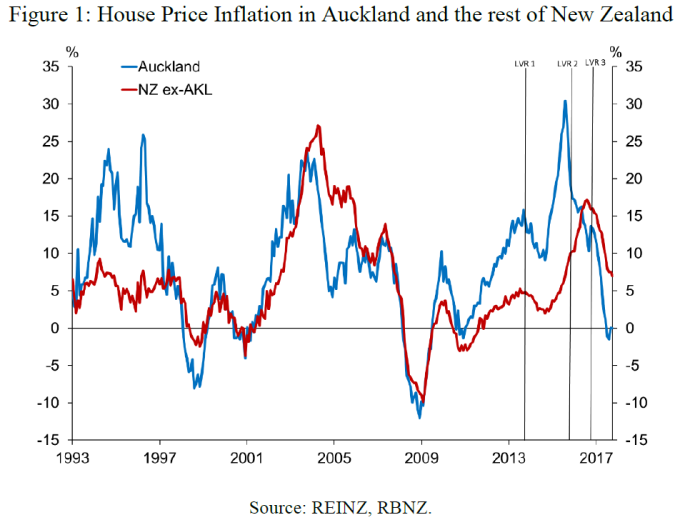
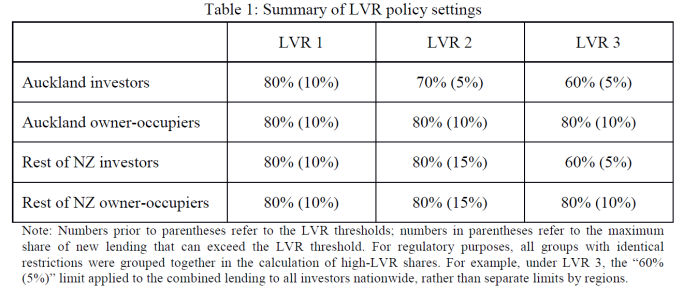
Other people OIA the Reserve Bank too

Occasionally I have a look at the Reserve Bank’s website page on which they post selected OIA responses.  This time I was just checking to see whether a response I got yesterday –  after 2.5 months, and still only partial –  was there (it wasn’t).  But I spotted this response to someone else, released last Friday

Dear …..

On 12 December 2017 the Reserve Bank received a request from you, via http://www.fyi.org.nz and pursuant to section 12 of the Official Information Act 1982 (the OIA), asking:

In the recent recruitment process to appoint a new Governor of RBNZ (which resulted in the Board recommending to the Minister of Finance that Adrian Orr be appointed as Governor), please advise: 1. How many of the total applicants/individuals considered for the role were: a) women; or b) non-Pakeha; or c) both.

2. What was the total number of applicants/individuals considered?

3. If there is a shortlisting process, how many of the individuals who were included on that shortlist were: a) women; or b) non-Pakeha; or c) both.

4. If there was a shortlisting process, how many individuals were included on the shortlist in total?

Decision

The Reserve Bank is declining your request, as allowed by section 9(2)(a) of the OIA, in order to protect the privacy of the candidates considered for the role of Governor.

Given the nature of the process and the final pool of candidates, releasing the information that you have requested is likely to identify people who were considered but not appointed – which is private information.

In other words, they refused to release any of this information at all.

Which should be pretty extraordinary really.   The Board’s defence is that they are withholding the information to protect the privacy of candidates.    But they ran a search process that included a public advertisement inviting applications.  I suspect they had several dozen applications, some less serious than others.   How could anyone’s privacy be breached by releasing the total number of applicants (plus the number of any people the Board themselves put directly into the mix)?     How could anyone’s privacy possibly be breached if it were known that three women and three “non-Pakeha” had applied (we know there was at least one in the latter category, since Adrian Orr has some Cook Islands ancestry)?  And how could anyone’s privacy be breached by revealing how many people were on the shortlist?

I’m a little more sympathetic in respect of question 3.  If there was, say, one woman on the shortlist, that might reasonably invite some speculation as to who, but even then it is hard to see how –  in a universe of say 1.5 million adult women in New Zealand –  a person’s privacy could have been breached.  And, given that the Bank has been notoriously weak (for whatever reason) in appointing women to senior positions, it might have been somewhat reassuring to the public that one (or more) women had made the shortlist.   As it is, we know there was at least one “non-Pakeha” in the list since –  as the Board tells the requester later in the letter –  Orr is quite open about the Cook Islands aspect of his heritage, and if perchance there was more than one “non-Pakeha” on the shortlist it is still hard to see how any one specific person’s privacy would have been jeopardised.

But in a sense, the really interesting bit of the letter is the final paragraph of the extract above.  It is factually false for one thing (names of people the Board considered are official information –  not private information –  even if protected from disclosure by the “privacy of natural persons” section of the Official Information Act).  But, if the Board is to be taken at its word.

releasing the information that you have requested is likely to identify people who were considered but not appointed

They don’t say “invite speculation on possible names” but “likely to identify people”. It is hard to imagine how it could do so –  reasoning outlined earlier – unless the shortlist included the name of a “non-Pakeha” woman (the subset of potentially credible candidates fitting this description seems likely to be very small indeed).   But even if it did, it would require a wider knowledge and a richer imagination than mine to guess –  let alone “identify” – who such a person might have been.

I rather doubt the Board should be taken at its word on this point –  rather they probably just didn’t want to release anything and waved their hands to construct a defence –  but if any readers do want to take them at their word, I’d welcome suggestions as to who the person might have been.