Following on from my post yesterday, two of the key players in the story (one of whom is keen to minimise her role) faced questions.
The first was the Minister of Finance who was questioned by a number of journalists before going into Parliament’s debating chamber early yesterday afternoon. The Heraldposted the audio, and I’ve made a transcription here.
Ever since the announcement of Orr’s resignation on 5 March, when he departed with no notice on the very eve of a major international conference he’d been quite ebullient about planning to host, the Minister of Finance has attempted to distance herself from it all.
At times she has asked us to believe that she didn’t actually know any more than we did about why Orr resigned (“I have always been able to speculate” was one of her early lines), which can really only be true if she let it be known to The Treasury and the board chair that she did not want to know, and if Orr himself gave no reasons in the letter of resignation which he had (by law) to have addressed to her (I have asked for a copy of that letter and of any reply). What responsible Minister of Finance, advised by the Secretary to the Treasury (in turn advised by the board chair, Quigley) that Orr had indicated he would resign would not ask (a) why, and b) seek out details of when and on what terms? A resignation with three months notice might be a very different matter (including in terms of temporary replacements etc) than leaving with no notice at all. Someone tired and wanting to retire to his farm very different from someone going following a scandal about to be revealed or an irrevocable breakdown of trust. No one can seriously believe that she didn’t know (even if what paper trail we actually have is thin at best).
The thrust of Willis’s comments yesterday was, again, that it was nothing to do with her and all a matter for the Bank’s Board. That is playing fast and loose with the law.
As a reminder, the Board does not appoint the Governor. The Minister (via Cabinet and the Governor-General) does, albeit she can only appoint someone the Board recommends. The Minister is the only person who can fire the Governor. The Board members are all appointed by the Minister and are, by law, accountable to her for the performance of their duties. Board members can only be dismissed for just cause, but the board chair is not only appointed by the Minister but can be removed by her at will (no substantive cause required although she has to consult the person before dismissing them). Resignations of a Governor are made, again by law, to the Minister of Finance. The Board does not even get to set the Governor’s pay (that is a matter for the Remuneration Authority) although it does get to set the other terms and conditions of employment (presumably including standard resignation and notice provisions in the Governor’s contract).
I noted that only the Minister could fire the Governor (and only for, statutorily identified, ‘just cause’, which doesn’t include policy disputes). The Board has a responsibility to monitor the Governor’s performance and is obliged by law to report to the Minister if they think there is just cause for the removal of the Governor (a couple of grounds – re obstructing the Board – can only be used by the Minister if there is a positive recommendation to act from the Board). They simply do not hire or fire the Governor, notwithstanding the Minister’s attempts to influence the general sense otherwise. The Governor is the Minister’s responsibility. Which is as it should be given (a) how much power Governors wield, and b) that only the Minister is accountable to Parliament and the public.
Instead we get stuff like this (which probably captures the flavour of the rest)
Or
The Board chair serves at your pleasure Minister. If the Board is not being adequately transparent with, and accountable to, New Zealanders, and you do nothing about the chair, that responsibility is on you.
And note that rather than answer the very final question about the non-disclosure agreement apparently signed with Orr – the terms of which we also don’t know – Willis simply walked away.
In an earlier post, I identified a substantial list of questions for Willis. None of them has yet been answered. All remain germane to understanding what happened, and the context for what happened.
I’m almost inclined to wonder if there is not yet one more final layer behind the story in yesterday’s post. Why is the Minister so determined to try to convince us it is all nothing to do with her, when a powerful senior official appointed by the Minister of Finance, dismissable only by her, suddenly ups and leaves with no notice (but several weeks of pay nonetheless)?
The second interview yesterday was one Heather du Plessis-Allan did with board chair Neil Quigley. You might wonder how she got him on her show, given his usual reluctance to engage with journalists on Bank matters, but apparently he wanted to be heard in defence of his medical school, and that provided the opening for questions on Reserve Bank stuff. The audio is here (starting about 4 minutes in) and my transcription is here
I hadn’t previously noticed that the 2021 Reserve Bank Act now requires the Board to operate “in a manner consistent with the spirit of service to the public” (that Peter Hughes phrase that is supposed to guide all the doings of the public sector as a whole). I’d be surprised if anyone thinks that the Board’s approach since lunchtime on 5 March has shown any resemblance to being “consistent with the spirit of service to the public at all” (and probably not in the days prior when they appear to have, with the Minister’s acquiescence or not, signed up to a gag agreement with Orr to protect them, Orr, perhaps the Minister (or all three) but definitely not the public). Quigley last night was in his usual poor form, obstructive, misleading, and still defending the claim that it was just a “personal decision”.
Since it was such a good quote from Luke Malpass, it is a shame not to use it again
In this particular interview, Quigley spends some time trying to convince the interviewer that there is a material difference between saying that a departure was a “personal decision” (his actual words on 5 March) and saying that it was “for personal reasons”. It is angels-on-the-head-of-a-pin in this context.
In the interview, faced with repeated questions about claims reported in yesterday’s post, Quigley refused to say anything. He refused to say whether Orr had sworn in a meeting with Treasury on 21 February. He refused to say whether Orr had sworn at a meeting with Minister and Treasury on 24 February (he was at both meetings). He refused to say whether he’d sent an email to Orr three days later with the catalogue of conduct/behavioural issues. He attempts to justify his silence on some pretend right that Orr has to privacy, but of course by refusing to comment he confirms the essential truth of the claims. Had they been materially false, sure it was his obligation – having been directly involved or witness to all three, and as chair of the Board – to have refuted the claims in the strongest terms (quite possibly having a go at me as well, as gullible or worse) precisely to protect the former Governor. If none of this happened, surely Orr too would want us to know, lest we think worse of him than he really deserves.
Quigley’s other line was that all this was covered by “an Official Information Act request” (there were actually multiple requests)
This is simply nonsense. The Bank’s 11 June pro-active release covers nothing at all about the meetings on 21 or 24 February, nothing at all about the Board’s deliberations or communications with Orr, nothing about the substance of gag orders (or why they ever made), and nothing (of course) about the (claimed) 27 February email. In addition, the Bank has chosen simply to ignore (not to decline with specific reasons) whole categories of inquiry that made up those Official Information Act requests. What is truer is another a line he used which is basically that we said all we are going to say on 11 June, and tough luck on anything else. Which doesn’t seem like either the “spirit of service” or any sort of spirit of compliance with the Official Information Act itself. We shall one day – perhaps next year, perhaps the following one – what the Ombudsman makes of the defiance of the law.
The final aspect of Quigley’s specific comments I wanted to touch on was the convoluted round-in-circles discussion on the role of differences over the Funding Agreement played. For example
But that is actually quite telling. It goes to the point I have been making since 11 June, that this was not a departure simply over differences around the future Funding Agreement (bureaucrats face those sort of disappointments all the time, especially in the last couple of years). And, actually, the Bank has said as much. Remember this from their statement of 11 June
Even if this was true – and it seems increasingly unlikely that it was anything like the essence of the truth – it is such a severe difference of opinion, expressed presumably in ways from which there was no going back (unlike usual robust discussion among peers etc), that it was pretty clear the Governor had to go, that things just wouldn’t work in future if he stayed. That is the clear import of the Bank’s own statement, and the bit they released in error on the morning of 11 June, had tied that breakdown more closely not just to the board but to that meeting with the Minister. Of course, in some sense it was a “personal decision” (as Quigley claimed all along) but it had nothing to do with being tired, sick, or a sense of a job now completed. There is, as my source yesterday implied, a strong element of being pushed (and Quigly himself consistently refuses to shed direct light on that, despite his role supposedly being to serve the public, accountable to the Minister). It wasn’t (as Neil says) the funding discussion per se that “required” Adrian to resign – smart people will have robust arguments about resourcing and then, once settled, move on – but about things much deeper about Orr’s own conduct, quite possibly building on the list of behavioural complaints that Quigley seems to have compiled over several years.
Some straightforward answers would be nice – from the Minister, from the Board chair, perhaps even some board member who might consider breaking ranks (perhaps at the cost of their position) because they think the public deserves to know. The questions are about both substance and about process. Had we had an honest accounting months ago (at absolute latest when the Funding Agreement was signed), the issue would all be water under the bridge by now. Instead….most questions are still unanswered, and Quigley presumably hopes the Ombudsman takes his usual dilatory approach (on usual form, Quigley would be gone next July before we hear anything from the Ombudsman’s office).
On 11 June the Reserve Bank finally (more than three months after his departure) did a pro-active release of carefully selected documents relating to the departure of Adrian Orr. Those documents purported to respond to various OIA requests, although many elements of events around the departure, and many elements of the OIA requests, were simply ignored. It appeared to be a belated attempt to shape the narrative, never mind the law.
I’ve done a number of posts on these issues since 11 June, drawing partly on what the Bank released in that package, and on various interviews, and some other OIA releases, all to try to make more sense of what really went on in the months, days, and weeks leading up to the resignation and sudden departure of the central bank Governor.
That last post, from last Thursday, prompted someone who seems to have been very close to events back in February/March to contact me out of the blue with a number of quite detailed comments about some of what really seems to have happened. I do not know who the person is.
I also cannot directly verify what follows. I have however this morning lodged a series of Official Information Act requests with the Minister of Finance, the Reserve Bank, and The Treasury in an attempt to check key elements of the account. My overall sense is that the account is likely to be trustworthy. It is written in a calm style, in places details fit with other stuff that is already in the public domain, and the author is not black and white (at one point Quigley is defended, on another where part of the account appears to be secondhand, the lack of certainty is explicitly acknowledged). My interactions since suggest someone who, while a little fearful for their own position, is frustrated at the lack of transparency (including abuse of the OIA) and believes more of the story needs to be told. Could I be being played? I suppose so, but on balance I don’t think that is what is happening.
When I was contacted, the person commented positively on what I have written about these events and suggested that they wanted to fill in some gaps. I will step through the various elements of the account I have been given, and will explain how what I was told fits with other stuff we know, or seems to fill gaps. As I noted to the person, their account “isn’t overly surprising unfortunately”.
The person who sent me this account out of the blue asked just that I keep their details confidential (I have barely any). I was still a little unsure what they envisaged or hoped for, so I went back and explicitly asked what, if any, of what they had sent me they would be happy with me using here. I noted that an alternative would simply be that I used what had been provided to shape some more OIAs without referring directly to anything in this correspondence. I also suggested that I might not be the ideal vehicle if they did want the material publicised and explicitly noted that, for example, the Herald had given these issues serious coverage and might be a better vehicle (including – a point I didn’t make explicitly – because they could ring up people in power and ask follow-up questions directly).
I was uneasy about the idea of using direct quotes since, in principle, writing style could be used if someone (a past or present employer) wanted to try to track down the individual. Independent of that unease, my correspondent got back in touch and explicitly indicated that they were okay with me using their information here, subject to using paraphrases rather than direct quotes. They reiterated both an unease about their personal risk and a view that the story should be told. They have made several mentions of the public interest considerations that are supposed to be of importance in dealing with OIAs.
And so here goes:
In last week’s post, I referred to a mention in a recent OIA response from the Reserve Bank that an hour or so after Orr’s resignation had been announced the Minister of Finance’s office had asked Neil Quigley to do a press conference. According to the Bank’s account, “the Minister thought it was important for the chair to front the media and possibly to calm the markets”. I’d noted in another post that no one had made Quigley do this press conference (which proved to be a bit of train wreck).
My correspondent starts by noting that in their view on this point I had been a bit unfair to Quigley. It is claimed that Quigley did not want to talk to the media (something I can quite believe, based both on his past behaviour and his responses to questions on and after 11 June) and had made that clear to management. My correspondent states that it actually took multiple communications, texts and calls with/from both the Minister herself and people in her office, before Quigley finally agreed to do so. There was no hint of any of this in the 11 June Reserve Bank release and my correspondent indicates that it was material that was within-scope for at least some OIA requests on events around the Orr resignation (including, I believe, mine). I still maintain that it was Quigley’s choice to do the press conference, but clearly he was put under considerable pressure.
In and of itself, it is not a revelation of great moment. However, the Minister of Finance has consistently attempted to distance herself from events around the Orr resignation, having claimed variously that she had no knowledge of why Orr resigned (“I have always been able to speculate”) and had no contact with the Board or Board chair on such matters (even though the Governor’s resignation had to be made to her not to the Board and – more a matter of substance than law – this was the very powerful chief executive of one of her main agencies). Perhaps it also points to the chaos of the day: recall that an earlier Herald OIA had revealed that Orr’s resignation had been brought forward on the morning of Wednesday 5 March to that day rather than, as planned until then, the following Monday. One might have supposed that the Bank, the Board chair, and the Minister and her office would have sorted out who would say what when before the resignation statement went out.
The second leg of the story goes to the heart of the resignation itself.
Recall that the Bank has tried to spin us a story that it was all about disputes over the Funding Agreement. This extract is from the (final version of the) statement the Bank published on 11 June.
An earlier (but near-final) draft – which they sent in error that morning to OIA requesters – had tied it more to a meeting between Orr, Quigley, Treasury officials and Willis on 24 February.
I noted then that it clearly wasn’t correct to characterise this as just a dispute over funding (as much media coverage did), since many public service CEOs have had disappointed expectations in the last 18 months and none of them had resigned with no notice. In one of my post 11 June posts I even observed (but briefly and without follow up) that it really wasn’t clear to what extent Orr had chosen to go and to what extent he’d been pushed.
My correspondent suggests there was a very considerable element of push to it, and that funding disputes were really no more than the immediate presenting context.
You may recall that an earlier Herald OIA (reported here) reported some Q&As that the Minister’s staff had prepared for her around the resignation included the telling one “Did the governor ever raise his voice with you?”, which it was suggested she should avoid answering, clearly suggesting that exactly such a “voice raising” had in fact occurred. As David Farrar put it at the time
My correspondent says “raising his voice” was the least of it, reporting that at a meeting with Treasury on 21 February the Governor had completely lost his cool, behaving in a way that was “completely inappropriate and swearing” and that it had been much the same in the 24 February meeting with the Minister.
The timing of these events is pretty clear. The fact of the 24 February meeting has long been known. Of the meeting on the 21st we hadn’t previously heard directly, but it is likely to be the one proposed in this email from Quigley that was in the 11 June release pack
but ended up happening on the 21st rather than the afternoon of the 20th as Neil had proposed. The Bank clearly envisaged by this point that it was going to be smooth sailing on the Funding Agreement from here and that everything could be tied up within a few days. Clearly, that wasn’t what happened…..and as context for Orr completely losing it (if in fact he did) it sounds quite plausible and aligned to the facts.
Now, in this debauched age swearing isn’t uncommon and newspapers have taken to reporting crass and vulgar language directly. If you are less bothered by such behaviour than I am, it was still pretty extraordinary for an official – no matter how senior – to completely lose it in crucial meetings, most particularly with/to the Minister herself. You could see why future working relationships might be impaired – not by differences over approved spending (just the meat and drink of bureaucratic life) but over Orr’s quite extraordinary conduct. Or rather, just the latest episode.
Because my correspondent goes on. The claim made to me, quite specifically, is that on 27 February Neil Quigley, as Board chair, sent an email to Orr which had an attached “Statement of Concerns” outlining quite a range of concrete and specific issues with the Governor’s behaviour covering several years (and not about funding). Quigley is reported to have asked Orr to respond. It was this, my correspondent says, that triggered Orr’s resignation.
The story fits with other things we know. The Bank’s Board met, for seven hours on 27 February. As I noted last week there is nothing in the minutes about the Funding Agreement, nor of course about Orr. It seems that such issues were all discussed in a (probably protracted) “Board-only time”, perhaps in part (also not disclosed in the minutes) without the Governor. We know that 27 February is also when Quigley advised Rennie who advised Willis that something was in the works re Orr’s future. And (although I can’t track it down this minute) if I recall correctly the exit agreement negotiations occurred over the couple of days after 27 February, and were concluded on Monday 3 March.
The story, if true, also goes some way to the mystery of the exit agreement which – we’ve been told – included gag provisions of some sort. When it appeared that the exit had been driven solely from Orr’s side it was very puzzling why the Board agreed to any such restrictions (setting aside the fact that resignation was a matter for which the Minister was responsible for dealing with).
But for the Board – and we must presume that Quigley wouldn’t have been acting without their support – to have presented Orr with a memo documenting behavioural concerns over several years, and explicitly seeking a response, they must have got to the point where, even if they wouldn’t put it in quite so many words, they had lost confidence in the Governor. When things get to that point, exit is a pretty common option (at lower levels, when public servants are told they are going to be put on performance improvement plans it isn’t unheard of them for them to up and resign, saving everyone the pain, and the employee the CV issues, of a dismissal process). But Orr still held a few cards: he was only two years into a second five year term, the Board couldn’t fire him, and (even with serious behavioural concerns) it would not have been easy for the Minister to have fired him (intense scrutiny, political controversy and all). So perhaps he told Quigley “I’ll go, so long as no one tells the truth about what went on”. By then perhaps it seemed cheap at the price to Quigley (bearing in mind, even more mundanely, that Orr’s record was an an empire builder not as a cutter and chopper, adjusting to budgetary restraint and – as the Bank’s 11 June statement notes by then the Board had accepted that much lower budgets were coming).
Who knows what items were on that behavioural concerns list, if such there was. Even on the things in the public domain there were so many to choose from over Orr’s time as Governor, let alone all the stories that seep out from those who were there. Why, on the very morning before he’s reported to have completely lost his cool at Treasury, he’d been lying to FEC (again). None of this, sadly, seems very surprising. If there is a surprise it is that the Board had finally – finally – chosen to take a stand. With one exception (new Board member) these board members had all been responsible for recommending Orr’s reappointment in late 2022, when almost all the concerns – well, perhaps not swearing etc at ministers – were already documented. At the time, Quigley signed the recommendation with this
At the time I observed
They must have known then – Quigley more than most (much of the Board was new, but Quigley had been there throughout, chairing the board that first nominated him in 2017) – just how detached from reality that endorsement was. Of course, Robertson will have known too (I’m looking forward to how his book, due out next month, treats Orr).
But, we must be fair, and give the Board some credit for finally acting, possibly under pressure.
What then becomes utterly inexplicable is the decision to lie about what went on.
It isn’t just the press release on 5 March which was spin from start to finish, lauding Orr’s contribution, including in “modernising its culture” (losing your cool and swearing?), or Quigley’s statement – released by the Bank – a bit later that afternoon
We were clearly supposed then to believe that a long-serving Governor was, perhaps, tired, and having done his one big job he decided – Cincinnatus-like – to take a step back and return to private life. It seemed unlikely then. It is pretty clearly outrightly false now.
(As previously documented from the 11 June release, the Bank (Hawkesby) ran the same utterly misleading line to staff.)
And if those statements weren’t bad enough, there was the press conference. Even accepting that Quigley was pushed into doing it by the Minister, surely, surely, he must have rehearsed his lines and tested how he was going to answer the inevitable questions he would face?
At the press conference, Quigley started off with “he felt it was just the right time to go” sort of stuff, highlighting all he’d done. Then when he was asked if the Board still had confidence in Adrian he responded – avoiding the specific question
“My relationship with Adrian has been very good, and I have confidence in Adrian. Yes, he and I have been through a lot in my time as board chair of his time as governor, and with the pandemic and everything else, we have very good memories of the challenges that we have confronted.”
I recall noting earlier that interesting juxtaposition (he claimed he still had confidence, avoided answering about the Board), but how can we possibly now believe Quigley was being honest even reporting his own views. You don’t send a written statement of multi-year behavioural concerns by email and ask, by email, for a response when you have confidence in your CEO (a quiet CEO/Chair chat might be a different kettle of fish).
There were then actively misleading answers about the Funding Agreement before we got this
Q: What has been the precipitating factor to what you call this personal decision?
A: I think you have to remember that the job of the Reserve Bank Governor is one where you face unrelenting critique of your actions. You know, no matter what you do, there are near alternatives that other people say that they would have taken. And so there is a time when you think having achieved what you wanted to achieve, that’s That’s enough.
I suppose just possibly he had in mind some “unrelenting critique” that included the Board, but it was clearly a deliberate exercise in deception, all the more so if today’s account is accurate.
It goes on and on (bringing to mind Peter Mahon’s famous line on Air New Zealand) including
Q: Can you just be clear that no, policy, conduct and performance issues are at the center of this resignation?
A: We have issues that we’ve been working through, but there are no issues of that type that are behind this.
You’ll recall that when challenged on some of this after the 11 June release, Quigley first attempted to fob off questions suggesting he wasn’t going to be grilled by a journalist acting like a courtroom lawyer, only to fall back on the excuse of the supposed gag orders (the details of which have never been released). But gag orders do not oblige (or excuse) chairs of powerful government organisations to go out and actively misrepresent what actually was going on. Don’t hold a press conference if you can’t or won’t give straight answers.
So far, we have heard quite a bit about Orr’s conduct. Quigley’s has long been pretty egregious as well, centred on his repeated and deliberate attempts to mislead as regards appointments to the first MPC (summarised again here). My correspondent added some more, on top of the already documented public cover-up and avoidance of scrutiny efforts around the resignation. According to the correspondent, any records of that meeting with Treasury on 21 February were within-scope of at least one of the OIA requests (not mine). It turns out that Treasury staff at the meeting had written up a record of the meeting (which would seem to be a normal thing to do), but that when Quigley learned of this record he went apopolectic (my word, but captures the flavour of my correspondent’s words) – not just internally, but rang Treasury to complain vigorously. It is reported that in meeting some or other OIA request the Bank so heavily redacted that document that an RB comms manager could boast that they’d rendered it useless. [UPDATE 23/7: Rereading my source, this claim is actually about the Treasury record of the meeting of 24 February with the Minister and Treasury.]
On its own, again perhaps not so surprising. Senior public officials often don’t like stuff being written down – discovery risks and all that awkward stuff, scrutiny – but…..the Official Information Act is the law, and there are overriding considerations of public interest. The Bank’s approach (most likely either acquiesced in by the Board chair or driven by him) has been to release absolutely as little as possible, as inconsequential as possible (so note that the 11 June release had quite a few bits and pieces, but most shed no light at all, and almost none of those that might shed light were released at all. OIAs were – and are being – simply ignored.
The final point in my correspondent’s statement related to an issue I wasn’t aware of at all, and isn’t directly related to the Orr departure. The correspondent claims that the Bank is about to move its Auckland office into one of the plusher buildings down near the waterfront (PWC Tower, which seems to boast all sorts of Orr-pleasing green credentials). I have no way of knowing if this is so, but published board minutes certainly reveal that they were planning to shift and suggest that in March negotiations were still ongoing. The suggestion is that the space being leased is “three times” what would be needed for the staff there, the more so after the Funding Agreement cuts. The report from my correspondent is that management – post Orr – suggested reconsidering (optics, job losses, and all that) but that the Board itself refused, and that by the time the final decision was made the Board knew the lower level the new Funding Agreement would be set at. My correspondent seems very confident about all that, but notes that they are not sure of the reasons, reporting only a general sense among Bank people that the Board had wanted fancy spaces for themselves. Staff will speculate, staff may have that one wrong, but it doesn’t sound like a very good look at all. Again, occurring on Quigley’s watch.
If offence it is, it is certainly one of the lesser ones, but it does point in the direction of the Funding Agreement not actually having been cut to the bone. You’ll recall last week’s post that the Bank’s operating expenses in 2025/26 will be 12 per cent above the level in 2023/24, the last year budgets were set under Labour, and that line about the culture of excess that Quigley had included in his last ditch bid in March to limit the cuts the Minister was going to impose.
This has been a long post. As noted earlier, I have lodged a number of new OIAs, with the aim of trying to verify as much as possible of what is reported here. I expect there will be more obfuscation and outright ignoring of requests, although if so that will be telling in itself.
None of it leaves anyone looking very good (although perhaps it partly redeems the standing, at that late date at least, of the Board members other than Quigley). We have not had straight answers yet from either Quigley or the Minister of Finance (and have heard nothing at all from Orr, which might perhaps be more understandable if he really was close to having been forced out on conduct/behavioural grounds). And OIAs continue to be ignored.
If this were just any junior public servant of course things would be different. There would be no particular public interest in disclosure. But we are talking here about the sudden departure of one of the most powerful and highly paid officials in New Zealand, who had often boasted (mostly not correctly) of how open and transparent he and his institution were. And yet someone who used his office to treat people poorly, in some cases (it seems) abominably, and of course who had such a questionable policy record too – all that (core) inflation, all that economic dislocation, those $11 billion of losses for taxpayers. We deserve some honesty. And it remains almost beyond belief that after all this not only is Neil Quigley still in office, but that he is now leading the search for the nominee for a new Governor. Because his last pick worked out so well?
A month ago, I wrapped up a series of posts on these issues with one posing 41 Questions for the Board, for Quigley, for Willis, for Treasury, and for the temporary Governor Christian Hawkesby. Most remain outstanding.
UPDATE: I hadn’t known there was any accessible footage of Quigley’s 5 March press conference (and some Wilis comments) but here is a link that contains many of his answers. Nothing new beyond what I’ve previously quoted from a written transcript, but fyi.
A couple of months ago a journalist got in touch and asked for some thoughts on New Zealand’s best and worst Ministers of Finance. Eric Frkyberg was working on an article for The Listener, following on from one that magazine ran late last year ranking Prime Ministers. The Ministers of Finance article appears in the issue that turned up in my letterbox at lunchtime. He took views from three historians, a tax policy expert, and me and ended up ranking 10 Ministers of Finance from best (Douglas) to worst (Muldoon).
I didn’t actually give Frykberg a simple ranking like that. Instead, I tried to summarise my analysis in this chart
There are other elements one could evaluate these people on (some were more technically able than others, some served in more (or less) propitious times, some will have been nicer people) but I looked at the difference these ministers made, and whether and to what extent I thought those differences had been for good or ill. Nash, for example, was responsible for economic policy for a long time (14 years as Minister of Finance), and the controls-oriented model lasted for decades, but I assess that contribution as deeply net negative (I’m expecting correspondence on this point!). Muldoon was much less consequential because although he was Minister of Finance for much longer than Douglas (say), much of his economic policy (at least the better remembered bits) was swept away pretty quickly, even if they helped trigger what followed.
Anyway, for anyone interested here were the comments I sent Frykberg:
Thoughts on New Zealand Ministers of Finance
May 2025
There have been 29 people who have been Minister of Finance (or Treasurer, or Colonial Treasurer) since 1900, seven of whom were Prime Minister at the same time.
14 of them served for a significant period of time (more than one full parliamentary term)
Of the others, a couple are worth consideration as among the better Ministers of Finance, people who made a discernible difference even though both served for only about three years (Gordon Coates and Ruth Richardson).
Of the earlier list, I’d quickly knock out of consideration Allen, Lake and Birch. Each seems to have been a fairly safe pairs of hands, without contributing a great deal that was distinctively constructive as Minister of Finance. [A former Treasury official recently passed on anecdote re Lake – who had had health problems for much of his term – that Treasury knew not to expect that he’d read anything longer than a page or two.]
And I’d also knock out both Seddon and Ward (despite their long terms), probably mainly because until the Great Depression macroeconomic management really wasn’t a thing in New Zealand, but also because of Ward’s questionable personal business record/bankruptcy and his ill-starred return in 1928.
That leaves a reduced list of:
Downie Stewart[1] is also worth a mention, mostly because he was the last Minister of Finance to resign on an issue of policy principle (he opposed the exchange rate devaluation in 1933 and resigned). I think his policy position on that issue was wrong, but I admire a politician willing to pay the price.
How to think about each of these nine?
Coates won the battle to depreciate the NZ pound (such as it was) in early 1933, which helped turn the tide of the Great Depression. On the other hand, he was also responsible for the deliberate default on the NZ government’s domestic public debt. He was responsible for the establishment of an independent Reserve Bank in 1934 (and our first coinage in 1933). He was, to some extent, fortunate in his timing – the worst of the Depression in the UK for example had already passed by the time he took office – and the pressure to cut spending (because of limited access to forex, whether from net exports or borrowing) had eased. Work on a central bank had already been underway before he took office, but he nonetheless made it happen. By the time he went out of office New Zealand had substantially recovered from the Depression.
Nash was Minister of Finance for 14 years in succession (albeit for a couple of years he was minister resident in Washington) which warrants consideration. He deserves most credit perhaps for his fiscal stewardship of WW2 and the substantial reduction in NZ government outstanding external debt through that period. On the other hand, his Reserve Bank reforms were a clear step backwards (putting the Bank under the thumb of government, and macroeconomic policy generally was run far too loosely in the early years, running into a foreign exchange crisis in late 1938 and what would have been default on sovereign foreign debt in 1939 if the approach of the war had not made the UK willing to intervene to enable maturing debt to be rolled over. Moreover, the entire turn inwards (import licensing etc) occurred on his watch, and post war the government was far too slow to (a) liberalise, and b) keep inflationary pressures in check. If there are positive enduring legacies of the 1st Labour govt it isn’t obvious things Nash was primarily responsible for are among them.
Holland isn’t primarily remembered as a Minister of Finance, but served as both PM and Minister of Finance from 1949 to 1954. He was the first Minister of Finance after the 1st Labour govt, and made a number of useful steps (seeking to unwind import licensing, enabling tenants to buy state houses, removing the ability of the Minister of Finance to direct the Reserve Bank, the revival of monetary policy as a countercyclical tool, seeking to reintroduce competition in domestic aviation, ending rationing, introducing the annual Economic Survey to accompany the Budget).
Muldoon is a polarising figure. Perhaps his biggest misfortune was to be Minister of Finance spanning almost entirely the period of very decline in New Zealand’s terms of trade (almost entirely outside NZ’s control). A focus on the 1982-84 price and wage freeze, the undelivered 1984 Budget and the 1984 devaluation would lead to a very low score, and one could add Think Big to that mix especially with the benefit of hindsight[2]. The inflation record increasingly stood out (to our discredit) relative to peer countries abroad.
On the other hand, he left office with net govt debt only about a third of GDP (not much higher than now), had managed the late 60s slump in the terms of trade and painful (IMF- supported adjustment) as well as anyone was likely to have at the time. And as Minister of Finance he also presided over significant, if fitful, financial sector liberalisation (right almost to the end) and in his combined PM/MOF role enabled CER, plans to reduce the importance of import licensing, road transport and shopping hours liberalisation, corporatising rail, and so on.
It is a very mixed record. And he ends up not as consequential as either Nash or Douglas because little that he did really lasted long (good and bad both subsumed in the Douglas/Lange “revolution”).
Douglas was Minister of Finance for a little under 4.5 years, but it was an enormously consequential period (including that most of what was done then lives on in one form or another) and the dominant view among economists would probably be that those changes – in law and ethos – reestablished macroeconomic stability (fiscal and monetary) and contributed to a sustained improvement in our productivity performance (at least relative to the counterfactual). He remains enormously controversial – perhaps an embarrassment to his own (then) party – and he was part of a team of ministers, but specifics one could point to include the Public Finance Act, the Reserve Bank Act (although legislated under his successor), an overhauled and much more efficient tax system, the corporatisation and privatisation of government trading entities, the removal of interest rate, exchange rate, and exchange control regulations etc.
Richardson was Minister of Finance for only three years, and arguably the thing she is most remembered for (the Fiscal Responsibility Act) was achieved only after she was sacked as Minister of Finance and had left Cabinet. Notwithstanding the headlines and historical memory around the Dec 1990 fiscal package and the 1991 “Mother of All Budgets”, much of the necessary structural fiscal adjustment had already been done by Douglas/Caygill (government was running a significant primary surplus by the year to March 1991). In that sense, she consolidated and extended work already under way. Deserves credit for greatly accelerating the increase in the NZS eligibility age (a process initiated by Caygill). Arguably the biggest economic policy reforms of that government’s term was the Employment Contracts Act, but it was Bill Birch’s legislation not Richardson’s.
Cullen. In a blog post on Cullen’s memoir I wrote
“On the front cover of the book, Helen Clark describes Cullen as “one of our greatest finance ministers”. There aren’t that many (relatively long-serving ones) to choose from but I’d hesitate to endorse the accolade. Running down the public debt was an achievement but (a) demographics, (b) a prolonged, but productivity-lite, boom, and (c) the terms of trade ran strongly in his favour, and the dam burst in the final three years of his term. I guess he has monuments to his name – Kiwisaver and the NZSF (“Cullen fund”) – but then so does Bill Birch from his time as Minister of Energy, and the best evidence to date is that Kiwisaver has not changed national savings rates, and it isn’t clear what useful function the big taxpayer-owned hedge fund has accomplished. Meanwhile Cullen – and Clark herself of course – bequeathed to the next government (who in turn bequeathed it to this one), the twin economic failures: house prices and productivity (the latter shorthand for all the opportunities foregone, especially for those nearer the bottom of the income distribution).”
15 years on Kiwisaver and NZSF have endured so Cullen probably deserves marks for consequentiality. But not much had been changed for the better. Note that he shouldn’t really be blamed either for the deficits that emerged as he left office – on his last (2008) Budget Treasury’s best professional forecasts/estimates were that the budget would remain (narrowly) in surplus. They were wrong, but that wasn’t Cullen’s fault. He thought he was going to leave a balanced budget.
English was Minister of Finance for eight years. There is little to show for that time. The government’s finances took a major hit with the Christchurch earthquakes but it still took a long time for the government to take the steps that would return the budget to balance. There were few, if any, significant and positive economic reforms initiated and the twin legacies – house prices and productivity – I noted for Cullen above were also unaddressed on English’s watch. He enabled a serious decline in the quality of The Treasury. If one were looking for things to credit, the 2010 tax switch is probably worth a favourable note but it involved an overall increase in taxes on business (at a time when business income tax rates were generally being lowered globally).
Robertson was Minister of Finance only 18 months ago and so one could argue we are too close to evaluate him fairly. There isn’t much to his credit (positives might include establishing a Reserve Bank MPC rather than a single decisionmaker – although his claim to credit is marred by going along with a model that initially banned experts from serving and still in effect bars them from speaking – the new deposit insurance scheme, and the critical early couple of months of Covid). On the other hand, he inherited a structural budget surplus and bequeathed a large structural deficit (after the Covid effects had already passed through), made few/no useful structural reforms and displayed little real interest in productivity, he reappointed an RB Governor who had performed really badly (financial losses, inflation, personal style) and had failed to do much to reverse the decline in The Treasury. So both institutions and macroeconomic outcomes worsened materially on his watch. A moderately high score for consequentiality relates to (a) Covid, and b) the difficult legacy left.
One last candidate
In this exercise I focused only on the period since Seddon/Ward. If one were to take the entire sweep of post-1840 New Zealand history one could argue this overlooks a prime contender for best and/or most consequential Minister of Finance
Vogel served four stints as Minister of Finance (Colonial Treasurer) totalling about nine years. He was, arguably, the first champion in a succession of “big New Zealand” politicians, and was the author of the first “Think Big” economic strategy – borrowing on a large scale in London to facilitate immigration and railways development[3]. He’d easily be in top 3 for consequentiality, although no doubt views would differ widely on how appropriate or beneficial the economic strategy was.
In summary
Here’s a chart [see above], trying to summarise how I see these ministers on the twin dimensions of consequentiality and net benefit (the latter can be positive or negative).
It is worth bearing in mind that all of them were creatures of their time (Douglas in 1935 and Nash in 1984 would no doubt have done things differently than in their own time; Muldoon might have struggled to feature at all had he just been Minister from say 1960 to 72).
[1] Disclosure of interest here: I’m related to Holland and my wife and kids to Downie Stewart.
[2] Nonetheless, I recall Graeme Wheeler – who was in the energy section of Treasury at the time – telling us that contemporary Treasury opinion had been pretty divided on the merits of Think Big.
When our kids were little one of the books we often read them was “Bears in the Night” in which the young bears, hearing a noise outside, sneak out of the house at night, climb Spook Hill and then, terrified by the sudden appearance of an owl – not the most threatening of birds – whose call they’d heard, rush back to the comfort and security of home and bed.
It came to mind when reading some of the arguments being advanced by government officials and banks over the Credit Contracts and Consumer Finance Amendment Bill currently making its way through the Finance and Expenditure Select Committee.
The key controversial bit of the bill is the proposal to legislate retrospectively to close down class action suits currently before the courts against ANZ and ASB in respect of flaws in loan variation procedures etc that occurred between 2015 and 2019. The Credit Contracts and Consumer Finance Act had been amended in 2015 in ways that provided (MBIE’s words here) “that the borrower is not liable to pay interest or fees over any period of non-compliant disclosure made before loans are entered into or varied”. In late 2019 the Act was further amended so that for future breaches courts would have “explicit discretion to extinguish or reduce the effect of this provision in order to reach a just and equitable outcome”. That amendment was deliberately and consciously not made retrospective, but the current government now proposes to further amend the Act to apply the post-2019 regime to breaches that arose between 2015 and 2019.
Retrospective legislation is, almost without exception, an odious concept. Perhaps one might make an exception where, say, there was a clear typo in the legislation, giving a quite different meaning to the words of the legislation than Parliament had clearly intended. That wasn’t the case here. Rather, right or wrongly, Parliament changed its mind in 2019 about what the law should be going forward. Now the government – egged on by the banks – wants to make it as if a consciously and deliberately chosen law never was.
(Perhaps one might also make an exception to the general principle against retrospectivity if it was belatedly realised that the words Parliament had enacted enabled the strong to egregiously exploit the weak. I don’t know that that exception is in the typical lawyers’ list, but as a citizen/voter I could see the possibility (perhaps a parallel to exercise in criminal cases of a royal prerogative of mercy).)
What is puzzling is why the government would propose to amend the law retrospectively to help out large and highly profitable foreign banks. And in so doing to bypass what is apparently usually the practice when (as happens on rare occasions) retrospective legislation is passed, when cases already before the courts are (apparently) protected.
I hadn’t paid an awful lot of attention to the whole issue until two or three weeks ago when big scary numbers generated by the Reserve Bank were reported (eg here) and thus entered the public debate under headlines (not, to be clear, sourced to the Reserve Bank) about threats to the financial system unless this retrospective law was passed. $12.9 billion (the maximum estimate reported) sounded like a lot of money (but just glancing at articles I didn’t have a basis for knowing what a right number might actually be), even if stories about threats to the soundness of the financial system never rang true even for a minute.
And I still didn’t pay a lot of attention until the media reporting this week of the appearances before the select committee of the Bankers’ Association (strongly in support of the proposed amendment), the lawyers for the plaintiffs in the class action suits, and representatives of the litigation funders, LPF. The video of those appearances, and associated questions and answers, is currently here.
Yesterday, one of LPF’s representatives rang me, apparently given my name by several people as someone who might write a critical piece for them, especially on the Reserve Bank numbers, and the uses and abuses being made of them. I don’t really do submissions for hire, and am not taking any money from them, but my interest was piqued, and I benefited from a couple of useful conversations with them. More importantly, they sent me the document that contains the material from the Reserve Bank, a paper from MBIE to the then Minister of Commerce and Consumer Affairs (Andrew Bayly) from October last year which includes “Annex Two: Summary of RBNZ modelling and advice”. That annex appears to have been written by the Bank. The full document is here
In other words, we know nothing about the model, the scenarios, assumptions etc although it appears – from the OIA exclusion ground cited – that they must have obtained some data from one or other of the banks to somehow inform their numbers.
Note, though, that even the “big scary number” scenario, isn’t exactly a grave financial stability risk: “low to medium impact on capital ratios” is the Reserve Bank’s own line. Big numbers but if the underlying business models are profitable (as New Zealand banking typically is) then even in a hypothetical like this recapitalisation wouldn’t be expected to be an issue (whether from direct shareholder injections or retained earnings). Aside from anything else, and as they note, litigation will roll on for years. Losing on the scale of this “big scary number scenario” would be painful, but from the outside you could conceptualise it as a bit like a backward-looking windfall tax which, justified or not, wouldn’t normally really affect future behaviour. And when bureaucrats and the like come up with three scenarios, or three policy options, they typically expect people will be drawn to the middle one as perhaps best expressing their view or preference (and to be clear in this Annex the Reserve Bank is not taking a position on the merits of the proposed retrospective amendment).
It really isn’t clear how the Reserve Bank came up with the big scary number. Over the period in question – 2015 to 2019 – total housing and consumer loans averaged about $275 billion. If the average interest rate over this period was about 5 per cent, the average disclosure failing occurred half way through the period, and a third of all retail loans in the economy (by value) were subject to disclosure failings, the total interest involved would have been be about $10 billion, which is (I guess) in the same order of magnitude as the Reserve Bank’s $12.9 billion number (especially if one allows for interest on such an amount through to today).
But we know, for multiple reasons, that this cannot be a number to take seriously.
For a start, if the Bankers’ Association and its members thought it was even roughly accurate as an estimate of the sector’s exposure, they’d have hired a consultant economist to churn out quickly a well-explained and documented version of their own (rather than just waving around the worst Reserve Bank numbers, where any details as to how it was done are – perhaps conveniently for them – blacked out). It wouldn’t take long, and the Bankers’ Association clearly isn’t short of money to deal with this issue: at their FEC appearance they brought along three [UPDATE: two apparently] KCs to help testify and answer questions on legal dimensions. One of those KCs – James Every-Palmer – actually told FEC (at about 24 minutes in) that the sums being sought in the cases against the ANZ and ASB were “as I understand it, hundreds of millions of dollars” (before then handwaving to tie this to a system-wide $12.9 billion dollars). ANZ and ASB together make up the best part of half the banking system, so if the Bankers’ Association understands the claims against them to be “hundreds of millions” then even if that represented $1 billion in total, it is all but impossible to see how the rest of the system could be exposed to $12 billion of claims.
There are several reasons for that statement: no other claims have been lodged, the litigation funders told the committee they had heard of no other claims (and any such claims could really only go forward with litigation funding given the cost of civil justice), and the existing legislation is written in such a way that any further claims, not already lodged, would almost certainly be out of time (more than five years on from when breaches were disclosed). I’ll leave those points to the lawyers to argue about, but there is also some hard data on the numbers of customers involved.
The Commerce Commission reached settlements with the four big banks (and Kiwibank) some years ago, and those settlements (which involve compensation for actual loss, and did not preclude civil action by customers) are all sitting on the Commerce Commission website to consult.
102000 customers were affected. That appears to have been around 30 per cent of ANZ’s mortgage customers in 2015, and at 31 December 2015 ANZ had about $63 billion of retail credit outstanding.
Under the existing provisions of the CCCFA, customers were not liable for interest in the period between an erroneous notification and either when it was corrected and they were notified, or when they next made a (validly informed) change to their loan. Someone who changed the fixed term of their mortgage in December 2015 (getting incorrect disclosure) is likely to have changed it again before the end of 2019 – say, on average, December 2017 – and received correct information then.
However, as I understand it, the (potential) ability to claim back all interest also only applies to those loans which had been taken out from 2015 onwards, so it is likely to be only a minority who are covered by the current class action suits, given that the poor disclosures only occurred for one year.
It isn’t impossible – depending on the specific assumptions – to get up to a total towards $1 billion of exposure, BUT we already know that is a) more than Bankers’ Association lawyer suggested the claims were, b) more than implied by the plaintiffs’ settlement offer this week (around $300m, suggesting that was around two-thirds of the total exposure).
The ASB situation is a little murkier. For ANZ, the bank knew exactly who’d been affected (and so past actual reimbursements were for actual errors). At the time of its Commerce Commission settlement, ASB did not know how many or who had got the wrong disclosure, only that in total 73000 customers were potentially affected.
The breach went on for longer so a larger proportion of those customers are likely to be able to potentially claim back the interest and fees paid over those years (the median such customer in principle having a claim for about two years of interest). But we have no idea how many customers actually got the correct disclosure – ASB seems not to have had the systems to know, but presumably if this case proceeds will go to lengths (costly lengths) to ensure that the actual victims of procedure “not consistently followed” are identified and only for them might there be an exposure (in the Commerce Commission settlement all 73000 were paid a fixed and modest lump sum, presumably cheaper then than trying then to go through every customer file).
If 20 per cent of the affected (post 2015) customers got the incorrect disclosures, I could produce an estimate as high as $700-800 million. But again, as with ANZ, these numbers seem higher than material in the public domain from those better placed to know already suggests. And even taken together with a high-end estimate for ANZ, nowhere near half of the $12.9 billion for the Reserve Bank’s high-end scary number scenario.
And those are the two banks against whom a case is actually being taken.
Of the other two big banks, BNZ accepted a warning from the Commerce Commission. The number of customers involved was much smaller (11956 in total) of whom 2300 had been directly compensated by BNZ. Meanwhile, the Westpac settlement involved new credit card customers only (so, on average, far smaller loan balances) and only 19000 of them. Kiwibank – while smaller in total – has a substantial retail customer base and seems to have had a similar issue to ASB. It had 35000 new borrowers with a variation potentially affected. But it is hard, even adding all three up, to get to more than another $1 billion maximum exposure. And, to repeat, no class action civil case has been taken against those banks, or indeed any of the smaller lenders, about whom MBIE purported to be so worried. Even if things were not out of time, smaller lenders who’d breached might in any case have been unlikely to have sufficient customers to attract a potential litigation funder).
Only someone with access to really detailed information at an individual bank level could come up with a reasonably robust system-wide estimate of potential exposure in the now, almost impossible event, that cases were to have been taken against any other institutions. But it still looks as though even the Reserve Bank’s second scenario – which they describe as “low impact” on capital ratios – would err on the high side. Based on what the Bankers’ Association lawyers have said, based on what the plaintiff’s lawyers have said, and taking account of the absence of other claims and the likely out-of-time nature of any further claims, it is difficult to see how a worst case involving actual claims before the courts exceeds $1 billion in total.
You can understand why the ANZ and ASB and their shareholders would prefer not to pay such a sum, and would (a) fight it in court, and b), if they could, lobby for a retrospective law change. But it simply isn’t a financial stability issue. It is worth remembering that 15 years ago a big tax case went against the banks, costing them $2.2 billion in an economy then about half the size (nominal GDP) of today’s (and in the midst of a severe recession). Banks affected emerged just fine. When MBIE advised the Minister last October to act to “immediately alleviate distress in the market”, there was (and is) no sign of distress in the market – as it affected ability or willingness to lend, of large players, players being sued, or other lenders – just some “distress” in the local board rooms of ANZ and ASB.
(And note that MBIE’s own advice a month later – page 31 here – was that the proposed amendment was “not clearly necessary to address concerns about the financial position of either ANZ or ASB” and “we acknowledge that applying this amendment to the active class action has “upside” potential for the banks only”.)
Without someone launching an OIA – which the Bank might well stall for several months – we have no way of knowing what the Reserve Bank makes of the use being made by the Bankers’ Association of the $12.9 billion number, or even whether they would still stand by it as a plausible scenario now, 9 months on. But it is pretty clear that – with material then in the public domain – a number on that scale never made any plausible sense, and that the only cases that are actually before the courts – the only cases now likely ever to be – probably involve total stakes less than 10 per cent of that “big scary number”. The banks affected will know that too, but in expected value terms it is no doubt better them to just repeat over and over the “big scary number” and hope to scare the government into passing this retrospective law than to come straight out and acknowledge the plausible maximum scale of any exposure if they lose in courts (and several rounds of appeals) and if the courts made awards fully consistent with the plaintiffs’ claims.
I took from the select committee appearances the other day that while the plaintiffs and their funders oppose the use of retrospectivity on principle, they would (unsurprisingly perhaps) be content with a carveout that meant that the proposed amendment did not apply to cases already before the courts. You can understand why ANZ and ASB would not like that, but why shouldn’t the government and Parliament, particularly once they realise that the big scary number is just a fairy tale, although being used rather more maliciously than a typical parent readings Bears in the Night to their young ones? And yet lawyers for ANZ have the gall to suggest that the plaintiff’s settlement offer this week is “a cynical attempt to influence the law reform process currently before Parliament”. One might well understand why the plaintiffs might make a settlement offer when ANZ and ASB seem to have the government lined up in their corner, but there is no mistaking that brandishing the poor old Reserve Bank’s big scary number is much more evidently an attempt to keep the select committee in line and make public opinion a little less unsympathetic to a law change designed specifically (and only) to help two big (foreign) banks.
For anyone interested, there is a column by Jenny Ruth ($) on related issues this morning.
Finally, regular readers will know that I am not exactly a “bank basher” and have often here derided the rather desperate anti-Australianism implicit in a lot of the NZ political attacks on banks. I think we have a pretty good banking system generally. I’m not necessarily a big fan of the CCCFA in any of its forms (and thought the actual plaintiff who was wheeled up to the select committee the other day was singularly unpersuasive – unlike his lawyer). But I don’t like people playing fast and loose with “big scary numbers”, when they know (or could reasonably be expected to know) that they, and claims made for them, bear little or no relationship to reality. And I don’t like retrospective legislation one little bit.
There are still lots of outstanding questions around the sudden departure of the Reserve Bank Governor, and the handling of those events by the board and the Minister. But, even amid ongoing OIA obstructionism – the Bank simply ignoring the substance of specific requests, in a flagrantly illegal way – some more bits and pieces have emerged.
Back in April I lodged these requests
The Bank finally got round to responding on 30 June.
Of those, item a) wasn’t primarily about Orr’s departure (for unrelated reasons I wanted to see how their board committees work). Nonetheless, the response was interesting because although they sent me the committee minutes (with redactions), they didn’t even address the request for the minutes of actual Board meetings. As it happens, the Bank periodically (normally quarterly) releases rather limited and selective minutes of regularly scheduled Board meetings (you can find them here) and I’d lodged the request mostly because by 14 April they hadn’t released any for six months). They’ve since put up more recent ones. The Bank’s usual approach when someone requests something that is already on a website by the time the reply goes out is to point requesters to a link to those documents and then decline the specific request because the document is already publicly available (legitimate grounds for denial). This time, however, there is no mention in the response of the board minutes at all (only a mention that the committee minutes were attached, as they were).
This suggests an (illegal) effort to avoid addressing the specific request. One possible reason might be because it is almost certain that there will have been short-notice board meetings in and immediately around Orr’s resignation, which they don’t want to either acknowledge or disclose the records of. How could it have been otherwise? The Governor tells the board chair he’s thinking of resigning, and the Board does nothing, never meets, never authorises an exit package with gag agreements? Even for an apparently supine board like that of the Reserve Bank it seems very very unlikely. And when the Governor actually resigns – recall it was brought forward at the last minute by several days – there is no short notice Zoom board meeting to discuss what next? Yeah, right. (I’ll come back later to some interesting points in the minutes of the scheduled board meetings).
Another reason to believe that might be the explanation is the Bank’s response to my second item (above). This was it
That is a reference to the belated bulk release (available here), apparently designed to shape how we should think about Orr’s departure. But…..that response to my request by the Bank simply does not address my specific request, because the 11 June release contained precisely nothing about discussions among board members and nothing about the chair’s press conference later on the afternoon of Orr’s resignation (and nothing about any short-notice board meetings). Of course there will have been discussion among board members, and there might be even be some OIA grounds to withhold some of that specifically (in which cases such withholding needs to be justified specifically, item by item), but this response seeks to pretend answers have been provided when in fact the whole issue has been avoided.
Item d) of my request was overtaken by events. I was no longer particularly interested in Kolich’s departure (and the 11 June release suggested it was in train before Orr left), and the 11 June release did tell us there was an NDA with Orr (although we still have no idea what the nature of the gagging provisions were, or why they were imposed or accepted by the Board, or the Minister – you’ll recall from previous posts that a Governor’s resignation is addressed to the Minister not the Board).
But then there was item c) (above). There is a typo in the request, but the Bank seems to have understood it as intended (about possible and actual departure). This was their response
It is quite extraordinary really. Things had run so far off the rails that the Governor was first talking of resigning then actually planning to resign – partly, the 11 June release tells us, because effective future working relations were so impaired, in the context of the funding agreement disagreements – and neither the Board nor the Board chair initiated any (direct) contact with the Minister of Finance at all; no meetings, no texts, no calls, no written advice, no nothing. If true, and I guess we must assume it is so, it is extraordinary, and something of a dereliction of duty, given that the Board governs the Bank, monitors the Governor etc all on behalf of the Minister, who not only has general responsibility for the Bank but specific responsibility for hiring, firing, and (in this case) receiving a Governor’s resignation. (Other releases show that Quigley had alerted Iain Rennie to what was going on, who’d mentioned it to the Minister). I usually word such requests quite carefully to specifically include “or the minister’s office” and failed to do so this time. I guess it is possible they are hiding behind that and there was contact by Quigley and the Board with senior advisers to the Minister, but on this occasion I doubt that is so because of the final two sentences in that response. It was nice of them to tell me about that but since it was from the Minister, conveyed via her office, it wasn’t specifically within the scope of my request (but one is left wondering why it wasn’t disclosed in the 11 June release).
It just seems astonishing. And not least because of how the Board just seems to assume the freedom to negotiate gag orders with Orr, when a) his resignation had to be made to the Minister not to them, and b) when there would inevitably be intense public questioning and scrutiny of what was going on, and they were proposing even to tie the Minister’s hand without consulting her.
And then the only contact is the ill-judged (as it turned out) request from the Minister’s office for the Board chair to do a press conference. I don’t disagree that both the Board chair and the Minister owed us answers (which we still don’t have) but Quigley is singularly bad at fronting when dealing with challenging questions, and his responses in that press conference ended up raising more questions than answers, at times apparently actively misleading journalists and the public, all while there were no evident market ructions to calm. More questions for the Minister I guess: does she even now know the terms of the gagging agreements entered into? If not, why not? If so, how and why does she defend or justify them?
I noted earlier that the March quarter Board minutes (released on 18 June, conveniently after the 11 June release) had some interesting content (and some telling omissions).
There were records of two meetings. The first was on 27 February (which reports the Board approved minutes of a 14 February special meeting, minutes of which – not disclosed – were clearly within scope of my request). This was the meeting – we were told in the 11 June release – where things crystallised
with the Board taking one view on the future Funding Agreement (bowing to reality) and the Governor refusing to do so. You have to imagine there was quite an extensive and tense discussion. But here is what the Board minutes have to say about discussion of the Funding Agreement and associated negotiations.
That’s right. Precisely nothing. And it is not as if some very sensitive material has been withheld on legitimate OIA grounds (hard to see what now that so much is a) finalised and b) in the public domain). It is just that there is no mention of the Funding Agreement in the 10 pages of minutes of a seven hour meeting.
It is extremely dubious, because it appears like an active effort to mislead readers (of these proactively released documents) and, unless there are secret shadow minutes, a breach of the Public Records Act, which requires public agencies to maintain proper records, including of such consequential meetings and discussions. It seems likely that much of the discussion will have occurred in item 6.2 “Board Only Time”, where nothing is disclosed (or withheld), although even then how plausible is it that all the discussion of the Funding Agreement, where there were major differences, occurred without any other senior management present (CFO or that person’s boss, or the Deputy Governor)? It really is a classic example of minutes theatre: it is good that the Board releases proactively what they do, but this example illustrates again just how selective (and thus dishonest) their approach is.
The next meeting for which they published minutes was on 27 March, three weeks after Orr had resigned. This time there is a short note that “The Five Year Funding Agreement negotiations have neared completion”. On this occasion there were quite a few interesting snippets.
The first was this
This one took me quite by surprise. When in Opposition, Willis used to promise an independent review pretty much as soon as she took office. Nothing had been heard of it since they did take office. Nothing else has found its way into the public domain since 27 March. What review then? Who will be conducting it? What will the terms of reference be? How does it fit with the Royal Commission which did a – poor, once-over-lightly, channelling officialdom – chapter on economic policy in its Stage 1 report? Who, if anyone, will be invited to submit? And (frankly) at this late date what really is the point – unless, I guess, it asks hard questions of Christian Hawkesby, assuming he has applied to be Governor, about his responsibility for the costly mistakes and bad calls (as deputy chief executive then responsible for macro and monetary policy). But I do hope some journalist with access to the Minister will ask about the review.
The second was more forward looking.
That sounds sensible enough, even if it remains egregious that Neil Quigley is driving the process, having been chair through the Orr years, policy failures, culture of excess, messy departure of the CE and all. But for some, still inexplicable, reason that appears not to bother the Minister.
One of my big concerns about the new governance structure created by the 2021 Act has been that the Board had major responsibilities around the appointment of MPC members, including the Governor, but members had little or no expertise or background to making those calls (including reviewing performance on monetary policy matters, something they are also charged with). Two things partly allay those concerns. The first is the appointment of a couple of new board members with an economics background: Professor Philip Vermeulen and the former Deputy Governor and chief economist Grant Spencer. And the second, at least in principle, is involving external MPC members in the interview process. I say “in principle” because of the three externals, one is 80 and coming to the end of six years on the MPC where he shares responsibility for the very costly mistakes and is not on record as having made any distinctive contribution, and another – Prasanna Gai – is thought in some circles to be interested in becoming Governor himself. It does rather narrow the value of such an external panel.
Note, however, that one of Bank’s main roles is bank (and related) supervision and regulation. The Bank’s policies there have been quite contentious – including apparently with the Minister – and yet there is no one on the board with a strong banking or banking regulation background other than Spencer, and he tended to be a status quo figure in his last decade in the Bank when responsible for those functions. It just isn’t obvious where the intellectual vigour and fresh perspectives will be coming from (and it is interesting that, contrary to the practice for many top public sector jobs these days, there is no suggestion of having a respected outsider or two on an interview panel).
It is difficult to be optimistic about the process. There are no obvious ideal candidates, and the Board remains led by the same chair who gave us Orr in the first place, appointed and reappointed. But……fingers crossed I guess.
Yesterday’s post focused on the puzzling events around the adoption of last year’s Reserve Bank budget: the board planned to spend massively above what the Funding Agreement had allowed and for reasons still totally obscure neither Treasury nor the Minister of Finance raised any concerns whatever.
A few months ago now, after Orr had left the scene (with many questions still unanswered), a new Funding Agreement for 2025-30 was signed. I noted then that while the new spending allowances were well down on what the Bank had itself egregiously planned to spend in 2024/25, they didn’t appear to represent much of a cut at all relative to previously agreed levels (past Funding Agreement and 2023 variation), despite the huge increase in allowed spending that had been granted on the Orr-Quigley-Robertson watch. A few weeks ago – and only a day or two beyond the statutory deadline – the Bank released its Statement of Performance Expectations (SPE) for 2025/26. You’ll recall that, by law, the Minister (and hence Treasury) will have had a chance to provide comments on the draft.
The SPE contains the Bank’s budgets for 2025/26, and enables us to use some directly comparable numbers over time for total operating expenses. One of the sleights of hand in the new Funding Agreement was moving more items – some potentially quite significant – out of scope of those particular limits. It turns out that in the Bank’s 24/25 budget 13 per cent of operating spending was out of scope, while in their 25/26 budget, as reported in the SPE 24 per cent is.
It is fair to observe that the relationship between recent Reserve Bank budgets and actuals seems to have been surprisingly loose – Orr seems to have been unable to spend all the money that board allowed him when they set annual budgets – but for 2024/25 and 2025/26 budgets are all we have to go on. For 2024/25, the Minister was still happy to have used the budget numbers in her March Cabinet paper on the new Funding Agreement and we know (from that document) that there had been a big increase in actual staff numbers (FTE) between 30 June 2024 and 31 January 2025 (up about 10 per cent in 7 months), and staff expenses are by far the largest item of opex.
Anyway, here is the best chart I can put together, using Annual Reports for actuals and the SPE budget numbers for 2024/25 and 2025/26.
Since the Bank has been in full-on retrenchment mode in recent months (eg top management numbers have more than halved, and they’ve been reduced to laying off a quarter of their first and second year new graduates), it isn’t impossible that the 2024/25 actuals will come in a fair way below the budget adopted last June (although there will be unforecast redundancy costs).
But what really caught my attention was the budget for 2025/26. You’d have to think that, having been adopted only last month, with a Board chair and temporary Governor wanting to show how they’ve moved with the spirit of the times, these aren’t vapourware numbers, but the best hardnosed estimate of what the Bank expects operating expenses to be in 2025/26. That number is 12 per cent above actual operating expenses in 2023/24, the last year in which budgets were adopted under the previous government – the one the current Minister of Finance rightly and regularly attacked for extravagant levels of spending. 12 per cent above…..(this only becomes apparent now because it is only now that we can put hard numbers on how much spending was moved out of scope of the Funding Agreement limits, in a way that allowed the Minister to sell the extent of restraint as materially greater than it turns out to have been). How many other government agencies have budgets this year 12 per cent above levels of spending in 2023/24? Not many would be my bet. It is quite astonishing.
(Yesterday, I linked to someone else’s OIA published on the Bank’s website. It included this plaintive appeal to the Minister of Finance not to cut the funding agreements amounts further in a report dated 14 March
The Board chair owning up to the culture of excess that had developed over recent years. Who had been the board chair right through that period? Why, that would be Neil Quigley. Who is the board chair still today? Why, that is Neil Quigley. )
What of the rest of the Statement of Performance Expectations? It is very little use to anyone (I’d have thought). There is less of a breakdown of planned spending this year than last. This was from last year (bother only about the spending column)
It raised several questions then (I had a post about the extraordinary $35 million of planned spending on “engagement with the public and other stakeholders”, which seemed so egregious that the truth surely couldn’t be quite as bad as it seems (but we have never any answers). This year, they’ve collapsed the categories so we get only this
With that utterly-meaningless “central bank functions” heading hiding almost everything that might be interesting.
And then there is this (with no numbers at all)
After the six months the Bank has had (coming on the back of the last few years – $11bn of losses, worst outbreak of inflation in decades), you really wonder how they can write this stuff with a straight face. But I guess that is the sort of quality bureaucrats (and associated board members) are recruited for. Well-grounded trust usually requires a record of achievement or at very least a record of open and self-critical transparency when things don’t go so well. The Orr-Quigley-Hawkesby Reserve Bank is still failing on both counts. A Governor just disappears, with no notice and no explanation. Or recall all those unanswered questions in my recent post (let alone all the ongoing OIA obstructionism), and the inability to even give straight answers regarding the actual level of spending restraint when the Funding Agreement was released three months ago. (Note too the odd benchmark: while the Commerce Commission has some independent powers, Treasury and MBIE are simply ministries whose activities or advice are rarely directly visible to the general public in a way the Reserve Bank’s independent exercise of its powers is. They aren’t similar, and I don’t think “no worse than how the public thinks of (or trusts) Treasury” is really an adequate benchmark at all.)
Four weeks ago I noted that I was going to be tied up for the following couple of weeks. Between a busy trip to Papua New Guinea, the extremely dubious governance of the Reserve Bank superannuation scheme, various family members coming to stay, and a health relapse all that turned into a rather longer break from the blog than I’d expected/intended. But in that time, several interesting responses to Official Information Act requests turned up.
My last post was 41 Questions, in reference to the many questions still unanswered by the Minister of Finance, the Reserve Bank board, Neil Quigley (the Board chair), the temporary Governor, and The Treasury about the events surrounding that sudden departure in early March of Adrian Orr as Governor of the Reserve Bank.
A few of those questions (around one particular set of events) have now been answered, and the answers leave everyone involved in a poor light. These were a few of the questions from that earlier post that I thought the Minister of Finance owed us answers on.
The short answer (developed in the rest of the post) is that the documents show that neither the Minister of Finance nor The Treasury raised any concerns at all about the Bank’s plans to substantially increase operating spending last year, to levels far above what was permitted in the (Labour government’s) Funding Agreement. It is really quite extraordinary.
But lets go back to the beginning.
As a reminder, the Reserve Bank operates under a Funding Agreement reached every few years with the Minister of Finance. Quite a few classes of spending are excluded from the Agreement, and there is no external limit on what the Bank spends on those items, but around 85 per cent of the operating expenses were within the scope of the agreement in place last year.
When the Reserve Bank’s Board was approving the budget for 2024/25 – around the time of the government’s first Budget, where much was made of expenditure restraints (and cuts) for most core government departments – the Reserve Bank was operating under a Funding Agreement for 2020-2025 agreed with Grant Robertson in 2020, with amendments (the most recent, providing for a large increase in operating spending for the final two years, signed off shortly before the 2023 election).
Under that amendment, the Minister and Bank agreed on how much the Bank could spend on (within scope) operating expenses in the year ending 30 June 2025.
This was a very marked increase from the $118.3 million originally provided for 2024/25 in the 2020 Agreement.
Both the agreement and the Act are quite clear that these are limits for the financial year concerned. The agreement is not structured to provide for (and the Act does not envisage) a five yearly total within which the annual numbers are merely indicative.
There are two caveats. First, the 2020 Agreement had provided a separate category for spending on direct currency issuance expenses (a sensible provision because you wouldn’t want the Reserve Bank stinting on a functioning currency system to pursue some other whims). For 2024/25, this allowance was $14.5 million. However, by 2023 it was apparent that the Bank was needing to spend a bit less than expected on currency issuance, and so the Minister had agreed that for 2023/24 and 2024/25 the Bank could utilise any underspend on this item for general (in-scope) operating expenses. The Bank thus had ministerial approval to spend up to about $154.4 million in 2024/25 on general (within-scope) operating expenses.
The second caveat was this (from the 2020 Agreement)
Budgeting five years in advance is hard (like the Bank – as disclosed in recent papers – I think the Funding Agreement approach is not really fit for purpose and should be replaced; useful as it was transitionally 35 years ago). This provision recognised that in any one year the Bank’s actual spending might go over the Funding Agreement limit. It put the onus on the Bank – and the Board after new law came into effect in 2022 – to offset any one year’s excess with savings in subsequent years.
The Board sets operating budgets for the Bank. You would expect that those budgets would be in line with the Funding Agreement amounts – and two Board members (the chair and the Governor) had signed that 2023 amendment – but there are no direct or immediate consequences if either budgets or actual spending aren’t in line with the Funding Agreement. That is one of the real weaknesses of the system.
But, weak as the system is, we (the public) weren’t supposed to be left unprotected. After all, in the 2021 amendments to the Reserve Bank Act a stronger responsibility was assigned to Treasury to monitor the Reserve Bank and act as adviser to the Minister of Finance on things involving the Bank. And then there was the Minister herself. Flawed as a five-yearly Funding Agreement (with amendments) model might be, these days the Reserve Bank is required to produce a Statement of Performance Expectations each year. The relevant clause of the Act reads well.
and, yes, the financial dimension is included
and the draft needs to be with the Minister well before the finished document has to be finalised and published.
We know, from the final published Statement of Performance Expectations, that the Bank budgeted for total operating expenses in 2024/25 of $231 million. That was well up on the previous year’s budget (and on the biggest discretionary item – personnel expenses – the budgeted increase was 21 per cent, this in the first full year of a new government emphasising spending restraint).
The published Statement of Performance Expectations does not provide numbers that enable direct comparisons with the Funding Agreement limits (surely a weakness in the statutory provisions?) but material released subsequently show that of the $231 million, $200 million was on items covered by the Funding Agreement (around $9 million on currency expenses and around $191 million on the core within-scope operating expenses). Recall, that the 2023 Funding Agreement amendment allowed them to spend about $154.4 million on those core within-scope operating expenses in 2024/25. The final published budget was thus consistent with spending around 23 per cent in excess of what was provided for in the Funding Agreement.
In recent years – since the Board became the primary governing body – the Bank has been published partial (and limited) minutes of meetings of the Board. We know from the June 2024 minutes that the Bank had received and incorporated comments on the draft Statement of Performance Expectations from the Minister of Finance and Treasury.
The mystery then was how such a huge blowout in operating spending had happened despite the input of the Minister and Treasury. So I asked the Bank for copies of those comments (as part of a request for several other items that, three months on, they have still not responded to). Their response was to tell me that the comments had actually been released in October last year, as part of a very long document for a standard Treasury pro-active release. The relevant pages are here as a standalone document.
These documents are Treasury advice to the Minister and a proposed letter from the Minister to the Board chair (which is, presumably, the version that was sent, since what I’d asked for was what the Bank received). There is simply nothing in the documents (even considering redactions) even mentioning the overall proposed level of spending, let alone highlighting the inconsistency with the Funding Agreement, or raising concerns. Nothing.
It is difficult to decide who is more culpable here, Treasury or the Minister. The Minister should be able to rely on hardnosed Treasury advice on such things. And, after all, Treasury had been involved in the previous Funding Agreement increase only nine months or so earlier, it had been fully involved in the spending cuts for agencies in the 2024 Budget, and had been involved the April 2024 Letter of Expectation sent by the Minister of Finance to the Bank’s board, which included this.
You’d think that a Treasury doing its job – in fact, a Treasury even half awake – would recognise that a big increase in spending in the last year of the old Funding Agreement, well in excess of what was allowed for that year in the Funding Agreement, was a glaring “red flag” and should be called out in no uncertain terms. Neither they nor the Minister had the power to override the Board and compel a lower budget, but they could have put a great deal of pressure on, including threatening to call out excess in public. Instead, it seems that they did nothing at all. Nothing.
At very least they might have made the point that consideration of the next Funding Agreement would start from a baseline of what had been allowed in the previous agreement and that it would be quite unacceptable for the Bank (as it went on to do) to bid for the next five years’ spending from a starting point so far in excess of what the Bank was allowed to spend in 2024/25.
And what of the Minister of Finance? If she is entitled to expect hard-nosed advice from The Treasury, highlighting all the relevant issues and risks, and giving her both recommendations and choices as to how she deals with the Bank, what on earth was she thinking herself, and what was going on with the political advisers in her office, who are there partly to protect her interests when bureaucrats aren’t doing their job? Willis, and (surely) her own advisers, had long been sceptical of Orr. They’d rightly highlighted in public some of the spending excesses undertaken by the Bank under Labour’s watch. Did it never occur to them to check what percentage change in operating spending the Bank was proposing, or to check how that spending compared to the Funding Agreement, or to line up the Bank’s plans with the spending limits Willis was imposing on most departments? If any of it ever occurred to them – and it would have been easy to go back to Treasury and get them to follow up – there is not the slightest sign of it.
It is quite an astonishing lapse (or choice) by a very senior minister, in a climate of (purported) fiscal restraint. And if the Reserve Bank isn’t the biggest spending agency (by far), the old mantra about looking after the pennies and the pounds will take care of themselves still has something going for it, including in inculcating in government entities a culture of frugal restraint. Willis let the mad Reserve Bank spending binge run on for a whole additional year, and in addition to the resulting sheer waste of taxpayer money, and the demonstrated capacity for the Bank to simply ignore (or twist) the Funding Agreement, the result was also lives badly disrupted. The Bank carried right on substantially increasing staff numbers in 2024/25, drawing people away from other jobs, only for many now to be losing their jobs (and if we needn’t sympathise even slightly with Orr’s senior managers now departed, think of the new graduates just starting out being laid off, and many others in between). Large scale restructurings are wrenching, dislocating, and hard on people innocently caught up in them at the best of times.
It is easy to blame Adrian Orr in all of this, and I’m sure he deserves his fair share. None of the excess would have occurred without him. But the Governor is not the governing body of the Reserve Bank any longer: the Board is. And who is supposed to act as monitors and checks on the board – when they let themselves be carried away by the ambitions of an over-mighty Governor, and thus simply fail to do their job? Why, that would The Treasury – premier economic advisers to the government – and the Minister of Finance, the person accountable to Parliament (and thus voters) for the Bank and both its policies and (in this case) its use or abuse of public resources.
I had wondered for a while how even a useless underqualified board, apparently in the Governor’s pocket, as the 2024 Reserve Bank board seems to have been, could have thought it appropriate or right to increase spending so much last year, so much in excess of the Funding Agreement limit. There isn’t an obvious or easy answer to that, but the Board minutes suggest they thought – and presumably were told by management – that it was all just fine. This is also from the June 2024 Board meeting minutes
Somehow, even though the Funding Agreement is very clear about annual limits, they talked themselves into believing that somehow any past underspends could be used for a final splurge in the last year. It is hard to believe that anyone of honesty and integrity could have reached a conclusion that that was either a) possible, or b) right. No doubt they would have been pointed to that extract from the 2020 agreement about what happens if the Bank overspent in any early year of Funding Agreement. But not only is there nothing in that section suggesting underspends could be saved up and spent later but (and importantly) a) spending for the first three years of the agreement was already water in the bridge by the time Grant Robertson reset approved spending levels in August 2023 for the last two years of the agreement (had he wanted them to spend even more in 23/24 and 24/25 presumably he’d have set the annual allowances even higher, b) did no one on the Board stop to think how disruptive it would be to massively increase spending and staff numbers in the final year, with no assurance that such artificially high spending levels and staff numbers would be approved for future years (it wasn’t as if the sharp increase was a specific one-off project), when c) the Minister – see letter of expectation – had already highlighted the need for fiscal restraint in approaching the new Funding Agreement negotiations.
We can only conclude that either the Board was asleep at the wheel (paying no attention no matter Orr was doing) or – more likely in my view, given the bid for the 2025/30 Funding Agreement that the Board approved a little later last year – Orr persuaded them to go along with some reckless double or quits strategy: spend up large now, get a bigger empire, and then hope we can persuade the Minister to reset the new baseline level of spending not off the previous Funding Agreement starting point, but from the (hugely in excess) Bank-determined level of planned spending for 2024/25. Either way, you wonder how they thought they were serving the public interest, or how they have had the gall to claim their fees.
Perhaps even more surprising then is that just a couple of weeks ago, the Minister of Finance – having reappointed Quigley last June for a final two year term as chair – reappointed yet another of the existing Board members, Byron Pepper, for a full five year term (while leaving another board vacancy unfilled). There is not the slightest evidence in any of the minutes that Pepper had ever (a) dissented on the reappointment of Orr, or b) dissented on the Funding Agreement blowing 2024/25 budget, or c) dissented on the 2025/30 Funding Agreement bid. And yet, such it seems is the New Zealand way, he is rolled over for a full five year term, and now chairs the Board’s Financial Stability Oversight Committee. You’d at least hope he’d be demanding evidence of better standards of governance from the institutions the Bank regulates/supervises that he displays in participating in the governance of the Reserve Bank.
(As it happens, the “carry forward underspends” point is explicitly clarified in the new 2025-30 Funding Agreement which states
That seems sensible, making explicit what was always really the law – variations were allowed, and happened as in 2023. But is interesting that right to the end, the Bank was still championing a looser model. On their website I noticed someone else’s OIA which included a late draft of the 2025-30 Funding Agreement sent by the Bank to the Minister of Finance on 14 March (after Orr’s departure)
Presumably the Minister said no to giving that sort of leeway to Treasury. Rightly so, but where was she in pushing back on excess last year, or holding to account those – eg Board members – who nodded through the last mad wave of spending excess?)
UPDATE 17/7
Had the Bank been at all interested in transparency etc no doubt I’d already have had a response to this follow-up OIA. I expect to wait at least 20 working days.
I’m pretty tied up for the next couple of weeks so unless there are significant new developments (things like, for example, complying with the OIA) this will be my final post on events around the Orr resignation for the time being.
We know from what the Reserve Bank did choose to release last week that their story is now one in which Orr’s behaviour triggered by the prospect of deeper cuts to the Bank’s next Funding Agreement than he would have liked was what led to the departure. That is the gist of the (no doubt lawyer-vetted language) of the statement/press release last week:
“This caused distress to Mr Orr and the impasse risked damaging necessary working relationships, and led to Mr Orr’s personal decision that he….could not continue in that role with sufficiently less funding than he thought was viable for the organisation”. They wouldn’t have included that “this caused distress” stuff if it had just been a bunch of reasonable senior people (Board, management, Treasury, Minister) having a purely professionally-conducted disagreement and one deciding it was time for him to go.
But, as I’ve noted in a number of posts, having finally got that disclosure, more than three months after the resignation, there are still lots of unanswered questions (some for Quigley, some for the Board as a whole, and some for Willis, the people who continue in office). It would, of course, be great if Orr himself would give a substantive interview to a serious but searching journalist, but he is now just a private citizen.
This post attempts to bring the outstanding questions together in a list.
Questions for the Minister of Finance
Did you really never ask (Rennie, Quigley, or indeed Orr) why Orr was planning to resign?
Did neither officials nor the Board chair nor Orr (eg in his resignation letter, which had to be submitted to you to be effective) ever tell you why the Governor of the Reserve Bank was resigning?
Did you ever make it known, directly or indirectly, that you did not wish to know?
Were you aware that an exit agreement (going beyond resignation terms in Orr’s contract) was being negotiated? When?
If not, why not? If so, did you ever make representations regarding possible severance payments and/or non-disclosure agreements?
What was the atmosphere of the meeting held between you and Orr/Quigley and others (including Treasury officials and Hawkesby) on 24 February? Was the Governor’s conduct wholly and entirely professional?
What representations and comments did you make on the Reserve Bank’s proposed 2024/25 Budget as part of their required consultation with you on the draft Statement of Performance Expectations?
If those comments did not push back very strongly on planned levels of operating spending that went well beyond (around 23 per cent in excess of) what was permitted under the then-current Funding Agreement, why not?
What was Treasury’s stance on that proposed budget?
When did you first indicate to Treasury and/or the Bank (management or Board) that their initial bid for the new Funding Agreement (for $981 million in opex over five years) was unacceptable?
Why were levels of Reserve Bank operating spending far in excess of (say) what the previous Funding Agreement had allowed for 24/25 included in the HYEFU numbers in December last year (reflecting fiscal policy decisions you had made up to 28 November). (NB: The previous Funding Agreement allowed around $154 million of (in scope) spending in 2024/25, while HYEFU appears to allowed $181 million per annum for each of 25/26, 26/27, and 27/28.]
Questions for Neil Quigley, Board chair
Why did you approve a Bank budget for 24/25 involving levels of operating spending far in excess of what was allowed under the then-current Funding Agreement? Had any comments from Treasury or the Minister’s office raised any material concerns before the final Board decision was made?
Why was it that as late as your email on Friday afternoon 14 February you seemed to believe that an agreement with Treasury on funding agreement matters could be sealed the following week?
What stance had the Board taken on these matters at its meeting earlier that day?
When did Treasury or the Minister first make it clear to you (or the Board generally) that the level of funding the Bank was still seeking by early February ($900m over five years, per Orr’s 5 February email) was quite unacceptable?
Was there any communication from the Minister (or her office) to you after the 24 February meeting raising concerns about the Governor’s behaviour etc?
When did you first learn that the Governor was seriously considering resigning? Was it at or after the 27 February Board meeting?
Why was a negotiated exit agreement (covering anything more than, say, waiving notice requirements) considered necessary or appropriate (given that standard resignation provisions were presumably already part of the Governor’s contract)?
Why did the terms of that agreement include paid “special leave” to 31 March rather than a resignation effective immediately (ie from 5 March)?
Was there any discussion with the Minister, her office, or with Treasury regarding the possible terms of such an exit agreement. Did any of them raise concerns about gagging orders (whether binding on the Bank or on Orr?)
What, if anything, are the terms of any gagging restrictions still in place? Given the extensive comments you have made, it seems the Bank may not be subject to material constraints? Is Orr, and if so why, and what consideration was given in exchange for him agreeing to such a term?
Why did you say (per statement in the released pack) on the afternoon of 5 March (but independently of your press conference) “Adrian’s decision to resign as RBNZ Governor was a personal decision. He has conveyed that with consumer price inflation back within its target band, the time was right for him to step down.” Relative to the option (always open) of saying nothing, wasn’t this aggressively and deliberately misleading? How does that square with the Bank’s values around transparency and accountability?
Why did you choose to hold a press conference at 5pm on 5 March? There is no suggestion of one in the pre-event planning. Was holding such a conference consistent with your agreement with Orr?
Why did it take the Bank (for which, as chair you are responsible) more than three months to make the public statement that you did last week? Even if one granted some sensitivity around the Funding Agreement negotiations, the final Funding Agreement was released in mid-April?
Did you and/or the Board approve what was released last week, including the text of the Summary Statement?
What steps has the Board now taken to ensure that the Bank complies with its legal obligations under the Official Information Act, including in respect of requests on this broad issue (Orr resignation) that have been outstanding for months are were not addressed at all in last week’s release)?
Why does last week’s release disclose nothing about dealings between you/the Board and either the Minister or Treasury in and around Orr’s release?
Why does last week’s release disclose nothing about the Board’s own deliberations on these matters and/or their engagement with Orr once he made clear he was considering resigning?
Questions for the Board as a whole
Why did you approve a budget for the Bank for 24/25 that was so far in excess of the level of spending authorised under the then-current Funding Agreement?
Why did you agree to make a Funding Agreement bid that involved a large increase in future operating spending relative to levels authorised in the previous Agreement, despite being well aware of the prevailing climate of fiscal stringency. What sort of pushback did you provide to management, and did you insist on stress-testing the various options (including likely ministerial reaction to such a bid)?
When were you first collectively made aware that the Governor was considering resigning, and what (if any) reasons were you given. What was the Board’s reaction?
Why did the board agree to negotiating an exit agreement beyond the standard resignation provisions in the Governor’s contract. Did you approve the terms or was everything delegated to the chair? If the latter, given the sensitivity of such issues, why?
Do you still have confidence in the chair after his handling of the public side of this issue, both on 5 March and since?
Questions for the temporary Governor
Did you ever push back against either the 24/25 Budget, approved by the Board last June, or against the appropriateness of using such a vastly inflated level of spending as the starting point for the Funding Agreement bid?
Who decided, and when, that Adrian Orr would not open or attend the inflation targeting conference (noting both his email at lunchtime on 5 March and comments later that day from the Board chair suggesting it still wasn’t clear)?
Why did it take three months for any sort of statement (other than the highly misleading ones made to public and staff on 5/6 March) to be made on Orr’s resignation?
What steps have been taken to ensure that the Bank meets its obligation under the Official Information Act, including actually addressing the specific requests lodged on this subject some months ago?
Questions for Treasury?
What comments, if any, did you make on the proposed Bank budget for 24/25? What advice did you give to the Minister on this?
When did you first make clear to the Bank’s Board that the initial Funding Agreement bid was quite unacceptable? Why weren’t they sent away early to revise and resubmit?
Why were such spending numbers (well above previous Funding Agreement) included in the HYEFU fiscal numbers?
Were you aware that an exit agreement was being negotiated with Orr? If so, did you make any representations on severance payments and/or gagging restrictions (if so, what?)?
UPDATE:
As it happens, I received a response to my OIA to The Treasury on (some of) these matters this afternoon.
The request was as follows
There is very little there. Here is the full response, including a note of one document (only) withheld completely, with even the title kept secret.
I think the only positive things we learn from this is
Rennie’s initial advice to Willis on the afternoon of 27 Feb (the day of the crucial RB Board meeting) apparently reporting initial advice from Neil Quigley is very short (2.5 lines of a text) and not enough for more than a “Thank you for the heads up” from the Minister in reply. It seems to have been followed up with fuller conversation (Rennie/Quigley) that evening, which seems to conclude with the suggestion of a meeting or phone call (Willis/Quigley?) presumably the next day.
On the Friday 28th, Quigley texts Rennie to ask him to call, saying he has an update. It seems likely this was the point where Orr had decided to go. Other papers reveal the exit agreement between Quigley and Orr was reached by Monday afternoon (3rd).
But what surprises me is what isn’t there. Faced with the likely, and then certain, resignation of the Governor of the Reserve Bank, an agency Treasury is responsible for monitoring and where the Secretary sits as a non-voting MPC member, there is nothing else at all written down, either before the announcement, on the day, or in the few days following.
Questions about the Funding Agreement, HYEFU, and last year’s RB budget were, of course, not covered by this request.
the comments by the Minister, including claims that she didn’t know why Orr had resigned
the latest set of Quigley comments given to Newsroom’s Jonathan Milne, and
(largely for the record) restating events around MPC appointments that are minimised by Milne but which reinforce the sense that Quigley is unfit for the office he holds.
But first, a reminder of history. In The Post this morning it is claimed that “a governor had never resigned out of the blue before”. There have only been four Governors in the modern (independent) era and two of them have resigned out of the blue. Don Brash did on 26 April 2002. His resignation was announced at 9:54am that morning, with a brief explanation (including that there had been no disputes with the government) and an announcement that there would be a press conference (off site) at 11 that morning. where Don answered all sorts of questions. There were no gagging provisions, no secrecy or active misleading. If as Reserve Bank Governor you are going to resign and go with no notice (which I don’t advocate), it was the way to do it. The Minister, Board, and Governor might usefully have refreshed their memory of that experience in the week or so they had to prepare for Orr’s departure (there is no mention of it in the documents released the other day), rather than setting out on months of (as yet not fully resolved) obfuscation and distraction.
Willis
This snippet from an article in yesterday’s Herald caught my eye.
It crystallised something that had been playing on my mind for a while.
The Minister of Finance here seems to be saying that she did not know (at the time) why one of the most powerful officials in New Zealand, chief executive of a major agency in her portfolio, was resigning. The implication is that she never asked and was never told. If so, it would be quite extraordinary, and doesn’t seem at all likely. Decent answers to OIA requests might shed some light, but as I noted yesterday the Bank has so far simply ignored that part of my OIA request relating to communications with the Minister or her office.
The Minister has fairly consistently attempted to suggest that they were all matters only between the Board and the Governor. The Minister appoints the Governor, and while she does not set the terms and conditions of employment (the Remuneration Authority sets the salary and the Board the rest), the Act is quite clear about how a Governor resigns.
The Governor’s resignation is submitted to the Minister and is effective not before she receives it (the Bank gets a copy for information, and I guess to give effect).
Are we seriously expected to believe that the Minister of Finance was so little curious that she never enquired why, or what was going on, either when Iain Rennie first told her this was a possibility (earlier stories say this was 27 Feb, the day of the Bank’s Board meeting referred to in this week’s statement) or at any point in the following few days?
And if, as we are now told, Quigley (for the Board) went off and negotiated an exit agreement with Orr, on whose authority was that done? After all, the resignation itself was to the Minister. Wouldn’t an engaged senior minister, for example, have wanted to ensure that if there were any side deals done there were (a) no embarrassing severance payments, and b) no awkward gag restrictions, obstructing the public’s right to know (given that she now emphasises that the public should as far as possible have a right to know, and Quigley now cites the agreement he made with Orr as some sort of obstacle)? Perhaps Willis is a particularly disengaged minister, but….it doesn’t really seem likely, and especially in view of the balls that were in the air at the time (around both the Funding Agreement and bank capital issues). I guess it is just possible that she told her staff to tell Rennie and Quigley that she didn’t want to know anything (it might be politically convenient for her) but that would be a straight-out abdication of responsibility given her responsibility (including to Parliament and public) for this agency.
Put it together with the points I noted yesterday (did she ever object to the Bank setting a Funding- Agreement-blowing budget this time last year?, how did much higher than previous Funding Agreement numbers find their way into official HYEFU fiscal estimates?) and one senses that there are questions that should be asked of the Minister (journalists, Opposition MPs). And quite what was the character and tone of that meeting with her on 24 Feb, attended by Orr, Quigley (and Hawkesby and Treasury officials)?
I am left beginning to wonder quite what the balance was between Orr choosing to go and Orr being pushed. This seems to have come to a head between the meeting with Willis on the 24th and the Board meeting on the 27th. Orr had clearly engaged in something like an emotional over-reaction to coming funding cuts (“the matter was distressing for Mr Orr”). But why was there a need for an exit agreement if he was simply resigning entirely of his own volition (maybe with the exception of a one line agreement to waive notice requirements in his contract)? And why has the Bank deliberately – and it must have been deliberate – withheld anything about board engagement with the Governor or deliberations on his behavior, stance on funding, future etc?
They are questions not conclusions, but situation seems nowhere near as clear as the Bank might have liked us to believe with their press release (and was it a management position or one formally adopted/approved by the Board?) the other day.
She too seemed to feed the line of “nothing much to see here”, while suggesting (contrary to the Act, see above) that the resignation was nothing to do with her, even though his resignation had been submitted to her.
Coming forward, there were some comments reported from Willis in the Newsroom article yesterday on the position of the Board chair.
Hardly a ringing vote of confidence. More reminiscent of those old movies in which some officer’s conduct has disgraced the regiment and he is given a pistol and a bottle of whiskey and expected to do the decent thing.
Quigley
Jonathan Milne of Newsroom has an extensive article on Quigley, including reporting some of his conversation with Quigley on Thursday afternoon. The article still appears to be paywalled (usually Newsroom lifts the restriction after a day, so perhaps it will be freely available shortly) and so I won’t quote extensively from it.
There are two sets of comments worth highlighting though. First, Quigley attempts to somewhat walk back his previous dismissive comments (to Dan Brunskill of interest.co.nz) and to justify his approach on 5 March (although not – not clear if it was asked – the three month wait for eventual partial answers). Little of it is at all convincing (and, for example, he never explains why he agreed to gagging restrictions he claims existed), but this was the most incredible (hard to take seriously) bit
It brings to mind that excellent encapsulation of the point by Luke Malpass in Thursday’s Post
No one, but no one, thinks that a resignation over a major dispute with Board/Minister, involving conclusions that future working relationships would be deeply impaired (presumably because of Orr’s conduct), is what would reasonably be described as “personal” reasons. Except, it seems, Quigley.
He actively misled us.
The second set relates to the question of what gagging restrictions still do (or don’t) exist.
If there is genuine uncertainty (Milne seems to contacted Orr himself) it should be resolved now, and clarified (waiving previous gag provisions if necesssary) in favour of transparency and accountability (and, at this point, it is less about accountability for Orr, but of the Board (specifically its chair) and the Minister. Among other questions, how was this departure so badly handled? (And recall that Orr was planning to turn up at the conference the next day and discuss the news, suggesting any gagging may primarily have come from the Board chair, with the acquiescence (at least) of the Minister. But we don’t know.)
The MPC blackball
(As noted above, this is mostly for the record. There is little new material beyond this point.)
In his article, Milne includes this
This is a characterisation I object to fairly strongly, having provided chapter and verse (including through Reserve Bank documents, and reported interviews with the person who was Reserve Bank chief economist at the time and with the person who was Grant Robertson’s adviser at the time) over several years. And from the first hand account of an academic who in any sane system would have been seriously considered but who was explicitly blackballed.
There are two separate parts to this episode though, both extensively dealt with and documented here:
the first related to decisions taken by the Board in 2018 about what sort of people to exclude from consideration for appointment to the new MPC (the Board recommends, the Minister decides)
the second related to Quigley actively misleading Treasury, and in the process the public, in 2023 by claiming that there was no such restriction.
Of these, the first is indisputable and to almost all serious outsiders quite extraordinary. As one of my former colleagues reminded me recently, it was a standard so absurd that if applied anywhere else in the world people like Ben Bernanke and Janet Yellen would have been disqualified from appointment (both served on the board of governors before later becoming Fed chair).
As I have noted in repeated posts, my knowledge of this blackball never relied on “a Treasury statement”, although the published Treasury statement provided an external hook to hang concerns on. I had been told months earlier by an academic (see above) that he’d been blackballed. I have never named this person (at their request) and have sought to rely on published material, but this was the relevant section of said academic’s email to me in 2023 when the whole issue came to the fore again.
In addition to published comments from John McDermott and Craig Renney, the post I linked to above has extracts from OIA releases setting out the Board’s position that researchers (in macro/monetary fields) should, pretty much automatically, be considered as conflicted and thus ruled out of consideration. The claim that this was about “conflict of interest” was simply absurd (as the academic notes in the email, in light of abundant overseas precedent (not just in the UK but, eg, in Sweden and the US), and any potential issues readily dealt with through the MPC Code of Conduct).
But absurd as the 2018 policy and practice was, I guess it was a lawful (ie legally open to the Board) choice. And had the Minister at the time strongly objected, I guess he could have pushed back and insisted that the field for consideration include active researchers in macro-type fields. That it is what actually happened was confirmed to the Herald in 2023 by Chris Eichbaum (one of those Milne talked to, former Board member in 2018/19) who confirmed that the blackball had been in place. Eichbaum defends the approach, but does not dispute that it was the policy/practice then: experts were explicitly excluded (consistent with the academic above’s account).
Eichbaum got involved again because earlier in 2023 Quigley had on two separate occasions denied to The Treasury that there had ever been such a blackball, suggesting that a Treasury official (who had since left, and could conveniently be thrown under a bus) had simply gotten the wrong end of the stick and had misadvised the Minister. In the context of questions around whether the blackball was still in place by 2023 this (very ill-advisedly) led Treasury to make a public statement denying that there even had been such a restriction, and tossing their own former employee under a bus. This is all documented, in painstaking detail, in the link above (including the email recounting the views of one Treasury Deputy Secretary (now leaving) suggesting that perhaps there really hadn’t been an error (on the Treasury side of the street)).
Eichbaum then talked to the Herald (and later confirmed that he was happy with how his views were reported), saying in effect “I don’t know what Neil thought he was doing. Why didn’t he just say, yes we had a ban then, but we don’t now”. Indeed. There wasn’t a ban in 2023, and a respected macro academic (Prasanna Gai) was appointed last year to the MPC.
At the time (2023) I was half-inclined to make excuses for Quigley (busy man, demanding day job, several years ago, perhaps he really had forgotten). It wasn’t a very persuasive story but I didn’t really want to believe that such a high office holder would actively mislead Treasury (not just once), never even clarifying things after the Treasury statement went out and there was pushback (including here). But events of the last couple of months suggest that when it comes to the Bank, Quigley seems to have been willing to say almost anything, with a close alignment with the truth not apparently being a prerequisite.
I’ve included all this here partly because I am a little annoyed at how Milne treated the issue (granting that he had huge amounts of material, and when I finished talking to him at 8pm on Thursday he was about to start turning it into a story before 5am), but more importantly because I think what this episode – in the 2018/19 and 2023 parts – demonstrates is that Quigley had long since proved himself unfit to be chair of our central bank’s board. The last three months (last week too) have been a debacle, coming on top of (eg) the egregious budget setting last June, all of which proved the point again, but the latest actively misleading shambles does not exactly come after years and years of previously spotless service as Board chair.
This morning as the Quigley/Orr/Board saga rumbles on I wanted to touch on three items:
the latest comments from Board chair Neil Quigley (and the Minister’s comments on and to him)
a reminder of where this all started, with the Board unanimously approving a budget last year far in excess of what had been approved under their then-current Funding Agreement, and
outstanding OIAs.
Quigley
When I wrote my post yesterday morning I’d seen only Quigley’s extraordinary jaw-dropping comments to interest.co.nz suggesting that he had been deliberately (to say the least) economical with the truth and actively misleading the public because they had no right, or particular need, to know. And when Brunskill suggested that this was perhaps inconsistent with the Bank’s oft-boasted commitment to transparency, Quigley let loose with the classic line that “I’m not interested in having you question me like you’re a lawyer”. A journalist doing his job would have been more like it…. It was, sadly, consistent with the Quigley who has long acted as if public affairs are matters only for the chosen and that the great unwashed should really pipe down and be grateful.
Then I saw another story from Brunskill in which he recorded that in a follow-up email Quigley had said that an agreement with Orr limited “the communication we could offer on March 5”. Which may well have been true, but doesn’t take us any further since
(a) it was Orr who resigned, and there were presumably standard resignation terms in his contract,
b) even if they had mutually agreed that the only comment on 5 March would be the agreed official press release i) Quigley did not need to agree to content that actively misled the public (reread the statement it is clearly designed to give the impression of “nothing to see here”, but perhaps suggestive of a long-serving CE who was tired and had accomplished what needed doing), and ii) it was Quigley who chose to give the press conference later that afternoon in which he clearly went well beyond the press release, trying fairly explicit to suggest that it was all just personal reasons – but not conduct or anything of the sort – and more or less explicitly denied it had anything to do with (the emotional overreaction to disappointment around) the forthcoming Funding Agreement.
Then the Minister of Finance entered the picture, giving a press conference at Fieldays (account here)
Which was a good start, although re that final paragraph note that the Board (Quigley) chose what to agree to in the exit agreement. It seems to have been Orr who wanted out. Quigley should have been acting to protect the interests of New Zealanders, including in transparency and accountability.
And then a few hours later a statement emerged from Quigley himself. It came via the Bank’s standard email advisory list (link here to a website version). I really don’t think it helped (and from people I’ve talked to I’m not the only one).
He started with this
“Late” doesn’t even begin to describe it. The bundle they have released – while interesting and revealing in itself – hides as much as it reveals, including almost everything about Quigley’s role, and does not even touch on large chunks of my request (not sure about others but my impression from reading coverage is that others are similarly underwhelmed). And the law is the law, and they knew from day 1 (well actually from when Adrian first said he was going) that there would be intense public interest in this and should have been pro-actively positioned to provide a comprehensive response early, for public and for staff.
As for that 3rd para, as noted above while Orr’s employment contract was a given, it was Quigley who decided what sort of non-disclosure restrictions to accept/impose.
Note that in the early afternoon of 5 March, just an hour before the resignation statement went out, Orr was planning to front the conference the next day and “discuss today’s news”.
As it happened, going through some old articles this morning I found one from 5 March when Dan Brunskill had door-stopped Quigley and asked him about the conference (“Quigley said he did not know whether Orr would still host the central bank’s monetary policy conference”) He had sorted that out by the time of his ill-starred press conference later in the afternoon, but none of it feels like some advance commitment that Orr would disappear in utter silence and no answers would be given for months.
The second bit of Quigley’s statement was this
On the first para:
even if there had been an agreement that the only public comment on 5 March would be the official agreed press release (a not unreasonable approach in itself), a) Quigley had a great degree of control over what was (and wasn’t) said in any statement, and b) why then did he seem to go off-reservation with a press conference where again and again he seems to have actively misled the public (acknowledging to Brunskill on Wednesday that he had done so deliberately?
the fact that the Funding Agreement hadn’t been finalised is really just distraction. The Minister had already said in public the previous week that she was looking for cuts, documents released show even Orr was reconciled to a lower level of spending than they’d initially asked for (even if not to what the Board was willing to go to to reach agreement with MoF). What stopped them saying “negotiations between the Board and Minister on the next funding agreement are progressing. In straitened fiscal times it is unsurprising that the Minister is looking for cuts. The Governor did not believe that the scale of cuts sought was appropriate and chose to resign”. Sure, it would have been uncomfortable, but….that is what real accountability and transparency means. (And anyway, the Funding Agreement was published in mid April and we got no disclosure until 11 June.)
As for the second para, their treatment of their staff seems to have been particularly egregious. Recall this from their internal Q&As for managers to use with staff.
They lied. They – Board and remaining senior management – had known for weeks at least (it is the released documents) that staff cuts were going to be necessary. That is more or less what public sector budget cuts meant across the board. Staff are adults. They know that. Sure, the final budget numbers hadn’t been determined but it would have been perfectly possible – they had days to do it – to have crafted a message for staff that said “it is now certain that our funding next year will be materially lower than this year’s operating budget. We do not know how much lower but the implications will certainly include staff cuts this year”.
Or, slightly less bad perhaps than the way they actually treated staff, they could just have stonewalled and said “no comment, no comment, no comment” when staff asked what was going on.
Can Quigley survive? He certainly shouldn’t but who knows. When a journalist asked me last night I noted that since I didn’t adequately understand why Willis had reappointed Quigley for a final two year term last year, one couldn’t be confident she’d do the right and necessary thing, but I still reckoned that within a month there was a better than ever chance he’d be gone. Victoria University’s Martien Lubberink suggested on Twitter last night that he was buying a lettuce. The original lettuce outlasted Liz Truss. I hope this one lasts longer than Quigley. Any good he did in his 15 years on the board seems long long past and there needs to be change at the top now.
Budgets
I was in a meeting yesterday and chatting over lunch with people who aren’t very focused on central banking or government finance issues, and a couple asked “what was Orr planning to do with all that money?” My response was simple: it wasn’t what he was planning to do in the future, but rather that the money had already been spent. And in breach of the Funding Agreement they’d signed with the Minister of Finance in mid 2023 (an agreement that covered the 23/24 and 24/25 financial years, amending the 2020-25 five-yearly Funding Agreement).
All the details of this are in a post I wrote last month. But to quickly summarise:
in that 2023 amendment the Bank had been allowed to spend about $154.4 million on (within scope) operating expenses in 2024/25,
the Bank’s Board adopted on operating budget for the same (within scope) items for 24/25 of $191 million, 23 per cent above the level of operating expenses Grant Robertson had allowed them for 24/25. This Budget was adopted unanimously by the Bank’s Board last June (and overall budget numbers were included in the Statement of Performance Expectations published then),
the Bank’s bid in respect of its next Funding Agreement, also adopted unanimously by the Board, involved a 7.5 per cent cut from that $191 million level (with a bit of sleight of hand in proposing to move some more things out of scope).
If you doubt the story, here it is in their own words
Spend up hugely, far beyond what the Minister of Finance had allowed – something no other government agency or department could do – and then offer up modest savings relatively to that grossly inflated (and improperly authorised level).
Consistent with this, they’d increased staff numbers from, 601 to 660 between 30 June last year and 31 January, and the documents revealed Orr talking of a plan to take it as far as 742.
It really was that simple, that extraordinary. And if it represents an abuse of office in respect of New Zealand taxpayers, it was almost worse in respect of their own staff. People had taken on new jobs in those last few months as the empire continued to be built even as Board and management were (at best) deceiving themselves about the fiscal environment and the sort of restraint that might reasonably be expected from them (as most other public agencies).
Now, there are still a couple of puzzles around the role of the Minister and Treasury. As my detailed post documents, the Minister of Finance had to be consulted on that Statement of Performance Expectations (containing the budget). We do not yet know whether she ever pushed back strongly at that stage (just after last year’s government budget).
And then there was this, spotted in the recent (government) Budget Summary of Initiatives document
The savings are good, but it looks as though Treasury had included in the HYEFU numbers much much higher levels of spending than the Minister eventually accepted, and more in line with the Bank’s opening bid. Why did they do that, when those higher levels were well above the previous Funding Agreement? Had conversations with the Minister in the second half of last year indicated that she was then fairly relaxed? We do not know (but really should).
So, it was never a bid for even more, it was about consolidating most of the extraordinary growth in spending and staff in recent years, the last and most egregious bit (in 24/25) having happened without any ministerial authorisation, quite inconsistent with the statutory instrument governing Bank spending, the 2025-30 (amended) Funding Agreement.
Outstanding OIAs
I saw a serious observer on Twitter the other day note that he’d had several OIAs in with the RB since February (clearly not Orr resignation related) and had not yet had a response.
My experience isn’t that bad, but…..
On the spending levels and the Minister’s involvement, I still have this outstanding
All this will have been readily accessible. If Quigley is serious about sharpening up the Bank’s OIA act, perhaps he could get them to address this one rather more promptly.
And then there was my request regarding the Orr resignation events. I didn’t put one in until quite late, and deliberately touched on only some specific aspects. This was lodged with them on 14 April
In their official response to me on Wednesday they claimed that the document dump dealt with this request.
It didn’t. I had already pointed out to them that the first request had almost nothing to do with the Governor’s resignation (and of course nothing in the release dealt with that). This morning I went back to them as follows
It is as if they either can’t/won’t read, or somehow think the Official Information Act doesn’t apply to them. I’m not optimistic of getting anything more (well, at best this side of 2028 if it involves the Ombudsman), but they can’t get away with claiming they’ve responded to OIAs they’ve chosen to ignore.
And then there is this outstanding from The Treasury, which should be due in the next few days.
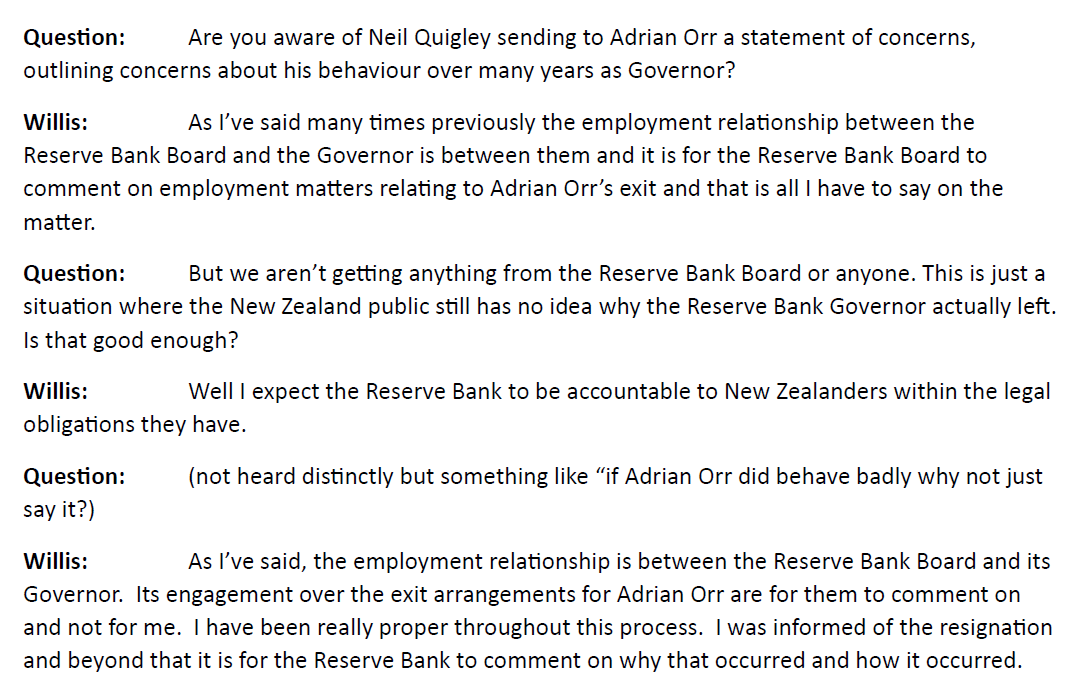
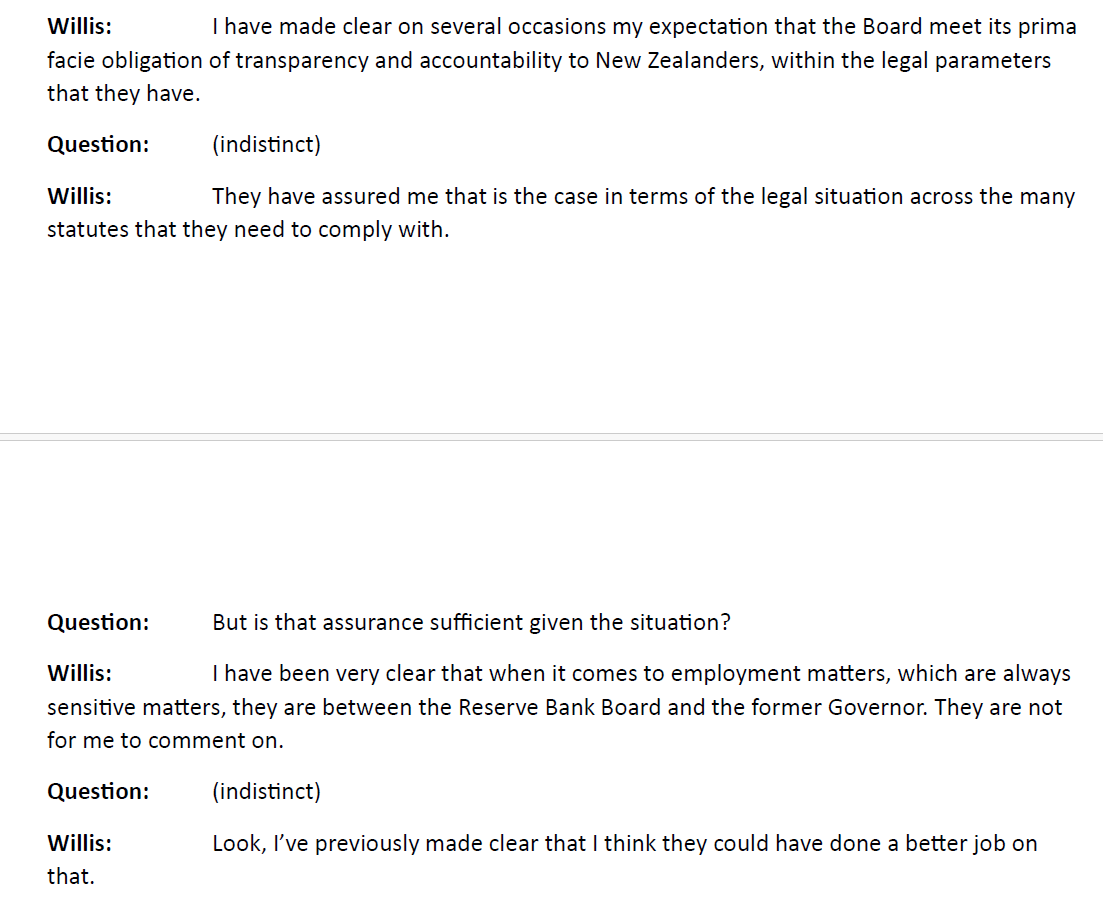
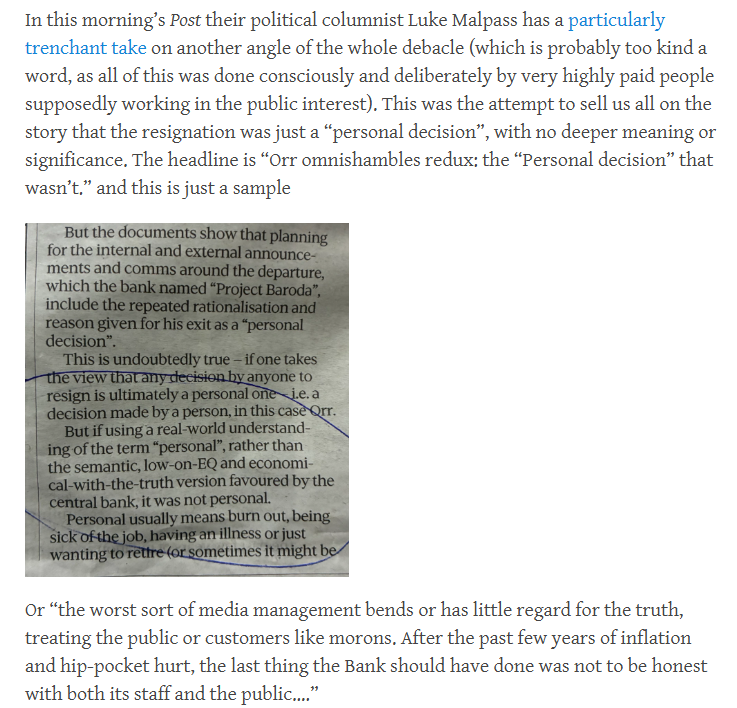

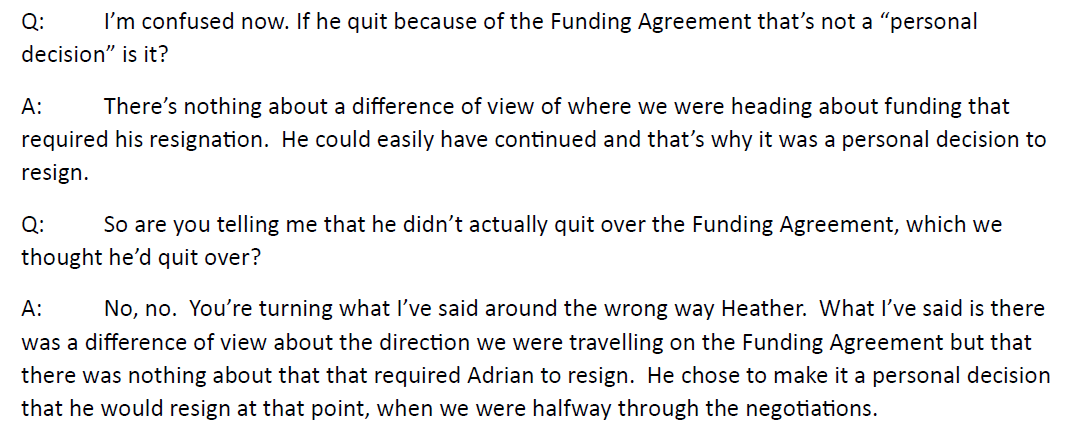
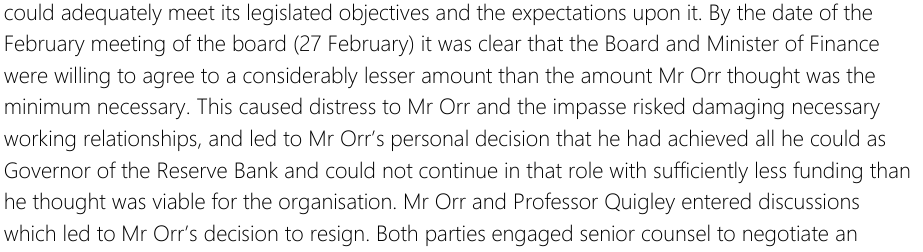
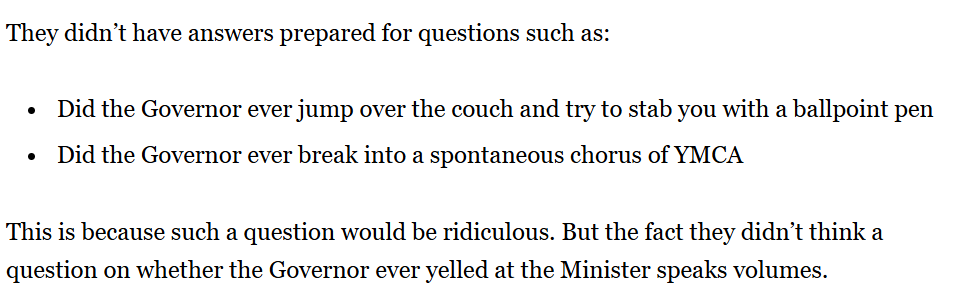
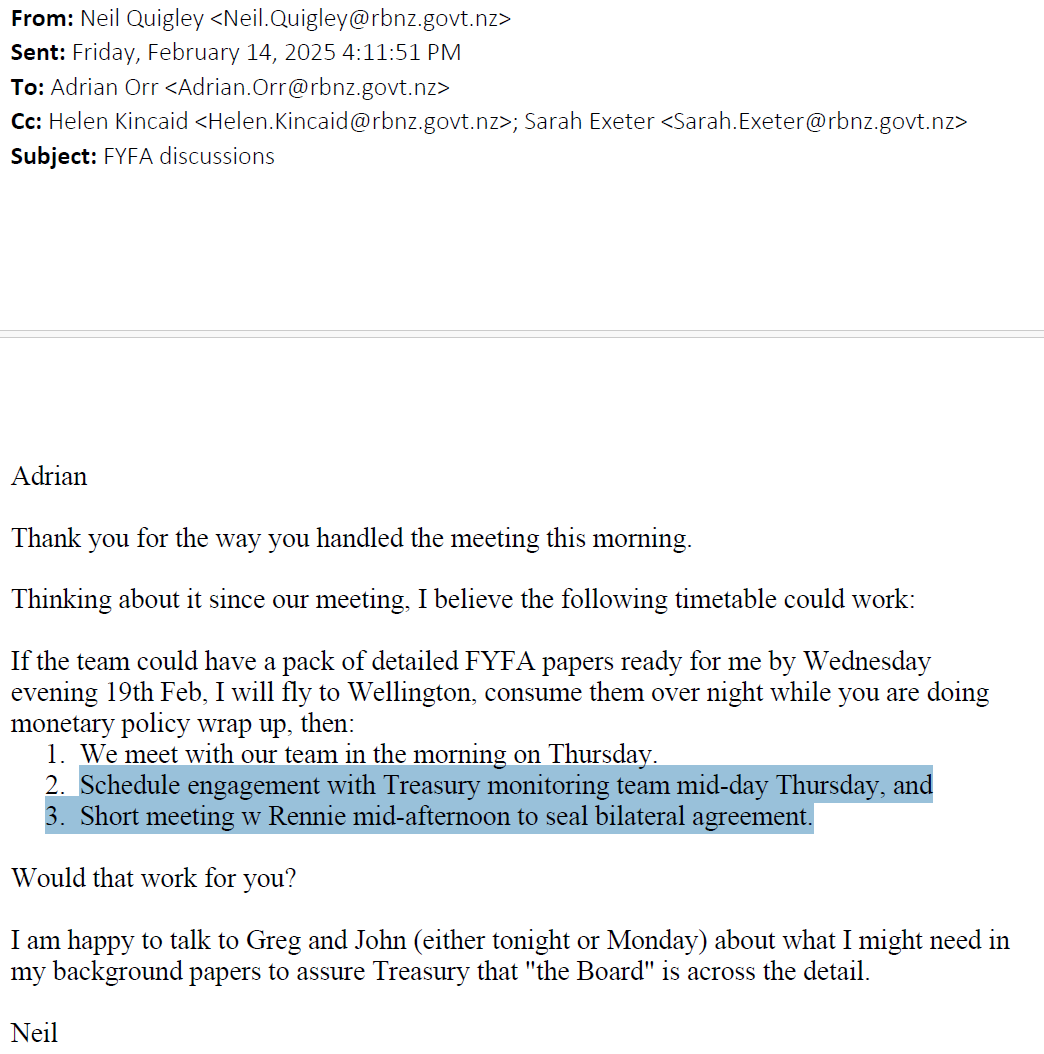
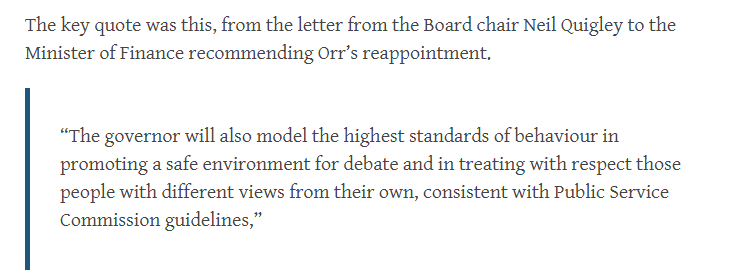
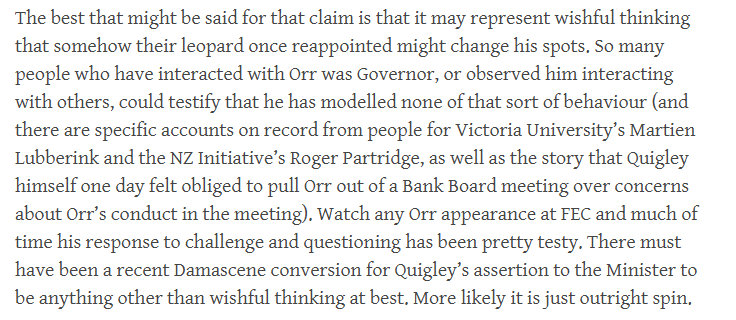
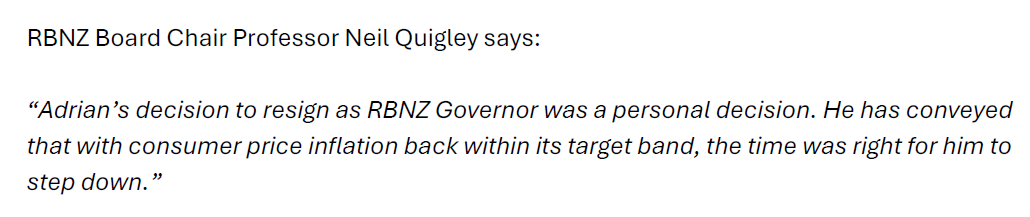
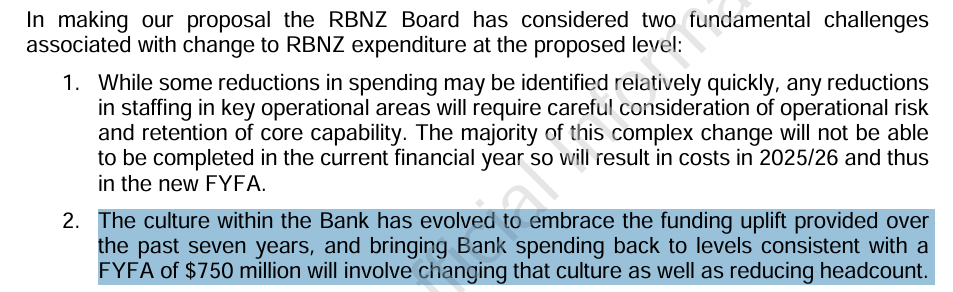
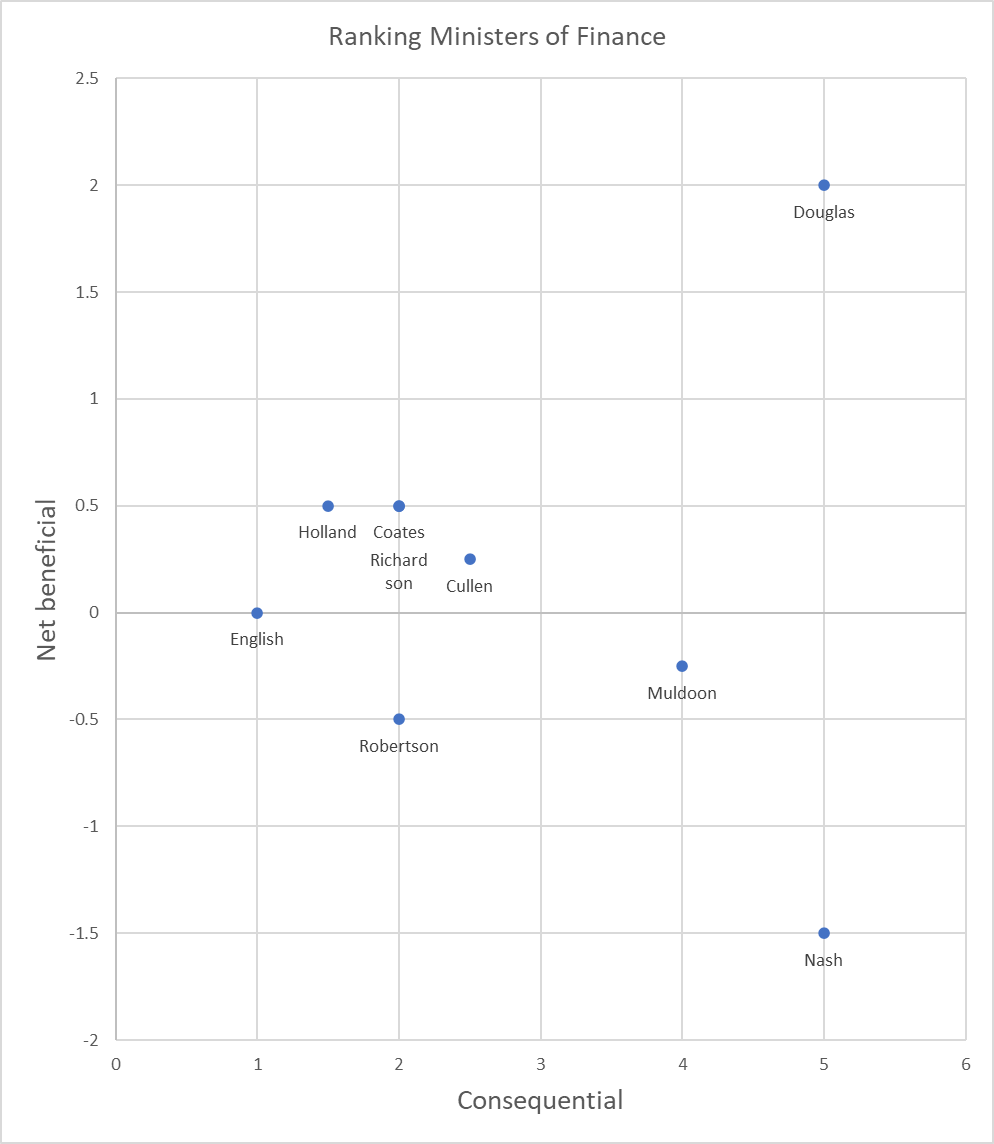
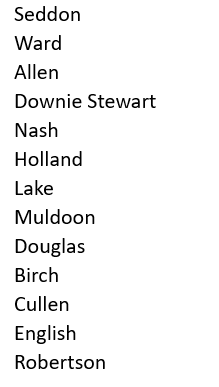
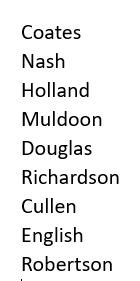


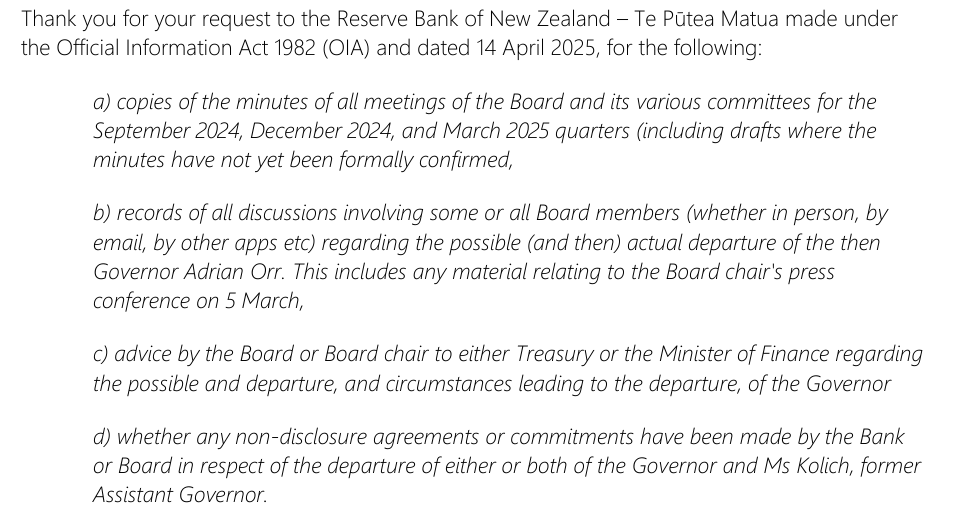

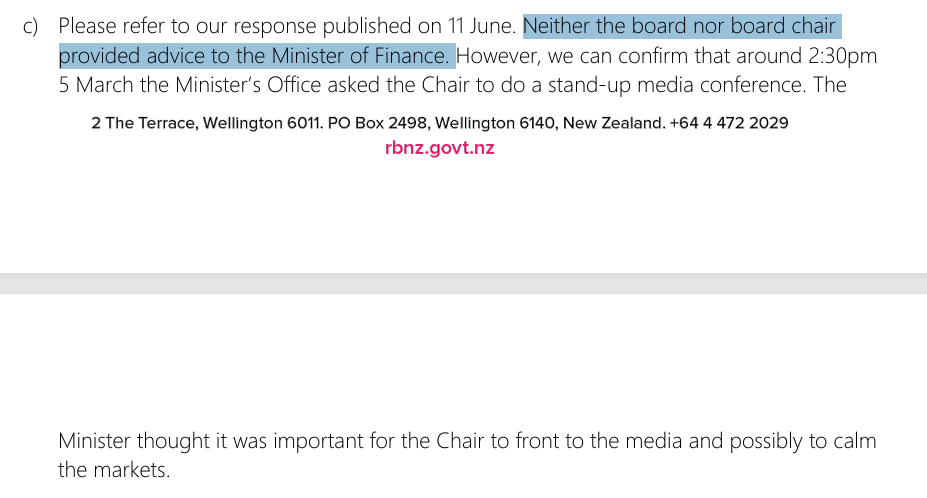
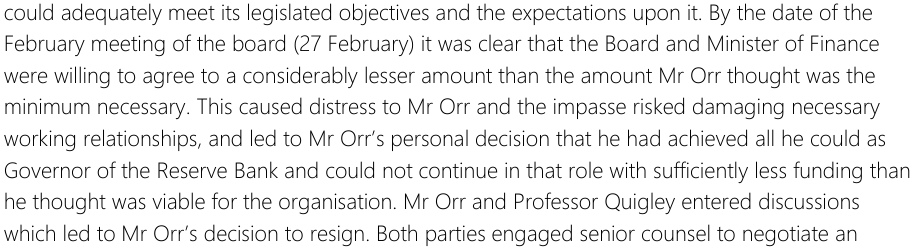

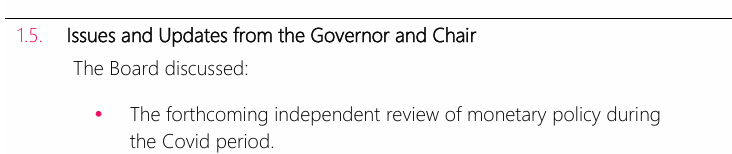
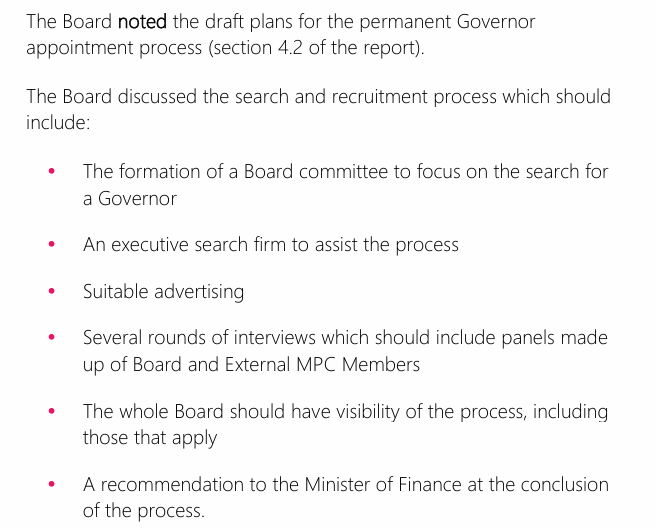
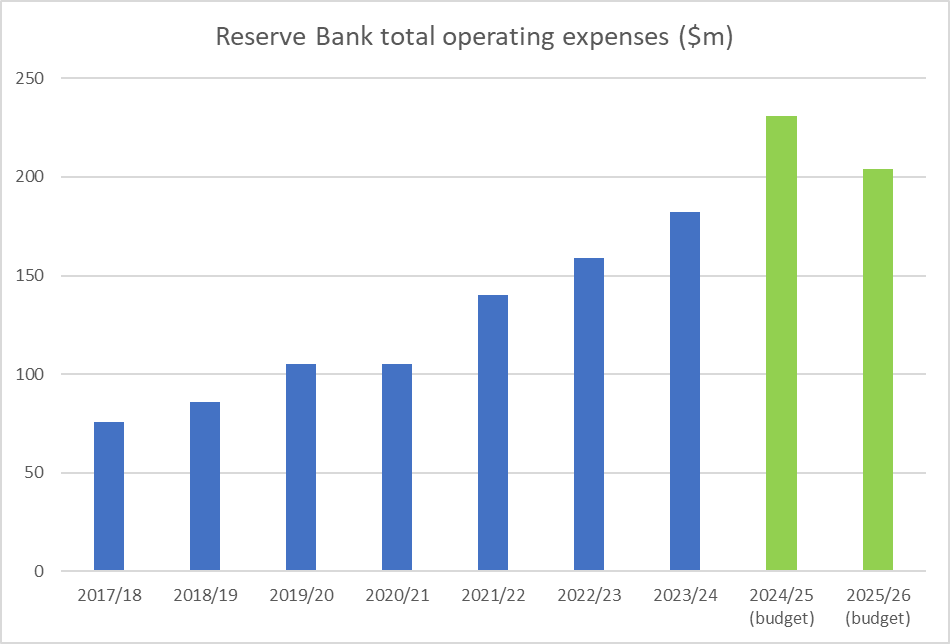
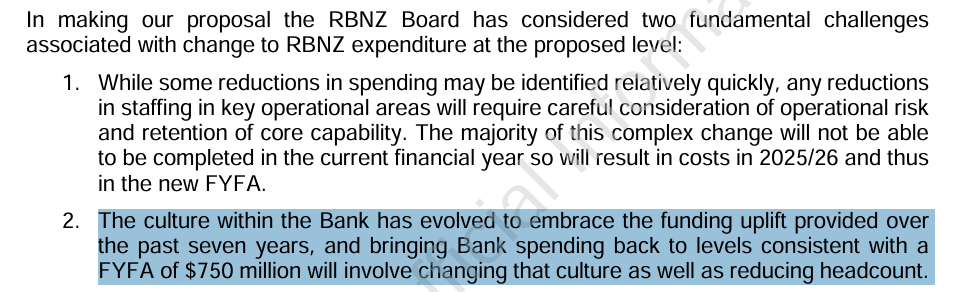
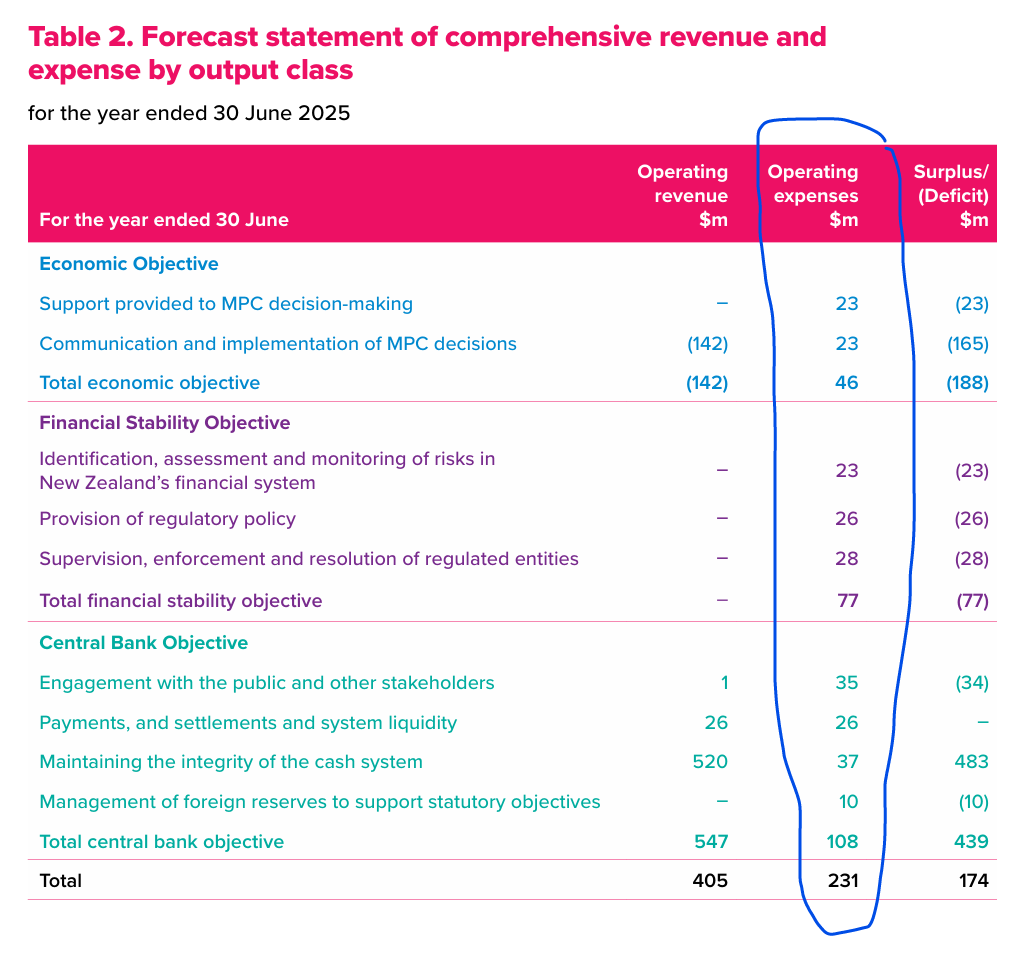
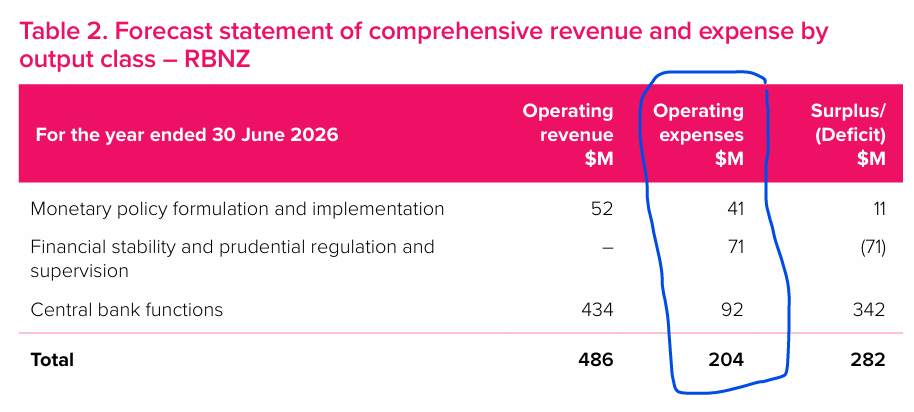
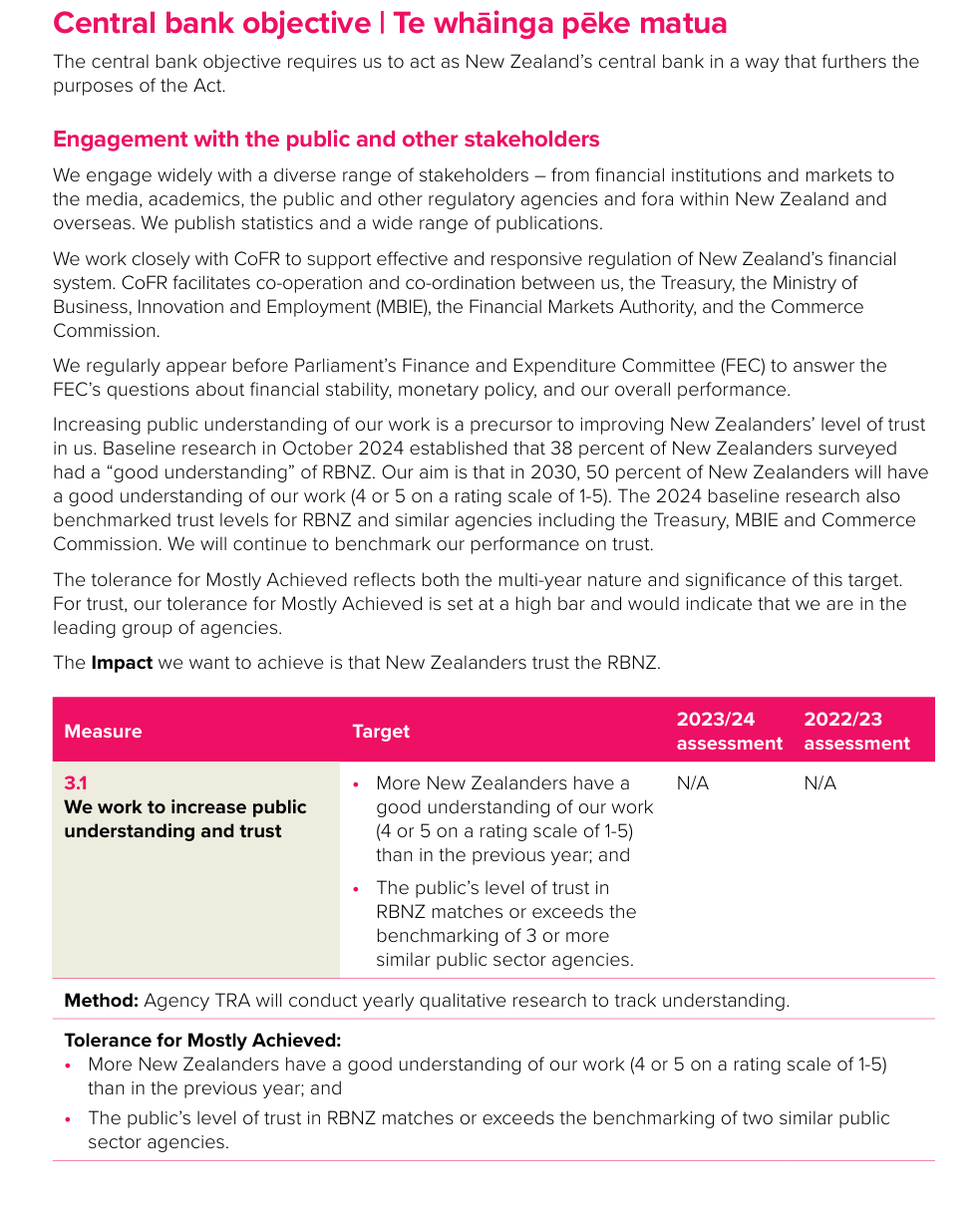
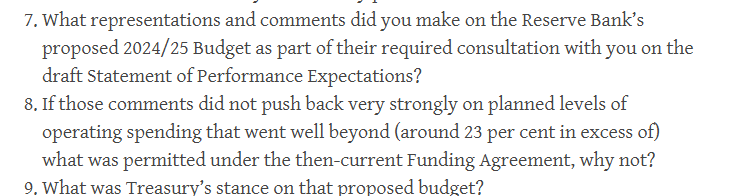

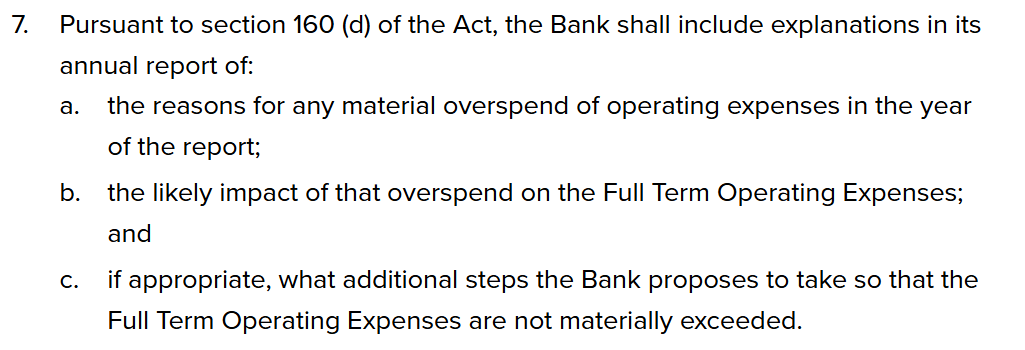

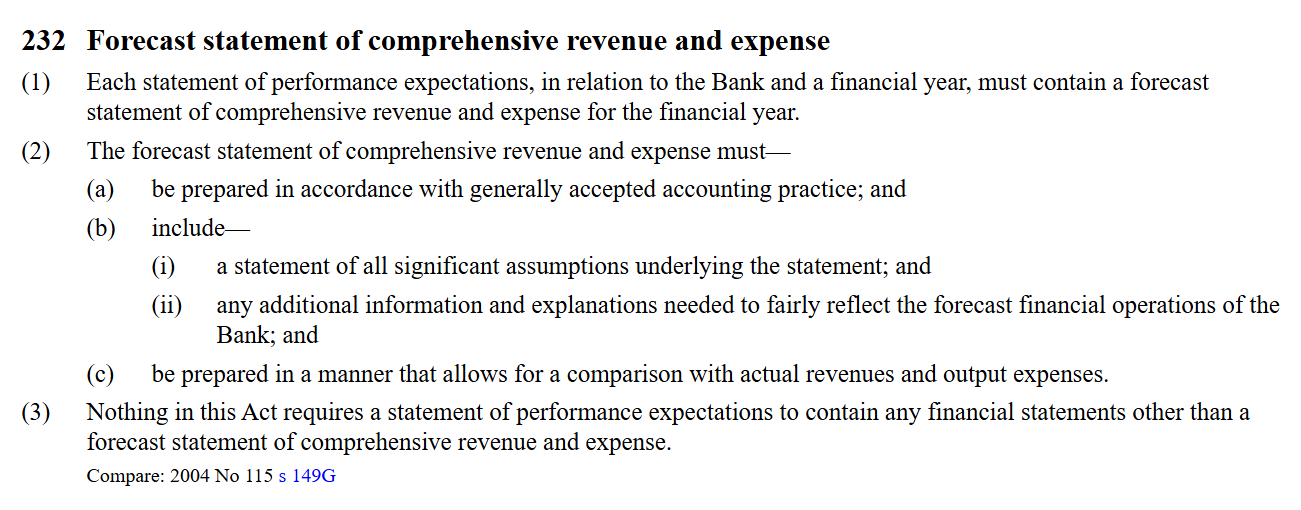
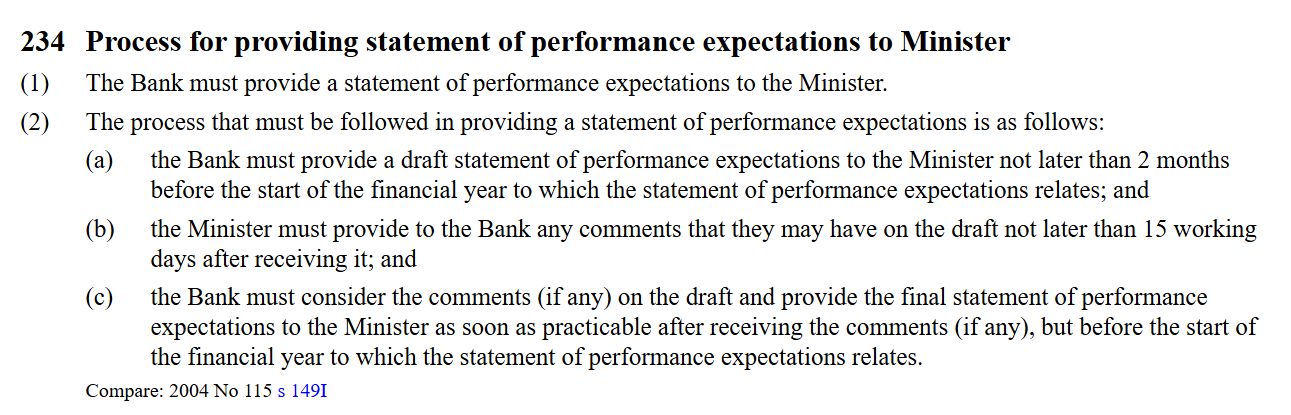
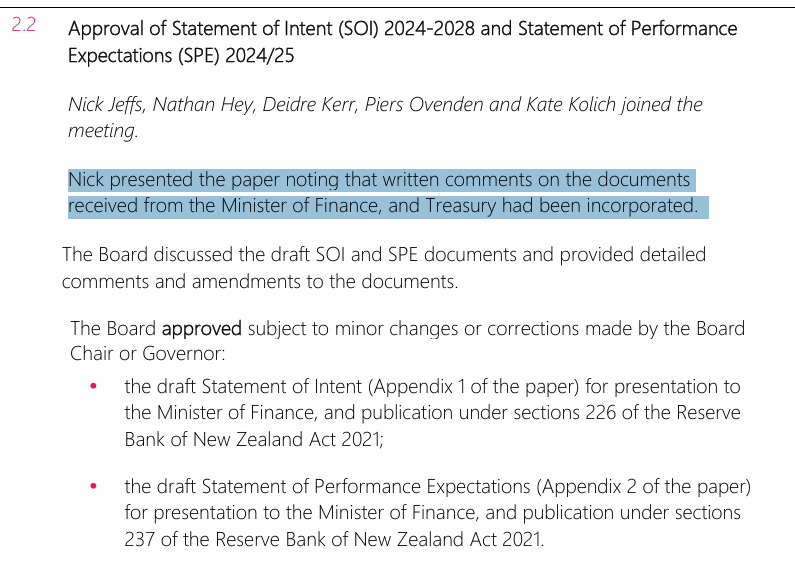
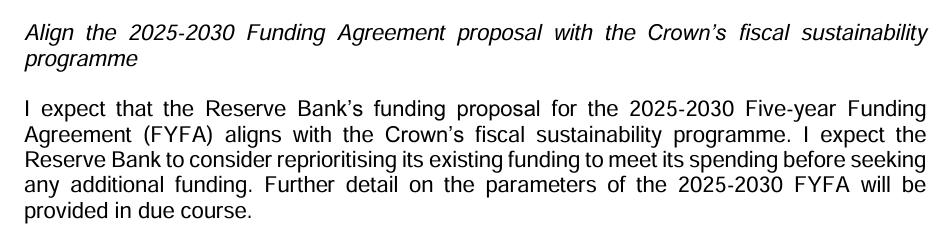
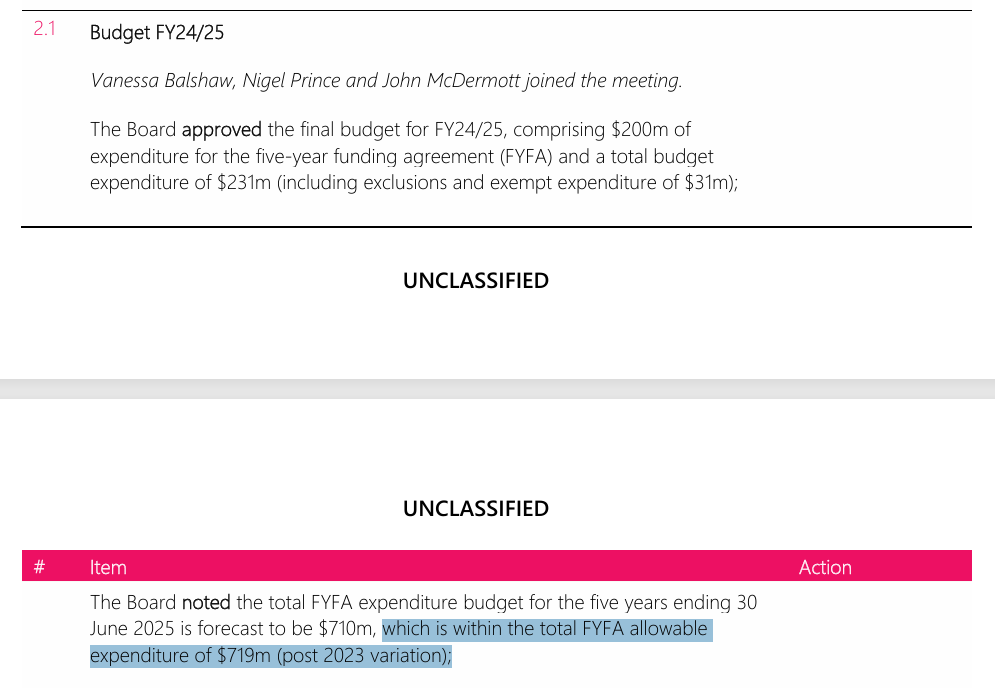
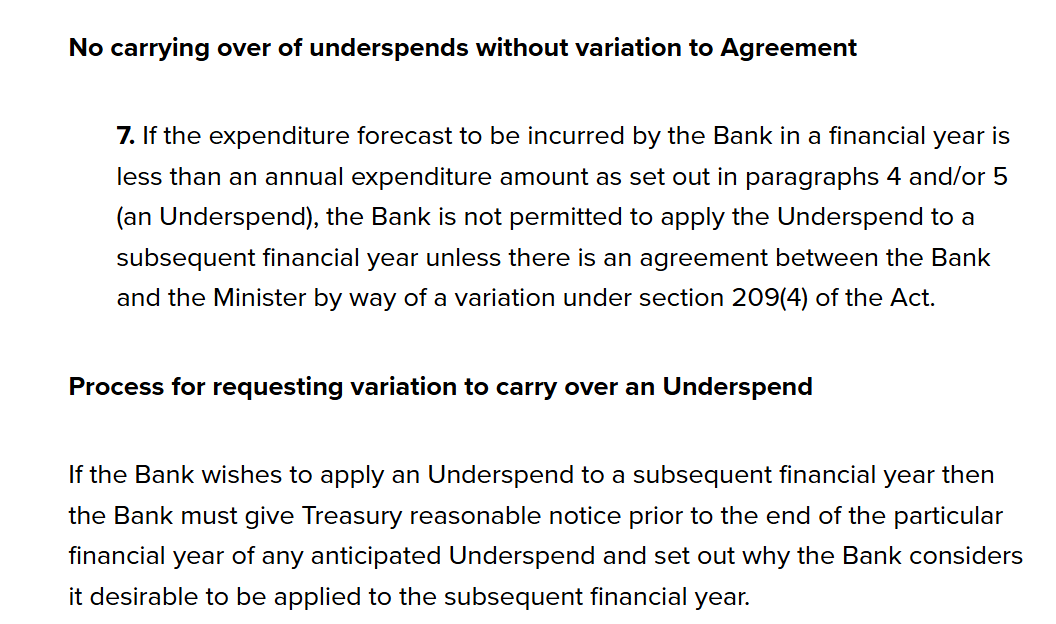
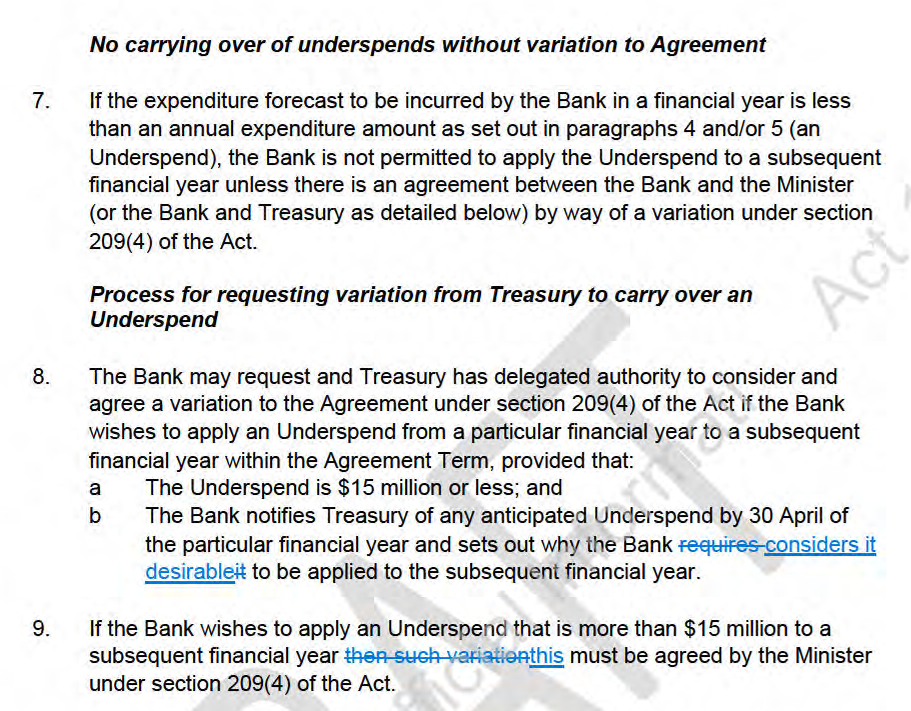
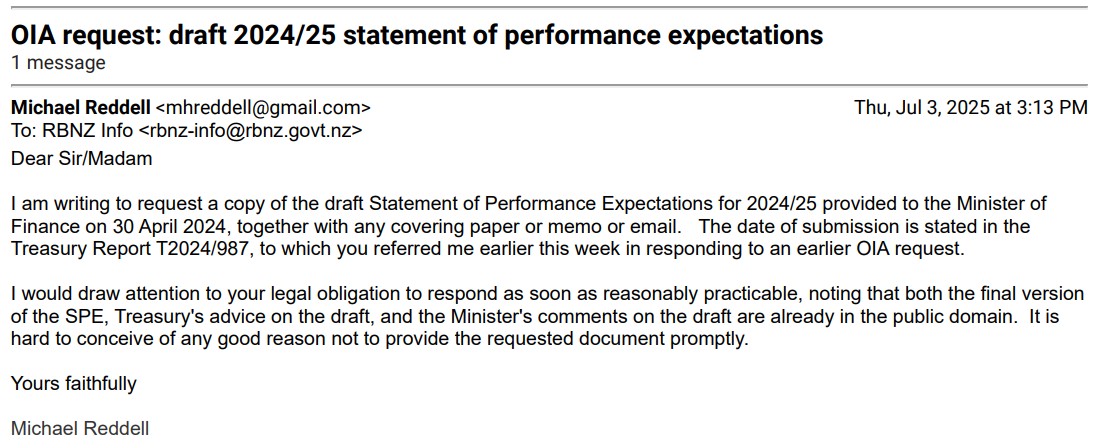
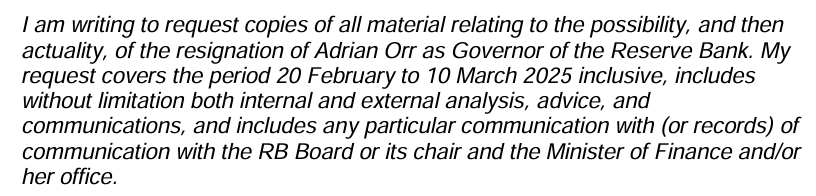
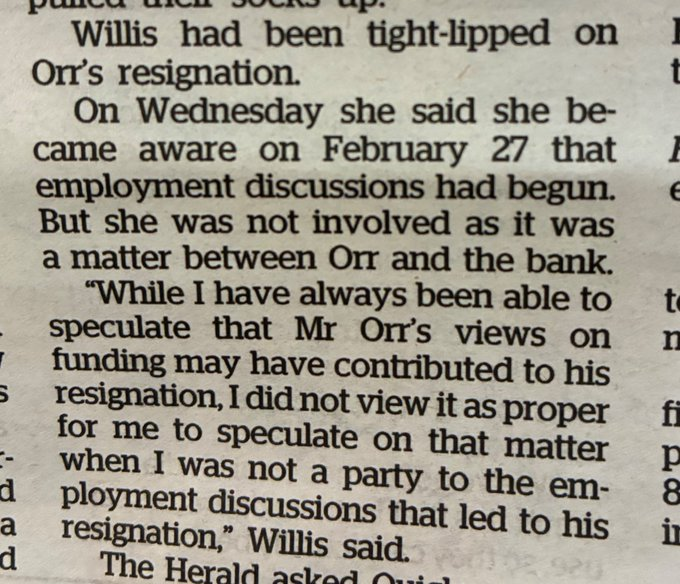


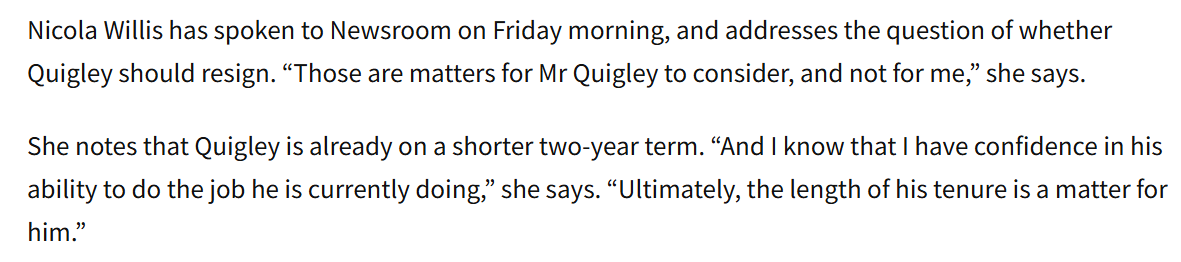
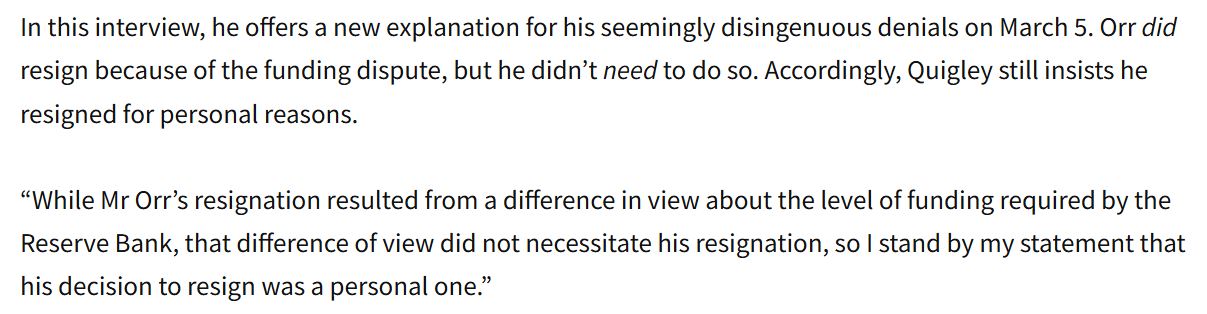
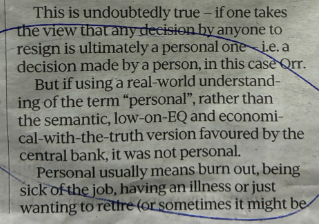
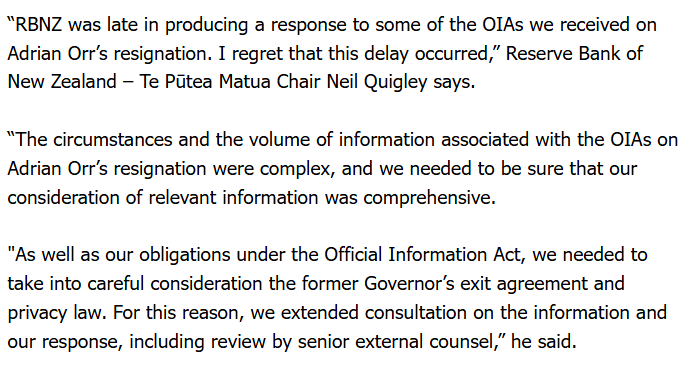
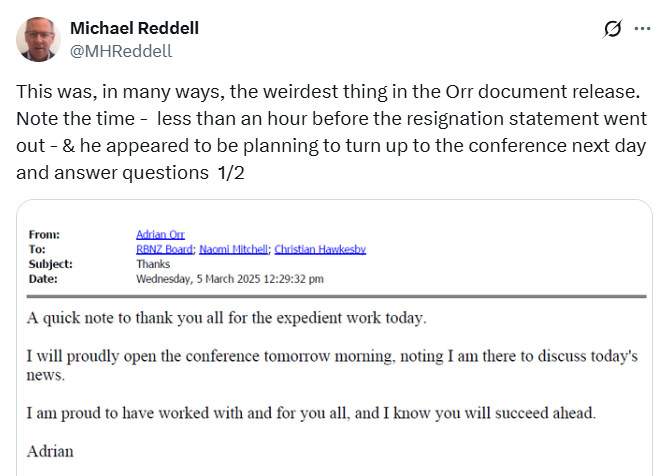
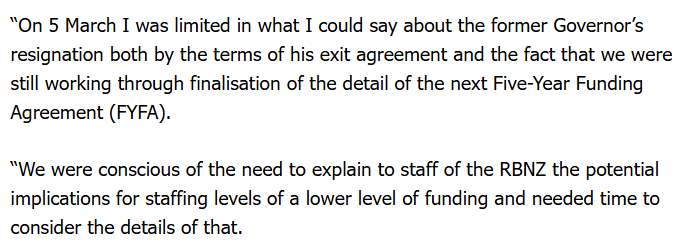
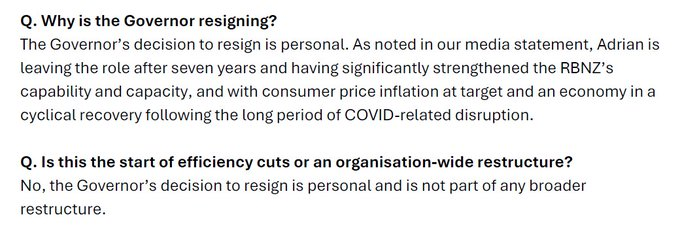

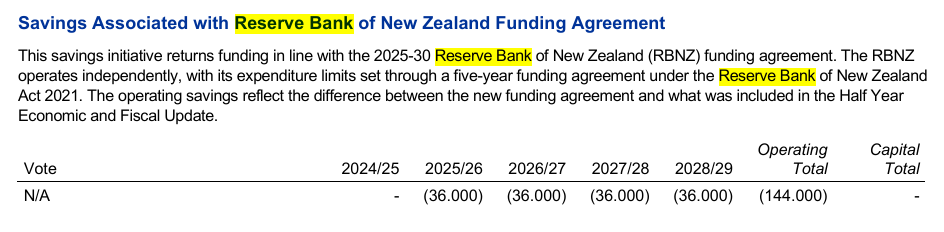
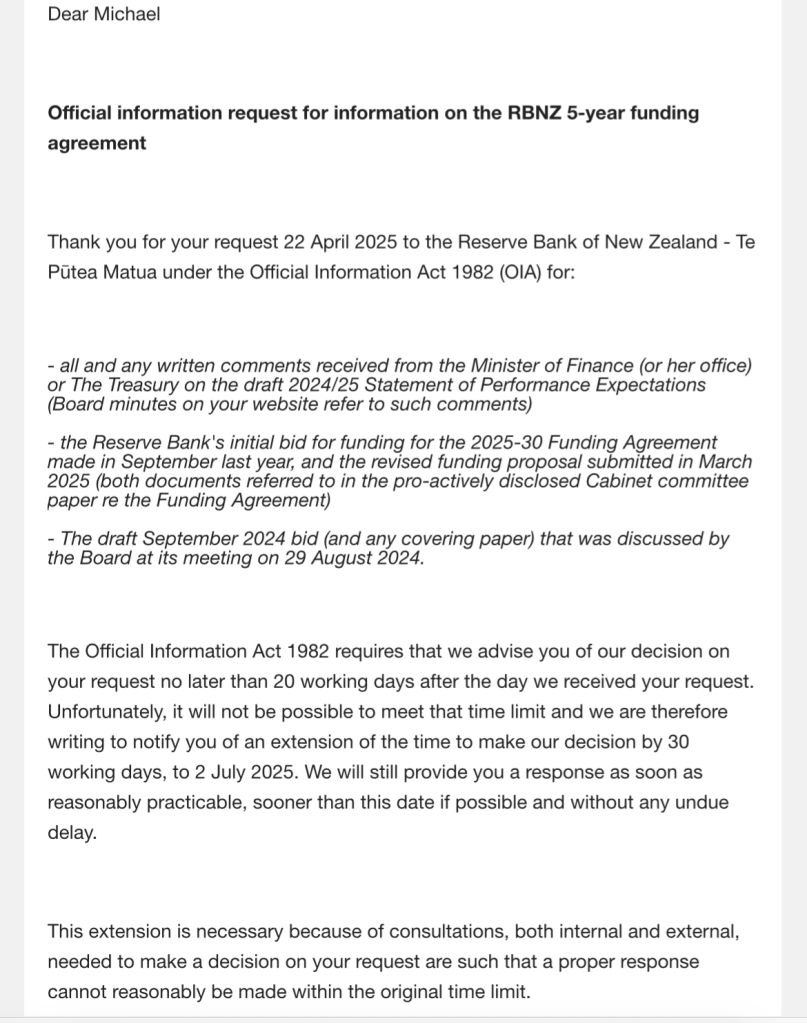
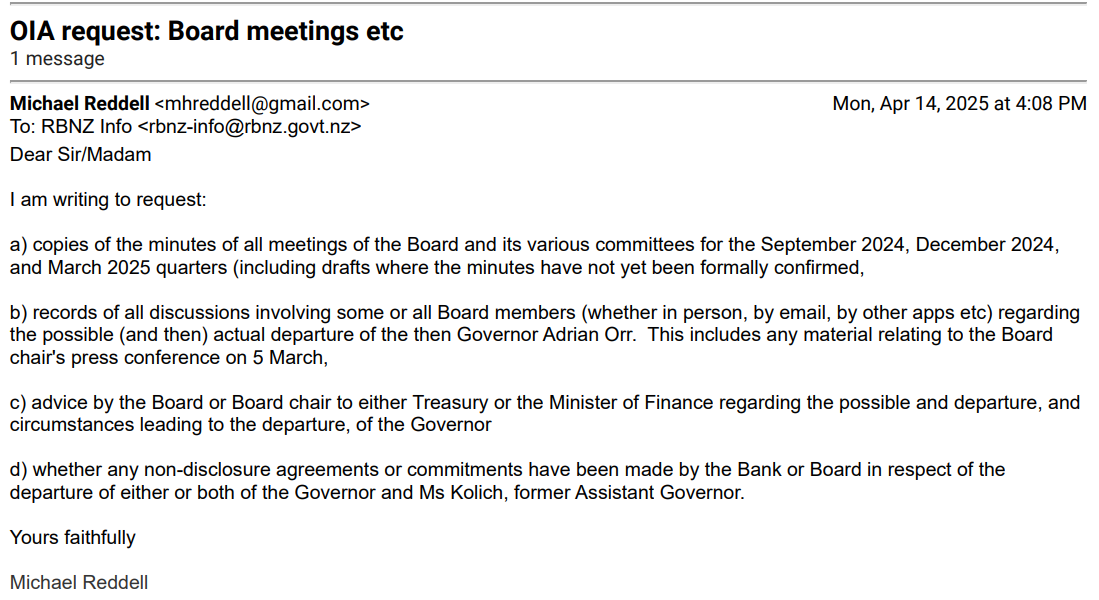
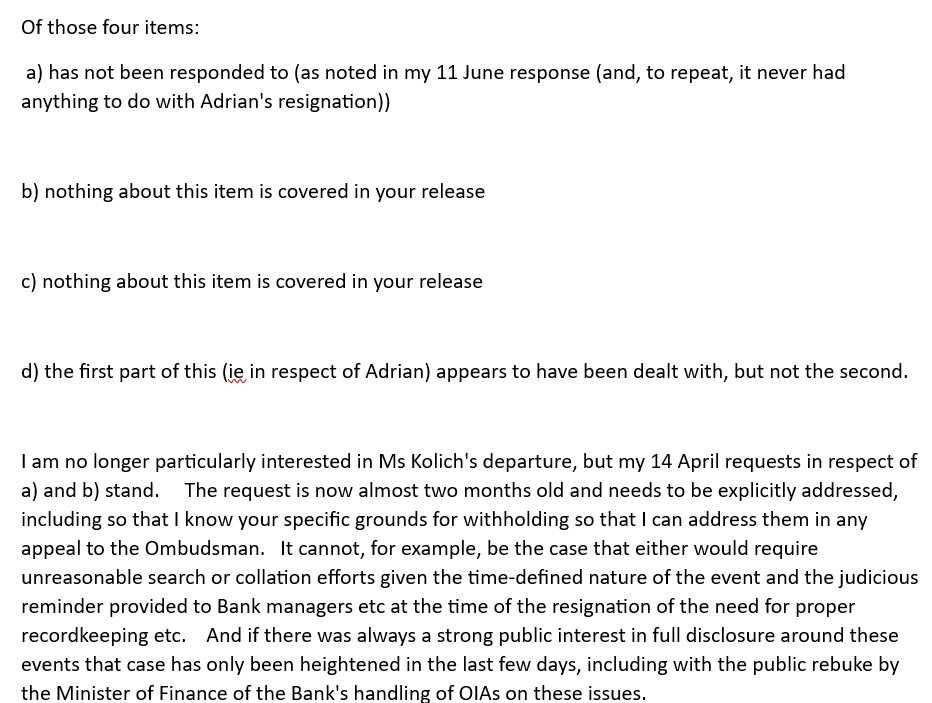
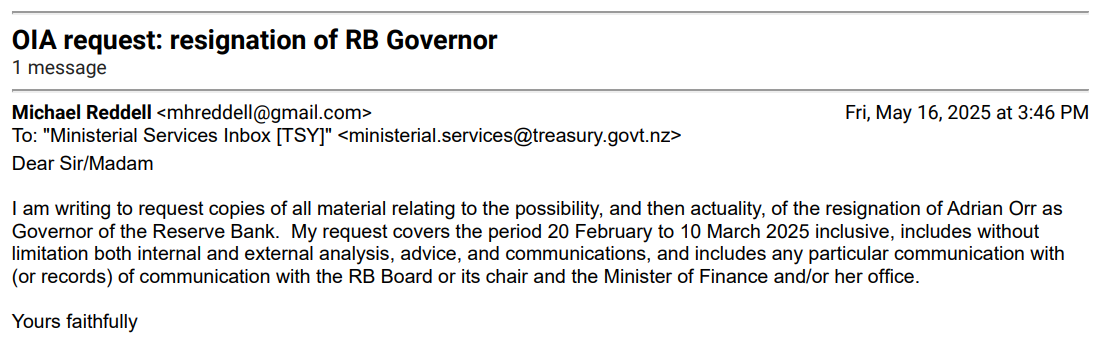
 croaking cassandra