Integrated markets 1890s style

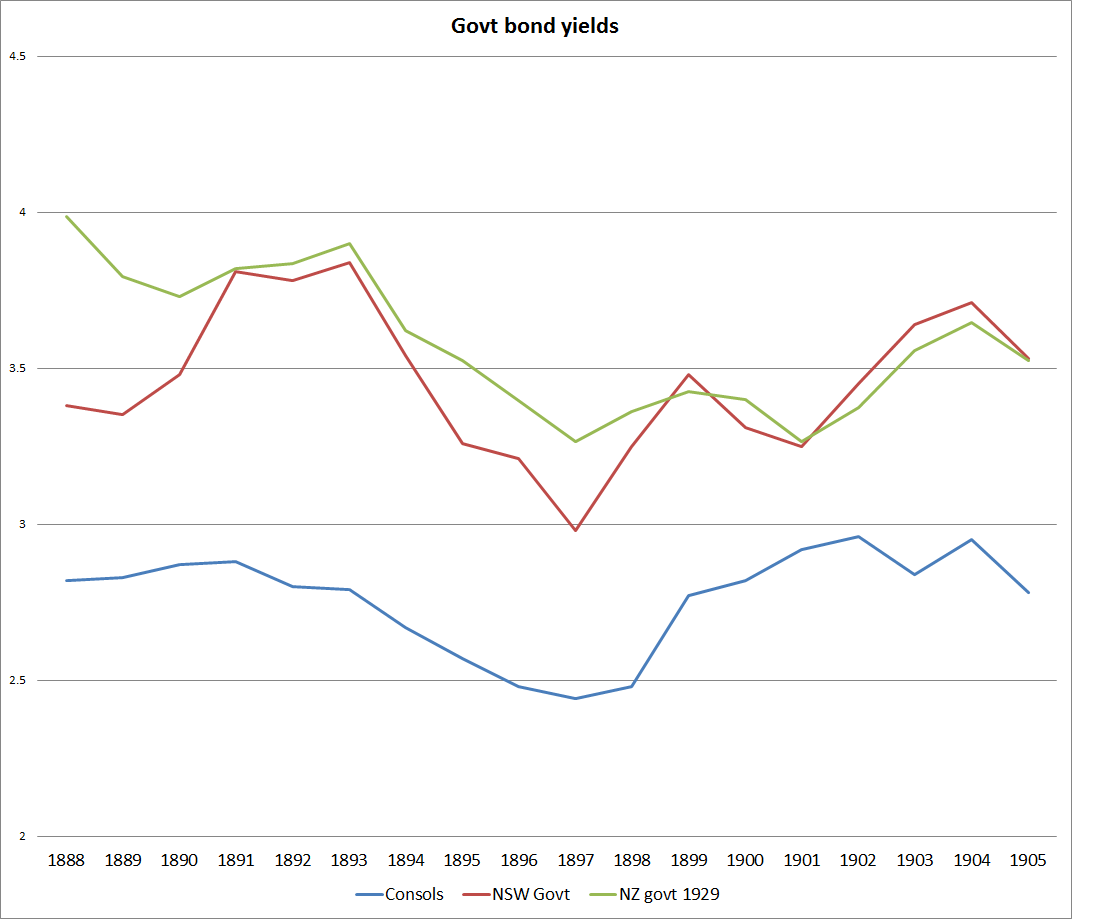
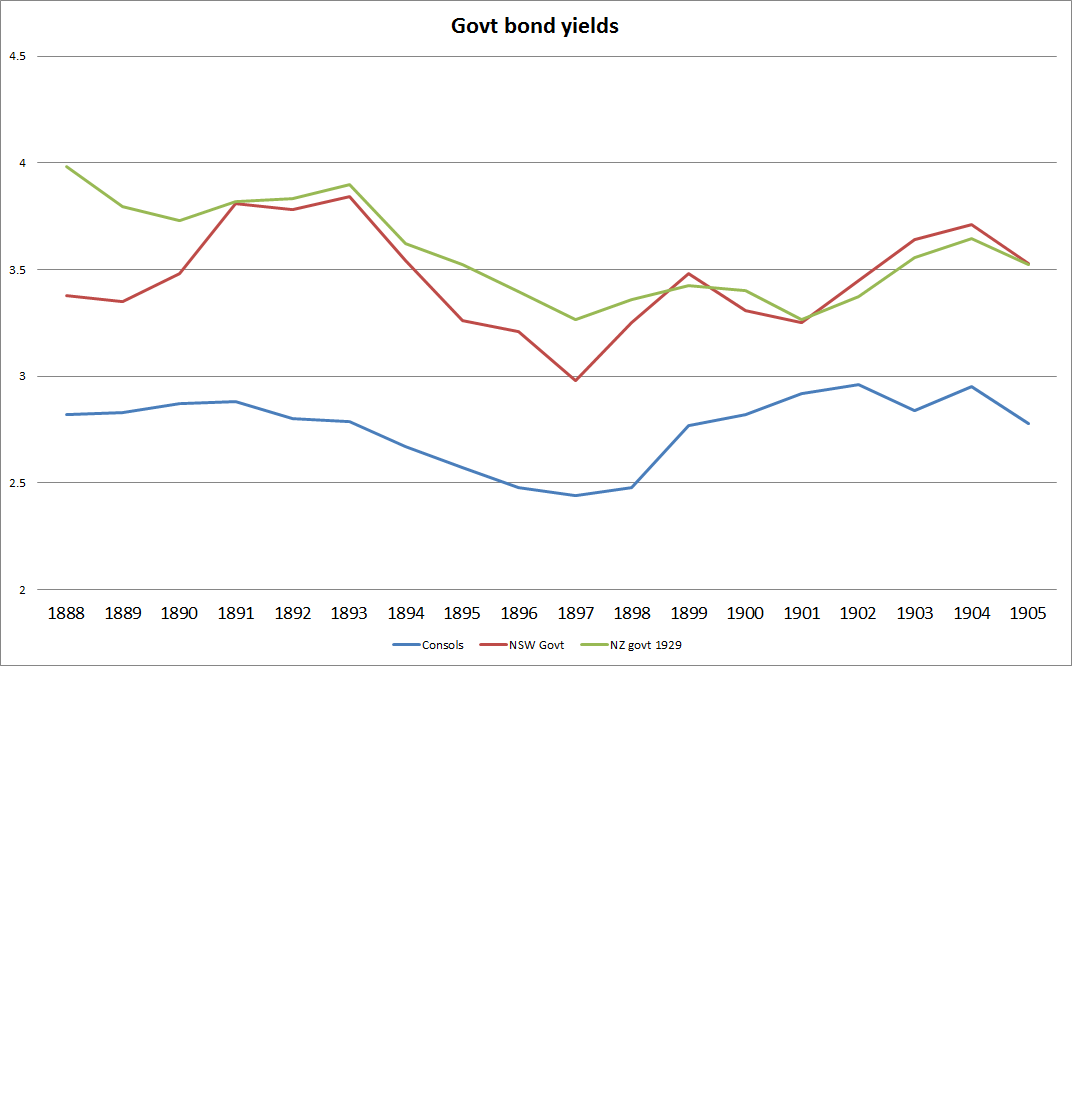
A conversation yesterday about markets in the 1890s prompted me to dig out some data on government bond yields in the period.  The chart below shows a not-entirely-consistent (different maturity dates, period averages vs ends of periods) selection of data on bond yields for the UK, New Zealand, and New South Wales (Australia not existing as a political entity until 1901).  There are spreads between these yields, but recall that they were, on the one hand, the securities of the most powerful country (and a major net lender) and those of two small highly-indebted colonies.   The Australian colonies and NZ both went through episodes of financial crisis in the early 1890s (with severe and long-lasting effects in Australia’s case), and that presumably accounts for the spreads in the chart below widening temporarily in the early 1890s.

Rather more recent yield differentials will feature in a post probably next week (school holiday obligations permitting).

bonds


Makhlouf on migration

The Dominion-Post reports this morning on a speech given yesterday by the Secretary to the Treasury, Gabs Makhlouf.  I might come back to the speech when I’m finally free of institutional constraints but, for now, it was his comments on migration that caught my eye.  An extract:

For New Zealand, many of the benefits from high net migration levels are similar to those that come from offshore investment.

Migration helps to lift our productive capacity – it enables the economy to grow faster by increasing the size of the workforce, in much the same way that foreign capital allows us to grow faster than domestic savings alone would permit.
Right now, at a time when international demand for some commodity products is weak, strong net migration also has the benefit of bolstering demand for goods and services at home.

Like foreign investment, migrants also bring new skills, new ideas and a diversity of perspectives and experiences that help to make our businesses more innovative and productive.

And perhaps most importantly, migrants often retain strong personal and cultural connections to other parts of the world, which opens up, and helps us to pursue, new business opportunities. We are in a pretty incredible position in this regard, with so many New Zealanders – around 1 million people – living overseas, and so many people who live here having been born in another country.

Contra Makhlouf, my proposition, which I will elaborate on over coming months, is that inward migration of non-citizens is rarely, if ever, even part of the answer (whether proximate or more fundamental) to underlying economic problems.  In relatively developed countries, per capita incomes of native populations have very rarely been lifted by immigration.  One way to see that is to look at incomes between pairs of advanced countries over very long periods: over say the last 100 years countries which have received lots of immigrants have not typically done better than those which did not.

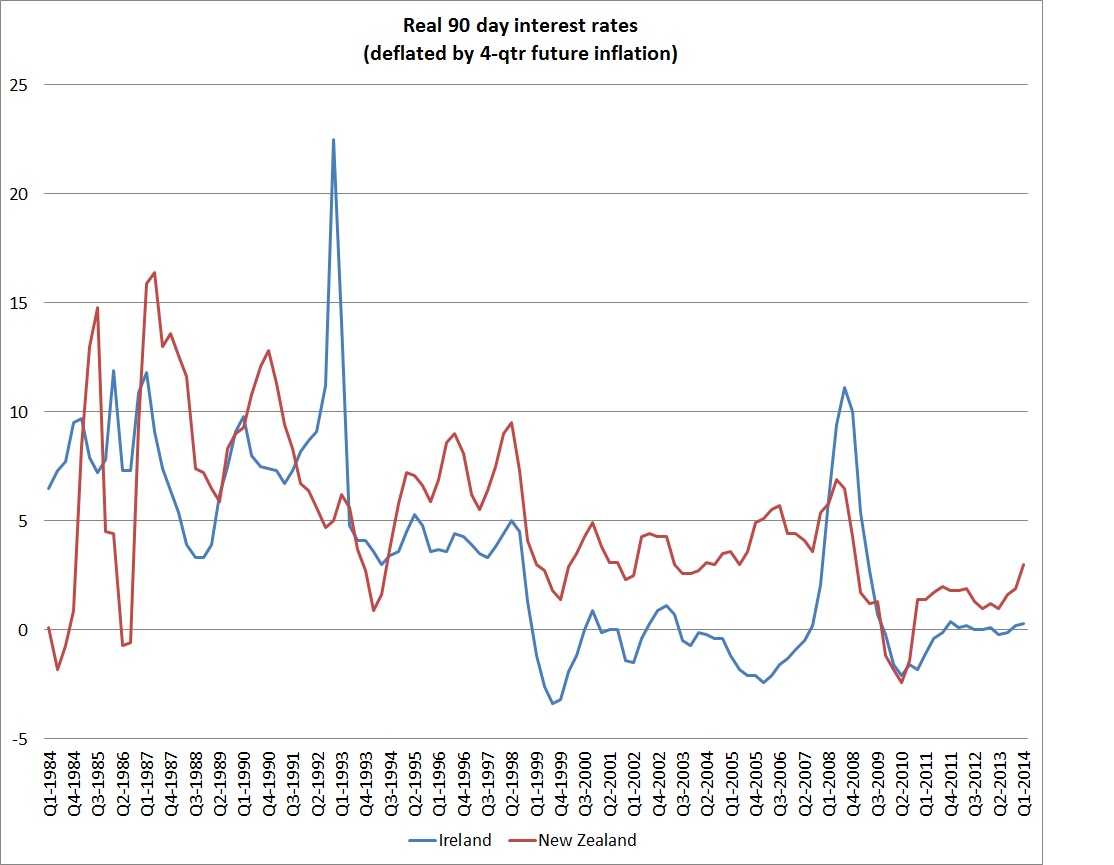
And when non-citizen immigration has boosted native incomes it is usually because the immigrant culture takes over and swamps what was there before  (one could think of European migration to New Zealand, Australia, Canada, and the United States in this light relative to the pre-existing indigenous cultures).  Cultures embed a lot of the keys to economic success.  When it works well, large scale inward migration of non-citizens [I labour the description to be clear that I’m not talking about the comings and goings of New Zealanders] is a complement to economic success that was already well underway, not a contributory cause.    Be it late 19th century New Zealand or the United States, Singapore or Dubai today, or 20th century Ireland  (where people rationally left during the dark economic years, and large inflows occurred only after rapid sustained growth in GDP and productivity was already well-established) the longer-term economic benefits are almost all to the migrants,

Immigration allows the benefits of a country’s economic success to be shared more widely.  It might be a path to success  and prosperity for the migrant (if they didn’t expect that they would not migrate) but shouldn’t be seen as a path to lifting the innovation and productivity of New Zealand people and firms.  In Australia, as orthodox a body as the Productivity Commission reached pretty much that conclusion almost a decade ago.

New Zealand is not an economic success story, and has not been so at least since World War Two.  Finding a path that begins sustainably closing the income and productivity gaps to the rest of the advanced world, should come before governments carry on bringing in yet more people, even as our own people are choosing to leave.

Just how badly has New Zealand done?

“Very.”

That was the Executive Summary to a discussion note I put together one Saturday a few months ago.

productivity just how badly has nz done

In one sense, there is nothing new  (the data have always been there) but there was a certain relentless bleakness about putting it together, and rereading it now.  If only the New Zealand political and economic elites treated the failure as seriously as it deserves.  But then countries fail mostly because of the choices of their elites –  sometimes including the well-intentioned ones.

The paper mentions another note of mine, which I included with one of the first entries on this blog.

Richer cities become less dense

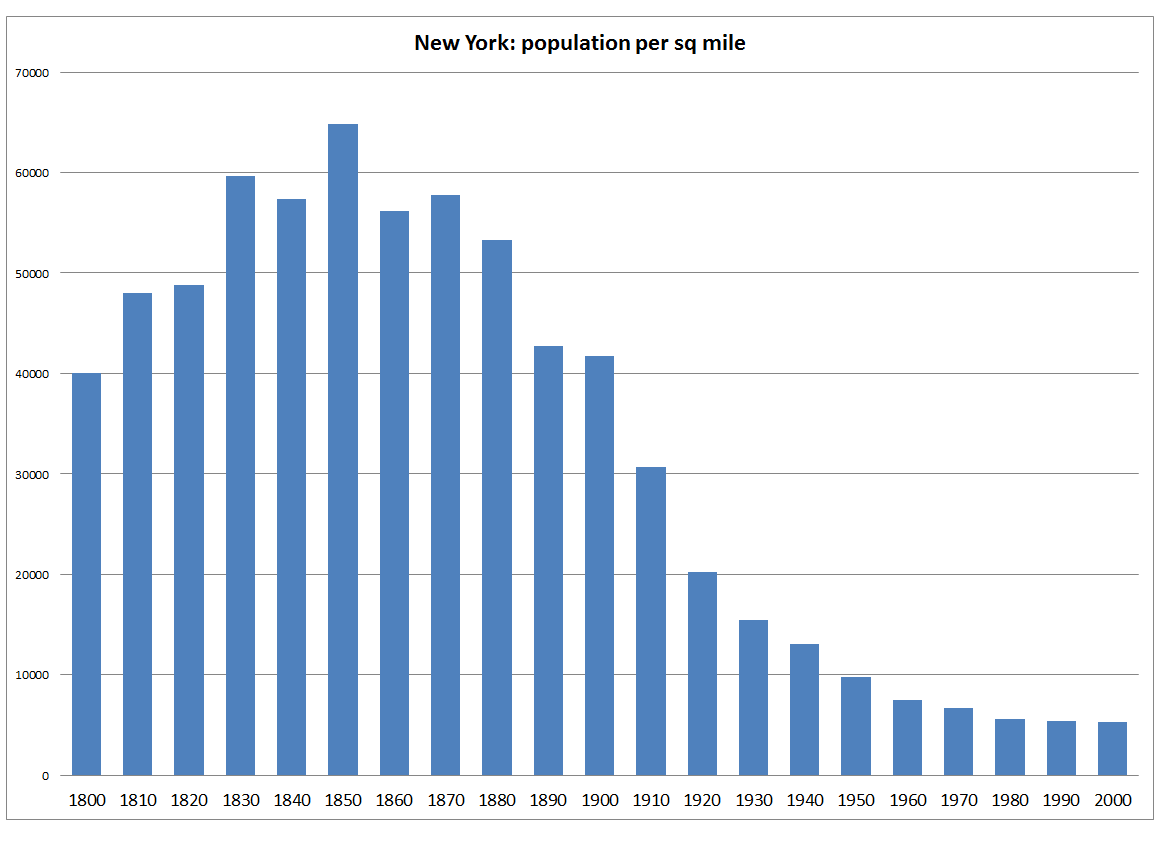
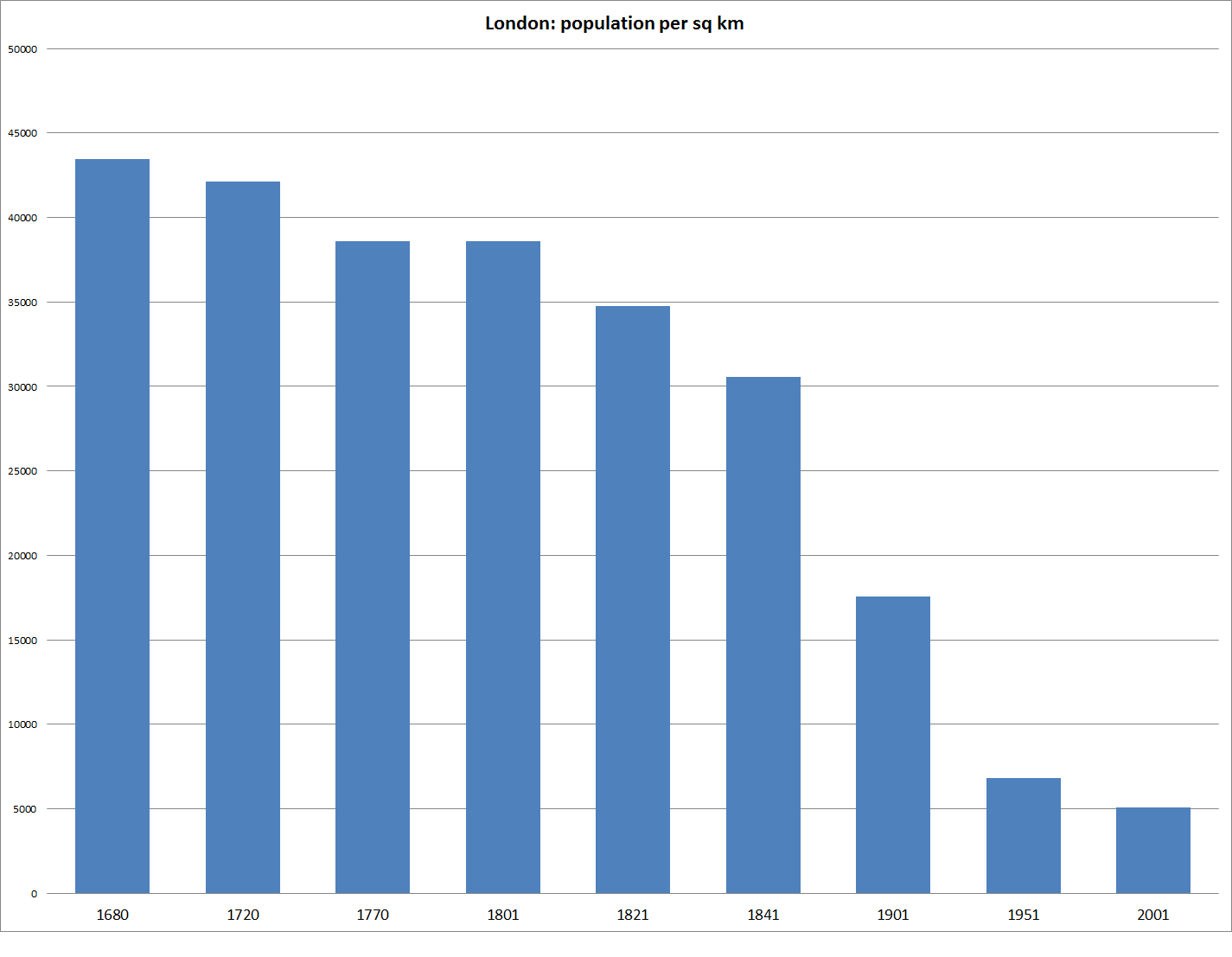
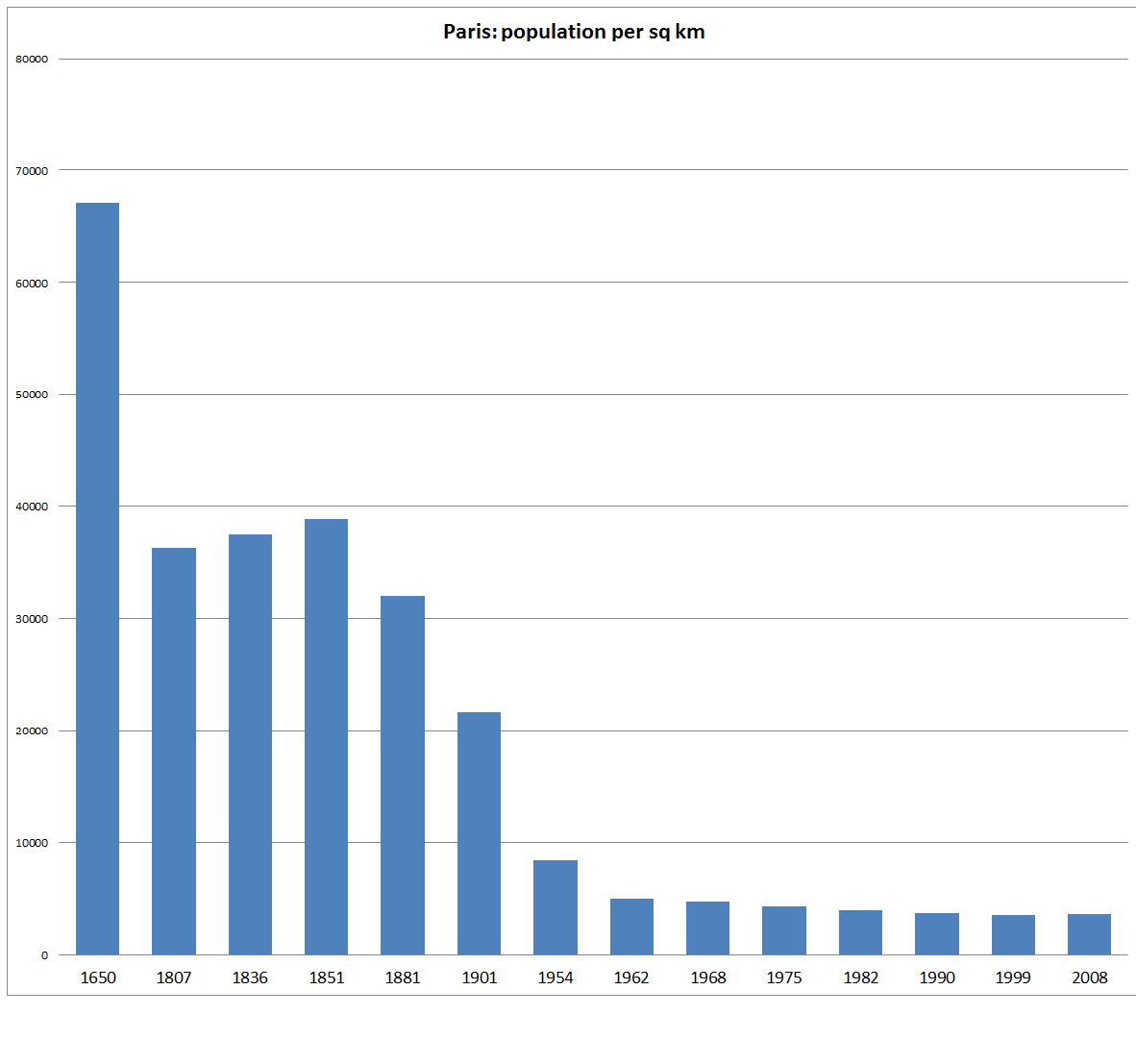
Much of the debate around housing in New Zealand seems to involve “urban planners”, and people with similar inclinations, trying to tell people how they should live, and what sort of houses (and what sized sections) they should live in.  In particular, the planners seem to have quite strong preferences for higher rates of urban density.  Some of this seems to be about their own lifestyle preferences, and some the alleged agglomeration benefits.  We’ll come back to agglomeration over the coming months.  But here I thought I would just highlight some fascinating data I stumbled on a while ago on the Demographia website on urban historical densities.    Here is some of the data on historical urban densities.

First, a newer city; New York since 1800

new york

And then two older European cities.

London since 1680

london

And Paris since 1650

paris

I haven’t looked at how the data were put together, and I’m sure there must be considerable margins of error around any of the older estimates.

But….they paint a pretty clear time series picture for each of three of the rich world’s great cities: as cities get richer, their citizens seem to demand more space, not less.  This shouldn’t be a surprise –  think of the tenements that the poor lived in in earlier stages of urban development, and of the congestion and squalor of much-poorer developing cities today.

Of course, governments and “urban planners” can stymie these trends –  by applying land use restrictions.  But in whose interests are such restrictions applied, and who is positioned to make those judgements?    Shouldn’t policy facilitate private preferences, whether for more density or more “sprawl”?

And none of this bears on questions of why some rich cities (eg in US or Australia) are much less dense than comparable size cities in other places.  And it has nothing to do with the point that in any country the biggest population centres are likely to be more dense than smaller places.

But…to repeat…history suggests that, all else equal, as cities and countries get richer then. all else equal, their inhabitants prefer more space not less.

Peak starts in Christchurch?

I spent Saturday in Christchurch visiting family. I haven’t lived in Christchurch since I was six, but in some respects it is still “home”.  People close to me lost a lot.   I get down every few months and have followed progress since the earthquakes with both professional and personal interest.  Among the (not original) observations was the striking contrast between the quick private sector action on the periphery, and the mostly glacial pace of activity in the central city government-controlled zone (where, not coincidentally, owners’ property rights had been quite severely impaired).

Saturday’s Press had an interesting feature on “the growing number of rebuild-related firms going bust despite a building boom in Christchurch” –  presumably not a reflection of lack of work, but of the dislocations and opportunities that major economic shocks bring.  Some will have prospered enormously over the last few years, and others –  a minority – just won’t have coped with the challenges of, say, going out on their own and running their own business.

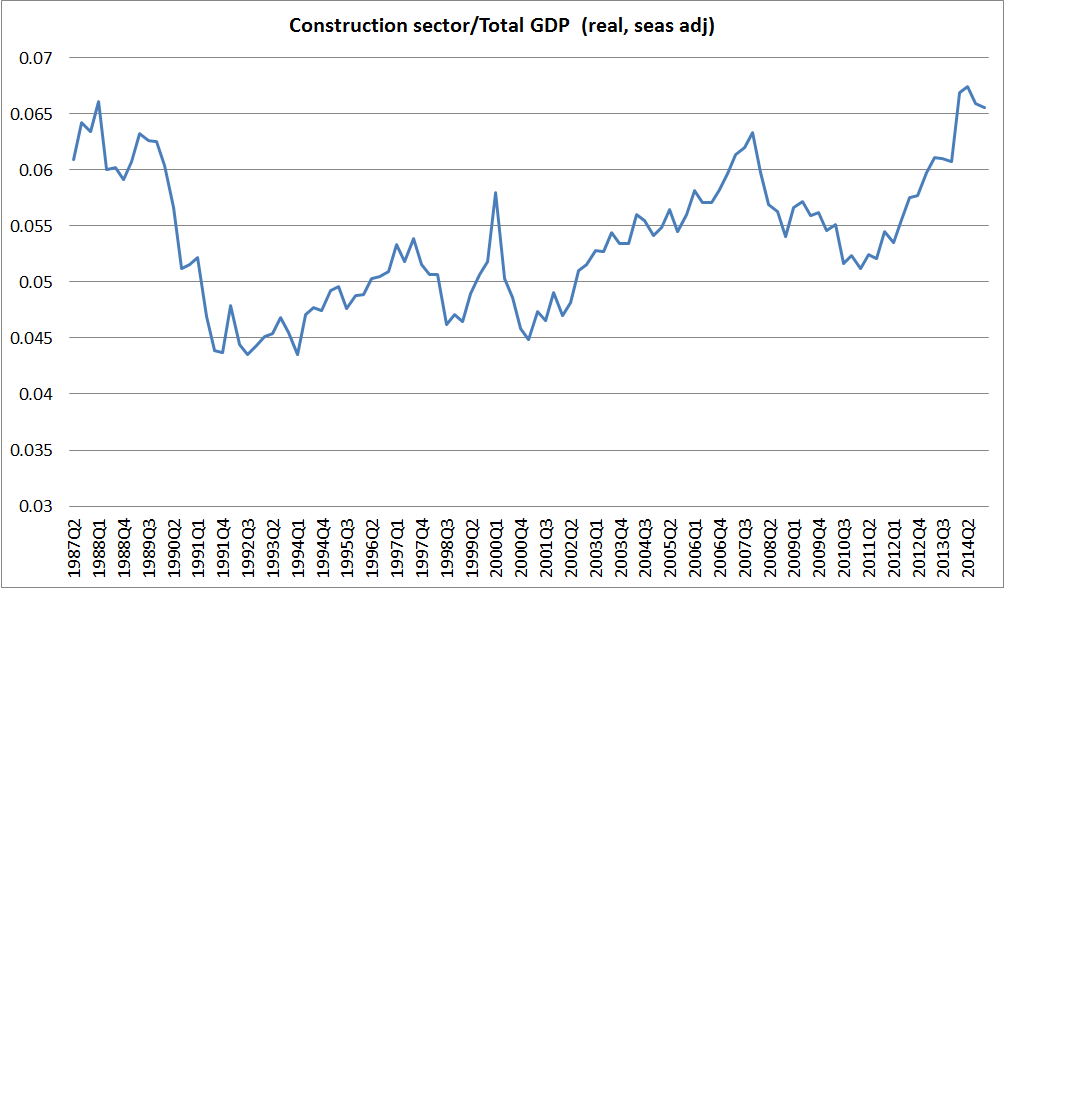
On this visit, even the government-controlled zone was finally starting to look more like a building site than a bomb site  (and I noticed that the Sunday Star Times had a big article yesterday on the scale of the central city developments).  And it is good to see an increasing number of new buildings up and open.  But I noticed on my previous visit, and again this time, that the new buildings often still have “for lease” signs up, and several vacant floors.  Wandering around the city it was not hard to imagine that Christchurch might already have passed “peak starts”, not just for commercial buildings, but for houses as well. Of course, there is years of work still to go –  and some of the questionable vanity projects (convention centre and sports stadium) are not even near commencement –  but it is difficult to envisage that the level of activity goes higher than it has been over the last year or so.  Four to five years on, presumably everyone has a roof over their head, and fewer firms are operating from very unsatisfactory temporary premises.  Housing market pressures look to be easing, and if the early commercial buildings aren’t quickly filled, what prospect for many more starts in the next five years beyond the projects that are already underway?  At an aggregate level, construction sector activity as a share of production GDP ran up very sharply (and much of that was Christchurch), but it has gone sideways or backwards for the last few quarters.

Once again, the Australian resources investment boom, and its aftermath, spring to mind.  With the difference that, vital as it was, the diversion of resources into repairing Christchurch doesn’t leave us with a new large productive sector at the end of it all.


Morgan Stanley has the answer (not)

Morning Report this morning gave considerable coverage to a new research report from the investment bank Morgan Stanley, Sustainable Economics: The Bitter Taste of Sugar.  The authors argue that rising obesity levels will act as a major drag on economic growth and productivity across the advanced world over the next 20 years, lowering growth rates by around 0.5 percentage points per annum (roughly 18 per cent of GDP cumulatively over 20 years).

sugar (2)

Reports like this are like a gift to those who loudly insist governments have to “do something” about the voluntary private consumption of sugar.  But there is almost nothing solid to back up the Morgan Stanley assumptions.  And not many things change annual growth rates semi-permanently by 0.5 percentage points. There is some discussion  in the report of the way in which obese people may be less productive than otherwise, but nothing to indicate whether people are more likely to become obese if they are already less productive for other reasons, or to back up the estimates/assumptions at an aggregate level.  And there is no attempt to back-test the numbers they use –  for example, does the changes in each country’s obesity rates in recent decades correlate, even loosely,  with changes in the respective country’s growth rate?

Of course, even if the estimates were accurate, it is hard to believe there is a policy problem.  These are private choices.

But if they were accurate  – and we were happy to ride roughshod over private preferences – it would suggest any easy way of closing the New Zealand productivity gap: reduce our per capita sugar consumption to, say, Japanese levels and in 20 years we would well on our way up the OECD league tables.     But, most likely, it just isn’t so.

And among the FIFA World Cup finalists

A commenter –  my son –  asked how the countries which were finalists at the last football World Cup have done.

The chart is below, done using the Conference Board’s annual database.  Curiously the two finalists have done the best, but the productivity performance (in favour of Brazil) reverses the crushing victory Germany secured in that memorable final.

Of these four countries, the Netherlands has the highest level of real GDP per hour worked

soccer

The other Australia vs New Zealand rivalry

After the thrilling semi-final against South Africa, the New Zealand cricket team finally has to venture across the Tasman for what will surely be the game of their lives on Sunday.  The bookies and most commentators expect the other finalist will be Australia.  Despite the momentum that comes from  being unbeaten in the tournament so far, New Zealand is likely to be the underdog.  Sometimes underdogs win, so we can hope.

But what about relative economic performance?  For a century or more, New Zealand and Australia had pretty similar living standards, and then at some stage post WW2 (when depends on the series one chooses) we started drifting behind, and New Zealanders started moving in larger numbers to Australia from the late 1970s.

There has been a curious thread running through economic commentary, and political commentary on economic developments, in the last couple of years suggesting that New Zealand has begun outperforming Australia.  Those on the right of the Australian have been heard to talk of how the Australian government should follow the (apparently) reforming path of the New Zealand government.  The head of one of our think-tanks has reinforced the message in a little book published in Australia.

Export commodity prices certainly ebb and flow, and Australia’s are still retreating, but from the extraordinary highs of just a few years ago.   One of the best timely indicators of how well an economy is utilising resources to deliver long-term prosperity is to look at real GDP per hour worked.  I’ve graphed it below for both countries for the period since December 2007 (just before the recession), indexed to 100 at that date (NZ data uses HLFS hours worked data).  It isn’t a pretty picture for New Zealanders.  For the first 3 or 4 years the cumulative difference wasn’t large, but look at the last 3 years.  NZ has had no productivity growth, and Australia’s productivity growth has accelerated.  Cumulatively these are big differences: eight percentage points over seven years, from a starting point where our incomes were already well below theirs.

ausnzgdp

We can only hope for a rather better result in the cricket, although the phrase “bread and circuses” springs to mind.  Argentina still does well at soccer, but I suspect most of the public would regard that as small compensation for a century of economic failure.

Do more people make NZ more productive?

The Australian blogger Leith van Onselen today ran a piece prompted by a new Ross Gittins article in the Australian papers about how high immigration could impede productivity growth.  Van Onselen took the opportunity to draw readers’ attention (again) to my own 2013 paper on how New Zealand’s large scale inward migration programme may have exacerbated imbalances in the New Zealand economy, and frustrated any aspirations to close the gaps between New Zealand’s productivity level and those of the more successful OECD countries.  He also linked to the Treasury Working Paper Julie Fry did last year which looked at various aspect of New Zealand immigration, including the “Reddell hypothesis”.

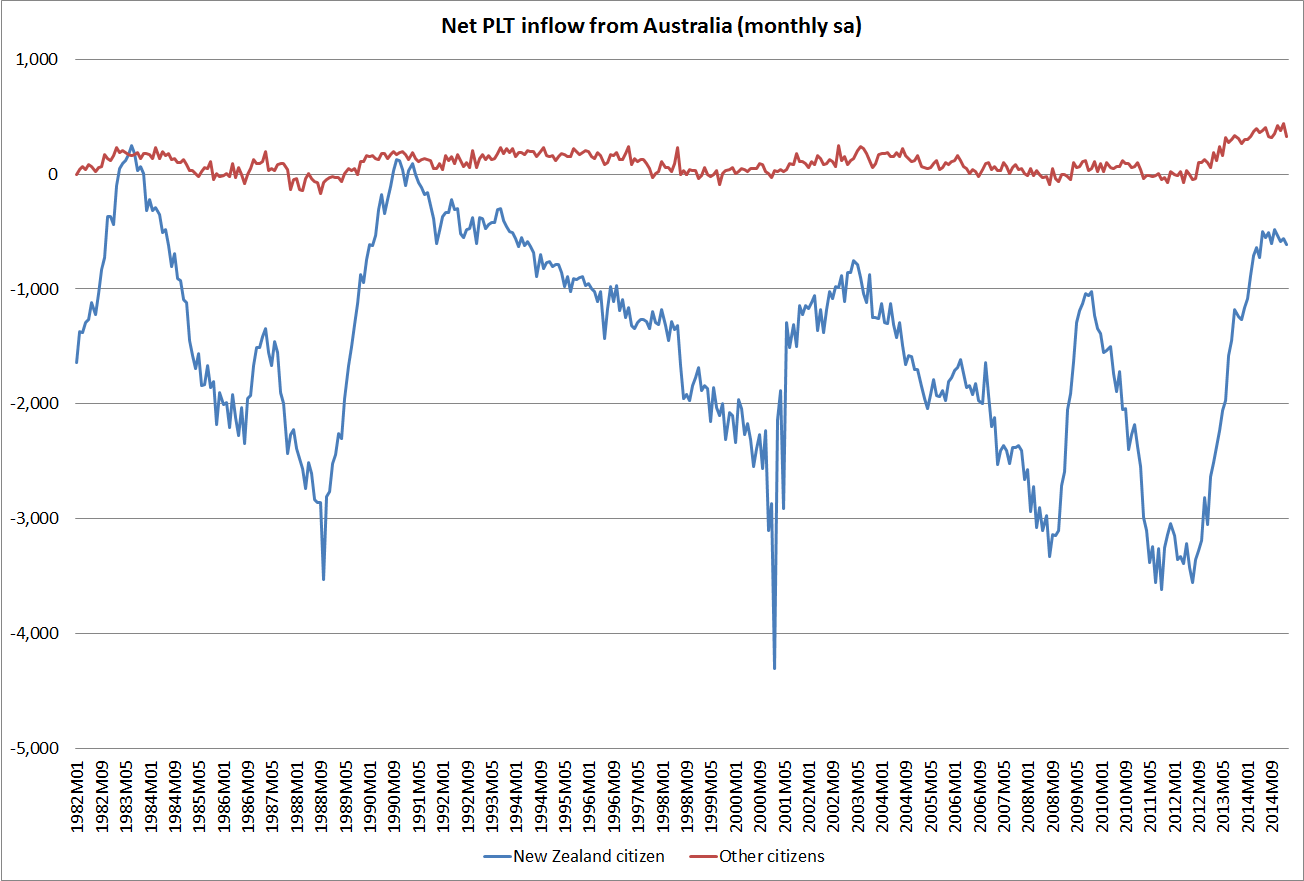
There will be more on these issues on this blog over the coming year.  I started thinking on these issues while I was working at Treasury from 2008 to 2010, and those early notes influenced the material in the report of the Savings Working Group.  My hypothesis is, of course, controversial.  I think that is a good thing, in such a challenging and important area as New Zealand’s long-term underperformance. And the hypothesis is not easily (dis)proved.  We need to have a more substantial debate around the New Zealand immigration programme, which has grown over the last 25 years with little advance public discussion.  No political party ever campaigned for the cause of much-increased immigration.    The debate shouldn’t be about year-to-year fluctuations –  most of those are about the comings and goings of New Zealand citizens –  but about just what a country with low savings, few obvious positive productivity shocks, and an exodus of its own people, is gaining from such large trend inflows of non-citizens, many from countries and economic cultures much poorer than our own (underperforming) one.

German voters, the euro, and government spending

Last year, the great and the good were repeatedly found advocating that Germany should increase government spending, and hence public debt, to boost demand across the eurozone.  It was consistent with a line that has echoed round the commentariat for the last five years, that somehow demand in Germany needed to be boosted.

From the scale of the unemployed resources across the euro-area it is pretty clear that, in the abstract, a boost to demand would be helpful.  But fiscal policy is national, and it was never clear to me why German voters would regard additional spending and debt as a “good thing”; something worth supporting at the ballot box.

To me, the chart below helps explain why a sensible German voter might reasonably be averse to expansionary fiscal measures.  Not only is the German unemployment rate low but Germany has been doing relatively better economically than it did in the half decade or so prior to the 2008/09 recession, but Germany’s public debt doesn’t look so good in international comparisons.

The IMF World Economic Outlook database has data on net government debt as a percentage of GDP.  Germany is in blue.  The other lines represent two other broad groups of European countries German voters might compare Germany with.  The green line is the median of net debt to GDP for France, Spain, Italy, Greece and Portugal.    And the red line is the median of the other Germanic/Nordic countries: Austria, Switzerland, Netherlands, Denmark, Norway, Finland, and Sweden.  For that latter group, median government debt has been lower than that in Germany for the whole of the last 20 years.  German voters might reasonably conclude that the Northern European route was more attractive than the Southern, on this count as well as others (including good governance, low levels of corruption etc).

German debt

Of course, it might be different if German voters for some reason put the interests of the euro area ahead of those of Germany. But, much as the elites might wish it otherwise, there is no sign of that happening. Politics is mostly national, even in the euro area.