The PRC and New Zealand: an Australian perspective

In response to my post yesterday about the Asia NZ Foundation roundtable on foreign interference/influence in New Zealand, I received this comment, which I’m elevating into a post of its own because of its source, and because otherwise only a small number of readers would now see it.

When officials are assuring you everything is under control, that’s the moment you know that everything is not under control. As a long-term New Zealand watcher I am deeply disturbed to see how the political and bureaucratic establishment in Wellington wants the problem of Chinese interference in domestic politics to be swept under the carpet.

The idea that the Australian debate on this topic is ‘unhelpful’ is simply ridiculous. Successive Australian governments have ignored the problem but now it has become so painfully obvious that Canberra has had no choice other than to take a stand and set some limits on Chinese Communist Party interference. I believe that a substantial reason why Canberra acted was because of the public focus on the problem.

China will continue to suborn the NZ political system unless your Government is prepared to push back. If the problem is not addressed in time this will become a serious problem for the NZ-Australia bilateral relationship.

My suggestion is that the Australian and NZ Prime Ministers should meet with their intelligence agency heads and have a frank, closed-door discussion about the extent of the problem of Chinese interference in both our countries. We can actually help each other here.

Pretending there is no problem, or failing even to utter Beijing’s name isn’t sophisticated statecraft, its just a failure to come to grips with a major problem for both our countries.

The comment is from Peter Jennings, who has been Executive Director of the Australian Strategic Policy Institute since 2012.

Peter has worked at senior levels in the Australian Public Service on defence and national security. Career highlights include being Deputy Secretary for Strategy in the Defence Department (2009-12); Chief of Staff to the Minister for Defence (1996-98) and Senior Adviser for Strategic Policy to the Prime Minister (2002-03).

I’ll leave his much-more-informed comment as it stands, just observing of his suggestion of a meeting of our two Prime Ministers etc, that for such an event to occur there would have to be a willingness and desire among political leaders on this side of the Tasman to acknowledge and confront the issue.  In fact, what we see in public is a desire to minimise, or to deny that there are, any serious issues, and to refuse to deal even with issues in plain sight.

Foreign government influence, the PRC, and the Wellington establishment

Somewhat to my surprise, a few weeks ago an invitation dropped into my email inbox.   It was from the Asia New Zealand Foundation – a (almost entirely) government-funded entity, staffed at senior levels by former MFAT people, with a mission

to build New Zealanders’ knowledge and understanding of Asia. 

These are the people who occasionally run public surveys, the results of which are marketed to bewail how little people know about Asia.  I managed to get all the latest questions right –  including which (of 4) Asian countries the Mekong river didn’t flow through –  and did surprisingly well on one of their harder quizzes.  But I still can’t name which English counties the Severn river runs through, all the countries the Rhine flows through, or all the states the Mississippi runs through or between.  I don’t feel  particularly disqualified as a result.

The invitation?

You are invited to attend a roundtable discussion being hosted at the Asia New Zealand Foundation on the conversation around foreign influence in New Zealand.

It went on

After observing the unhelpful polarity in the discussion in Australia, the Foundation has given some thought to how it could support a constructive conversation in New Zealand, namely one which:

– encourages expert voices to speak freely;
– sets a constructive tone for challenging these assessments and perspectives, without acrimony.

It was to be what they described as a “Track 1.5” event (in this world, Track 1 apparently involves official to official dialogue, and Track 2 involves non-government people talking to counterparts, but this forum would involve both).   Senior officials would attend, and speak, while as for the others

this event will involve up to 20 members of the business, media and academic community who are thinking strategically about this issue.

We were told that “the Government is keen to hear participants’  views” on issues such as

How can government and others talk about foreign interference, and its response, in a way that is constructive and sends coherent messages to a wide range of stakeholders (ie government agencies, public, business, international partners and state actors)?

I was a bit surprised to be invited.  I don’t lay claim to any particular China expertise, but I am interested in New Zealand policy and politics, and I suppose I had been a little dogged (perhaps even annoying, including to some others who were on the invite list).  So, with a little trepidation and low expectations, I accepted the invitation.  Expectations were low because in the entire document that accompanied the invitation the People’s Republic of China didn’t rate an explicit mention, and because if anything the focus seemed to designed to be about all being nice to each other.

the purpose is to bring different voices to the table on what is a challenging but important issue for New Zealand – and to discuss how we would like to engage with each other moving forward.

The event was held under Chatham House rules.  And since they were rather sensitive on the point (even sending out a later reminder about letter and spirit), this is the explicit rule this post is written under

The Chatham House Rule will apply to this roundtable. This means that participants are free to use the information received, but neither the identity nor the affiliation of the speaker(s), nor that of any other participant, may be revealed. There will be no note or output of the discussions.

Of the attendees, perhaps all I can say is that it was a very Wellington audience –  a description, and a flavour, rather than a criticism.

Every though everyone in the room knew that meeting wouldn’t have been held were it not for the issues around the People’s Republic of China, there was a rather desperate desire apparent to avoid singling out the PRC.   Indeed, the meeting opened with a statement about wanting to “talk as much about the risk as about any risk actor”, and that together with a statement near the end about not talking about the “who” but the “what” tended to bracket the discussion.

We heard that the Prime Minister had said publicly that New Zealand had experienced Russian cyber-attacks, we heard reference to Russian use of chemical weapons, about “fake news” and RT, we heard about the US pulling out of the Paris climate agreement (which, last time I looked, was their perfect right) and about questionable new US tariffs.   On the other hand, National MP Jian Yang –  former member of the Chinese intelligence system, Communist Party member, someone who admits that he misrepresented his past to New Zealand immigration authorities because Beijing told him to –  would have been mentioned not at all, except that I mentioned him (to note the omission) late in the discussion.   Trade ties –  and the heightened exposure some New Zealand entities have created for themselves, knowing the risks, and in turn putting increased pressure on the New Zealand government to keep quiet –  also barely got a mention.   Specifics quickly get awkward and personal.

Speakers were keen to convince us that officialdom was right up with the play (the issue being “owned” overall by DPMC), and working hand in hand with our Five Eyes partners,  They weren’t, we were told, “naive and unprepared” but rather actively engaged in “detecting and countering interference” –  apparently some overseas partners are even envious of some of the telecommunications legislation implemented here a few years ago (an observation that should probably leave New Zealanders a bit nervous).  Any suggestion of a threat to our membership of Five Eyes is, we were told, “spurious”.  I presume that means “false”.

I guess I came away with the impression that officials think they are more or less on top of the outright illegal stuff.   One hopes they are correct.

My own concerns tend to be with stuff that is legal, or just overlooked.   And where political cravenness, fear, and good dose of pursuing short-term opportunities as if oblivious to the character of those being dealt with, seem to matter as much as any active direct PRC intervention here.  Stuff like, for example, the way our major political party presidents laud Xi Jinping or the CCP, or the way a major party campaigns with a Xi Jinping slogan, or the refusal of anyone prominent to ever say anything critical of the PRC in public.  Or the willingness of our public universities to take PRC funding for culture/language learning, with PRC controls over the sort of people allowed to teach (Falun Gong adherents need not apply, nor those pro-democracy, those favouring respect for Taiwan’s independence etc).  Or the way our trans-Tasman school of government is in partnership with the Chinese Communist Party.  Last week our political leaders went back and forward over what to say about the US border/illegal immigrant issues.  The political editor of our largest paper called for our leaders to show we had an “independent foreign policy”.  I’d have thought the treatment of the PRC was more of a test of that one.   South China Sea anyone?  Taiwan –  a prosperous democratic state increasingly menaced by a power we’ve signed up with in some “fusion of civilisations” vision –  anyone?

Or one might look for any sense of real concern for our own ethnic Chinese citizens –  especially those who despise the regime, or have few/no modern ties to the PRC –  whose media, whose cultural associations etc are increasingly in the thrall of regime-friendly United Front entities.  Or concern for the New Zealanders of Chinese ethnicity who face threats to families back in the PRC if they do make a stand, or speak out, on anything.

I’m not suggesting there were no direct references to the PRC at the roundtable, but it seemed awkward, rather than any sort of open or really honest conversation.  I’m sure everyone there knows the character of the PRC regime –  at home, abroad, and here.  But…it was clearly awkward to talk about, and no one wanted to name the PRC as one of the most awful regimes now on the planet –  between its external expansionism, defiance of international law, attempts to rewrite history, attempts to use diasporas to serve its purposes, domestic concentration camps (much of the province of Xinjiang), political and religious repression, organ harvesting, and so on, the Nazi Germany equivalent of our day.  If you won’t name the character of the bad actor, you are unlikely to be serious about resisting or responding.   It is hardly as if the goals of the PRC/CCP, including through the United Front organisations in (various) countries like ours, is any great secret.

Having said that, I was pleasantly surprised in a couple of areas.  There was clear unease, from people in a good position to know, about the role of large donations to political parties from ethnic minority populations –  often from cultures without the political tradition here (in theory, if not always observed in practice in recent decades) that donations are not about purchasing influence.  One person observed that we had very much the same issues Australia was grappling with (although our formal laws are tighter than the Australian ones).  Of ethnic Chinese donations in particular, the description “truckloads” was used, with a sense that the situation is almost “inherently unhealthy”.   With membership numbers in political parties dropping, and political campaigning getting no less expensive, this ethnic contribution (and associated influence seeking) issue led several participants to note that they had come round to favouring serious consideration of state funding of political parties.   I remain sceptical of that approach –  especially the risk of locking in the position of the established parties, or locking out parties the establishment doesn’t like – but it was sobering to hear.

There was also unease about the suborning of former politicians (jobs after politics), and the suggestion of a need for stand-down periods.  And there was something of a call for more open government engagement on these issues (not, obviously, direct intelligence matters).  One person contrasted the speech a few months ago by the Australian head of the Department of Foreign Affairs and Trade, highlighting some of the issues and risks, and the near-silence by our own senior officials and ministers.    But here I suspect there was a bifurcation between those who felt the government should be on the front foot playing down the issues, and those who felt it should be more open in recognising them and engaging in debate with New Zealanders about how best we should respond.  Of the taxpayer-funded China Council’s efforts in this area –  attempting to minimise or trivialise the issue – one participant observed that they had been “unsophisticated and unhelpful”.

I guess my sense was that few of the people at the roundtable were at all comfortable participating in wider public or political debate: many were or are bureaucrats, not accustomed to visibility or audibility.  And many of the non-government people had business or similar interests that would make speaking out difficult, and potentially threatening to finances and professional opportunities.  There wasn’t even much sign of robust debate around the table of the meeting itself –  occasional awkward observations typically being left to stand, with no response or debate (although this may partly have reflected time constraints).

Many seemed to feel a real distaste for the nature of the debate in Australia over the last 12 to 18 months.   One discussant pushed back, arguing that what was needed was a robust public debate, not just involving subject experts, but citizens, and that –  moreover –  some heat was often an inseparable part of shedding light, and that arguably the Australians had done the debate better.  I’m in that latter camp.   On the other side, someone plaintively quoted one of the participants in the Australian debate as accepting that he had occasionally overdone things on Twitter, but surely that is almost in the nature of the medium?   Civility is a considerable virtue, but it isn’t the only one, and sometimes civility and politeness can be a cover for avoiding really confronting issues.  It is fine to quote –  as someone did – the old line about playing the ball not the man, but people are the actors here:

  • Jian Yang, personally, is in our Parliament, is a former member of Chinese military intelligence, did misrepresent his past, is closely associated with the PRC Embassy,
  • Bill English and Simon Bridges (on the one hand) and Jacinda Ardern and Winston Peters on the other sit silently by,
  • Chris Finlayson did openly attack Anne-Marie Brady (none of whose significant claims has been overturned or substantively challenged) as some sort of racist xenophobe,
  • Raymond Huo is closely associated with United Front bodies, and did adopt a Xi Jinping slogan for Labour’s campaign among the Chinese community,
  • Peter Goodfellow and Nigel Haworth do laud and magnify Xi Jinping and the PRC,
  • successive foreign and trade ministers make up stuff about our economic reliance on the PRC, and keep very very quiet whenever any awkward issues arise.

No one makes these people do any of these things. They choose to.   There are explanations perhaps, but not justifications.

In the end, I appreciated the invitation to the roundtable, and I did learn a few things.  But it didn’t leave me really any more confident than I had gone in that the establishment was at all keen or willing to have New Zealand stand up and do things differently, not just safeguarding our formal institutions (which probably aren’t that threatened), but with some self-respect, standing up for the sort of the values countries like our own have long stood for, and which the PRC/CCP is –  in many cases –  the antithesis.   Roosevelt’s four freedoms, and things like that –  on all of which the PRC either falls well short, or seems to simply regard them as “not applicable here”.

Then again, the real issue isn’t advisers per se, but the reluctance of successive elected governments to do or say anything that might prove awkward with Beijing.  Implied threats  – to individuals or to the economy (economic coercion and the like) –  are interference, even if there is nothing direct for intelligence agencies and the like to pick up on, and even if –  as in the case of economic coercion –  politicians are often excessively fearful.  Political donations may be part of that story, I don’t think they are anything like the entire picture.  And yet none of that was discussed.


Avoiding upset to Beijing: the Wellington establishment

A week or so ago I wrote here about some comments made by Jason Young, the (then) acting director of the Contemporary China Research Centre, which is based at Victoria University.   Dr Young’s contribution appeared to be to claim that any New Zealand debate around the People’s Republic of China, including its activities in New Zealand, was some sort of “fact-free zone” –  while ignoring all the facts in plain sight –  and to lament the absence of better quality debate, while not himself seeking to add much to it.  It seemed like an attempt to play distraction.

As I noted in that post

The chair of CCRC is Tony Browne, former New Zealand Ambassador to the PRC, who also just happens to be the chair of the PRC-funded (and controlled) Confucius Institute at Victoria University (CCRC and the Confucius Institute seem to share an administrator as well).  The CCRC itself seeems to work hand-in-glove with MFAT……and its advisory board is largely made up of public servants (MFAT, MBIE, Treasury, NZTE, Asia New Zealand Foundation) plus the chair of Education NZ and the former chair of the New Zealand China Trade Association.

It didn’t seem like an organisation that was ever likely to say anything critical…..and in the unlikely event it did, there would be repercussions all round.

A day or two later, Stuff had an article on the Contemporary China Research Centre, prompted (it appeared) by some mix of those Jason Young comments I’d been writing about and the announcement that Jason Young had been confirmed as director of the CCRC.  Young was, as one might expect, championing his institution

Young said the debate around the role China played in New Zealand, and the wider region, was more complex than had been discussed in the recent media reports and academic articles in New Zealand.

“Sensationalist claims about extensive Chinese influence in New Zealand highlight the importance of the knowledge and understanding the Victoria University of Wellington-led New Zealand Contemporary China Research Centre (NZCCRC) brings to public debate,” he said.

“It is crucially important we have a New Zealand institute that can think about New Zealand interests and New Zealand needs and New Zealand values and New Zealand problems.

“Obviously, we can draw on what American, Australian and other scholars are saying, but there are unique elements that need to be addressed from a New Zealand perspective.”

The new head said the centre’s advantage was its independence, and ability to speak with “a New Zealand voice”.

At that point I began wondering how he could say all this with a straight face.   He doesn’t appear to have been misquoted or misrepresented either (I kept an eye on his Twitter feed and on the CCRC website and there were no corrections or clarifications) –  what Stuff quote him as saying appears to be what he believes.  Remarkable what one can come to believe when one’s job (and recent promotion) requires it.

To their credit, Stuff picked up the point about the close ties betwen the PRC-funded Confucius Institute at Victoria and the CCRC.

The centre shares a location, chairman, and administrator with the Confucius Institute, which is funded by the Chinese Government.

Chair Tony Browne told Stuff the institutes operated independently.

Rebecca Needham, director of the Confucius Institute at Victoria, said she wouldn’t stand for any political influence from the Chinese Government.

So let’s try to unpick this a bit, including the web that ties together MFAT, the CCRC, Tony Browne personally, the Confucius Institute and so on, in ways that make it exceedingly unlikely that the CCRC will ever be able to (or interested in) providing detached critical commentary on any threat posed by the PRC.   When he speaks, Dr Young is likely to be expressing his real views, but he’ll have been chosen for the role in no small part based on the inoffensiveness (to his patrons and sponsors, and their funders –  in Beijing and the Beehive) of his views.

Take the connection between the CCRC and the Victoria University Confucius Institute.  It isn’t just that they share a:

  • location
  • administrator
  • chairman

which seems quite a close tie, all things considered.  I went back the other day and read the Annual Reports of the CCRC, and this is what I found.

From the first report in 2009

12. Confucius Institutes. The Centre has supported and facilitated the working on the establishment of a Confucius Institute at Victoria University. Canterbury University is also establishing a Confucius Institute in Christchurch.

and from the 2010 Annual Report

confucius

That was Xi Jinping himself.

The two bodies seem to operate hand-in-glove.  It is hardly likely that the NZ CCRC –  chaired by Tony Browne –  will ever be publishing critical material on the PRC, which would make difficulty for, say, the Confucius Institute, chaired by the same Tony Browne, and funded by the government of the PRC to propadandise for the regime in our universities and schools.   Presumably not even Dr Young or Mr Browne would pretend that the CCRC could ever be a source of critical scrutiny of the Confucius Institute programme itself  (which has raised serious concerns in other countries, to the extent of a number of universities discontinuing the programme).    NZ CCRC and the PRC are partners in all but name (in addition to the various formal partnership arrangements CCRC has with PRC universities and government agencies).

What else do we learn about the CCRC?    From the 2017 Annual Report

The Centre has continued the successful partnership with the China Capable Public Sector Programme, managed and funded by the Ministry of Foreign Affairs and Trade for officials from across the public sector.

The Masterclass is an intensive five-day course on China designed and taught by the China Centre. It is exclusively for public sector workers and is delivered through a series of introductory talks and roundtables, followed by scenario-based activities. This year the Centre has put on two Masterclass events with excellent feedback.

It looks like a worthwhile programme, but it is also a significant business arrangement and financial arrangement with MFAT, who will be most unlikely to welcome anything that rocks the boat (and I’ve heard that MFAT/CCRC have been quite selective in which perspectives get presented at these courses). I don’t suppose CCRC would be running MFAT’s course for them had they ever openly made life difficult by casting doubt on the “never ever upset Beijing” line that seems to guide officials and ministers.

From that same annual report we also find

The Centre’s Executive Chair [Tony Browne] has continued in his role as a member of the Executive Board of the New Zealand China Council. He has also been appointed to the International Steering Committee of the Silk Road NGO Cooperation Network.

The China Council?  The (largely taxpayer-funded) advocacy group, on the board of which sit the chief executives of MFAT and NZTE, to champion the relationship with the PRC, apparently by never ever saying anything critical, and pooh-poohing anyone else who does.

As for the Silk Road NGO Cooperation Network, it appears to be another PRC government facilitated body.

Tony Browne, the former New Zealand Ambassador to Beijing, must be a busy man.   I remembered that I had met him once.   Among his many hats is that he is co-director of the China Advanced Leadership Programme, run by the Australia-New Zealand School of Government (itself a partnership involving various Australian universities and Victoria University).

The China Advanced Leadership Program (CALP) is an annual three-week program for Chinese officials, delivered in Australia and New Zealand. The aim of the program is to develop productive relationships between high level public officials of Australia, New Zealand and China.  The program has been operational since 2011 and is delivered across multiple Australian and New Zealand cities.  The program is made possible due to ANZSOG’s relationship with the Organization Department of the Chinese Communist Party.   

It must be a quite a revenue-generator for the universities concerned.

Who attends

Who are our participants?

Senior and emerging Chinese public officials from central and provincial governments – Up 25 senior officials in China are carefully selected by ANZSOG’s program partner, the Organization Department of the Central Committee of the Communist Party of China. The Organization Department occupies a unique role in the hierarchy of the Chinese government – it oversees appointments of all key positions within the administration. Previous delegations have included Vice-Ministers from the Central Government, Party Secretaries, City Mayors, and Directors-General.

All, quite explicitly, CCP members.

Who speaks?

Contributors

ANZSOG brings together the highest levels within government, business and academia in Australia. Previous contributors have included Prime Ministers and Deputy Prime Ministers of Australia, the Australian Minister for Foreign Affairs, the Governor-General of Australia, state Premiers, the Treasurer, former Prime Ministers, Chief Justice of Australia and other top political leadership, CEOs of federal and state government agencies, business and industry bodies. The program provides a world-class learning opportunity in Australia and New Zealand for senior Chinese officials. Past contributors include The Hon Susan Kiefel AC, The Rt Hon Jacinda Ardern, The Hon John Howard OM, AC, The Hon Bob Carr and The Hon John Brumby AO.

And me.  I don’t think Graeme Wheeler ever quite got the message about the PRC.  The organisers were keen to have him speak, and twice the job got passed down the line, ending up with me.    The day I last spoke, they’d also had John Key, Gerry Brownlee, Phil Goff and Iain Rennie speaking.  It is all taken very seriously.   (If anyone is interested, I got the Reserve Bank to release the text of my 2014 address, on the evolution of economic management in New Zealand over almost 200 years.  I think I avoided upsetting the visitors or being nauseatingly obsequious.)

You might suppose that being a partnership between numerous Australian universities and Victoria University, ANZSOG wasn’t of much moment in New Zealand.  In fact, the state and national governments are members.  And of the Board, three are New Zealanders –  in the chair is Peter Hughes, the current State Services Commissioner.  And what of ANZSOG’s ties with the PRC?  It isn’t just a commercial relationship involved in running that course.    Instead, ANZSOG lists as “affiliate partners” a small number of agencies including

Affiliate partners

It is all terribly cosy.  The presence of the Chinese Communist Party speaks for itself.  But CELAP describes itself as

China Executive Leadership Academy Pudong (CELAP), a Shanghai-based national institution, is funded by the central government and supervised by Organization Department of the CPC Central Committee.

Does it amount to much?  Probably not, but it is hardly a sign of governments ready to take a detached, and perhaps critical, approach to the PRC, or to foster such free and frank perspectives among their own public servants.

Reverting to the Victoria University Confucius Institute, the director Rebecca Needham was quoted in that Stuff article as saying that

she wouldn’t stand for any political influence from the Chinese Government.

And no doubt that is quite true as written.  But presumably she doesn’t count as “political influence” the sorts of prohibitions in these arrangements that, for example, screen the Mandarin language teaching assistants for their own political and religious soundness (Falun Gong need not apply)?   Perhaps, since she is a skilled and experienced bureaucrat, the “Chinese government” in that quote does not include the entity in the PRC that funds the Confucius Institute?  The Office of Chinese Language Council International (colloquially Hanban) apparently describes itself as a “non-government and non-profit organization”, but is chaired by a PRC vice-premier and reports to the PRC Ministry of Education.

Apparently, the directors of these Confucius Institutes are typically appointed by the host institution, not by anyone in the PRC.    And yet, when your institution is launched, here in Wellington, by Xi Jinping, when your institution depends on ongoing PRC funding, lets not be cute and suppose that anyone slightly risky –  or ever needing “political interference” to do the “right thing” –  would be appointed to the job.

And what of Ms Needham?  When I looked her up, it turns out that she was a long serving MFAT staffer, including a stint as New Zealand Consul-General in Guangzhou, leaving MFAT only a year or so ago.   Remarkably, despite serving now as the director of a PRC funded entity, devoted to the advancement of PRC interests in New Zealand, she is listed on the MFAT website as part of the “China Capable Public Sector Community of Practice”   which

brings together a core group of China experts from across the public sector who provide input and advice to the CCPS programme and connect people to share knowledge, learn, and collaborate around common concerns, problems, opportunities, or interests regarding New Zealand’s engagement with China.

The rest of the list is made up exclusively of current New Zealand public servants.   It looks like a good initiative, and the role of this “community of practice” is described as

The role of the CoP is to:

  • Act as a trusted advisor to agencies to inform strategic thinking, broad policy direction, and operational issues on China matters when invited
  • Provide advice and guidance on the New Zealand perspective and China context in the development and delivery of CCPS curriculum initiatives
  • Share knowledge and experience through participation in CCPS curriculum activities
  • Foster networks with China experts across the sector
  • Model a collaborative approach to develop a cross-sector mindset on China capability.

But Rebecca Needham works for an organisation funded by the government of the PRC, devoted to the advancement of various PRC interests in New Zealand.  Did MFAT not even recognise the potential for conflict, for differences of interest or views?

And, of course, Needham shares a location, an administrator, and a chairman with the Contemporary China Research Centre.

To repeat, no one should look to the New Zealand Contemporary China Research Centre for any independent perspectives on the PRC, or its relationship with New Zealand.   That will, presumably, serve the government and MFAT (and perhaps Beijing) well, but sadly it will also mean that even when the CCRC does put out good material, or host worthwhile workshops, that might offer some (fair) perspectives on Beijing, its contribution will be tainted by the knowledge that it would be most unlikely to ever offer anything on the other side.  The CCRC is neutralised by construction, and by appointments (chair, director, board members), by business dealings, and by association.

And thus we’ve heard nothing from it on, say, the presence in our Parliament of a former member of the Chinese military intelligence establishment, former (?) member of the CCP, close associate of the PRC Embassy and various United Front organisations, who misrepresented his past to voters, who acknowledges that he misrepresented his past to New Zealand immigration authorities at the encouragement of his former PRC masters.   None of those facts is in dispute.  And the silence, or attempts to play distraction, by the CCRC, the China Council, and so on is deafening, and sadly telling.

Economic coercion PRC-style

The great fear that seems to pervade official circles in New Zealand (bureaucratic and political) is “what could China do to us if ever our government upset Beijing”, whether that involved speaking out forcefully against PRC military expansionism, doing something about Jian Yang, meeting highly-respected pro-democracy leaders from Hong Kong, pushing back against PRC control over local Chinese-language media, or whatever.

No one supposes any threat is military in nature.  What seems to worry people is the possible economic cost.      Governments led by both major parties have retailed (and perhaps believe) the nonsense that somehow New Zealand was “saved” by the PRC in the last recession, or that our alleged prosperity (no productivity growth in the last five years, and the shrinking relative size of our export sector) owes much to the good graces of the butchers of Beijing  If Xi Jinping should once avert his glance, our economy would be imperilled.   It is never openly stated quite that explicitly, and perhaps even the more thoughtful believers would use more-moderate language, but you get the gist.

All self-respect is long gone by this point.  Generally, if you find yourself over-exposed to someone else (some person, some business, some country), and especially one of questionable character, the prudent thing to do is to gradually reduce your exposure, diversify your risks, and regain your (perceived) freedom to act in accord with your values.    But when it comes to the PRC, prevailing opinion –  ministerial speeches, taxpayer-funded lobby groups, and so on –  seems to be that we should double-down, increasing our exposure to a country that they know to be an international thug and bully.  Thus, for example, our commitment to the geopolitical vision represented in the PRC Belt and Road Initiative, a scheme now being actively promoted with your own taxpayer dollars.

This mental model ignores a whole bunch of relevant points:

  • mostly, individual countries make their own success and their medium-term prosperity does not depend on the fortunes or favours of a single other country, no matter how large.   We (and Australia for that matter) were rich –  further up international league tables –  when China was mired in its own self-destructive behaviours,
  • the share of New Zealand GDP represented by trade with the PRC isn’t especially large by international standards, and
  • much of what we do sell is relatively homogeneous products traded on world markets.

(None of which is to downplay the risks to the world economy and New Zealand if something were to go seriously wrong in the PRC economy –  something I wrote about several years ago when still at the Reserve Bank ( Discussion note 2014 what if China slowed sharply ) most of which still seems valid – but that is a different issue, where the New Zealand government’s political stance towards the PRC is largely irrelevant.)

I’m also not attempting to minimise the PRC’s willingness or ability to play the bully-boy and attempt to exert coercion over New Zealand should our government ever find within itself a modicum of courage and self-respect.   These are people who play rough: with tens of millions of their own people dead at the regime’s hands, a whole province these days functioning much as an open air concentration camp, why stop at the odd sovereign independent country?  They haven’t.

Earlier this week, a US think-tank, the Centre for a New American Security, released a fascinating study on China’s Use of Coercive Economic Measures. The think-tank appears to be quite well-regarded, and has among its senior figures various people who served in the Obama administration.   The study appears to be a pretty careful description and assessment of the way the PRC has attempted to use economic coercion on a serious of democracies over the last decade, and to draw some lessons from those experiences.

They looked at seven such episodes:

  • a 2010-2012 episode in which the PRC halted rare earth exports to Japan (at the time, China accounted for 97 per cent of world production) over a specific incident related to the Japan/PRC dispute over the Senkaku islands,
  • the PRC’s measures against Norway (concentrated on salmon exports) over 2010-2016 after the (private) Nobel Committee awarded the Peace Prize to dissident Liu Xiaobo,
  • the PRC’s use of additional quarantine controls on the Philippines from 2012 to 2016, throttling agricultural exports (especially bananas), over the Philippines defence of its South China Seas claims, including those later upheld under the Law of the Sea by an international tribunal,
  • PRC attempts to coerce South Korea in 2016/17, with the intent of encouraging South Korea to reverse permission for deployment of the THAAD anti-missile system,
  • the PRC’s attempt to punish Mongolia for hosting a 2016 visit by the Dalai Lama,
  • pressure around the 2016 Taiwan elections, in which the PRC objected to the winning party and acted to cut back tourist numbers, and
  • the current pressure being exerted on Australia, via warnings to overseas students (and, although this study doesn’t mention them, delays in clearance of eg wine imports from Australia).

This isn’t the sort of thing normal countries do.

(The study also touches on the PRC pressure on Iran and North Korea, episodes which, while interesting, are a bit different from those involving democracies.)


There are other examples, including direct coercion on companies, and some telling snippets about the general approach

During the Hu Jintao era [when, as a whole, the PRC was less assertive than it has become under Xi Jinping], meetings between a head of state or head of government and the Dalai Lama led, on average, to a reduction of exports to China of between 8.1 percent and 16.9 percent. Trade subsequently recovered during the second year after the visit.

I haven’t got space to go into all these episodes in detail (all the material is there on pages 42 to 49 of the report), but there are a number of interesting points that emerge:

  • the clever targeting of politically salient sectors.  The coercive measures were rarely applied to sectors directly related to the issue that was directly bothering the PRC, but rather where they thought they could get leverage  (the Norwegian example was an extreme case, given that the initial “offence” wasn’t even done by the government,
  • coercive measures are rarely officially announced, allowing plausible deniability, and also calibration of any escalation and de-escalation,
  • measures are rarely applied in sectors where coercion could directly hurt PRC entities themselves.   As the authors note of the Korea example, there were 43 retaliatory measures taken by the PRC, estimated to have knocked 0.4 per cent off Korean GDP last year, but “Beijing made sure not to target Korean sectors where economic retaliation might harm China’s own supply chain” (thus, China still imports 65 per cent of its semiconductors),
  • where possible, the coercive measures involve restrictions not amenable to complaints to the WTO (where the PRC loses such complaints it has altered its behaviour to comply).  Tourism has been an obvious example, and perhaps the foreign students case in Australia.  More generally, “China typically imposes
    economic costs through informal measures such as selective implementation of domestic regulations, including stepped-up customs inspections or sanitary checks,
    and uses extralegal measures such as employing state media to encourage popular boycotts and having government officials directly put informal pressure on specific
    companies.”
  • in many cases –  but not always –  China wins (at least in the short-term) and the targeted countries adjust, often in a rather craven way.   Those that yielded did so in the face of rather limited overall economic costs (but large concentrated costs in a few sectors).

As an example of the victories, here is the report on Norway

Finally, China has achieved symbolic victories even when the practical impacts of coercive economic measures appear to be limited. For example, after the Norwegian Nobel Committee awarded Chinese dissident Liu Xiaobo the Nobel Peace Prize in 2010, China retaliated by banning imports of Norwegian salmon. The import ban appears to have had little real-world impact, as Norway found alternative markets and appears to have routed fish to China via third countries.  Yet, as part of restoring normal relations with Beijing in 2016, Norway nonetheless issued a public statement acknowledging China’s “sovereignty” and “core interests” while Beijing hoped that Oslo had “deeply reflected” on how it had harmed mutual trust.

There were limits even then

Initially, China also requested a secret “nonpaper” with a more strongly worded apology, but then-Prime Minister Jens Stoltenberg denied the request as at odds with Norwegian foreign policy.

But reality was craven enough

In its rapprochement with Norway, China achieved both its deterrent and public apology objectives. In 2014, Norwegian officials declined to meet the Dalai Lama. When the two countries normalized relations in 2016, China obtained a formal, public apology. Norway acknowledged China’s “sovereignty” and “core interests,” while Beijing hoped that Oslo had “deeply reflected” on how it had harmed mutual trust.  The salmon trade resumed. Upon Liu’s death in July 2017, Norway’s more muted statement compared to its European neighbors’, could be viewed as a sign of the continuing deterrent value of the Chinese policy A few weeks later, the countries revealed progress in their free-trade agreement negotiations.

Between coercion and inducements (stick and carrot), the Philippines government greatly softened its stance around the South China Sea.

Of Mongolia –  84 per cent of whose exports went to the PRC –  the authors note

After initially standing up to Chinese coercive measures, Mongolian leaders eventually relented. As part of the rapprochement between Ulaanbaatar and Beijing, Mongolian leaders, like Norway, offered a public apology.  They expressed regret for the invitation and emphasized that they would no longer host the Dalai Lama during the government’s term. Chinese leaders said they hoped that Mongolia had taken the lesson of not interfering in China’s “core interests” to heart.

South Korea went ahead with the THAAD deployment, and any concessions seem to have been modest and face-saving more than substantive.

South Korea eventually relented to Chinese pressure in October 2017 by issuing a list of assurances, the “three no’s,” on further missile deployment and military alliance with the United States. Korea officials argued that these assurances were a reiteration of long-standing policy, suggesting the advantages China can gain from informal measures that give it flexible off-ramps from economic pressure rather than tying it to specific—and falsifiable— results.  Additionally, though China did welcome the development, it still urged Korea to “follow through” on its statement and did not lift the pressure as quickly as it has in other cases of coercion. As of February 2018, more than four months after the rapprochement, tourism was still 42 percent lower than the previous year and Lotte still had not received relief from the regulatory pressure.

In the Japanese case, strong international support (EU and US) combined with WTO remedies meant the PRC didn’t win –  although domestic political imperatives may well have been served by stirring up anti-Japanese popular sentiment.

The specific pressure on Taiwan around the 2016 election doesn’t appear to have “worked” but is presumably still just part of the long-term PRC goal to isolate and weaken Taiwan, and exert pressure on firms (Taiwanese and international).

As for Australia, it is probably still early days (the article I linked to above appeared only yesterday).  Whatever the PRC has yet done –  plausible deniability and all –  is only a token of what they could yet do, if the Australian government continues to push back against PRC influence activities in Australia, and against PRC military expansionism.  For the moment there is no sign of the Australian government backing down, and bipartisan concern about PRC influence activities assists their position (as, presumably, does the coming election) but, equally, pressure from the sectors that are, or could yet be, targeted must be building.

The authors of the CNAS report are not optimistic that the PRC will become any less willing to use these coercive techniques; if anything, the continuing relative rise of China’s economic fortunes could increase the willingness, and perhaps ability, to exert pressure on individual firms, business and political leaders, and countries, blended perhaps with inducements (trade agreements) and other blandishments.

They offer a series of recommendations, many of which are quite US focused (and, as they note, for various reasons the US has not yet been subject to PRC coercive efforts yet).  Many of the recommendations focus on better understanding the issues and risks, at a detailed levels, raising awareness, and encouraging a forceful and supportive response to the PRC when other countries are targeted.  The advice for private sector companies is to take steps to ensure that they are not unduly reliant on PRC suppliers or the PRC market.   In the end, other countries (especially small countries) can’t stop the PRC attempting to act the bully-boy, but success (giving in) will only encourage the thug, and so there is something important about building resilience, reducing exposure, and being willing to take a stand alongside whoever the PRC picks off, rather than cowering in a corner, thankful that the bully has chosen someone else this time, and determining to be even more submissive next time the government engages with the PRC.

What does it all mean for New Zealand?

I hope our Ministry of Foreign Affairs and Trade has already been thinking hard about these case studies and about the lessons for New Zealand, and that in doing so their response is to advise the government on reducing exposure, not doubling down and living in the sort of fear of the battered wife –  too scared to leave, unable to resist.

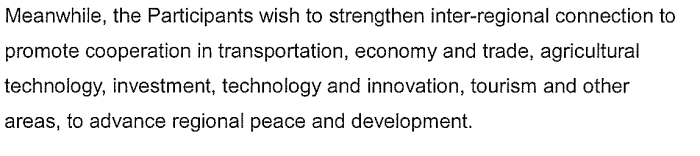
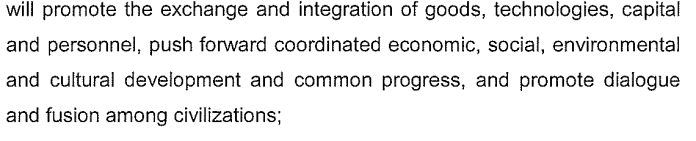
But we don’t see any sign of that sort of approach, at least when our ministers and Prime Ministers (advised by officials) speak.  This is, after all, the regime that our government last year signed an agreement with, supposedly working towards a “fusion of civilisations”.

There is no point pretending there are no areas of vulnerability, if our government ever took a stand, even rather politely.  Quarantine and other related rules could be enforced rather more tightly.  I don’t suppose milk powder is a big risk –  the Chinese need it, and would only have to buy it from somewhere else if somehow trade with New Zealand was disrupted.  But higher-end lamb exports might be –  fresh product, not consumed by the mass Chinese market.  But I still reckon that the biggest, and most obvious, area of vulnerability is around export education and tourism, exports actually delivered here, rather than in China.  There are plenty of other places in the world for Chinese tourists to visit for a year or two, and other places –  often with better-rated universities –  for PRC students to study.   Put a ban on group tourism to New Zealand, or issue official warnings about safety here etc, or raise difficulties about landing rights and the numbers coming would be disrupted quite materially.  Being a small country –  and selling nothing critical to Chinese supply chains –  we might be a good case to try to “make an example of”

These sorts of threats aren’t some existential threat to our economic health and wellbeing –  recall the central bank estimate of a 0.4 per cent of GDP effect in Korea last year –  but they could be a big issue for some operators in the industries concerned.  As the Taiwanese example illustrates, tourism source markets can change, and can even do so relatively quickly (although perhaps as a long-haul destination the challenges are a bit greater here), especially if public money were put behind marketing campaigns.

In a way, the export education industry worries me more, especially the universities.  Last year, half all student visas were issued to Chinese students, and foreign students make up a huge share of university (and PTE, and some schools) income, in a system in which domestic fees are capped at (typically) below long-run average cost.   Universities and polytechs are government agencies, but ones with their own agendas to serve, and empires to preserve (Waikato, for example, has a degree-granting arrangements in China itself, presumably at risk of regulatory enforcement changes quietly implemented by the PRC, and several have Confucius Institute where they receive direct PRC funding).

A prudent industry would not have so many eggs in one basket, particular a basket controlled by a regime that has shown willing to act the international bully (one might have a quite different view if half the student visas were going to German students, Korea students, or Canadian students).  A prudent industry would be stress-testing itself (and its prime domestic funders and regulators would be insisting on such stress-testing) and adjusting its marketing accordingly.   But a rent-seeking one, knowing the feebleness of our governments, will continue to pull in the revenue from Chinese students knowing that (a) they can put a lot of pressure on governments to go along, and never upset Beijing about anything, and (b) even if things go wrong on that score, the financial risk will really lie with the government itself, not those who now run the universities (who would no doubt run an effective marketing and political campaign about how NZ students would suffer without a government bailout.

We might be small, and thus vulnerable on that count.  On the other hand, we are a long way away –  New Zealand is just a great deal less important to China than, say, the issues around Korea, Mongolia, Japan, Taiwan, and the Philippines.   And in aggregate we just aren’t that exposed to specific Chinese markets (even allowing for the fact that the PRC is a large part of the world economy now).  Even a bad year or two is just that –  not the abandonment of all future prosperity.

But we’ve allowed a couple of industries –  one highly-subsidised, through the immigration connection –  to flourish, and politically salient sector risks to develop, which now depend on the New Zealand government cowering in the corner and never upsetting Beijing.    Neither industry is at the leading edge of productivity growth –  indeed, our services exports in total are smaller now as a share of GDP than they were 15 years ago – but the probable political clout is undeniable.  It should be a matter of priority for any self-respecting government to look to reduce those specific exposures, encouraging greater resilience in the respective industries, so that one day we could have the courage to stand for what we believe –  assuming that among the political classes, belief is still about something more than the last trade dollar, and the next political donation.   In time –  one hopes, in a day (decades hence) when freedom comes to China –  we should aim for a relationship of trust and mutual respect, not one of the battered wife cowering in the corner.

(But as I reflected on this issue, my admiration increases for successive New Zealand governments decades ago –  most notably that led the Prime Minister’s predecessor Norman Kirk –  who were willing to openly take on France over atmospheric nuclear tests in the Pacific.)

Playing distraction on the PRC

On Newsroom on Friday there was a rather soft article giving a platform to an academic with a pretty strong vested interest in a “nothing to see here, move right along” approach to the People’s Republic of China.

Jason Young is acting director of the Contemporary China Research Centre (CCRC), based at Victoria University.  The chair of CCRC is Tony Browne, former New Zealand Ambassador to the PRC, who also just happens to be the chair of the PRC-funded (and controlled) Confucius Institute at Victoria University (CCRC and the Confucius Institute seem to share an administrator as well).  The CCRC itself seeems to work hand-in-glove with MFAT, seems to get considerable direct funding from government departments, and its advisory board is largely made up of public servants (MFAT, MBIE, Treasury, NZTE, Asia New Zealand Foundation) plus the chair of Education NZ and the former chair of the New Zealand China Trade Association. (None of this, of course, was in the Newsroom article.)  I’ve heard some stories about the role of MFAT in blocking anyone who might prove awkward from consideration for the role of Director.

Perhaps the NZ CCRC does some good work, and holds the odd interesting conference, but when push comes to shove it is hard not to see it as a taxpayer-funded front for the “nothing to see here” line that our politicians and business elites seem committed to.  In that respect, it is perhaps worse than the New Zealand China Council –  which openly functions as a taxpayer-funded advocacy group, while the CCRC hides behind the veneer of academic independence, integrity etc.

In Friday’s story, the first of Jason Young’s comments was largely pretty reasonable.   Asked about the recent testimony in the US and the papers published by the Canadian intelligence services,  he noted –  as I have –  that

Jason Young…. suggests both the Canadian and US reports are based in large part on the ‘Magic Weapons’ report published by Canterbury University professor Anne-Marie Brady last year.

Brady’s report, which detailed concerns about China’s attempts to influence migrant communities and take over ethnic media among other issues, received media coverage at the time.

However, Young says the latest round of coverage has done little to advance the case made by Brady.

“For many of us it’s just more hype around the same types of questions without new evidence.”

Perhaps “a repetition of the same claims in an increasing number of overseas fora” might have been a less-loaded description than “just more hype”, but lets not quibble too much.

Young goes on

Young believes the debate in New Zealand is becoming counterproductive, with opposing sides staking out increasingly polarised positions on the topic.

“We’re not talking about empirics, we’re not furthering the debate, all we are having is a more extreme and radicalised position being put forth…[and] we don’t talk about the bigger issues.”

Which prompts three thoughts:

  • first, if you are the director (even acting) of the Contemporary China Research Centre, surely you might have some responsibility for participating in, and actively facilitating debate, and exploration of the evidence, issues, and risks?    And yet, there is almost nothing of that sort coming from the CCRC.    They seem more focused on getting public servants properly house-trained.
  • debate?     We have a debate?   There isn’t much sign of one in New Zealand at all, most academics maintain a stony silence, and the contrast in that regard with Australia is particularly striking (whether or not you happen to agree with the current, more sceptical, stance of the Australian government).
  • As for empirics:
    • well no one doubts (because he has acknowledged it) that Jian Yang is a former member of PRC military intelligence structure, a member of the Chinese Communist Party, who also acknowledges that he misrepresented his past on New Zealand immigration forms, reportedly at the encouragement of the PRC authorities.  Jian Yang sits in New Zealand’s Parliament.
    • no one doubts the effective PRC control of almost all the Chinese language media in New Zealand,
    • no one doubts that a former Foreign Minister received a large donation to his mayoral campaign –  auctioning, of all things, the works of Xi Jinping –  from sources in the PRC,
    • no one doubts the ties of senior Labour backbencher Raymond Huo to United Front organisations, or his role in adopting a slogan of Xi Jinping’s for Labour’s ethnic Chinese campaign last year,
    • Charles Finny –  former senior diplomat, and himself on the CCRC advisory board –  observed on TVNZ last year that he knew both Jian Yang and Raymond Huo were close to the PRC Embassy and thus he was always careful what he said around them.
    • we know that several of our universities, and a number of high schools, take PRC money and allow the PRC to control appointments, and the content of teaching.
    • even abstracting from the Confucius Institute concerns, we know that our universities have made themselves very financially dependent on PRC students.
    • we know –  it is on public record –  that the presidents of both the National and Labour parties have been praising the Chinese Communist Party and Xi Jinping.
    • we know that a number of former politicians have ended up in well-remunerated roles in PRC-related entities, and that their continuation in such roles is inconsistent with ever saying anything remotely critical of the PRC.
    • and we know that our senior politicians –  whether in government or (in the National Party’s case) in Opposition – never ever say anything critical of the PRC regime (in stark and noticeable contrast to the sort of approach their predecessors took to, say, apartheid South Africa, pre-war Germany or Italy, the Soviet Union, and so on).
  •  So we could debate, for example, the risks and significance of joint research agreements New Zealand universities enter into with PRC institutions –  technology transfer, by fair means or foul, being a well-known PRC priority – or we could debate party fundraising in New Zealand, where the limited evidence might be open to various interpretations.  Evidence around cyber-attacks isn’t made public.  But there is still lots of hard factual material to be going on with.    And it is not as if most of the PRC activities are unique to New Zealand –  even if perhaps no other advanced country yet has a former PRC intelligence operative in Parliament.

Young goes on

Young says the Government’s messaging on the issue has been “quite minimal”, influenced in part by the sensitivity of allegations related to espionage or foreign influence and the role of our spies.

“The Government has got a responsibility to set China policy, to engage with China, and also have ground rules.”

Prime Minister Jacinda Ardern has made some steps in that direction, he says, pointing to her recent speech at a China business summit outlining her view of the region and the kind of relationship that was needed.

It would surely be more accurate to say that the Prime Minister –  like her predecessors –  seems to simply wants to pretend there isn’t an issue (a very different stance than that taken by her Australian Labor counterpart, Bill Shorten).    If, perchance, in the quiet of her heart she really does deplore the regime, and worry about its activities here and elsewhere, she owes it to the public to promote an honest open conversation.  But, so far, all the evidence is that she is just unbothered –  she has uttered not a word about Jian Yang, she promoted Raymond Huo, and so on.   Remarkably, the New Zealand airforce is conducting exercises with the PRC air force this week –  the same airforce that not a couple of weeks ago was landing long-range bombers on illegally constructed “islands” in the South China Sea (to not a word of concern from New Zealand).

Young’s contributions conclude this way

More generally, Young says the discussion about China needs to be based more on evidence and less on “hyperbole”.

“If someone is claiming New Zealand is the weak link in Five Eyes, what is the claim based on and what is the evidence behind that?

“The argument that New Zealand has somehow changed its security position in relation to Chinese influence, where’s the evidence for that? I can’t see any basis for it.”

It’s not that there’s nothing to talk about, he says: given China holds very different views to New Zealand and other countries, there are valid areas of concern.

But ensuring those concerns are backed up with evidence is critical to stop the debate from losing shape, he says.

Personally, the Five Eyes arguments (generally) seem to me like a bit of a distraction.  But so, in a sense, do Dr Young’s comments more generally.  There is plenty of hard evidence to be going on with, and a real reluctance apparent among the establishment to turn over stones lest awkward stuff might be uncovered.  Dismissing the sorts of issues that Professor Brady, and some others (including Newsroom, who first broke the Jian Yang story) have been raising as “hyperbole” itself looks like another attempt to play distraction, and avoid the real issues.  I’m sure Dr Young –  and Tony Browne, and Steven Jacobi, and the Prime Minister, the Leader of the Opposition, the leaders of the Greens and New Zealand First –  all know the character of the PRC regime:  evil at home, expansionist abroad, working to neutralise and/or divide countries like New Zealand or Australia (or Greece, or the Czech Republic, or…or….or) –  but they seem not to care one bit.  Or, if they really do care, to be so afraid, and to have lost any sense of self-respect or regard for New Zealand values, that appeasement has just become their watchword.  It is shameful.

The Newsroom article in which Dr Young is quoted also talked to another academic keen to downplay the issue; this time an Australian one, James Laurenceson, deputy director of the Australia-China Relations Institute, a think-tank based at a university in Sydney, and funded by large donations from two recent PRC migrants to Australia.

“The New Zealand government’s line tends to be to dampen reports down, but in Australia it goes in the opposite direction,” Laurenceson says.

He also suggests New Zealand has been more willing than Australia to scrutinise the allegations of foreign interference, and is unequivocal about which approach he favours.

“I can’t point to one single advantage of the approach Australia has taken,” Laurenceson says

What he means is that the New Zealand government prefers to ignore the issues altogether and, at least in public, pretend there is simply nothing to see.  In Australia, by contrast, an Australian (Labor) Senator was forced to resign for his close ties to the same billionaire who funded ACRI.  In Australia, in a bipartisan effort, the intelligence and security committee has recently released a 400 page report on the planned new laws designed to limit foreign government intervention and influence activities.   Yes, some Australian exporters appear to be paying a price, but sometimes doing the right thing –  standing up for your own country and its values, not just for the next dollar –  will cost those who parley with evil.  While Jacinda Ardern and Simon Bridges, aided and abetted by taxpayer funded bodies like the China Council and the CCRC, pretend there is just nothing to see.

There was a nice contrast to the New Zealand approach in The Australian newspaper on Saturday, in a column by their respected foreign editor Greg Sheridan.  For example

The last couple of weeks are a good indication of things to come. The range of our disagreements with Beijing in this period has been­ ­bewildering.

Beijing hates the foreign interference legislation. It hates that [Liberal MP, Andrew] Hastie under parliamentary privilege named a Chinese national resident in Australia as the suspect in a US case regarding a bribe paid to a former senior figure at the UN. It hates the fact that Canberra prevailed on Solomon Islands to refuse a Chinese bid to build an underwater internet cable. It hates that US court proceedings revealing alleged Chinese bribes in Papua New Guinea were front-page news in Australia.

It hates that Defence Minister Marise Payne rightly criticised the deployment of long-range bomber aircraft into islands that Beijing has illegally occupied in the South China Sea. It hates that, Beijing having ordered ­Qantas to refer to Taiwan as ­“Taiwan, China”, Payne said ­Qantas should not be bullied by governments and that Australia had “always called Taiwan, Taiwan”.

Beijing also didn’t like Payne’s reiteration of Canberra’s longstanding position on disputed territories in the South China Sea at the recent Shangri-La Dialogue, nor did it like her pointedly saying that countries should be allowed to express such concerns without being intimidated, coerced and bullied by other nations.

Beijing, like everyone else, understood who she was talking about.

In all these matters, the Turnbull government has taken the only position any self-respecting government could.

A self-respecting government, but not a New Zealand one.

After I’d read the Newsroom article, I found a recent podcast of a discussion between Jason Young and James Laurenceson.   It was another attempt by Jason Young –  remember all that taxpayer funding at stake, and those close ties to the Confucius Institute –  to play down the issues in New Zealand (to be clear, I’m not suggesting Young’s views are determined by financial incentives, but that he holds the role he does because he holds views that aren’t going to rock the boat with MFAT, the government, or the PRC).

In the course of the discussion –  in which he also highlighted the difference between New Zealand and Australia, in the depth of commentary and debate over there, without apparently seeing any role for people like him to take it deeper here – he attempted to draw a distinction between influence and interference.  But again, it was all about an attempt at minimalisation and trivialisation.  He accepts that PRC influence-seeking activities go on here, but then minimises that by suggesting “everyone does it” –  as if the character of the PRC regime is something we should be indifferent to, relative to say the UK, France, Germany, India, Singapore or whoever.  The issues aren’t just about process, but content, character, and so on.  As far as “intervention” is concerned, Young asserted that the “bar was not yet met” on such claims.  Perhaps that is a definitional issue, but when there is a former PLA intelligence operative in our Parliament, when another MP uses Xi Jinping slogans to advance his party’s cause (himself being associated with various United Front bodies), and when our politicians (and academics apparently) are too scared to speak out –  we never had a problem criticising South African apartheid or French nuclear testing – I think we all know that interference has happened.  Just because the mugger with the baseball bat doesn’t actually hit you, doesn’t mean that when you handover your wallet, the mugger hasn’t interfered.

Finally, as if to make Jason Young’s point about the greater depth and seriousness of the debate and analysis in Australia, there is even a better class of material to debate.  Professor Hugh White is an academic at ANU, former deputy head of Australia’s Defence Department, and a long-time writer on strategic issues in east Asia and Australia.  He has been criticised for, as some argue, being too ready to assert that Australia needs to recognise that the the PRC is already, or soon will be, the dominant power in East Asia, and re-align accordingly, making nice with the PRC and moving away from the US.

But he had a bracing short commentary out a few days ago, Australia’s real choice about China

Australia’s problem with China is bigger and simpler than we think, and thus harder to solve. It isn’t that Beijing doesn’t like Julie Bishop, or that it’s offended by our new political interference legislation, or that it’s building impressive new armed forces, or staking claims in the South China Sea. It’s that China wants to replace the United States as the primary power in East Asia, and we don’t want that to happen. We want America to remain the primary power because we don’t want to live under China’s shadow.

And that’s a big problem for Beijing. Its ambition for regional leadership isn’t something the Chinese are willing to compromise. Nothing—not even economic growth—is more important to them. So our opposition is a big fault line running through the relationship.

This shouldn’t come as news. China’s ambition, and the problems it poses for Australia, have been unmistakably obvious for a decade, but most of us have been in denial about it.

ending, after noting his real doubts that the US is willing to pay a price to retain its position

…at the end of last year, the government announced new laws to prevent covert political interference, clearly aimed at China.

That’s when China decided to exert a little pressure. It didn’t take long for Canberra to get the message. By early this year, Turnbull and Bishop were already backpedalling hard. They tried to deny that the foreign interference laws were aimed at China, talked up China’s positive contribution to the region, and even took the remarkable step of repudiating Washington’s new tough language about China as a rival and a threat.

But Beijing hasn’t been assuaged, and so the pressure is still on. It isn’t much so far—at least compared to what they could do if they wanted to cause us real pain. But it’s enough to remind Canberra—and the rest of us—what national power means. It means the capacity to impose costs on another country at relatively low cost to oneself, and China now has that in abundance. We’re being warned.

This problem isn’t going to go away, so we have to make some choices. Now we know that China is serious, what price are we willing to pay to resist it, and how far are we prepared to go? Those choices must be based on a realistic assessment of China’s power and ambitions, and of the cost we will incur by opposing them.

We haven’t had that kind of realistic assessment until now, in part because it has been so easy to accuse those who recognise the reality of China’s power and ambition as advocating surrender to it. That is, of course, absurd. And now, perhaps, we can put this absurdity behind us and start seriously to discuss how to deal with the biggest foreign policy challenge since at least World War Two.

It isn’t clear that the issues are really any different for New Zealand, including because of the absolute importance of our relationship with Australia.  But there is no New Zealand politician or, it seems, academic willing to actually make this straightforward point, and lead a debate about the implications, and choices, for New Zealand.  Perhaps where I depart from White is that I think he overstates the economic threat the PRC could pose to either New Zealand or Australia, other than in the short-term and in a handful of sectors that have dealt with the devil and left themselves over-exposed. Countries make an sustain their own prosperity.

But isn’t that the sort of debate and analysis one might hope for from a body labelled Contemporary China Research Centre. Or the sort of leadership one might hope for from our politicians.  New Zealand’s current approach –  keep silent, pretend there isn’t an issue, lie (in essence) about the character of the regime, and appease like anything –  wasn’t the right approach in the 1930s, and isn’t likely to be now.  It is a shameful betrayal of our interests, our values, and –  not incidentally –  of our friends in the free and democratic parts of east Asia.

New Zealand, the PRC…and the 29th anniversary of Tiananmen Square

The (generally subservient, or even servile) relations between New Zealand and the People’s Republic of China have been back in the news this week.  It isn’t as if there have been material new developments –  except perhaps confirmation that Winston Peters (who won’t tell New Zealanders, let alone the PRC, what his government thinks of the PRC’s latest steps in militarising artificial islands illegally created in the South China Sea) is a fully paid up member of the “never ever upset Beijing” establishment.

The news was mostly just a couple of reports: testimony at a US Congressional commission (and the subsequent train wreck of the radio interview of one of those testifying) and the publication of material from a Canadian security services academic conference.  In both cases, perhaps it was newsworthy that such events were taking place abroad, and that New Zealand’s experience was being aired more widely.   But both lots of material seemed to draw entirely from material already in the public domain, including notably Professor Anne-Marie Brady’s Magic Weapons paper.  The Canadian material is all published under Chatham House rules –  in this case, no ascription of authorship at all – but when I read the material on New Zealand it was so similar to Brady’s other published material, that I just assumed she was the author.

As I noted the other day, in Radio New Zealand’s interview with him, former CIA analyst Peter Mattis, one of those who testified before the Congressional commission, performed really badly.    He just didn’t know the material, and appears to know nothing about New Zealand beyond what he had read in Brady’s paper.     Unsurprisingly some of the more vocal defenders of the “nothing to see here” club were pretty exuberant.  Here was the Executive Director for the (taxpayer-funded) New Zealand China Council

This interview reveals fully the appalling use of innuendo and conspiracy theory in the “debate” about Chinese influence. Well done for exposing it!

But, as I outlined in my post on Monday, none of what Mattis referred to in his testimony –  or indeed of the activities Anne-Marie Brady has written about has been refuted.   Nothing.

Meanwhile the Prime Minister confirmed her membership of the “nothing to see hear” club,  claiming that none of the Five Eyes countries had raised issues with her (as distinct from raising them with diplomats and senior public servants?) and answering questions thus

When asked what specifically was being done to review the country’s safeguards she said the Government made “independent decisions based on evidence and the best option for New Zealand”.

“For example, there is a national security test in our law governing space and high altitude activities.

“Parliament has regulated for national interests in the telecommunications area [TICSA]. We have strong provisions to counter money laundering and the financing of terrorism.”

Which gets to the issue hardly at all –  no doubt deliberately.

Over the course of the week, I found one interesting article commenting on these issues, from an American security expert who lives in New Zealand, former academic Paul Buchanan.  He notes

The impact of Chinese influence operations has been the subject of considerable discussion in Australia, to the point that politicians have been forced to resign because of undisclosed ties to Chinese interests and intelligence agencies have advised against doing business with certain Chinese-backed agencies. As usual, the NZ political class and corporate media were slow to react to pointed warnings that similar activities were happening here

and

unlike the US and Australia, NZ politicians are not particularly interested in digging into the nature and extent of Chinese influence on the party system and government policy. This, in spite of the “outing” of a former Chinese military intelligence instructor and academic as a National MP and the presence of well-heeled Chinese amongst the donor ranks of both National and Labour, the close association of operatives from both parties with Chinese interests, and the placement of well-known and influential NZers ….. in comfortable sinecures on Chinese linked boards, trusts and companies

Buchanan thinks these matters are worth investigation, but notes that

….the more interesting issue is why, fully knowing that the Chinese are using influence operations for purposes of State that go beyond international friendship or business ties, do so many prominent New Zealanders accept their money and/or positions on front organisations? Is the problem not so much what the Chinese do as as a rising great power trying to enlarge its sphere of influence as it is the willingness of so-called honourable Kiwis to prostitute themselves for the Chinese cause?

There wasn’t anything like the same willingness to associate with causes of the Soviet Union, arguably a less repressive and less aggressively expansionist power than the PRC –  and certainly less active in the political life of countries such as New Zealand and Australia.

Buchanan is keen to stick up for the current New Zealand government, suggesting that the Peter Mattis testimony (see above) had attempted to suggest the current government was particularly bad (which wasn’t the way I read it, and certainly isn’t the thrust of Professor Brady’s paper, which came out before the election).

Let’s be very clear: for the previous nine years National was in power, the deepening of Chinese influence was abided, if not encouraged by a Key government obsessed with trade ties and filling the coffers of its agrarian export voting base. It was National that ignored the early warnings of Chinese machinations in the political system and corporate networks, and it was Chinese money that flowed most copiously to National and its candidates. It is not an exaggeration to say that Chinese interests prefer National over Labour and have and continue to reward National for its obsequiousness when it comes to promoting policies friendly to Chinese economic interests.

and

Labour may have the likes of Raymond H[u]o in its ranks and some dubious Chinese businessmen among its supporters, but it comes nowhere close to National when it comes to sucking up to the Chinese. That is why Jian Yang is still an MP, and that is why we will never hear a peep from the Tories about the dark side of Chinese influence operations. For its part, Labour would be well-advised to see the writing on the wall now that the issue of Chinese “soft” subversion has become a focal point for Western democracies.

As for what Labour (and New Zealand First) will be like in government, it is still early days.  But, at present, it is hard to put any daylight betweeen the approaches of National and Labour.  No doubt that is welcome to the MFAT officials and the business interests that need to keep things sweet with Beijing, and local party officials who need to keep up the fundraising.  But it is as if they are happy for New Zealand to be almost a vassal state, corrupting our own historical beliefs and values in the process.

Thus, it is fine to say that Jian Yang reveals problems in National.  And isn’t it a disgrace that not a single National MP, present or past, has been willing to stand up, speak out and say that is simply unacceptable to have a former PRC military intelligence official, former (?) member of the Chinese Communist Party, in our Parliament?  But…….not a word on the subject has been heard from anyone in the Labour Party either.  By your silence Prime Minister –  and all your senior colleagues –  you too become just as complicit.  All else equal, it should have been easier for people in the political opposition to speak out than for someone in Jian Yang’s own party (for some of his own party people there is more at stake, including perhaps a list ranking).  But not a word.

And, of course, National makes no effort to call out Raymond Huo, or Labour’s use of a Xi Jinping slogan as part of their advertising campaign last year.    Once we expected higher standards than this from our members of Parliament.  But now, it seems, there are deals to be done, campaigns to finance, and so on.   And so the presidents of both major political parties can laud a tyrannical expansionist regime which, not incidentially, brutally suppresses its own people (as just another example, this article from the latest Economist.)   It wouldn’t have happened (and rightly so) with apartheid South Africa, with the Soviet Union –  or perhaps these days even with US political parties.

Just a few weeks ago, it was that denizen of the centre-left, Hillary Clinton, who was highlighting the risks in her speech in Auckland.  To deafening silence from our own centre-left government.

I don’t suppose any of this reluctance has anything to do with illusions about the nature of the regime.   Our political leaders know about the near-complete suppression of free speech, the prison camp that Xinjiang has become, about suppression of freedom of worship, and about decades of forced abortions.   They know about the PRC’s aggressive and illegal expansionism in the South China Sea, and its increasing intimidation of free, democratic and prosperous Taiwan.  They know about the (in many cases) successful attempts to corrupt political systems in various places around South Asia.  And they know about the activities, and strategies, of PRC authorities in countries like New Zealand, Australia, and Canada (as only three of many) to exert control over ethnic Chinese groupings, including Chinese language media.  They know the PRC now takes the view that ethnic Chinese abroad –  even citizens of other countries –  are expected to work in the interests of Beijing, and are at times coerced to do so (imagine if the British government acted thus among those of us of British descent in New Zealand).   They know our schools (my daughter’s high school among them) and universities are taking money from the PRC regime, on its terms.

But, knowing all this, they just don’t seem to care.  Or if, in some back recess of the brain there is some sense in which they vaguely lament all this, it doesn’t motivate them to do anything about it, or even to have an honest and open conversation engaging New Zealanders.  It is just a corrupted system.

There is a lot of focus at present in Australia –  a country facing very similar issues, but at least with an active and open political debate (including in the Labor Party) as to how best to deal with them –  on legislative changes designed to combat (mostly) PRC influence.   Perhaps there is a case for some legislative initiatives here (eg around former ministers taking up roles serving foreign governments, or organisations controlled by foreign governments), but –  and this comes back to Paul Buchanan’s point –  I suspect the bigger issues aren’t legislative but attitudinal.    On both sides of politics.

Jian Yang would be out of Parliament tomorrow if Simon Bridges and his National colleagues had an ounce of decency on these sorts of issues (and if, somehow, Jian Yang was resistant, at least he’d be an isolated backbencher, out of caucus for the rest of the term).   Jian Yang would be explaining himself to the English language media if there were an ounce of decency and respect for standards in public life.

Confucius Institutes’ activities could be banned from our state schools if either main party actually cared. Universities, supposedly bastions of free speech. could –  as some overseas have done –  close their Confucius Institutes –  but most have made themselves quite dependent on the flow of PRC students.

Ministers and senior Opposition figures could openly lament the aggressive expansionist appraoch of the PRC in the South and East China Seas.  Closer to home, they could ensure they avoid United Front controlled organisations, and speak out for a diverse Chinese language media market.  And so on.

But, instead, they seem terrified. If they did any of that there might not be an upgrade to the preferential trade agreement between New Zealand and China.  And party fundraising might get quite a bit harder.  Some New Zealand exporters might find more technical roadblocks in their path, as some Australian firms have been recently.

This isn’t the approach of a political system that has retained any self-respect whatever.  It is sad to watch, and shaming that these people represent us.  It is, purely and simply, appeasement at work.   As if nothing can be done, and nothing should be done.  Worse than Neville Chamberlain on my reading, because so much here seems to be just about the economic dimensions.

Taking a stand would, most likely, have a short-term cost.  But China does not, and never has, determined our material living standards or those of Australia.  We –  our resources, our people, our institutions –  determine that.  (It isn’t even as if the PRC is one of the economic success stories of Asia –  at best a middle income country, in a region of Korea, Japan, Taiwan, and Singapore.)    If you have a business that is heavily reliant on the PRC –  our universities (basically SOEs) and some tourism operators mostly – you might take a hit.  But, as the old saying goes, when you dine with the devil you need a long spoon.  More specifically, you knew the sort of regime you were dealing with, and you dealt anyway.  It isn’t clear why the rest of us need to be sold-out, or have our values ignored, to serve your particular business interest.  It is one of the (many) downsides of bilateral trade agreements that it encourages ministers to put values to one side, or even a clear assessment of longer-term foreign policy threats, in the interests of corporate interests wanting to increase profits now.

Incidentally, I also doubt that changes to electoral donations laws are very relevant here, Unlike Australia, we already have laws preventing large foreign donations (except, for example, large ones such as those to Phil Goff’s campaign through auctions).  And many of the issues of real concern in Australia relate to very large donations by relatively new Australian citizens of PRC origins.  Unless one wants to move to exclusively state funding of political parties (and I certainly don’t) you can’t pass laws to stop people giving to a party on the basis of the policies such a party professes and practices –  however pernicious such policies might be.  Rather, it comes back to attitudes and to leadership.  Whatever ongoing diplomatic relations –  correct but formal –  our governments need to have with those of the PRC –  there can be no reason for party Presidents to be praising such a dreadful regime.  Perhaps we should revert to the practices of decades past where MPs and party leaders had little or no involvement in, or knowledge of, party fundraising.  And perhaps party leaderships needs the courage to turn down donations when the motives appear questionable.   Would it come at a cost?  Most probably it would, at least in the short term.  But, in a sense, the only real test of a system’s integrity (or that of an individual) is when they are willing to pay a price for what they believe.

Finally, this weekend marks the 29th anniversary of the massacre, by PRC authorities, of hundreds (or perhaps thousands) of unarmed students in and around Tiananmen Square.  The anniversary will go unmarked, and unremarked on, in the PRC of course.  That is the sort of regime our governments and business leaders defend.

This was how National MP Jian Yang alluded to these events in his maiden speech in Parliament

In April 1989 a great opportunity was opened up for me when I received a scholarship from the Johns Hopkins University in America. However, in the weeks following, student demonstrations swept China. The Chinese Government’s policy change afterwards prevented me from leaving to study in the United States.

Perhaps this weekend some journalists could invite him to flesh out his remarks.  An openly critical comment on the PRC –  who embassy he seems to remain very close to –  would certainly be a first.  A refusal to even engage –  by an MP paid and elected by all New Zealanders –  is, of course, more likely.  Perhaps they could also ask Labour MP, Raymond Huo –  also an adult in the PRC in 1989, now chair of the New Zealand Parliament’s Justice Committee – for his take on the events of 4 June 1989, and the sort of regime/Party that undertook such actions and now forbids its own people to even discuss them.   It isn’t as if either MP is a Cabinet minister.  But perhaps speaking out would interrupt the flow of party donations, upset some people doing business in China.  One often reads of PRC authorities using threats to family back in China to keep ethnic Chinese overseas in line.  If that sort of constraint exists in either case, an MP subject to such pressure might have our sympathy, but clearly would not be free to fulfil his duties to New Zealanders.

New Zealand’s establishment and the PRC

Two interviews on Radio New Zealand’s Morning Report this morning followed on from the news, reported in the local media on Saturday, of a US Congressional commission having held hearings on PRC influence in New Zealand politics (and that of various other countries).

I wrote about the testimony and related issues here.   As I noted in that post, it was pretty clear that the testimony, by a couple think-tank staffers (one former US Defense Department, one former CIA), was secondhand, reporting (sometimes in slightly garbled form) the work of Anne-Marie Brady in particular, and people like Australian journalist John Garnaut.  Of itself, that isn’t a criticism – in any inquiry of this sort, looking into a number of different countries and not in great depth, it makes a lot of sense to draw on the work of others closer to the specific country.   What was interesting about the US inquiry was that it was happening at all, and that the New Zealand situation was getting this degree of visibility, and that is was before a longstanding commission with representatives from both sides of politics.

On Morning Report, one of the think tank staffers, Peter Mattis was interviewed.    I’m not going to suggest it was an impressive performance, because it wasn’t.    He didn’t have a good command of the sources he was drawing on, and seemed unable to cite specific examples of the sorts of behaviours and developments here that concern him.  Painting with a broad brush risks getting dismissed with a broad brush, and that is more or less what happened –  Mattis’s weak answers (unfortunately) spoke for themselves, and the tone was also evident in the voice of the interviewer, Guyon Espiner.

But let’s have a look at what Mattis said in his testimony (from p114) to the Congressional commission, and see what (if any) of it is wrong, or has been satisfactorily refuted.

First point is that Australia and New Zealand both face substantial problems with interference by the Chinese Communist Party. In both cases, the CCP has gotten very close to or inside the political core, if you will, of both countries. The primary difference between the two has simply been their reaction.

The problems that are there include the narrowing of Chinese voices, the CCP’s essential monopolization of the media outlets, the takeover of community organizations, and in a sense denying the rights of Chinese Australians and Chinese New Zealanders to exercise the rights of freedom of association and freedom of speech in public forums. And this relates to the political systems of these countries primarily because if these are the–if CCP backed people are the heads of these Chinese community organizations in those two countries, and politicians use them as their sort of advisors or their guide to what the Chinese community is thinking, it means that they really essentially have a CCP firewall, if you will, between the political class in both countries and the Chinese communities that live within them.

Of the “political core”, well no one now disputes that National MP Jian Yang was (and probably is –  since in CCP terms, no one leaves without being expelled) a member of the Chinese Communist Party, which controls the PRC.  Jian Yang served for some years on Parliament’s foreign affairs committee, and accompanied the Prime Minister and trade minister on official visits to the PRC.   This was the same Jian Yang who now openly acknowledges that he misrepresented his past as part of the Chinese military intelligence system (and who has now gone to ground, not accepting any interview requests from the English language media for many months now).

And on the other side of politics is Raymond Huo, currently chair of Parliament’s Justice committee (dealing, for example, with electoral law).  Huo may not have the same questionable background as Jian Yang, but was –  so it is reported, and hasn’t been denied –  responsible for taking a slogan of Xi Jinping’s and using it as a centrepiece in Labour’s election campaign among ethnic Chinese voters last year.

Of both Jian Yang and Raymond Huo, former senior diplomat, and now trade consultant and lobbyist, Charles Finny was interviewed on TVNZ’s Q&A show last year. As I recounted it

Finny confirmed that he knew both Jian Yang and Raymond Huo, the latter less well.  He observed that he thought it was great that we had Chinese MPs, and had no problem with them being in our Parliament.  But then he went on to note that he was always very careful what he said to either man, because he knew that both of them were very close to the Chinese Embassy.

As for community organisations, Chinese language media, and so on, no one has attempted to refute the claims made about the situation both here and in Australia.  From everything I’ve read and heard, it would be pointless to attempt to do so. It is just the way things now are.

Mattis went on

There’s also the issue of what you might call a three-way transaction where retired officials or politicians take on consulting jobs, if you will, and when a company tries to open their business in China and open sort of different avenues where they need political support, the CCP side simply says, well, you need to pay so-and-so to open the doors for you and to arrange the meetings, and that way there is never a direct, direct CCP payoff to a Western consultant or person, but rather it’s done through the companies themselves so it’s a bit of a proof to the pudding of Lenin’s apocryphal comment that only a capitalist will pay for the rope that’s used to hang him.

To the extent he is referrring specifically to New Zealand, some of this seems a little overwrought (although there is the egregious case in Australia of Andrew Robb, the former Trade Minister who went straight from Parliament to a (NZ)$1m a year part-time job working for business interests with close connections to the Chinese state).  But even here, we have former senior politicians on the boards of PRC (government-controlled) banks, and a former Prime Minister serving on a PRC forum, focused on extending the Belt and Road Initiative, all while also serving on the board of the New Zealand government funded New Zealand China Council.

Mattis again

With respect to the reactions, in New Zealand, both the last prime minister, Bill English, and Jacinda Ardern, have denied that there’s a problem at all, and although the current prime minister has said that the attempts to intimidate and to steal materials from scholar AnneMarie Brady will be investigated, that’s a far cry from any sort of productive action when you have people who have lied on immigration forms that are now sitting as members of parliament.

That’s pretty much a statement of fact.   No party leader seems bothered by the presence in Parliament of a former member of the Chinese military foreign intelligence system (who has never once been heard to criticise the PRC), or even by the acknowledged fact that he misrepresented his past to get into New Zealand.

And from the subsequent interchange with members of the Commission

MR. MATTIS: The answer is yes, that’s precisely what I was implying, that it should be considered on an ongoing basis, and the way some of what was described to me is that, yes, some of these individuals had not, don’t have direct access to the product of NZSIS or the Ministry of Defense, but because they were close to the prime minister, in the case of Bill English, that anything on China that was briefed to Bill English was briefed to Mr. Yang Jian, and therefore it may not be sort of official day-to-day access, but in terms of the conversations, the briefings, it was entirely present within the system.

And I think because it has gotten very close to the political core, one of the major, one of the major fundraisers for Jacinda Ardern’s party has United Front links, that you have to say this is close enough to the central political core of the New Zealand system that we have to think about whether or not they take action and what kinds of action, what do they do to reduce the risk, because especially once, once it involves members of parliament, it requires the prime minister to make a decision themselves of whether or not there’s an investigation of them. If the prime minister is not going to make that decision, then nothing can happen below that.

I presume here that Mattis is relating (in somewhat garbled fashion) the claim that Jian Yang, when travelling with official delegations to the PRC, is likely to have had access to highly classified briefing material prepared for senior ministers –  material for which, were he not a member of Parliament, he would never have been granted access to (as, given his background, he would never have been granted a high level SIS security clearance recommendation).   I’m not sure if this claim  –  regarded Jian Yang’s past access –  has been confirmed, but I’m confident that no effort has been made to refute it.  And recall Charles Finny’s observation –  confirmed in numerous bits of photographic evidence, including on Jian Yang’s own website –  of how close Jian Yang is known to have been to the PRC embassy.

Here is Brady

Yang accompanied New Zealand PM John Key and his successor PM Bill English on trips to China and in meetings with senior Chinese leaders when they visited New Zealand. This role would have given him privileged access to New Zealand’s China policy briefing notes and positions. Under normal circumstances someone with Dr Yang’s military intelligence background in China would not have been given a New Zealand security clearance to work on foreign affairs. Elected MPs are not required to apply for security clearance.

And what of the fundraising aspects?  Note that Mattis did not –  contra the Herald headline –  suggest that the Chinese Communist Party was funding Labour.  His specific suggestion, channelling Brady, was

one of the major fundraisers for Jacinda Ardern’s party has United Front links

The Labour Party General Secretary and President claim no knowledge of what this refers to (Nigel Haworth went so far as to say Labour had no one working for them that fitted the description.   Anyone who has read Brady’s paper will recognise the reference to Labour MP (ie paid by the taxpayer) Raymond Huo.    Here is Brady

Even more so than Yang Jian, who until the recent controversy, was not often quoted in the New Zealand non-Chinese language media, the Labour Party’s ethnic Chinese MP, Raymond Huo霍建强 works very publicly with China’s united front organizations in New Zealand and promotes their policies in English and Chinese. Huo was a Member of Parliament from 2008 to 2014, then returned to Parliament again in 2017 when a list position became vacant. In 2009, at a meeting organized by the Peaceful Reunification of China Association of New Zealand to celebrate Tibetan Serf Liberation Day, Huo said that as a “person from China” (中国人) he would promote China’s Tibet policies to the New Zealand Parliament.

Huo works very closely with the PRC representatives in New Zealand. In 2014, at a meeting to discuss promotion of New Zealand’s Chinese Language Week (led by Huo and Johanna Coughlan) Huo said that “Advisors from Chinese communities will be duly appointed with close consultation with the Chinese diplomats and community leaders.” Huo also has close contacts with the Zhi Gong Party 致公党 (one of the eight minor parties under the control of the United Front Work Department). The Zhi Gong Party is a united front link to liaise with overseas Chinese communities, as demonstrated in a meeting between Zhi Gong Party leaders and Huo to promote the New Zealand OBOR Foundation and Think Tank.

It was Huo who made the decision to translate Labour’s 2017 election campaign slogan “Let’s do it” into a quote from Xi Jinping (撸起袖子加油干, which literally means “roll up your sleeves and work hard”)

and

During his successful campaign for the Auckland mayoralty, in 2016, former Labour leader and MP, Phil Goff received $366,115 from a charity auction and dinner for the Chinese community. The event was organized by Labour MP Raymond Huo. Tables sold for $1680 each. Because it was a charity auction Goff was not required to state who had given him donations, but one item hit the headlines. A signed copy of the Selected Works of Xi Jinping was sold to a bidder from China for $150,000.

I’m not aware that any of this has been refuted, even if Andrew Kirton and Nigel Haworth wish to attempt to plead ignorance.

(And to be clear, there is no suggestion that Labour operates much differently in this regard than National. I presume Mattis referred to Labour because they happen to be in office now.)

There is no suggestion in any of this that New Zealand electoral laws have been broken –  charity donations like that to the Goff campaign are not illegal.  But the suggestion Mattis made –  of close ties near the top of the political establishment –  appears to be on pretty safe ground.

Following the Mattis interview this morning, Morning Report also had on Labour Party President Nigel Haworth, who wasn’t exactly pushed very hard.      But why focus just on MPs raising funds for the party, when we could look at the role of party presidents, National and Labour, themselves.  From a post late last year.

A month or two ago, at the time of the 19th Communist Party Congress, it came to light through the Chinese media that the presidents of both the National and Labour parties had been sending warm greetings and congratulations.   This last weekend, the Labour Party went one step worse.

The Chinese Communist Party held a congress in Beijing for representatives of such political parties from around the world (300 from 120 countries) as it could gather to its embrace.    Most of them were from developing countries.  Nigel Haworth, the President of the New Zealand Labour Party, attended.   Here is how one Chinese media outlet reported the event.

The CPC in Dialogue with World Political Parties High Level Meeting was the first major multilateral diplomacy event hosted by China after the recently concluded 19th CPC National Congress.

It was also the first time the CPC held a high-level meeting with such a wide range of political parties from around the world…..

During the closing ceremony, Chinese State Councilor Yang Jiechi stressed that the meeting was a complete success with a broad consensus reached. He also said CPC leaders elaborated on the new guiding theory introduced by the 19th CPC National Congress.

“The innovative theoretical and practical outcomes of the 19th CPC National Congress not only have milestone significance for the development of China, but also provide good examples for the development of other countries, especially developing countries,” Yang said.

The Beijing Initiative issued after the meeting states that over the past five years, China has achieved historic transformations and the country is making new and greater contributions to the world.

It also highlighted that lasting peace, universal security, and common prosperity have increasingly become the aspiration of people worldwide, and it’s the unshakable responsibility and mission of political parties to steer the world in this direction.

“The most important thing between the 18th and 19th CPC party congress was the belt and road initiative,” according to the Russian Communist Party’s Dmitry Novikov. “And the most important thing about the initiative is the economic cooperation among various countries. Such cooperation leads to the promotion of relations in culture and politics.”

And the President of the New Zealand Labour Party was party to all of this.    In fact, not just a party to it, but someone who was willing to come out openly in praise of Xi Jinping.

Here he is, talking of Xi Jinping’s opening speech  (here and here)

“I think it is a very good speech. I think it is a very challenging speech. I think he is taking a very brave step, trying to lead the world and to think about the global challenges in a cooperative manner.  Historically we have wars and we have crisis, but he is posing a possibility of a different way of moving forward, a way based on collaboration and cooperation.  Making cooperation work is difficult, but he think that’s a better way for mankind. I think we all share that view.”

It is shameful.     Probably not even Peter Goodfellow would have gone quite that far –  if only because there might have been some (understandable) rebellion in the ranks if he had gone that public.

To which one could add that it appears that Peter Goodfellow and Jian Yang actually share business interests (and here) in promoting the PRC government’s Belt and Road Initiative.

To repeat, no one –  not Brady, not Mattis –  is suggesting that anything illegal is going on (except perhaps for the acknowledged and documented failure of Jian Yang to disclose his PRC intelligence past, apparently on PRC instructions, when entering the country). But they are suggesting a willed indifference to the nature of the PRC regime, and its activities threatening its own citizens (perhaps the least important issue for outsiders), threatening the interests of other countries that share our historic commitment to democracy and the rule of law, and its activities in New Zealand, at a political level and among New Zealand ethnic Chinese communities.    This isn’t just any other foreign government.  The United Front approach isn’t, for example, that of the British Council – the shameful sort of parallel that Guyon Espiner seemed to attempt to introduce in his interview with Nigel Haworth.

The (Beijing affiliated) New Zealand China Friendship Society also entered the fray.  Morning Report reported a text or tweet from their president suggesting that it was past time for a critical examination and review of Professor Brady’s paper.  I’m sure Professor Brady would welcome that –  it is how academe works –  and it has been nine months now since her paper was released, and I’ve not seen any serious attempt to refute or disprove any significant element of her paper.   Surely if she had just got the wrong end of the stick it would be easy to disprove? Perhaps the NZCFS would have asked someone to do so?  I had a look at their website, and found that their annual conference was being held this last weekend.  There was nothing on the conference programme suggesting any serious engagement with the issues.   Perhaps that would have been awkward for the sponsors.  Brady again:

The Xi administration’s strategy of working more with local governments for economic projects has now revitalized the CPAFFC, as well as the local equivalents they work with such as in New Zealand, the New Zealand-China Friendship Society (NZCFS). NZCFS, like their parent organization, went into decline from the 1980s on, and struggled to attract membership. Now thanks to significant support from both the PRC and the New Zealand government, a re-invigorated NZCFA is again promoting China’s interests, but this time it is an economic agenda—One Belt, One Road.

The Herald’s article on Saturday had some political reaction to the story.  Perhaps unsurprisingly, it was just another round of “nothing to see here” from both the Prime Minister and the Leader of Opposition.    In their never-ending pursuit of yet another trade deal –  serving the specific interests of a few influential business groups (including the universities) –  they sell New Zealanders, and our values, short, unbothered apparently  by the corruption of our own system. or the activities of the PRC regime.     And their craven stance –  never ever critical of anything the PRC do –  appears to have been ably represented this weekend by our Minister of Foreign Affairs.

When asked whether he would raise issues regarding the South China Sea, after China landed a bomber on one of the islands in the disputed territory, he said he expected the issue to come up, but said he would not do Chinese politicians and officials the “discourtesy” of airing New Zealand’s specific position on the matter via the media.

“The Chinese would not have any respect for me if I did that, and I do want them to respect me.”

(I wonder if he will ever tell us  –  citizens, voters, taxpayers – “New Zealand’s specific position on the matter”?)

One can only imagine that the PRC regime has about as much respect for Winston Peters (or Simon Bridges –  who wanted to sign us up for a “fusion of civilisations –  or Jacinda Ardern) as Hitler had for Neville Chamberlain.

New Zealand and the PRC: some US testimony

For almost 20 years now, the United States has had

The United States-China Economic and Security Review Commission is a congressional commission of the United States government. Created through a congressional mandate in October 2000, it is responsible for monitoring and investigating national security and trade issues between the United States and People’s Republic of China. The Commission holds regular hearings and roundtables, produces an annual report on its findings, and provides recommendations to Congress on legislative actions related to China.

The twelve commissioners are appointed to two-year terms by the majority and minority leaders of the U.S. Senate, and by the minority leader and speaker of the U.S. House of Representatives.

Not long ago, the Commission was hearing testimony about PRC activities in both Europe and in east Asia and Australasia. I only noticed this in a story this morning running under (what turns out to be) a somewhat exaggerated headline of

NZ should be kicked out of Five Eyes – ex-CIA analyst

As it happens, all the relevant testimony –  written and oral – is online, in a document  – the report of the Commission to leaders of the House and Senate – published a few weeks ago.

I’m not sure how often New Zealand comes up in testimony before Congress, or congressional committees.  One hopes that when we do, it is generally more favourable than what the Commission heard a few weeks ago.

The key relevant witnesses were a couple of people from US think-tanks, specialists in PRC-related issues.   In respect of New Zealand, there wasn’t much very new, mostly drawing on the work of Anne-Marie Brady (and John Garnaut in primarily an Australian context).   And yet it is sobering to see your own country described in these terms, and to reflect on the extent to which our political leaders have allowed themselves to be compromised in ways that serve the ends of the PRC.

Here was how the co-chair of the Commission, former senator Jim Talent, opened the session

The activities of the United Front Work Department, which coordinates the CCP’s overseas influence operations, deserve more scrutiny–and a careful response. Australia and New Zealand, members of the “Five Eyes” intelligence-sharing network, have seen a sharp rise in political donations and media investment from United Front Work Department-affiliated entities, and even individuals affiliated with the United Front Work Department and People’s Liberation Army holding office. Beijing also incentivizes political figures in Australia and New Zealand to parrot its line on issues it deems important.

And comments from Amy Searight of the Centre for Strategic and International Studies, whose testimony related primarily to South East Asia.  These were from her oral testimony.

Recent studies on Australia and New Zealand have demonstrated the extensive and centrally coordinated efforts through CCP-led mechanisms to influence public debates and policy outcomes in these countries. John Garnaut and Anne-Marie Brady have both described their respective countries as “canaries in the coal mine” of Chinese political influence efforts. If countries with strong democratic institutions like Australia and New Zealand are vulnerable to Chinese influence and domestic political interference, one can imagine that countries in Southeast Asia, which have weaker governance, less transparency, and in some cases higher levels of corruption, would be even more susceptible.

She asserted that

Ultimately, China seeks to build a new order in Asia on its own terms where countries in the region will enjoy the benefits of economic linkages for the price of paying political deference to China’s interests and prerogatives.

In terms of the instruments of influence that China deploys, it primarily uses traditional tools of statecraft–aid, investment, commercial linkages and active diplomacy. The Belt and Road Initiative, along with the Asia Infrastructure Investment Bank, have become the primary tools for China’s economic diplomacy…..

It’s also important to note that China resorts to economic coercion, both to directly punish countries that act in defiance of its interests and to demonstrate to others the cost of defiance, and the most notable example here is in the case of the Philippines. When the Philippines challenged Chinese seizure of Scarborough Shoal in the South China Sea in 2012, Beijing sought to punish Manila by cutting off imports of bananas and other farm goods.

and

Recent examinations of Chinese political influence activities in Australia and New Zealand have revealed a number of mechanisms through which the CCP seeks to influence domestic debate in these countries. At the heart of most influence activities is the United Front Work Department, UFWD. UFWD efforts have focused heavily on overseas Chinese populations in Australia and New Zealand, including businessmen, community leaders, and students, but their efforts are not limited to ethnic Chinese and increasingly target the non-ethnic Chinese people in these countries. And we’ve seen allegations that have caused some real concern and public debate over a number of incidents, which include things like Beijing-linked political donors buying access and influence with party politicians; universities being coopted by generous donors for research institutions that have dubious neutrality in their academic pursuits; and voices that are coerced and silenced by networks on college campuses and elsewhere that are mobilized to silence criticism of Beijing. So these cases, the recent revelations in Australia and New Zealand, I think point the way for questions that should be investigated in the cases of U.S. allies and partners in Southeast Asia.

And these comments were from her written submission

Recent examinations of China’s political influence activities in Australia and New Zealand have revealed a number of mechanisms through which the CCP seeks to influence domestic debate in these countries. At the heart of most influence activities is the United Front Work Department (UFWD). UFWD efforts have focused heavily on overseas Chinese populations in Australia and New Zealand, including businessmen, community leaders and students. But their efforts are not limited to ethnic Chinese, and increasingly target non-ethnic Chinese people in these countries. Influence activities are broad and varied in these countries, but the allegations that have sparked the most concern include Beijing-linked political donors buying access and influence with party politicians; universities being coopted by financial largesse for research institutions that have dubious neutrality in their academic pursuits; and voices that are coerced and silenced by networks on college campuses and elsewhere that are mobilized to silence criticism of Beijing.

The second expert to testify was Peter Mattis, apparently a former CIA analyst but now Fellow in the China Program at the Jamestown Foundation.

First point is that Australia and New Zealand both face substantial problems with interference by the Chinese Communist Party. In both cases, the CCP has gotten very close to or inside the political core, if you will, of both countries. The primary difference between the two has simply been their reaction. The problems that are there include the narrowing of Chinese voices, the CCP’s essential monopolization of the media outlets, the takeover of community organizations, and in a sense denying the rights of Chinese Australians and Chinese New Zealanders to exercise the rights of freedom of association and freedom of speech in public forums. And this relates to the political systems of these countries primarily because if these are the–if CCP backed people are the heads of these Chinese community organizations in those two countries, and politicians use them as their sort of advisors or their guide to what the Chinese community is thinking, it means that they really essentially have a CCP firewall, if you will, between the political class in both countries and the Chinese communities that live within them.

There is the supporting of those voices that speak productively, in Beijing’s terms, about China, and there is the issue of suppressing voices that don’t through denial of visas, through pressure placed on institutions, and in some cases sort of calls directly to those individuals. There’s also the issue of what you might call a three-way transaction where retired officials or politicians take on consulting jobs, if you will, ….. it’s a bit of a proof to the pudding of Lenin’s apocryphal comment that only a capitalist will pay for the rope that’s used to hang him.

With respect to the reactions, in New Zealand, both the last prime minister, Bill English, and Jacinda Ardern, have denied that there’s a problem at all, and although the current prime minister has said that the attempts to intimidate and to steal materials from scholar AnneMarie Brady will be investigated, that’s a far cry from any sort of productive action when you have people who have lied on immigration forms that are now sitting as members of parliament.

And to quickly move to a recommendation, I think that at some level the Five Eyes or the Four Eyes need to have a discussion about whether or not New Zealand can remain given this problem with the political core, and it needs to be put in those terms so that New Zealand’s government understands that the consequences are substantial for not thinking through and addressing some of the problems that they face.

The Commission also reproduces the interchange between witnesses and Commission members.  Some excerpts

HEARING CO-CHAIR TALENT: Mr. Mattis, two questions. Mr. Mattis, you said that you noted that New Zealand is part of the Five Eyes arrangement, and you, I think you said in your oral testimony that the United States should consider that on an ongoing basis, and I think the suggestion here is that there is some risk that they may have been compromised to the point that perhaps we shouldn’t continue that arrangement. Am I reading you correctly that that’s an option we ought to take into account, and how high would you assess the risk? …

MR. MATTIS: The answer is yes, that’s precisely what I was implying, that it should be considered on an ongoing basis, and the way some of what was described to me is that, yes, some of these individuals had not, don’t have direct access to the product of NZSIS or the Ministry of Defense, but because they were close to the prime minister, in the case of Bill English, that anything on China that was briefed to Bill English was briefed to Mr. Yang Jian, and therefore it may not be sort of official day-to-day access, but in terms of the conversations, the briefings, it was entirely present within the system. And I think because it has gotten very close to the political core, one of the major, one of the major fundraisers for Jacinda Ardern’s party has United Front links, that you have to say this is close enough to the central political core of the New Zealand system that we have to think about whether or not they take action and what kinds of action, what do they do to reduce the risk

and

DR. SEARIGHT: Can I just add something on the New Zealand point? You know Peter raises some really important concerns, and he’s more knowledgeable about some of the specifics than I am, so I don’t discount his concerns, but I would say that the Five Eyes relationship with New Zealand is extremely important to New Zealand, and it’s one of the few pillars we have in our relationship.

We don’t have a free trade agreement with New Zealand. Obviously we walked away from TPP. We haven’t exempted them inthe steel and aluminum tariffs. I heard an earful about this when I was just in New Zealand two weeks ago. But I think there may be a disconnect between the political level and the bureaucratic level, I mean the government. The bureaucratic level is really turning on China and sees its connection with the United States and Australia as really significant in that sharpening of their policies, their thinking about China, and we heard a lot of thinking that was encouraging. And so I would just say I would be very cautious about cutting off a Five Eyes relationship because I think that really could have some tremendous negative blowback and push New Zealand in a direction that we would not be happy about.

MR. MATTIS: Two other points. I didn’t say cut it off. I said consider it because we–and you just highlighted a number of carrots that are on the table. There are sticks and carrots that we have with New Zealand, and I think on this issue we need to consider how to apply them and sort of encourage New Zealand to find the political will if they can find it because it does, especially in their system, given what has to come from the prime minister’s office, it is a question of politics, not a question of knowledge at the bureaucratic level.

Pretty sobering stuff, to have affairs in your own country described thus.

What was, perhaps, new was Dr Searight’s comments from her recent visit to New Zealand, in which she noted

The bureaucratic level is really turning on China and sees its connection with the United States and Australia as really significant in that sharpening of their policies, their thinking about China, and we heard a lot of thinking that was encouraging

It would be interesting to know who, and what, she meant by that (perhaps the intelligence agencies or Defence, rather than MFAT?).  To the public, there is no sign of any unease, or any change of course.  And of course our political leaders –  of all parties –  keep blithely on, preferring (for example) to avoid awkward issues like Jian Yang or Raymond Huo (the latter now chairing a major parliamentary committee) and to pretend that there are no issues.

I was reading yesterday the New Zealand China Council’s report on options for New Zealand to participate in the Belt and Road Initiative (the one in which the previous government agreed to work with the PRC towards a “fusion of civilisations”).  This report was paid for by the Ministry of Foreign Affairs and Trade, and the Secretary of Foreign Affairs and Trade and the head of NZTE sit on the board of the China Council.

It was quite as obsequious, and deferential, as ever.  In the preface, Council chair (and former Deputy Prime Minister) Don McKinnon gave a single mention to the need for New Zealand’s involvement to be considered in the light of New Zealand’s “deeply held values”.  That sounded briefly encouraging, but throughout the rest of the 40 page report there was no further mention of, or identification of, values.  One was left assuming that for the China Council, and perhaps their sponsors, the only “value” that mattered was the dollar one – as much trade as possible, never upsetting the interests of the Council’s corporate membership.

I’ve also been reading over the last few days, Clive Hamilton’s book on PRC influence activities in Australia (although with some references to New Zealand), Silent Invasion.  This was the book that the author’s long-time publisher pulled out of publishing at the last minute worried about the threat of (PRC-related) legal action.  Based on where I’ve got to so far, the book does have its weaknesses, but it also gathers a wide range of well-documented information on PRC activities in this part of the world, and we’d be foolish to think that things here are materially different than they are in Australia.  But as I read, it occurred to me that I hadn’t seen a single review of the book –  or article about its substance –  in any New Zealand outlet (although the Beijing-aligned New Zealand China Friendship Society did link to a negative review from an Australia paper).  It is as if the willed-blindness to the nature of the PRC regime, and its interests in keeping New Zealand and Australia quiescent by whatever means, and its attempts to use ethnic Chinese abroad in its interests (whether they really want to or not) extends not just to our political and business leaders but to all or most of our media as well.

I can’t see how kicking us out of Five Eyes helps anyone, except perhaps the PRC.  And in the current climate, the US Administration certainly doesn’t help the case of those interested in a serious sustained pushback against PRC influence activities, and aggression in and around the South and East China Seas, and in countries like Pakistan, the Maldives, Cambodia etc.  But the flakey and inconstant nature of the US at present doesn’t change the character of the issue, and shouldn’t distract us from the nature of the reprehensible regime our politicians and business leaders constantly want to make nice to.  Our Foreign Minister is in Beijing this weekend, but presumably will be as deferential as ever, seeking new deals with the regime, and keeping very quiet about what it seems to be doing here and abroad.

As I noted a week or two back, this government seems more like Neville Chamberlain than Michael Joseph Savage (whose government took a strong stand in the late 1930s).  The previous government was, of course, just as bad (and remain so now in Opposition), but I don’t suppose comparisons with Savage mean much to them.

UPDATE: A Herald story on this material, including some reactions from politicians  –  “nothing to see here”   – and academics.


Eyes determinedly shut

After a series of posts late last year, I haven’t written much recently about the New Zealand economic and political relationship with the People’s Republic of China.  It isn’t that I’ve lost interest, or become somehow less convinced of the importance of the issues. It remains, for example, a disgrace that unrepentant former PRC intelligence officer Jian Yang  –  who now acknowledges misrepresenting his past on official documents –  sits in our Parliament, protected by his own party and not subject to any critical scrutiny from the new Prime Minister or her party.  All parties seem determined to look the other way.  Businesses trading with the party-State no doubt quietly cheer them on.  Don’t ever rock the boat, don’t ever display any self-respect, seems to be the watchword.  Deals need doing, bottom lines enriching.

I’ve been busy with other things, but yesterday was the “China Business Summit 2018” in Auckland, operating under the logo “Eyes Wide Open”.    The Prime Minister and the Minister for Trade and Export Growth both gave what were billed as keynote speeches.  I want to focus on the Prime Minister’s speech, but couldn’t go past David Parker’s risible description of

“China’s leadership on issues like…trade liberalisation have the potential to add momentum to collective efforts in the region”.

No serious observer –  no one with other than an obsequious political agenda –  could regard the PRC as a leader in the cause of trade liberalisation.  The PRC lags badly, mostly to the detriment of their own citizens. That is so whether it is tariffs under consideration, or non-tariff barriers, and it is as true of the letter of law as well as the way laws are actually applied (recalling that the PRC is not exactly known for the priority placed on the rule of law.  As the Chief Justice of the PRC regularly reminds people, in the PRC the law is at the service of the Party.

Curiously enough, even Stephen Jacobi –  executive director of and spokesman for the (largely) taxpayer-funded advocacy group the New Zealand China Council seems to agree.  He is reported in another article this morning again stressing how difficult it will be to get the upgrade to the New Zealand/China preferential (“free’) trade agreement unless New Zealand gets more actively on board with the PRC geopolitical initiative, the Belt and Road.    Because, let’s be clear, the PRC’s barriers to international trade are a great deal higher than those New Zealand still has in place.  For them, deals (“FTAs”) are primarily about politics, not about some rules-based international order –  which may from time to time be useful to them, but only instrumentally.

But what of the Prime Minister’s speech?

There is lots of gush, and little reality.

We will look to cooperate with China to promote regional stability and development

How, one wonders, do we see the PRC promoting regional stability –  that isn’t just the quiescence of the indebted, the intimidated, or the bought – in  flagrant aggression in the South China Sea, standoffs with India, in the repeated threats to prosperous and democratic Taiwan, in the intimidating patrols around the Senkaku Islands, in loading up developing countries with debt, in the threats to democracy in places like Cambodia or the Maldives?

She moves on to note that

The Belt and Road Initiative is a priority for China.  New Zealand is considering areas we want to engage in the initiative, and other areas where we will be interested observers.

In fairness, that is hardly a ringing endorsement –  and perhaps less than her audience would have liked –  but recall what our government (previous one) has already signed up to in the Memorandum of Arrangement.  I wrote about that a few months ago.  You might recall that the two governments agreed.

BRI 3
I think the ball is in the PRC’s court when it comes to avoiding threats to regional peace.  By pretending otherwise, New Zealand governments simply give cover to the PRC agenda.

Of course, there is worse in the agreement, with talk of us both promoting the “fusion of civilisations”

BRI 2

As I noted in the earlier post

I’m quite sure I – and most New Zealanders –  have  little interest in pushing forward “coordinated economic…and cultural development” with a state that can’t deliver anything like first world living standards for its own people (while Taiwan, Singapore, South Korea etc do) and whose idea of cultural development appears to involve the deliberate suppression of culture in Xinjiang, the persecution of religion (Christian, Muslim, Falun Gong or whatever), the denial of freedom of expression (let alone the vote) and which has only recently backed away from compelling abortions.  And that is just their activities inside China.    “Fusion among civilisations” doesn’t sound overly attractive either –  most of us cherish our own, and value and respect the good in others, without wanting any sort of fusion,and loss of distinctiveness.  But perhaps Simon Bridges [who signed the agreement for the previous government]  saw things differently?

Perhaps one day the Prime Minister could tell us, straightforwardly, whether this stuff –  an agreement the New Zealand government is party to – reflects her values?

In her speech yesterday there was a whole section headed “New Zealand Values”

This brings me back to something that this government has placed front and centre of its agenda – our values

But what might those values be?  She goes on to tell us (or at least I think she does –  the language is a bit garbled).

This is why my government is placing such an emphasis on our core values, like on environmental and climate change issues. 

So that was no mention of:

  • democracy,
  • rule of law, domestically and internationally,
  • freedom of speech,
  • freedom of religion,
  • standing by countries that share similar values, when they are threatened.

or anything of the sort.  Just climate change and the environment (although are those “values” or just issues?) –  where, conveniently, her rhetoric and the PRC seem to, for now, align.

Then she moves to the standard fallback line of one New Zealand minister or Prime Minister after another.

Naturally, there are areas where we do not see eye to eye with China. 

We will just never, ever, come out and clearly and state what those differences are.  Instead, she trivialises the (unspoken) differences

This is normal and to be expected with any country, especially where we have different histories and different political systems.

It is as if she treats the PRC as a normal country, rather than one of the biggest abusers of domestic human rights and most aggressive external powers anywhere.  It is today’s Soviet Union, except probably with more evidence of an active external aggressive agenda.   Our Prime Ministers a generation or two back didn’t trivialise the difference between the Soviet Union and the West in the way that John Key did, and Jacinda Ardern does.  Then again, I’m pretty sure we didn’t have party presidents (Haworth and Goodfellow) issuing congratulary statements on the occasion of meetings of the Soviet Communist Party.

But there weren’t big business interests –  private and government (think universities) –  with dollars at stake then.

Of course, the Prime Minister tries to cover herself with talk of

New Zealand and China can and do discuss issues where we have different perspectives.  We can do this because we have a strong and a mature relationship – a relationship built on mutual respect; and a relationship that is resilient enough for us to raise differences of view, in a respectful way.   This is a sign of the strength and maturity of our relationship.

But it is just words when our leaders –  accountable to the citizenry, not to Fonterra, Zespri or university vice-chancellors –  will never utter a word of concern in public.   Maybe they do occasionally raise issues in private –  and the PRC authorities politely ignore them – but even that argument was undercut by the Deputy Prime Minister in comments yesterday

The foreign minister was asked whether China’s influence in New Zealand, Australia and the Pacific would be on the agenda during his trip.

“I’m in a job called foreign affairs, and diplomacy is rather important. You’ll know I’m naturally a tactful person, and I won’t be raising those issues in the way you put them.”

These aren’t values they stand for, just dollars.

The Prime Minister can talk in generalities all she likes

Our reputation as a leader on environmental issues; as a fair player internationally; as a defender of the international rules-based system, a system which privileges state sovereignty and dispute settlement on the basis of diplomacy and dialogue, is fundamental to who we are as a nation and as a society.

But specifics are what count.  Anyone can give POLSCI 101 talks, but when she won’t (say) stand up and call unacceptable China’s illegal creation of new artificial islands in the South China Sea, its illegal assertion of sovereignty, and the militarisation of those new “islands” –  to reference just her talk of “a system which privileges state sovereignty and dispute settlement on the basis of diplomacy and dialogue” –  it is hard to take her seriously on the values score.  When she won’t call out Jian Yang’s position, or the way in which PRC-affiliated entities have gained effective control of Chinese language media in New Zealand, or the way several universities and many of our schools are taking PRC money on PRC terms, it is hard to take her seriously when she talks of values, even as it directly affects New Zealand.   [UPDATE: This very morning she managed to openly criticise actions of two other countries.]

But probably the big-business entities putting pressure on the government to do whatever it takes to get the “FTA” upgrade –  unconcerned about values, but very interested in bottom lines –  will be happy with her.

It all seems a lot more Neville Chamberlain than Michael Joseph Savage (whose government was quite critical of the appeasement of Nazi Germany).  But however deluded Chamberlain was, nobody supposed his stance was just about the money.

And, since most of you come here for the economics, I was struck by an account I saw of the appearance last week by the Governor of the Reserve Bank at Parliament’s Finance and Expenditure Committee, where he was asked about China.  Astonishingly, the Governor reportedly claimed that the Chinese economic story was well-understood –  I think most of those close to it would argue that anyone who thinks they really understand it is only revealing how much they don’t know – but then he want on to make what is simply a factually inaccurate statement.  He claimed, so it is reported, that China was in some “miraculous” period where it was moving into “first world economic wealth”.

Productivity is the foundation of prosperity.  The cohort of countries near the very top of the OECD league tables (several northern European ones and the US) have real GDP per hour worked, in PPP terms, of around US$70 an hour.   Here –  from the Conference Board database – are the 2017 numbers for the various first world Asian economies, and for the PRC.

Real GDP per hour worked (USD, PPP)
Singapore 64
Hong Kong 54
Taiwan 51
Japan 46
South Korea 37
(PR of) China 14

Even underperforming New Zealand manages US$42 an hour.  Other countries matching the PRC productivity numbers include such denizens of the first world as Indonesia, Ecuador, and Peru.

It sounds as if the Governor has been buying the hype.  But I suppose his political masters won’t be unhappy: flattery and never ever uttering a sceptical word are among their watchwords.


A double standard…or not

There has been plenty of criticism of the Labour-New Zealand First government for their failure to act meaningfully in support of the United Kingdom and other traditional western friends and allies, responding to the poisoning in Salisbury of the Skripals.  I’d agree with the critics.  Even Ireland –  not in NATO, Five Eyes or other military/intelligence alliances –  expelled a Russian diplomat in response.  But not New Zealand.   Add in that refusal to act to the Minister of Foreign Affairs’ attempts to minimise Russian responsibility for the downing of MH17 or to suggest Russian hadn’t been attempting to meddle in the US 2016 election, and it must be increasingly difficult for our friends and allies to take us seriously as either.

I don’t suppose Russia is much direct threat to New Zealand –  though cyber threats aren’t restricted by physical proximity.  But that shouldn’t really be the point.     Countries simply shouldn’t be able to get away with killing (or in this case, so far, attempting to kill) people going about their lawful business in other countries without some response.     And the provision of support in times of need is what friends and allies do –  in fact, it is one of test of friendship.  Kicking out diplomats (for a few months) is a feeble enough response, longer on symbolism than substance.  But the New Zealand government wasn’t even willing to get onside with the symbolic response.    Instead, we find our ourselves in the company of Greece – a country with very close historical and contemporary political, cultural and religious ties to Russia.

With enough determination even a country –  Russia – whose real GDP (in purchasing power parity terms) is only a third of that of just the biggest four west European economies combined, and about 20 per cent of that of just the United States, can wreak a lot of havoc if it chooses, especially to its smaller and weaker neighbours.  But it is still a country in relative decline.

So there is Russia and then there is the People’s Republic of China.  I’ve recently been reading the book Henry Kissinger wrote a few years about China, including US relations with the People’s Republic in recent decades.  It was a useful reminder that when the PRC and the United States opened up to each other almost 50 years ago now it was, from both sides’ perspectives, substantially about dealing with the greatest geopolitical threat of that era –  the Soviet Union, which had armies (and nukes) perceived to threaten western Europe, and armies massed on the northern borders of China.

Here was the relative economic capacities (real GDP in purchasing power parity terms) of the three countries in 1970.

econ resources 1970

Of course, the PRC had enormously more people than either of the other countries (and, as Kissinger reports, Mao had often talked of China’s ability to absorb losses of a few hundred million people in a nuclear attack).   Add in, on one side, the rest of NATO and, on the other side, the rest of the Warsaw Pact, and the western economic capacity was far far greater than that of the Soviet Union.    But states like the USSR could still pose a threat, by devoting a far larger proportion of their resources to military purposes.  Pre-war Germany was, after all, materially poorer than Britain and France (and respective empires) combined, and even a bit poorer than just the Soviet Union.  Real GDP in Japan in 1940 was about a quarter of that of the United States.  Japan and Germany lost –  they were both poorer, and had fewer people than the countries they took on – but it tooks years and enormous sacrifices to beat them.

What of the situation now?   This chart shows the ratio of PRC to US total real GDP, again in purchasing power parity terms, from 1980 (when the IMF database starts) through to forecasts for 2022.

econ resources us vs china

In PPP terms, the size of the PRC economy exceeded that of the US a few years ago.  Even if you think China might have some rocky times ahead –  the overhang of all the internal debt – it seems highly unlikely that the PRC economy will ever again be as small as that of the US.  On IMF numbers, in 2022 total GDP in China will be roughly equal to that of the US, Japan and Germany combined.   Of course, material living standards in the PRC are much lower than those in the United States, but on the IMF projections by 2022 real GDP per capita in China is forecast to be about a third of that in the United States.  Soviet Union real GDP per capita in 1970 was about a third of that in the United States then.

There is plenty of talk from the PRC of its “peaceful rise” or “peaceful development”.  But even if we set Tibet to one side, this is the regime that has fought three aggressive wars (Korea, India, and Vietnam), which has used military action to seize islands and reefs in the South China Seas and which to this day has never ruled out the military conquest of its neighbour –  the now prosperous democracy of Taiwan.   If anything, the rhetoric around Taiwan has only been stepped up in recent years.  In defiance of international law, the regime has created artificial islands from rocks and reefs, and continues to expand its military capability on those “islands”.  The regime menaces Japan around the Senkaku Islands, and only last year there was the Doklam standoff with India.  If you are worried about Russian support for separatists in eastern Ukraine –  as most rightly are –  there is plenty enough to match it in the aggression of the PRC.  The PRC bullies and bribes regional goverments to gets its way (eg here) . And yet rarely a word is openly uttered by most Western governments, including our own.

And if Russia’s latest offence – egregious enough –  was attempting to murder a couple more Russian citizens in Britain, what of the People’s Republic?  There was a fascinating, and pretty disconcerting, article in Foreign Policy only a few days ago headed “The Disappeared” about the (alleged) activities of the PRC regime in kidnapping or otherwise coercing people who have left China –  who may even be citizens of other countries (and the PRC doesn’t legally recognise dual citizenship) –  to return.    There is even a suggestion, from a former Chinese diplomat who defected to the West a decade or so ago, that such activities may have occurred in New Zealand.

One of the first cases to spark debate dates to 2005, when Chen Yonglin, a Chinese diplomat who had defected to Australia, accused security forces of having drugged and kidnapped Lan Meng, the son of a former deputy mayor of Xiamen, five years earlier. Lan was allegedly drugged by Chinese security forces and transported from Australia back to China on a state-owned shipping vessel.

Chen, who was assigned to China’s consulate in Sydney at the time of his defection, claimed that Chinese officials abducted Lan in order to force his father, Lan Fu, to return to China from Australia to face criminal corruption charges. (Lan Fu returned to China in 2000 and is now serving a lifelong prison sentence.) Australian officials have contested Chen’s claims, and the alleged victim, like numerous others, apparently denied the story to Australian federal police.

But Chen remains adamant. Reached by phone in Australia, he confirms his account of Lan Meng’s rendition, citing numerous conversations about such abductions with Chinese military, intelligence, and diplomatic officials during his tenure at the Chinese Ministry of Foreign Affairs. He says while in office, he heard of at least one other Chinese-sponsored seizure in Australia, as well as one in New Zealand. Chinese operatives also performed similar kidnappings in Vanuatu and Fiji during this period, he says. (Chen says the New Zealand case involved a woman named Xie Li, who was kidnapped in Auckland in 2004 and returned to China via a state-owned shipping vessel.)

It would be interesting to know what the New Zealand government’s position is on this claim.  (Probably wishing it had never been aired, lest they be put on the spot.)

Along similar lines is a new article in The Economist, which cites that way the PRC regime uses threats to families back in China to coerce silence or return from dissidents abroad –  again, often citizens of other countries.   It reminds us again of the case of the Swedish citizen Gui Minhai

In countries with closer ties to China, agents have occasionally dispensed with such pressures in favour of more resolute action. Wang Dan, a leader of the Tiananmen Square protests of 1989, says that he and other exiled dissidents have long avoided Cambodia, Thailand and other countries seen as friendly to China for fear of being detained by Chinese agents. The case of Gui Minhai, a Swede who had renounced his Chinese citizenship, suggests they are right to do so. He was kidnapped by Chinese officials in Thailand in 2015 and taken to the mainland. In a seemingly forced confession broadcast on Chinese television, he admitted to a driving offence over a decade earlier.

It all seems as least as lawless as Russia, quite probably more so.   And yet in some parody of good government and the rule of law, a PRC senior official now heads Interpol.

We could go on, and focus on the PRC theft and dubious acquisition of all manner of intellectual property.

Or, then again, we could simply look at New Zealand itself, where the PRC is generally accepted as having exerted its energies here –  among New Zealand citizens of Chinese descent –  to get effective control of almost all the Chinese language media here (and something similar in Australia), and many religous and cultural bodies patronised by New Zealanders of Chinese descent.  Or we could look at the Labour Party MP who was adopting slogans from Xi Jinping for Labour’s campaign among the New Zealand Chinese community.   Or the National Pary MP, formerly a member of PRC military intelligence establishment, member of the Chinese Communist Party (which controls the PRC government), who closely associates with the PRC Embassy in New Zealand, and who has never once in his political career been heard to utter a criticism of the regime’s activities –  whether here, abroad, or back in China itself.    Who admits he lied about his background –  at the direction of the PRC regime –  when he came to New Zealand.  Perhaps the regime exercises leverage over him by threats to his family back in China.  If so, he clearly doesn’t have the capacity to operate as a member of Parliament in the interests of all New Zealanders. And if not, why can’t he bring himself to utter a word of criticism of such a noxious regime? (More generally, why won’t he front the English language media –  the bits not until PRC/CCP control –  at all?).

I wrote a post a few months ago, when the Jian Yang affair first broke about how it would have been inconceivable to have had a former KGB/GRU official in our Parliament in the 1970s –  at very least, not one who wasn’t a trenchant critic of the USSR he had left behind.  But I could bring that up to date.  Imagine if there was a former GRU officer in the House of Commons, or our Parliament, today.  It is inconceivable.  And yet that is the equivalent situation we face with Jian Yang as a New Zealand MP today –  something that no politicial figure will express any serious concern about, or that the National Party will do anything about.

Oh, and one of the responses to renewed Russian aggression in recent years has been to put on ice negotiations for a preferential trade agreement with Russia.  That suspension seemed prudent and appropriate –  both in managing relations with our friends in Europe, and on the substance of the case and the nature of the regime.  And yet our government –  and its predecessor –  seem quite unbothered about a preferential trade agreement with the PRC, or –  more pointedly –  about continuing to negotiate right now for an upgrade to that agreement.

I’m disappointed that our government has refused to join the Western (symbolic) response to the apparent near-certainty of Russian government responsibility for the Salisbury attack.  But in the scheme of things, the complaisance, the silence, the desire to do deals with the PRC –  the refusal to confront even a situation like the Jian Yang one domestically – concerns me, and should concern New Zealanders, considerably more.  If there is a serious double-standard at work in those who criticise the government about the Russia response, while never raising even a murmur about the PRC, perhaps there isn’t one in the government at all.  They seem simply supine all round.

There was a column in The Australian the other day from a former deputy head of the Australian Department of Defence (and now head of a think-tank) in which he observed

Sadly, New Zealand’s failure to join other democracies in expelling Russian spies and Wellington’s kowtowing to Beijing shows that this is one old ally that already has given up the fight for Western values.

One hopes that is a premature conclusion, but there doesn’t seem to be much evidence for the other side at present.  And it isn’t just a matter of values, or friendship, but of interests.  If the Soviet Union was the biggest geopolitical threat in 1970, it is hard not to conclude that the People’s Republic of China –  bigger and relatively richer than the Soviet Union ever was –  holds that title today.  Toadying served no country’s long-term interests in the 1930s, or during the Cold War.  It doesn’t today either.  Selling your birthright for a mess of potage wasn’t a great strategy for Esau, nor should it be for any one else with a modicum of self-respect.