I’ve never really been persuaded that it is a good idea for public servants to be giving speeches, unless perhaps they are simply and explicitly explaining or articulating government policy. If they are, instead, purporting to run their own views or those of their agency it is almost inevitable that we will be getting less than the unvarnished picture and more than a few convenient omissions. Public servants still have to work with current ministers after all.
The thought came to mind again when I read a speech given last week by Struan Little, now a “chief strategist” at the Treasury but until recently a senior Deputy Secretary (and actually Acting Secretary for a time last year). The speech was to some accountants’ tax conference, under the heading “The role of the tax system in addressing New Zealand’s intertwined fiscal and economic challenges”. All else equal, you might suppose that lower taxes would be more likely to be part of dealing with the productivity failings and perhaps higher taxes might have some role to play in closing the gaping fiscal gaps. It isn’t clear that Treasury necessarily sees it that way. They seem quite keen on raising taxes generally, especially on returns to capital.
(To be clear, I’ve been on record for some time picking that whoever is in government over the next few years the GST rate will rise, but that is prediction not prescription – and I’m not a senior official. Somewhat oddly, in his speech Little claims that “there are no simple options to raise substantial merit over the shorter term” when, whatever the merits of such a policy, raising GST is certainly simple.)
Now, I guess it was a tax conference, but it was slightly odd that not even once was it mentioned how much spending has increased in the last few years. Core Crown operating expenses were 28 per cent of GDP in the last full pre-Covid year (to June 2019) and in this budget were projected to be 32.9 per cent of GDP this year (25/26), slightly UP on last year. The current structural deficit, from the same budget documents, was projected to be about 2 per cent of GDP. I guess officials always need to have tools to hand if politicians want to go the higher tax route but it isn’t obvious that the scope of expenditure savings has been exhausted (or even much begun perhaps outside core departmental operating costs, which generally isn’t where the big money is).
Remarkably also, there is no mention at all in the speech that New Zealand’s company tax rate is among the highest in OECD countries. In the literature, the real economic costs of company taxes are generally found to far exceed those of other main types of tax. There is no mention either that New Zealand has long taken one of the highest shares of GDP in corporate tax revenue.
That chart is a few years old now but the OECD data are very dated and the most recent I could find on a quick search was for 2020 (when, unsurprisingly, we would still have been well to the right on this chart).
Instead what we got is a straw man discussion, claiming that life (and literature) have moved on and that now everyone agrees the tax rate on returns to capital should be positive. In practice no one has seriously argued in the New Zealand debate that capital income should generally be taxed at zero, notwithstanding some literature suggesting that on certain assumptions a zero rate might be optimal. Where there is debate is a) how high that rate should be, and b) what should count as taxable (capital) income.
Now, to be fair, on a couple of occasions Little suggests that we need to cut taxation on returns to inward foreign investment (because of our imputation system the company tax rate falls most directly on foreign investors), but then never addresses the issue as to whether or why our income tax regime should treat foreign investors more favourably than domestic investors and what the implications of that might be.
Treasury has, of course, long been keen on the idea of a capital gains tax. Little repeats an estimate from the Tax Working Group some years ago suggesting that such a tax might raise 1.2 per cent of GDP per annum but then never bothers engaging with the fact that the largest source of (real) capital gains in recent decades has been in housing, and that the reform programme of the current government is supposed, at least according to the Minister responsible (if not to his boss) to be lowering house prices, and (presumably) making sustained and systematic real capital gains on housing/land a thing of the past.
Little champions the somewhat-strange Investment Boost subsidy introduced in this year’s Budget, and yet (of course) never notes that the biggest returns (by a considerable margin) to that subsidy are for investment in new commercial buildings. The very same sector that the government (perhaps over Treasury objections) increased taxes on last year, when it barred tax depreciation on commercial buildings. Where is the coherence in that? Or in the fact that Investment Boost offers a subsidy to rest home operators but not to providers of rental accommodation? But I guess Treasury wouldn’t really want to comment in public on any of that. The Minister would certainly not have been keen on them doing so. He never offers any thoughts either on why subsidising a specific input – as if capital goods are some sort of merit good – is preferable to lowering the tax rate on returns to whatever combination of inputs firms find most profit-maximising.
We also get the same (now decades-old) line about housing being tax-favoured while never noting either a) that the story of New Zealand in recent decades has been too little housing (& urban land) not too much, or b) that the largest tax advantage by far in respect of housing is to the owner-occupiers with no debt. Perhaps Treasury favours taxing imputed rents (with suitable deductions including for mortgage interest) but if so there is no hint of it in the speech (something for which the Minister would no doubt be grateful).
And there are tantalising but concerning lines suggesting Treasury might favour rather arbitrary distinctions between returns to different types of capital. Thus, there is mention late in the speech of possibly in future reducing tax on “productive capital investment” (which then does Treasury regard as “unproductive” ex ante), there is a reference at one point to taxation on “physical capital”, without being clear as to why physical capital returns should be treated differently than returns on intangible capital. And perhaps potentially most concerningly there was this line: “a coherent approach would not necessarily mean taxing all capital [returns to capital?] at the same rate, since not all capital is the same”. What, one wonders, does Treasury have in mind there? After all, not all human capital is the same either (you are different than me) but our tax system treats all financial returns to it much the same anyway (or so it seems to me; perhaps I’m missing something).
There are some fair points in the speech. Little notes that our system “penalises certain types of saving when inflation is high”, which is true but understates the point: even 2 per cent inflation results in such distortions, and they apply to borrowing (when interest is deductible, which it generally is for business) and depreciation, not just to returns on fixed interest assets. These distortions have been known for many decades, and yet there seems to be no momentum – political or bureaucratic – to address them, whether by changes to the tax system or to the inflation target.
And there was a paragraph late in the speech that I very much welcomed.
I’ve long been keen on a Nordic approach and it was an option noted by the 2025 Taskforce back in 2009. But what chance is there that the bureaucrats might support such a change? When I was involved in tax debates IRD was quite resistant to any cuts to business tax rates arguing (with little or no evidence) that many taxable profits were rents – returns above the cost of capital – and that taxing them came at little or no cost. And if by some chance a new generation of officials has emerged, what chance ministers (whichever main party is in government) being that bold. Another growth-supportive option that might have warranted mention in that paragraph would have been work on the possibility of a progressive consumption tax.
As I noted at the start of the post, I’m not sure senior officials really should be making speeches other than to represent the policy of the government of the day. They simply can’t add much, or any sort of unconstrained perspective. The free and frank advice has to be for ministers. That said, perhaps at some point it would be useful for Treasury to publish some research/analysis outlining what sort of tax structure would, in its view, be most conducive to supporting a much faster rate of productivity growth in New Zealand. It is unlikely that tax system changes could ever represent any sort of panacea but insights into the mental models of the government’s premier economic advisers could still be useful. Since it isn’t impossible that the answer might be much lower taxes (and thus spending) than at present, you could even put some constraints around the exercise: if you (or your political master) needed to raise 27 per cent of GDP in tax, which mix of taxes and tax rates would be most consistent with helping enable a materially faster rate of productivity growth.
Yes, Orr/Quigley/Willis again. For everyone’s sake now – well, perhaps except her own – one can only wish that the Minister of Finance would finally decide, more than six months on, to make a full and complete disclosure of what actually went on around the exit of Orr and the aftermath.
Instead, the snippet by painful snippet process continues. Since my post yesterday we’ve learned some more things:
First, questioned by Barbara Edmonds in the House yesterday, the Minister finally gave the gist of texts between her and Iain Rennie on 27 Feb re the commencement by the Bank’s Board of an “employment process”. She and Treasury have withheld these texts for many months, long after she herself was the first to formally disclose (to FEC on 18 June) that there had indeed been an “employment process” prior to Orr’s departure. That in turn lead her to realise – what she’d have known if only she were an assiduous reader of this blog! – that in fact on 18 June she had also told FEC, three times with Rennie sitting next to her, that she’d first heard from him about the “employment process” on 24 February. Last night just before the House rose she made a personal statement correcting this point. No doubt it was an honest, if careless, mistake in June, although it doesn’t reflect very well that there was no earlier correction (when Rennie must have known, or suspected and should have quickly checked afterward, that his minister has mis-spoken).
Second, and much more importantly, just prior to 2 this afternoon Treasury finally released the set of texts in full. There are a couple about the funding agreement stance from 14 Feb, which are useful but don’t materially add to the information we already have (although do make clear that Rennie had only spoken to Quigley about the funding agreement bid on the morning of the special 14 Feb board meeting). There is a mysterious one from Willis to Rennie on 17 Feb “Are you coming to the 230”, which has no obvious significance but Treasury must think it is somehow in scope. And then there are the crucial 27 Feb texts.
The first of those adds nothing new, but the second does (going beyond what Willis told the House yesterday). Note that fourth sentence: “Neil’s current thinking is that you could receive recommendation later next week unless decision is taken to go down voluntary exit route”. In context – and given the range of the Minister’s power – this could only be a possible recommendation to dismiss. So not only did the Board envisage their process culminating in a dismissal recommendation (NB an interesting pre-judgement before hearing Orr’s response), but the Minister was fully informed of that (and actually tossed in the observation that the board would need good legal advice, apparently approving of the lawyer Rennie advised her the board was using. (Incidentally, she would also have needed good legal advice had it come to a recommendation to dismiss, given that any decision could have been challenged in the courts). This completely undercuts the line Willis herself has run for months about how it was all nothing to do with her because it was an “employment process” when, as I’ve stressed and the Board, she, and the Treasury clearly knew, she was the one with the (hiring and) firing powers, and only her.
The third development was a question to Willis from Edmonds in the House this afternoon. She asked whether the Minister considered that Quigley’s characterisation of the exit from 5 March (and beyond) as “a personal decision” was misleading. The Minister said that she had relied on Quigley’s judgement that that was all that he could say. Edmonds could have strengthened the question, because Quigley also said on the day that “the Governor had got inflation into the target range and felt it was time to go” and denied that there were any conduct, policy, or performance disputes at the heart of the exit. The Minister is just making up stuff if she believes that any of those lines were really satisfactory, unless “satisfactory” involved keeping the substantive truth from the public. We still do not know – and MoF claims not to either – what NDA provisions there actually were, and nor do we know why the Minister (operating in the public interest supposedly) did not insist on (a) finding out in advance, and b) tightly constraining them so that the public was not misled.
Edmonds moved on to ask why the Minister also didn’t correct the record on/after 11 June (the Bank’s deeply misleading selective release and statement, which tried actively to avoid suggesting there had been any employment issues – even though it was implicit in the existence of an exit agreement). The Minister responded that she had not been aware of the Board’s specific concerns, or of Orr’s responses, or of the terms of the exit, she did not want to expose taxpayers to legal risk, and (supposedly highmindedly) did not “want to politicise a sensitive employment process”). None of this really stacks up. As it is, on 18 June, at FEC (but barely if at all reported at the time – I hadn’t noticed it) she noted, what Quigley had sought to obscure, that there had in fact been an “employment process”, and of all the answers she didn’t have she could – and probably should – have insisted on them. She was aware the Board was driving the Governor out but had no idea what the concerns were? Yeah right. And, of course, decisions around funding, and decisions to fire the Governor were – by Parliament’s design – ones made by politicians. Willis concluded that she had relied on Quigley and he should have done better. Well, of course, but he was her man, and she covered for his approach for months, deceiving the public in the process.
On the final question, Edmonds asked if (rhetorically no doubt) if Willis really believed New Zealanders could trust her when she had withheld information, had known she might receive a recommendation to dismiss etc and (with a final flourish) when it fact it was Willis who had driven Orr out. Willis attempted (rather laughably) the high road, suggesting that Edmonds was free to be the great defender if Orr if she wished, but as for her (Willis) she wouldn’t deign to “politicise” Orr’s exit.
And those were the new developments.
But there are so many questions still outstanding. For the Board, at what point did they engage external counsel to advise on a process that (it is finally clear) they envisaged leading to an unprecedented recommendation to dismiss the central bank Governor? And was this prompted mainly by Orr’s behaviour at the 20th and 24th meetings or had it been brewing even before that? Also for the Board, given that clear direction, how can any of them with any integrity remain in office having been collectively responsible for the 11 June release, which was now even more clearly deliberately deceptive (under a guise of pseudo-transparency).
As for the Minister (and Treasury) it remains inconceivable that we have had the whole story. You, as senior minister, don’t just get a text out of the blue suggesting the part-time (mostly Labour appointed) board might recommend firing the Governor without wanting to know more, unless of course you already knew more. It is beyond belief that there were no discussions after Orr’s walkout from the 24 Feb meeting, and not very likely that – given that Rennie was being used as the comms intermediary (why?) – that no one at Treasury was looking into legal processes, grounds etc.
And, of course, why did she take no steps to ensure that a reasonably honest (not necessarily full or complete) statement was given to New Zealanders on a) 5 March, b) 11 June or c) at any other time up to and including the Ombudsman determination a couple of weeks ago? Whose interests was she serving then? Was her stance more about distancing herself from a process than legitimate legal/privacy issues for Orr?
Someone who doesn’t follow these things much commented to me recently “how can anyone now trust anything the Reserve Bank says?” A good question, but as information continues to seep out from Willis, much the same might, unfortunately, be asked about her. I remain convinced the ousting Orr was well-warranted and welcome, to her credit given the opening Orr’s behaviour created. But not the cover-up, the active misleading, and the obstruction. Or the lack of full disclosure to this day.
I think my post yesterday made a pretty conclusive case that the Minister of Finance had been fully part of the choice to deliberately mislead New Zealanders about what went on with the resignation of Adrian Orr. It might, initially, have been a fairly passive involvement re the proposed comms lines – when she, as responsible minister, should have been taking the lead in the run-up to 5 March, not leaving things to Quigley and the post-Orr Bank management (who, to put it mildly, do not have a strong track record on openness and accountability, or much sense of the likely public and political interest and risks). But she and her office quickly became fully part of it – prevailing on Quigley to do a press conference, knowing that it was exceptionally unlikely he was going to tell the truth, never challenging his statements before they went out, and signalling to the media afterwards that she was comfortable that a sufficient explanation had been offered. And then for months, even as it appears she gradually realised the coverup wasn’t going to prove tenable and offered occasional rebukes of Quigley, she continued to defer to the Bank/Quigley and used none of the knowledge or leverage that she had to force a more truthful set of disclosures. When finally Quigley was tossed overboard on Friday, it was only in the wake of fresh public furore about stuff she’d known of all along, and even then her press release just (so she says) recycled Quigley’s excuses for going – “the good job, well done, time to move on” stuff, Quigley had for a long time tried to deceive us with about Orr. Yes, she got more honest in her radio interview shortly after, which was better than nothing but not a great deal.
All in all, it should be quite unacceptable behaviour from a very senior minister. And even at this late stage there is no contrition, no sense that she might ever have done anything better or different. In face of the pretty clear set of facts it is both unconvincing, and leaves her looking weak (prisoner of Quigley gone rogue, sort of thing).
When I wrote that post yesterday I hadn’t heard the interview/exchange on Radio New Zealand earlier that morning (audio here, article here). Willis was no more convincing than in any of her other defences (eg as reported by the Herald, in an article linked to in yesterday’s post). She knew, she actively deferred to the Board chair for months, and at any time she could have insisted on more truthful explanations (even if the RB persisted in its own obstructive OIA responses). But I wanted to touch just briefly on a line she used in that interview yesterday, where she claimed that the independence of the central bank needed to be respected, and it would have been quite inappropriate for her to be involved in anything around Orr’s exit.
The Minister knows very well that the Reserve Bank legislation is carefully designed to distinguish matters over which the Bank has policy-setting responsibilities (eg many areas of prudential policy, such as bank capital requirements), where the Minister sets the goal but the Bank has operational autonomy (around monetary policy: the Minister sets the inflation target, the MPC adjusts the OCR to (aim to) deliver inflation near target), and where the Minister has primary responsibility. The old mantra was that Act was designed to balance operational autonomy with accountability, and to delineate carefully where it was that ministerial powers and responsibilities should be, and needed to be, exercised. One can debate the structure of the Act – I do, in a number of respects – but it is the law, and the Minister voted for the current legislation when it went through the House in 2021.
No one, but no one, seriously suggests that the issues that prompted Orr’s departure (announced on 5 March) had anything at all to do with the conduct of monetary policy (where it is important for the Minister and Prime Minister to keep their distance, not offering OCR advice in private meetings). As far as we know – and the Minister says she hasn’t seen the letter of complaint – the issues the Board sought responses on related to Orr’s personal conduct, and issues around trust in the context of a breakdown over Funding Agreement negotiations. There has never been a hint that monetary policy decisions were in the mix.
And the Act is quite clear that hiring and firing a Governor is finally a matter for the Minister (and Cabinet). The Board has roles in some of that – the Minister can only appoint as Governor a person the Board nominates (she is not bound though to accept any specific nominee), and the board can offer thoughts on whether the Governor’s performance or conduct rises to dismissal level, but even there the Minister (and only the Minister) can act to remove the Governor without a recommendation from the Board. Orr’s resignation was, as the law requires, submitted to the Minister, just cc’ed to the Board. So the repeated claim from the Minister that it was really important that she had nothing to do with any of it (was just a passive bystander, updated only when necessary) does not stand a moment’s scrutiny. Not only did the law give her a perfectly valid role, but so – frankly – did commonsense. In Opposition she’d objected to some of board appointees Robertson had made, who were mostly still there in February 2025. She knew that Quigley’s public handling of some past Bank issues had been questionable (to put it charitably). Wouldn’t any sensible senior minister, informed (say) on Friday 28 February that it was now all but certain that the Governor was going, after “employment discussions” initiated by the Board, have been all over the proposed communications lines? She might not have wanted her hands, or those of her office, to be too visible, but to sit idly by while the Bank (and Orr) dreamed up comms line – which would inevitably face robust external scrutiny – was to (voluntarily) make herself a hostage to fortune. That would be both risky and inept.
But the real point of this post wasn’t to repeat ground from yesterday. Instead, I want to put the Minister’s highly questionable part in the events of the last few months in the context of her overall handling of Reserve Bank issues since her days in Opposition.
Anyone who watched FEC hearings prior to the election could detect the frosty (at best) relationship between Orr and Willis. At times she did ask searching questions, and Orr did not like that, and tended to treat her – as so many of those who challenged or criticised him – dismissively. But there was never much follow through from Willis.
National opposed Orr’s reappointment, when (as the new law required) the other parties in Parliament were consulted. It was good that she did, but her central argument was half-baked (at best) and thus undercut the thrust of what could have made it hard for Robertson to proceed.
The point in the first sentence of that clip from her letter was quite right – and one hopes she bears that approach in mind with the appointment to be made shortly – but she’d already undercut the case with the half-baked “it’s election year argument”. People like me, who agreed with the bottom line (it really was dreadful that Orr was reappointing, leading us to this year’s mess), had to distance themselves from such an ineptly made case.
In Opposition she made much of the need for a strong independent inquiry into monetary policy during the Covid period (pushing back against the adequacy of the Bank’s own rather self-congratulatory and premature review of the MPC). One could debate how useful it might be, but it was a strong commitment, but nothing happened. (Curiously, in the March 2025 Board minutes there is this
and yet still nothing has been seen or heard.)
They made quite a bit about the staff bloat and loss of focus in Opposition, but then what?
Even in Opposition, there was no follow-up when Quigley was caught out actively misleading the Treasury, which in turn prompted them and Robertson to mislead the public in (about the infamous ban on experts serving on the first MPC).
It was pretty clear when National was in Opposition that they’d have preferred to be rid of Orr if they could. I pointed out back then (in a post prompted by a conversation with an interested party) that he couldn’t just be removed, but that there were quite a few things that could be done to put pressure on, to encourage early change, to improve how the MPC worked, and perhaps even to prompt Orr to think it really wasn’t an environment he wanted to stay on in). Almost none of it was done.
Quigley’s term as chair expired on 30 June last year. He’d covered for Orr for years, he’d led the board that recommended the reappointment, he’d been responsible for the blackball (and the lies), and he’d been chair since 2016. It was no-brainer to replace him, and would have been entirely uncontroversial, but she didn’t. She didn’t even keep the board fully manned (she was stuck with the Labour appointees until their terms ended, but you have to use the leverage and opportunities you have).
She did nothing to overhaul the charter for the Monetary Policy Committee, to encourage greater openness and accountability, or an expectation that members would be available for speeches/interviews. She seems to have done nothing more generally to encourage scrutiny and openness – it is now almost 11 months since the Governor or any second tier Bank person gave an on-the-record speech (extraordinary by modern central banking standards).
And if she did appoint two new MPC external members when the terms of the two 2019 originals finally ended, and the new ones appear to have been an improvement…..but we can’t really tell because we hear nothing of or from them. And then, again for reasons that escape understanding, she extended for one last six month period the last and elderly external MPC member from 2019 who’d been there through all the policy mistakes and communications lurches of recent years (that position now needs to be filled in the next few weeks).
We might also give her some credit for this year appointing a bit more economic expertise to the Board, although both appointees seem stronger on macroeconomics, which the Board isn’t directly responsible for, than on the regulatory side of things which the Board has direct responsibility for.
And what about the organisational/management side of things? Given the Minister’s evident unease about Orr, and her (quite appropriate) Opposition concerns about use of resources, you’d have thought that on coming into office she’d all over this (herself, and on her behalf her office and The Treasury) making life much less comfortable for the Bank from day one, even if (as was the case) they had a generous Funding Agreement running through to 30 June 2025.
Instead what we got was little and feeble for far too long.
Take last year’s Letter of Expectation to the Board (dated 3 April) These documents can’t compel agencies to do anything in particular, but wise boards are sensitive to the emerging expectations and priorities of ministers. There is six pages of the letter but nowhere does the Minister hone in on the very rapid increase in spending and staff numbers and signal a need for cutbacks. There is just woolly generic stuff
This was written in the run-up to last year’s government budget. Most departments were facing cuts immediately, and one other independent agency – ACC – while not directly controlled by ministers decided that, reading the times, they’d make savings anyway. It wasn’t even suggested to the Bank. And although there was a reference to the future
which should have been enough for a Board attuned to the times, it was pretty thin gruel and there is no sign the Minister ever sought to use the moral authority of her office, her bully pulpit.
The Bank doesn’t include the specific Letter of Expectation they got a bit later on the next Funding Agreement with the other documents on that deal, but it is here. I pointed out last week that, reasonable as it seemed, it contained a rookie error
talking in terms of savings relative to the Bank’s 24/25 budget, rather than savings relative to the Funding Agreement limits for 24/25. And even then, you might have hoped that in an agreement reached only every five years, in an institution that the Minister knew had lost focus and discipline, you might want a zero-based case for spending rather than just trimming the last level your predecessor happened to approve.
But, of course, it was all worse than that. The Bank actually set a budget that was about 23 per cent in excess of the Funding Agreement limits for 24/25 – fully and unanimously endorsed by the board – and when they had to consult the Minister on the Statement of Performance Expectations for 24/25 they simply left out the numbers. They didn’t tell the Minister what they were planning to spend. And neither she nor Treasury insisted on finding out. It isn’t clear when they finally realised, but it looks like not until very late last year at the earliest. And even when they did there is no sign of any consequences for anyone. There is no robust letter from the Minister rebuking the Bank for such egregious excess (and even if the Bank has a KC who claims – as lawyers do for their clients – that it wasn’t strictly illegal, it was entirely out of step with the thrust of government policy, and the times), the board chair wasn’t sacked, and no board members were removed (another of them was actually reappointed this year).
And then of course there was the egregious Funding Agreement bid approved by the board (unanimously) in late August and lodged with Treasury in September 2024. In a sane and serious world, Treasury would have opened the document, realised the gamesmanship that was afoot (at taxpayers’ expense) – this was trying to set a base for the next five years using the bloated 24/25 budget as base, not the previous Funding Agreement limits – and a) sent it back immediately, with clear expectations of something much lower, and b) immediately informed the Minister of what was going on, and advised her to call in, or write to (or both), the chair and the Governor to make clear that not only was the budget itself a fundamental breach of trust, but that the new bid was egregious and utterly unacceptable.
[UPDATE: This afternoon (4/9) MOF proactively released various documents relating to the Funding Agreement. Among them is Treasury’s preliminary assessment to the Minister of the Bank’s Funding Agreement bid, which is dated as late as 13 February.]
But there is no sign that the Minister did any of that, or that her expectations of Treasury monitoring of the Bank were sufficiently clear that Treasury did anything either. It seems not to have been until very early this year that the Bank finally began to get a sense that the bid was not going to fly.
In the end, she sort of got there. The final Funding Agreement limit was a lot lower than the Bank had wanted – and involved big dislocation for the Bank and staff because of the unauthorised spree the Bank had continued on with last year, when the Minister could have acted to bring it to a halt much earlier. Even then of course, the cuts relative to the Robertson levels were modest, and the current restructuring seems to be taking staff numbers back to about 2023 levels, probably still 50 per cent above what is necessary. And the Governor and board chair are now both gone. But what a messy and inadequate way to have got there.
It isn’t as if everything she has done as regards the Bank has been bad or wrong, but most of it has been late and/or weak, when she knew from Opposition days that it was a problem institution with a highly problematic chief executive. Who knows why. I wonder if some of it was that she just didn’t care much (it was a below the radar issue with no votes in it) and perhaps she was rather out of her depth (eg the limp arguments recently about independence, showing she has no deep feel for the legislative model, or an ability to articulate it). She seems to have been poorly advised, and ill-served by his own advisers and by The Treasury (which has since cleaned out and replaced almost all its senior managers).
But all in all it is a deeply underwhelming performance from such a senior minister. And if that stuff is just regrettable, avoidable and expensive, the coverup and deliberate sustained intention to mislead New Zealanders around Orr’s departure is inexcusable: weak, inept, and dishonest.
UPDATE: While I was typing this post I had an email from a senior political journalist who passed on this snippet (with permission to use it)
“On October 30 I interviewed Willis about her role as State Service Minister. So it was not an economic interview, per se. At the end of the formal part of the interview we chatted about a few things but we did not discuss the Reserve Bank until she brought it up and said she was determined to cut back its funding.”
Which is interesting, and perhaps consistent with my story. Her instincts were sound – the funding needed to be cut back – but it isn’t clear that she did anything at the time, and it isn’t even clear that she’d yet had any advice on the bid or was aware of the egregious 24/25 budget the Bank’s board had set for itself. The “strong signals” – see this morning’s post – don’t seem to have come until February, months later.
That was the Minister of Finance’s chief press secretary responding on behalf of the Minister to an inquiry from Stuff journalists shortly after Neil Quigley’s ill-starred press conference late on the afternoon of 5 March, the day Adrian Orr’s resignation was announced. But I’ll come back to that.
The main problem for the Minister of Finance, in finally encouraging Neil Quigley to resign late last Friday afternoon, is that throwing him to the wolves (well overdue) left her exposed to the long-running questions about what she knew and when, and what part she had played – actively or passively – in the choice to deliberately mislead New Zealanders about what had gone on around the out-of-the-blue no-notice resignation of one of the most powerful unelected officials in New Zealand, one who had generated enormous controversy in his time and whose frosty relationship with Willis, dating back to Opposition days, was obvious to all.
I’ve been writing on this, and on Monday the Herald’s Jenee Tibshraeny had a powerful piece calling out the Minister and noting that – unlike the public – the Minister got no, or next to no, new information from the Ombudsman-led Reserve Bank release on Thursday. The title of her piece said it all really
but noting, importantly (and emphasis added), that “Both the Reserve Bank board and Willis have engaged in what looks like a cover-up of the circumstances surrounding Adrian Orr’s resignation as Governor in March”. offering chapter and verse. This wasn’t just Quigley’s doing (or that of his board and temporary Governor) but Willis’s too.
The Minister apparently claims to regard these criticisms as unfair to her. She was, we were supposed to believe, a helpless Karori mother, pleading in vain for Quigley to be upfront with the public about the loss of one of her key officials, holder of an office where she – as Minister – is personally responsible for any hiring and firing, the one to whom (as the law requires) Orr’s resignation was addressed. Tibshraeny had another piece yesterday afternoon reporting the Minister’s side of the story. This seems to be the essence of her case for the defence
Setting aside for now the question of how much money the Bank has spent trying to stop the public knowing, all this tells us is what we already knew: that the Minister realised rather sooner than the Bank – and Quigley specifically – that the coverup and active misleading was untenable and could not go on indefinitely, but (a) the resignation was in March, and her earliest such comments were in June, and b) she did nothing meaningful about it (until last Friday) when she could have insisted on transparency from day one, or any time onwards. She had (considerable) leverage. But it is pretty clear that she and her office were fully party to the strategy of deceiving New Zealanders, probably hoping interest would quickly die away.
At this point, it is probably helpful to step back and step through the timeline in February and early March. (My overall, and updated, timeline is here.)
In preparing yesterday for this post I went back and read quite a lot of the initial coverage (5/6 March) and some of the OIAs. It was in a BusinessDesk column, dated 5 March, by their highly-experienced and regarded Pattrick Smellie, that I noticed this
I don’t recall noticing it at the time, and it has had no apparent follow-up. Perhaps it seemed (like a number of other things) unimportant that day, when it appeared that Orr had simply tossed his toys and walked off, and if it was apparent that we weren’t getting the full story, there was no reason to think we were being outrightly lied to. I have no idea whether Smellie’s “it is understood” had substance – but he doesn’t seem like someone who just interviews his typewriter – and put no further reliance on it, but if there is anything to it (or to the suspicion of it), it is probably relevant context. Once again, on RNZ this morning, the Minister was claiming it was important that she had nothing to do with the hiring/firing (or facilitated resignation) of Reserve Bank Governors, even though her role is quite central and explicit in the carefully designed Reserve Bank Act (current version, and all its predecessors since 1989).
The story seems to have unfolded through February. On 5 February Orr, having become frustrated with Treasury, advises his board and senior management that he had told staff to “cease and desist” negotiating funding agreement issues with the Treasury, suggesting that it should now be a matter for the Board and Minister directly. That stance seems not to have lasted because 10 days later (14 Feb) Orr and Quigley were exchanging notes about agreeing a deal with Treasury the following week.
But in the meantime, the Minister had been trying to get meetings that month with Orr on both funding agreement and bank capital issues. One of the Herald’s various OIAs revealed that Orr had been stonewalling, using as an excuse the “sacrosanct” nature of MPC deliberations during mid-February, and suggesting that he couldn’t meet with the Minister then, even on quite separate matters (this of course didn’t stop him having his usual pre-MPS meeting with the Prime Minister and Minister of Finance the day before the MPS itself was released). The meeting between Orr, Quigley (and, for part of it, Hawkesby), the Secretary to the Treasury, and the Minister on the afternoon of Monday 24 February was the earliest date Orr appears to have agreed to. In the interim, Orr had once again lied to the Finance and Expenditure Committee and, that same day (20 Feb) he and Quigley held a Funding Agreement meeting with mid-level Treasury officials where, not only was there no meeting of minds or settlement, but Orr so completely lost his cool, and must have refused later to apologise, that Quigley chose to put in writing an apology to the official concerned. Just an extraordinary situation – a board chair helpless in the face of his chief executive’s misbehaviour, unable even to secure an apology from the chief executive himself.
We do not know whether the Minister was aware of this episode before the meeting on 24 February. There is no paper trail shedding light on that (one way or the other), but it would be surprising if she was not made aware of how combustible Orr had become over these issues (and would the mid-level official handling Funding Agreement negotiations not have told his own boss or Rennie himself what happened, would no one in Treasury have alerted the Treasury secondees in MoF’s office, or indeed her – ex Treasury – political adviser? Would Rennie not have mentioned it to Willis?) Phone calls and oral advice don’t easily get captured in OIA responses, unless it suits responders to do so.
And so we come to the 24 February meeting. The Treasury file note of that meeting – which so enraged Quigley when he learned about it as the OIAs rolled in – is here. I had previously defended Treasury, noting that the record – of a high level meeting on important outstanding issues – seemed both reasonable and moderately expressed. But, as it happens, Tibshraeny revealed that yesterday she had a OIA response from Willis (beyond the original deadline) making it clear that the Minister herself had been very keen to have the meeting properly documented, having staffers followup with Treasury to ensure that it was being done.
This was the meeting where the Governor distanced himself from the Board, bagged Treasury, and then (so it seems reasonable to deduce) stormed out.
One thing I hadn’t previously noticed about this file note is that it records comments from the Minister on the earlier agenda items (bank capital reviews she was seeking, and banking competition issues) but there is no comment from the Minister recorded on the Funding Agreement issues (either before or after Orr walked out). It also records no comments from Treasury. Is that really credible (was it really only Orr and then Quigley who made any comments of substance?) or did it suit the Minister not to have had anything she said on those issues documented (given that we now know she had an active interest in the file note)? I don’t know, but it seems a reasonable question.
Things must have escalated quite quickly from there. It just isn’t conceivable that after that performance by Orr, coming on top of the 20 February episode at Treasury, that there was no contact to reflect on what had gone on between Quigley and either the Minister herself or senior people in her office (the latter perhaps for plausible deniability?) Quigley had pro-actively apologised for Orr’s conduct to a mid level Treasury official, so how much more assiduous was he likely to have been around the Governor’s performance in front of the Minister (especially when so much – future Bank funding – depended on the Minister)? Perhaps it was a one on one after the meeting, perhaps a phone call or two, but surely something?
At very least we know (from the RB’s June release) that within 24 hours or so – and before the board itself had met – various top RB officials independently became aware that exit was possible and established an ad hoc to manage the situation if it escalated. I happened to be listening yesterday to the recording of the Minister’s estimates hearing in June and there she states (three times) that it was on 24 February itself that she was told by the Secretary to the Treasury that “employment discussions” were underway between the Board and the Governor. (Other material suggests she may have had that date wrong and that the advice was on the 27th, but she did repeat the 24th a couple of times, in a hearing for which she will have been extensively prepared.)
And if, and the Minister now claims, she had next to no involvement in what came next, that must have been wholly and solely a tactical choice by her. She was, after all, one of the government’s senior ministers, the person concerned was one of her most senior officials (and by far the most prominent) and, by contrast, the Bank’s board then was almost entirely made of underwhelming Grant Robertson appointees, and Quigley had an established track record of not being a safe pair of hands in front of journalists etc under scrutiny. The Minister may have wanted to establish a “look, no hands [of mine] in this” but not only can she not credibly disclaim responsibility, but if there were concerns the board had – about things not visible to her – surely (as the hirer and firer) she had an obligation (to Orr, if no one else) to check them out. It might just have been an aggrieved, out of their depth, board. But, of course, Willis was aware throughout that that 24 February meeting – in her office – had been the final catalyst for the ouster. (And to be clear, I am not in the slightest critical of the ousting itself – Orr should never have been reappointed, and he appears to have acted recently in ways that handed those with power his own head on a platter.)
The Board and Orr met, and then exchange emails, including notably the Board’s statement of concerns for which they sought a response from Orr. (The Bank’s release last week only explicitly mentions recent issues, although my – generally reliable – inside source told me that it included concerns dating back several years.)
Through these days the Minister chose to up the ante, by providing quite specific comments to the Herald’s Thomas Coughlan for this article on Reserve Bank funding he published on 27 February. At the time, I thought nothing particularly of it, except of course to welcome comments suggesting cuts were likely to be required, because I/we then knew nothing of the backdrop. But the Minister did, and it is probable that she chose to respond to Herald inquiries, and to be as specific as she was, after the 24 February meeting, and knowing that a showdown with Orr was underway, knowing indeed that the Board would be meeting – and Funding Agreements issues would be on the table – on the 27th.
It was on the 27th that the statement of concerns was sent to Orr, and also when he got board approval for him stepping aside, remaining out of the office until the situation was resolved, with Christian Hawkesby to act as Governor. The Minister has since said she was aware that Orr had stepped aside earlier (before 5 March), and we must presume she was advised of it that day (there are – content redacted – texts involving Rennie and MoF that day). Are we really supposed to be believe that a highly political senior minister didn’t ask what was going on, or gave no guidance? If so, it can only have been because she did not want to be fixed with knowledge, but that does not change the fact that the evolving situation was her responsibility (she hires and fires, she is accountable to Parliament, the Board is accountable to her). At any point, she could have intervened and taken control (and probably should have, most especially around exit agreement issues).
By this point it appears that both sides (Orr and the Quigley, the latter for the board) had resorted to “senior counsel” to negotiate terms. By Monday afternoon (3 March) the ad hoc management committee had heard that agreement had been reached – although presumably formally documenting it means it wasn’t signed until 5 March. The plan at this point was for an announcement on either the Friday (7th) or the following Monday (10th), although at the last minute this is brought forward to 1:30pm on 5 March after Orr alerted people to concerns about leaks.
The Minister says, and I guess we must believe her, that she did not see, and has not since seen, either the letter of concerns or the exit agreement. But, again, this does not absolve her of responsibility. They were her board, Orr was her responsibility, and she was the one who was going to have to face parliamentary scrutiny. Did she not seek any assurances about lump sum termination payments, or things that resembled them? Did she not raise any issues about what would be said, by whom, when, let alone what sort of NDAs Quigley and the Board might be signing up to? The paper trail does not tell us, but it seems utterly inconceivable that there was no communication about what the story was going to be or how it would be told. And, again, if the Minister just sat back and let Quigley get on with it, she made herself part of such a strategy, if only by acts by omission. She was not a helpless victim (of Quigley here) but a powerful player making deliberate choices.
The paper trail suggests that the Minister had the planned Reserve Bank press release by late morning on 5 March (sent across by Quigley). This statement, which had been lawyered by both sides, represented the first attempt to spin the story. Recall that the Minister was not an innocent bystander here – it was her to whom Orr was actually resigning. The press release was full of “good job, well done, time to step aside” fluff, and there is no sign that either the Minister or anyone in her office raised any objections (to the text, or to the Bank-attached note which indicated that there was no plans to say anything further “if” there were questions). Willis knew that the statement was intentionally misleading – she has since told us she knew about the “employment discussions”, she’d been in the 24 Feb meeting, she knew Orr had been gone for a week, and yet she raised no objections. She doesn’t even seem to have asked what commitments had been made, by either side, under an NDA. But those were her choices; she went along.
OIAs reveal that she instructed her staff not to reveal to journalists what the 24 Feb meeting had been about, briefing notes (backpocket Q&As) prepared by her staff (and provided to PMO) were actively deceptive (“Did you have confidence in Adrian Orr as Reserve Bank Governor? Yes, I’m confident he discharged his obligations under the Act and that is consistent with the advice I received from the Board”, “Is Adrian Orr’s resignation linked to the funding agreement? Not that I am aware of.”), and her office encouraged her to use the “personal reasons” story (which wasn’t in the first press release), although it seems that she didn’t quite go that far herself on the day. Her own press secretary conflated – no doubt to Quigley’s annoyance – “personal reasons” and a “personal decision”, and when mid-afternoon the office was advised that Quigley was releasing another brief (and known to be misleading) comment (“Adrian’s decision to resign as RBNZ Governor was a personal decision. He has conveyed that with consumer price inflation within its target band, this time was right for him to step down.”) there is no sign that the Minister or her advisers raised any concerns whatever, not even to wonder how tenable such a position would prove over time.
But it goes on. Reserve Bank releases, my insider leaker, and the Minister’s own OIA releases suggest that Quigley had not wanted to do a press conference, but that he and the Bank were pressured by the Minister and her office to do so. And so he did. No one thinks he handled it well. And what were the Minister and office expecting or hoping he was going to say? Not the truth surely? They were fully complicit in the Bank’s approach.
I’ve had a automatically-generated transcript of the audio for some months but it was hard to read. Yesterday, I found the video of the press conference in a Stuff article from the time. With that, I completed a full readable transcript.
To assist readers, here I have inserted – in red – comments on the truthfulness (or otherwise) and straightforwardness of Quigley’s answers.
It really should serve as a case study for future crisis management communications courses and exercises in how utterly not to do it.
Much of the ground I’ve covered before so I won’t requote here in detail. It was obstructive, it was deliberately and knowingly misleading, and on occasion it was just outright false. As just one small example – which we have only known was false since last Thursday but the Minister says she knew all along – was his claim that there had only been an acting Governor since lunchtime that day.
It was utterly deceptive and misleading.
And yet, shortly thereafter a Post journalist emails the Minister’s chief press secretary and asks “is the minister satisfied that the Reserve Bank Board chair has given a sufficient explanation for why Adrian Orr suddenly resigned from his job.” An hour later Venter replies with a simple “Yes”. That was, as I noted above, reported in The Post at the time, but it didn’t seem very important, since we had no idea we were being lied to, apparently with the Minister’s knowledge and approval.
Willis has continued, to yesterday, to claim that, even thereafter, she was helpless, apparently an innocent victim of a board chair who ran amok. It is a story that doesn’t stand even a moment’s scrutiny. Not only could she have (threatened to) remove Quigley any time she liked (at will, not for cause), but (as she has confirmed) she was not party to any NDAs, and she (and Treasury) knew quite enough that she could have insisted on transparency at any time she chose. She and Treasury could have released the 24 Feb file note months ago, or the Quigley email apologising for Orr at the 20 Feb meeting. She could have insisted we were told “employment discussions” had been underway between the board and Orr, with her knowledge, she could have been open about the stark difference of view (she was aware of) on Funding Agreement issues, and by April she could have insisted on the release of that extraordinary Quigley email protesting that Treasury had written a file note of the 24 Feb meeting and might release it. She could have insisted, without overriding the RB on specific OIAs, on an early statement – or made it herself – on the lines on “Following employment discussions initiated by the Board, and brought to a head by differences between Orr and the board over funding agreement issues and Orr’s behaviour in several recent outside meetings, it was agreed that Orr would resign.” There would still have been follow-up OIAs, but we’d have been starting from a truthful statement, not from false and/or misleading statements exposed only by OIA upon painful OIA, a leaker, and some (limited) support from the Ombudsman.
The Minister of Finance was, therefore, an active participant in choices about what was done and what was said about what was done. That was so before the announcement on the afternoon of 5 March, before the Quigley press conference, and then for months afterwards. She knew the truth and she chose repeatedly and persistently, to keep it from New Zealanders. That is pretty extraordinary, pretty inexcusable.
One is left wondering how they (Board, Hawkesby, Willis, her advisers) ever thought they were going to get away with it. No one seems to have stress-tested a comms plan, which is extraordinary in itself, for an event of such significance and inevitable public and commentator and (belatedly) political interest. I guess it is good that Willis realised before the Bank that the game was up and that something closer to the truth would have to come out, but even then for too long her response was feeble, possibly concerned that doing more would – as it has done – expose her involvement and support for the approach more fully.
The fault was not in helping to engineer Orr’s exit – that is to her and Quigley’s credit, given the glaring behavioural record, come to a head in late February – but in the choice to obstruct and to mislead New Zealanders. And people wonder why trust in our institutions and politicians is in decline……
UPDATE: Forgot to include here that press release of MoF’s last Friday afternoon announcing Quigley’s resignation, with all the spin about “good job, well done, time to go”. Perhaps she never even read it before it went out, and she did back away moments later in a radio interview, but….
(I was going to follow-up on yesterday’s post and the associated (and welcome) media and political reaction regarding Neil Quigley’s latest disclosed (mis)conduct, but a new statement from the Reserve Bank this morning has seen that overtaken by events.)
The egregious chair of the Reserve Bank Board, Neil Quigley, has been at it again this morning. The Ombudsman has been inquiring into at least some of the complaints regarding the Bank’s handling of OIA requests around Adrian Orr’s departure. Here I stress – in contrast to the Bank’s statement this morning – “some”, since I have a letter from the Ombudsman yesterday that they are still looking into parts of my complaint on these issues
The outcome of the inquiry that the Ombudsman has concluded was that a) the Bank was not obliged to release any other documents than the carefully selected and very partial group, designed as much to mislead as to illuminate, that they released on 11 June, and b) that the Bank has, on the Ombudsman’s recommendation, nonetheless released a (also rather partial) “summary timeline of events relating to Mr Orr’s departure” (included in the statement at the link above).
Quigley engages in some self-congratulation in this morning’s statement thus
Which is just an extraordinary claim since (a) delaying tactics are a serious issue in their own right, b) many of their responses never identified (and still have not done so) specific reasons for withholding specific documents, c) some aspects of OIA requests were simply ignored, and d) some are still outstanding. To which I could add that the pro-active statement (and selective document release) of 11 June was clearly designed to mislead, and much light has since been shed by a combination of (a) the apparent insider who leaked to me, b) releases by the Treasury in the wake of that leak, and c) the timeline the Bank has just released. Between all that and Quigley’s own very public obstructionism, open disregard for the intense public interest in this matter, and actively misleading answers to questions dating all the way back to 5 March (probably questions to public officials formally count as Official Information Act requests), Quigley’s claim would be laughable if the situation weren’t so serious. Much is still unanswered.
Anyway, the point of this post is to put in place a rather fuller timeline, drawing on all that we now know, including but not limited to the Bank’s release this morning. In a small number of places I will insert things that must have been so but are not formally confirmed in documents, but where I do that I will explicitly indicate as much. As much as anything, those items point to continuing gaps in the record. A few comments follow below the timeline.
Quite a few things are still less than clear, and are deliberately not being disclosed:
there has been no indication as to what the Minister knew, when she knew it, including what (if any) contact she or her office had with Quigley after that meeting on 24 Feb,
we have none of the text of emails between Orr and the Board after 24 Feb (despite others, that seem to suit the Bank, being released, and others having been released in the past), or of exchanges among Board members themselves,
we do not know why the Board agreed to an exit agreement at all (if, as it is described, Orr had lost trust in Treasury, the Board, and the Minister – and noting that he was the employee – the simplest thing would be for him to have resigned, under standard contractual conditions)
or why the exit agreement seems to have provided for Orr to have been paid in full despite being absent from the office for more than a month,
we do not know the character or general terms of that exit agreement (eg who isn’t allowed to say what – noting that Quigley has previously attempted to hide behind that agreement, before a lot more later came out),
we do not have an explanation or apology from Quigley for what was pretty clearly sequential efforts to mislead (and worse) the public, starting from 5 March (and further reinforced by the attempt revealed in full yesterday to squash Treasury’s file note of an important policy meeting),
we do not know if the other board members knew of the exit agreement terms before they were signed, and
we are led to believe that MoF, to whom Orr actually resigned, had no knowledge of the terms of the exit agreement. If not, why not (as the person actually responsible for hiring and firing).
And perhaps someone might ask how much staff/Board time and outside legal expense has been incurred in almost six months of obstruction and coverup, when things could have been set out simply and straightforwardly months ago.
There have been numerous OIA requests around events leading up to and surrounding the (pretty clearly) coerced exit of Adrian Orr on 5 March. The Reserve Bank in particular continues to keep on with a fair amount of delaying and stonewalling, clearly resistant to the idea that the public has any real right to know what happened, in a case involving one of the most powerful officials in New Zealand, with a track record of poor personal behaviour and very costly policy choices. Judging from a couple of their recent responses to me and one I noticed to someone else via fyi.org they seem to be working towards a date around 18 September (at least three requests are extended to that date), perhaps around the expected timing of any final Ombudsman determination on the various appeals already in train. By then it will be well over six months since Orr resigned, and that it is with the Ombudsman apparently taking this matter seriously. It is pretty bad, in both appearances and substance, and had the Bank and the Minister of Finance been at all serious about transparency and accountability we could have had a full reckoning within a couple of weeks of Orr’s departure, and then moved on towards rebuilding the institution and with it its credibility and authority (eg that “social licence” Orr used to like to bang on about).
And yet, various responses do come in. While I was away last week there were responses – each with some information – from the Reserve Bank itself, from The Treasury, and from the Minister of Finance. In their different ways, whether by acts of commission or omission, they do not show any of those three parties in a good light.
You’ll recall that it was the Reserve Bank’s egregious Funding Agreement bid, and the resistance to it by the Minister of Finance and Treasury, that finally sent Orr over the top, resulting in behavioural breakdowns (described in the Herald the other day, with apparent extreme understatement, as “including at least one indecorous outburst”) that led to his coerced resignation.
I’ve been trying for months to get to the bottom of this; both how they ever made such an egregious bid in the first place, and how Treasury and the Minister did so little for so long, such that this only came to a head in late February (the bid having been submitted in September).
We know:
that in her letter of expectation to the Bank’s Board in April 2024 the Minister set out her expectations about future spending. Against the backdrop of what was happening to other agencies most people would read this as suggesting that the Bank could expect less authorised spending under the new Funding Agreement than under the old one.
The Reserve Bank nonetheless went ahead and set its own 24/25 budget (which it could, in law, do) 23 per cent above the amount of operating spending authorised for that year by Grant Robertson in a variation to the previous Funding Agreement made just prior to the 2023 election.
The Reserve Bank did not tell the Minister of Finance this, by the simple device that when – as the law requires – they gave her the opportunity to comment on their 24/25 draft Statement of Performance Expectations, they simply left out the planned budget amount. (It was filled in in the final published version but…..who reads such things).
The Treasury seems not to have raised any concern about this egregious 24/25 budget – it isn’t even clear they asked about it or were aware of it at any time during 2024 – and certainly did not alert the Minister to what had happened.
The Reserve Bank (and note that this was the Board, unanimously, and not just the Governor) in September 2024 lodged a bid for the 2025-30 Funding Agreement that was quite explicitly set on the basis of involving a level of future operating spending 7.5 per cent below their own (grossly inflated) 24/25 budget.
Numbers consistent with this bid found their way into the HYEFU expense tables in December last year (Treasury telling me that they simply took the numbers the Bank gave them).
Treasury appears not to have engaged seriously with the Funding Agreement bid until February this year.
It was pretty much beyond comprehension all round. How could the Reserve Bank Board have the gall to have a) set such an initial budget inconsistent with the recently updated funding agreement and b) then used that as the base for a bid for such a higher level of resources (incidentally going on to commit to large and expensive new office space in Auckland without any certainty as to their future approved spending)? How could the Minister of Finance, who had very evidently been no fan of Orr, have let all this happen (where was her suspicion/curiosity, where was that of her advisers)? And how could The Treasury, supposedly the guardians of the public purse and specifically charged with monitoring the Bank (and Board minutes show Treasury DCEs turning up for chats at Board meetings), have been so oblivious to what was going on (would this have been an acceptable standard in any other government department monitoring its Crown entities)?
The Bank has been quite obstructive in releasing the relevant material (Treasury, more cooperative, reveals that it really had none) and are still refusing to release the final Funding Agreement bid that went to the Bank’s Board (I really only want it to check whether the Board exercised any discipline on management excess but the minutes suggest not). However, in consultation with Treasury, they have now released a letter of expectation sent by the Minister of Finance to the Board chair headed “Expectations for the 2025-30 Funding Agreement proposal and review process”.
The version they released has no date on it (I asked yesterday, but perhaps they’ll take another 20 working days to reply), but it must have been after the April 2024 general letter of expectation (see above), although perhaps not much after it.
[UPDATE 8/9: The Bank has confirmed to me today that the Board chair received the funding agreement letter of expectation from the Minister of Finance on 3 April 2024.]
If you were dealing with honourable people, it would be a perfectly reasonable letter.
The Minister outlines the general fiscal context:
In pretty much any core government agency the budget for 24/25 would have been the appropriations made by Parliament for that department for that year. The Reserve Bank was different, because it had a five year Funding Agreement, in which approved operational spending for each individual year was specified. The Minister (and Treasury, as drafters of the letter) should still have been safe because you’d surely be able to count on the Bank having set a 24/25 operating expenses budget very much in line with the limits in that previous Funding Agreement for 24/25?
With decent people, but not it appears with the Reserve Bank Board (Quigley, Orr, and the rest). They simply set themselves a budget for 24/25 that bore no relationship at all to what they’d previously been allowed to spend for that year, and then took the Minister at her (literal) word and put in a bid 7.5% lower than that grossly inflated budget. And thus, per the covering Board paper dated 12 August 2024, Bank management (in this case, two of the – very many – deputy chief executives, Greg Smith and Simone Robbers) offer this assurance to the Board
And on the letter of the Minister’s request, it was indeed so. But it was fundamentally dishonest and any half-alert board members (including, but not limited to, Quigley and Orr) must have known that. It is almost inexcusable that any of the Board members involved – both in setting the 24/25 budget itself, and playing fast and loose with the clear intent of the Minister’s letter, in turn leading to the massive dislocation to the organisation and its staff this year – are still in office (driving the determination of the nominee to be the next Governor).
These are the guilty men and women who are still in office, drawing (incidentally) the highest board fees for any non-commercial government agency in New Zealand:
Nei Quigley (who, for reasons apparent to no one else, the Minister continues to express confidence in)
Rodger Finlay, the deputy chair
Jeremy Banks
Susan Paterson
Byron Pepper
Meanwhile, Treasury seems to have been asleep at the wheel, and doing a particularly poor job in pro-active advice to the Minister, in drafting things in a way that ethically challenged people could not drive a cart and horses through, and in undertaking constant and reasonable challenge and scrutiny of the Bank. And the Minister and her team hardly emerge looking good, when they been clear all along that they’d had doubts about Orr.
Where, you might also wonder, were the Opposition and FEC? But the primary responsibility rested with the Board, the Treasury, and the Minister. And if we can’t count on more honest and straightforward behaviour from those charged with monetary stability and the regulation of our financial system, or more effective scrutiny from those responsible for safeguarding the public purse, things are even further gone than this pessimist had come to fear. Mistakes will happen, but then the question is whether those in a position actually take them seriously and do something. There is no sign Nicola Willis has done that (after all, all those board members are still in office, and although their bid was cut back there were no consequences for them for the havoc they wreaked or the ethically-challenged try-on).
The second part of this post skips forward some months. But before we get to that take note of what the Bank and Quigley had done in the earlier section, hardly (one would have thought) conducive to good and trustworthy relationships going forward between the Bank and Treasury, if Treasury now realises they have to dot every i and cross every t, and check every single document that the Bank is not attempting to pull a fast one).
You might remember that a month or so ago I reported what an apparently well-informed insider had told me about what really happened around the Orr departure. Pretty much all of that story has checked out as things unfolded. One element of the story was that Neil Quigley had gone ballistic when he learned that Treasury had kept a fairly full file note of a critical meeting held on 24 February between the Minister of Finance, the Reserve Bank, and the Treasury. So I lodged an OIA request with The Treasury, and this was the response
Personally, having taken many file notes of meetings with Ministers of Finance and Treasury earlier in my career, neither the fact of the file note nor its contents seemed particularly surprising or inappropriate. Major issues (not just the funding agreement but bank regulatory ones) were being discussed, the language is not inflammatory – although the Orr walkout (itself described in muted terms) certainly was.
The fault here seems (and not surprisingly) all with Quigley. As ever with him, there is never a sense of why the Official Information Act exists, or whose interests it is supposed to serve. Instead, we get implied threats of (a) “this will require the full force of RBNZ legal advice to be brought to bear on it”, and b) the suggestion that release would “immediately destroy the goodwill between Treasury and the Bank that I have tried to create over the past few years”. You might wonder how Quigley is feeling now that the full file note has been released, but even set that to one side……goodwill????? This was the same Board chair whose chief executive had behaved so egregiously in a meeting with Treasury that Quigley had felt compelled to provide a written apology, and whose Governor (in that 24 Feb meeting) had (in muted Treasury language) “expressed frustration at the relationship between the RBNZ and the Treasury”. And this was the Board chair who had pulled the wool over Treasury’s eyes by agreeing to a budget for 24/25 quite out of step either (and more importantly) with his own Funding Agreement, or with the spirit of government fiscal policy last year, and then used that abuse as the base for a bid for a big increase in authorised spending for the coming years.
Quigley then puts one of the Bank’s attack dogs, their General Counsel, onto the issue and we have his crucial email as well
So, the Bank’s General Counsel tries to threaten Treasury that the Bank would not in future be willing to hold meetings with Treasury and the Minister of Finance on its future funding? Yeah right, but it is an attempt to intimidate Treasury.
And then, of course, there is that second paragraph. Which goes to the whole point, that the Reserve Bank’s Board appears to have engaged in attempts to make end runs around any serious public scrutiny, including via the OIA, by doing sweet-heart deals with Orr, the terms of which they also refuse to disclose. Fortunately, sweetheart deals done by Quigley et al don’t bind The Treasury, without whom it seems we would have no idea what went on at that critical meeting, when things were so bad that within 24 hours the exit process was getting underway.
Quigley repeatedly displays no regard for the public interest, and any relationship to the truth or straightforwardness on Reserve Bank matters seems entirely incidental (ie whether or not it serves his ends of the moment – see the repeated active misleading of the public, both on 5 March and since).
And, just briefly, one final OIA, this time from Willis herself.
My informant had told me that on the afternoon of 5 March there had been heavy pressure from the Minister’s office for the board chair (Quigley) to do a press conference on the resignation. One of the Bank’s earlier OIAs had also mentioned such approaches. The Minister’s response confirms that there were two conversations that afternoon involving her Senior Press Secretary and the Bank’s communications head to that end, and it also releases the draft press release and Bank comms plan that Neil Quigley had provided to the Minister’s office late on the morning of 5 March which included this: “Recommended media response plan for if [ “if”???? Really?] we get questions: No further comment”. The ill-fated press conference, at which Quigley did so poorly and actively misled the public, was clearly Willis’s initiative.
But that was not my main interest. I also asked for copies of “any material relating to exit conditions for Orr (process or substance)”. The Minister’s response was “No information about the Reserve Bank Governor’s exit conditions is held”. Which really is inexcusable. As a reminder, the Minister (and Cabinet) appoints the Governor, the Minister (and Cabinet) are the only ones who can dismiss the Governor, and the Governor’s resignation has to submitted to her specifically. The Minister is also responsible for the Board, and appoints – and can dismiss at will – the Board chair, and is the only person in the entire mix with any degree of direct public accountability. And yet we are expected to believe she is so incurious as not to enquire at all as to what sort of cover-up arrangements Quigley (and the “senior counsel” both sides engaged) was cooking up with Orr, as the basis for his departure, or even at what cost. And when a key precipitating event was a meeting she was part of?
I’m not sure I really believe it – not “holding material” is likely to be different from no phone calls were made, directly or indirectly, (and there is set of texts involving Iain Rennie on this topic that are still being withheld in full by Willis) – but if it is true it reflects very poorly on her as a steward of the public interest.
(And that is even granting that the wider public interest was almost certainly served by Orr’s departure, a couple of years after he would already have gone had the previous government not, inexplicably, reappointed him.)
All the interest in the Orr-departure story – the background, and the subsequent and ongoing efforts to mislead the public by the Board and the temporary Governor – seems to now centre on the Ombudsman. Various people, including me, have appealed the Bank’s OIA obstructionism on specific requests and the Ombudsman seems to be pursuing the issue reasonably expeditiously. I received a draft of a provisional opinion the other day for comment (which I have now provided extensive comments on) but I’m guessing it might be a couple of weeks before we get a final decision. I’m going to be away for a while so I don’t expect to write anything more after this post for at least a couple of weeks.
For the record, the Herald has an article today on the Reserve Bank staff cuts. Most of it is ground covered in my post last Friday. But the one bit that caught my eye was this
To which there are so many possible thoughts in response:
Surely no serious external observer ever thought they needed what they had bid for to do their statutory duties effectively,
But if the Board is now confident that everything can be done with 20 per cent fewer staff than they had in January, why did they ever bid for so much more money? (And it was the Board’s bid, perhaps championed by the then Governor but he was their agent and they had responsibility for governance, budgets etc),
And if “no work programmes have been cut” [“out altogether” appears from context to be the intended interpretation] a) what were all those people previously doing? and b) given all the non-core stuff the Bank got into under Orr, why on earth not?
It seems like further evidence that the modest cuts Willis imposed relative to what Grant Robertson had allowed the Bank to spend did not go anywhere near deep enough.
And it remains extraordinary that none of the Board members has had the decency to resign and that the Minister continues to express confidence in the chair, whose signature had been on that egregious bid late last year for so much more money, in which he and the Governor stated that that increased funding was what was appropriate “to deliver on our mandate and agreed outcomes”.
So many puzzles and so few explanations when it comes to explaining the last 10 months or so of the Orr tenure, that all ended so ignominiously on 5 March, coverups and all.
But another OIA response came in from The Treasury yesterday (having taken the best part of two months to provide two pages of information (and not withhold or redact anything)). Another of the puzzles around that final year or so is why Treasury appears to have been doing its monitoring role of the Bank so poorly (and this is a formal monitoring role, for which resources are formally allocated, established under the overhauled Reserve Bank Act in 2021).
This had been the request, lodged on 16 June
Some of this had already been overtaken by events because the Reserve Bank had already released to me Treasury’s comments on the draft 2024/25 Statement of Performance Expectations (SPE), and then had released the draft SPE and covering note the Bank had sent to the Minister of Finance.
The mystery, you will recall, was that the Bank had chosen to spend about 23 per cent more in 24/25 on matters covered by its Funding Agreement than the variation approved by Grant Robertson just before the 2023 election had allowed. Surely, it seemed, Treasury and the Minister of Finance would have pushed back strongly on this? But it emerged – all documented in previous posts – that the Bank simply chose to leave out the planned budget numbers from the draft SPE they consulted the Minister on. She simply wasn’t told about this planned excess, and Treasury had not flagged any concerns to her (they’d noted that the draft SPE didn’t have the budget figures in, but raised no particular concerns and simply noted that the numbers would have to be in the final version). They were, but there was no particular reason for the Minister or her office to look closely at the final version because they’d not been alerted to any particular areas of concern, or requested any major changes to the draft. As I’ve noted before, perhaps the Minister and her advisers should have been more suspicious – Willis had scarcely been on record as an Orr fan – but the real fault seemed to lie with Treasury. They are, after all, supposd to be the guardians of the public purse.
So what new do we learn from yesterday’s release? Mostly, it is about gaps – and not in what they released, but in what work never seems to have been done.
There were four limbs to my request.
On the first, it seems that there was no additional analysis or advice internally, and certainly nothing documented outlining any concerns as to what the Bank might be up to or suggesting (say) that they should insist that the Minister was alerted to the planned budget for 24/25. There is no sign in any of the material that Treasury was even aware of the scale of the planned spending blow-out, let alone suspicious of how such a blowout might be used to try and leverage more resources in the forthcoming Funding Agreement bid.
The third limb related to something I’d spotted in this year’s government Budget documents.
A not inconsiderable chunk of the “savings” in this year’s Budget ($144 million in fact) was this item. We were told, reasonably enough, that the figures now included in the 2025 government Budget reflected the new Funding Agreement that had been signed and released in mid-April. But why had figures so much higher ever been included by Treasury in the HYEFU last year? After all, much higher numbers had no warrant in any document any minister had ever seen (eg the draft SPE – see above) or signed (eg the Funding Agreement then still in place covering the period to 24/25). Why, in an environment of fiscal stringency, had Treasury included levels of Reserve Bank spending for the next few years far higher than anything authorised from the centre to that point?
The answer, it appears, is that no one bothered to look or check or think. Treasury told me that “there is no material in scope of the third part of your request”. And went on to tell me that “we note that the RBNZ provides the Treasury with operating expenditure forecasts which are used in the Treasury’s Half Year Economic and Fiscal Update (HYEFU)”. Which seems almost beyond belief. The Bank isn’t a tiny entity (say the Walking Access Commission), but one spending a couple of hundred million dollars a year, and one which had been increasing its spending substantially, and yet Treasury staff simply took whatever the Bank told them it planned to spend for the following few years and stuck it in the formal fiscal forecasts without apparently raising any questions at all. Not exactly a fearsome (or effective) watchdog.
One reason I’d asked about those HYEFU numbers is because I knew that the Bank had lodged its egregious bid for the following five years with the (acting) Secretary to the Treasury on 13 September. I’d assumed that between then and when the HYEFU fiscal numbers were finalised (27 November) somebody at Treasury would have (a) looked even a little closely at the Funding Agreement bid, and b) raised some red flags about a bid that used as a baseline spending levels so far ABOVE what was allowed in the still-current Funding Agreement, and c) perhaps (optimistically) gone back and looked at how the 24/25 budget had been set relative to those Funding Agreement limits. They might even have alerted the Minister.
And that was the gist of the second limb of my request. In fact, it appears that none of this happened. Treasury never actually responds directly to that bit of the request but (a) does not say it is withholding anything, and b) notes that two documents are in scope and soon to be released (as part of the long-delayed pro-active release of papers relating to the 2025 Budget). The first of those is “T2025/3027 Aide Memoire: Preliminary assessment of the Reserve Bank of New Zealand’s funding proposal for the 2025-30 Five Year Funding Agreement”, and is dated 13 February. That appears to be the first time anyone at The Treasury had put anything in writing on an egregious funding bid they’d received five months earlier (from an agency with a chief executive who was well known for his aggression etc). It seems almost unbelievable, but there it is.
I am loathe to accuse Treasury officials of playing fast and loose with the Official Information Act, but in this case it is hard to believe I have been given a straight answer. Why? Because we have the written words of the former Governor to his senior leadership team, cc’ed to the Board chair and deputy chair. This, from 5 February, is from the Bank’s 11 June release
You don’t tell people to “cease and desist negotiating with various Treasury Officials” if there had been no discussions and negotiations. And you don’t pull down your initial bid (see second to last line) if there’d been no prior reaction from Treasury or the Minister, and it is hard to believe that Treasury had put nothing at all in writing prior to then (and had not let the Minister know there was a looming issue).
But I guess it is plausible that no one much at Treasury had turned their minds to Funding Agreement issues for months after receiving the bid. Which doesn’t reflect well on them at all.
The fourth limb of my request covered any material of substance relating to Funding Agreement negotiations from 1 December until the date the Cabinet paper was lodged (1 April as it turns out). I’d narrowed the timeframe because I’d assumed there’d have been initial reactions earlier (after 13 September) but what I was interested in was the stuff that had led to the blow-up with the Governor). Treasury does not directly respond to this limb of my request either, but lists another paper soon to be released, dated 13 March (ie post Orr), a formal Treasury Report on funding agreement issues. And that is all. If Treasury’s responses are at least approximately truthful, it seems that they were very late in getting onto this set of issues (either future Funding Agreement bid, with its artificially high purported baseline, or the 24/25 budget itself, which had blasted through the then Funding Agreement limits).
If so, one might – just possibly, and in a mood of charity – be marginally less unsympathetic to the Governor. Perhaps he really thought he was going to get away with a) the massive 2024/25 overspend, and b) the artificial baseline for the new Funding Agreement. After all, it seems there had been no Treasury challenge or scrutiny at all, and his numbers even seemed to have found their way into the official fiscal forecasts with no challenge or question. It is astonishing that for months – dating all the way back to that draft SPE – there seems to have been no serious pushback, from the Minister or from Treasury. What sort of job were top Treasury officials doing in monitoring this powerful Crown agency? Not much of one it appears. Deputy Secretaries (both now out of the jobs they held then) are recorded as having turned up for chats at Board meetings, but what of it if excess of this sort was allowed to roll on for months unchallenged?
It is always possible that the way my OIA requests were drafted means something of significance has been able to be withheld as not quite falling within the specific scope of those requests. It is certainly difficult – nay impossible – to believe that there was nothing at all prior to 13 February. But it certainly doesn’t look as though Treasury was doing its job in a way citizens, let alone the Minister, might have reasonably expected that they would be.
There are three things I wanted to comment on this morning, all prompted by yesterday’s release by Treasury of their internal file note of the 24 February meeting between the Bank, Treasury, and Willis.
an article in The Post this morning,
one on the Herald website last night, with further comments from Quigley, and
my own reflections on yesterday’s release.
The relevant section of the record of that 45 minute meeting is this
Post article
The Post article really isn’t worth linking to (you can no doubt find it if you want). It is noteworthy only for this extraordinary line:
“Hawkesby, and then Orr, left the 45-minute meeting shortly before it ended, but there is no evidence in the minutes that the discussion became heated.”
Which seems to ignore several things. First, the Deputy Governor is recorded as having left the meeting, but at the end of his item. He was the Bank’s senior manager responsible for financial stability and the first two items on the agenda (Prudential Regulation and Competition) were in his bailiwick, and he left when that discussion ended. He wasn’t a member of the Bank’s Board, and the Funding Agreement is between the Board and the Minister. He also wouldn’t have been one of the senior managers (CFOs and the like) providing technical/operational support on budgetary details.
Orr, by contrast, left in the middle of the Funding Agreement item. Moreover, Nicola Willis has confirmed (it is in the Herald piece – see below) that Orr “chose to leave the meeting early” (and she is likely to be phrasing that diplomatically). And Willis told Heather du Plessis-Allan several days ago that it was clear to her that emotions were running high in that meeting.
And, finally, I guess the journalist has never been a bureaucrat. Writing down that the Governor “expressed frustration” about the Bank/Treasury relationship is likely to be a very muted and diplomatic rendering of the summary of the actual words and the tone around them. An official writing up such meetings isn’t, say, a Bob Woodward looking to capture all the drama for publication. (Note that my source last week suggested that the account was still not muted enough for Quigley, who reportedly was very upset to learn that such a record existed at all and allegedly rang Treasury to complain in no uncertain terms – an OIA may shed light on whether that was so.)
It might not be going too far to suggest that a more accurate account might involve words like “stormed out”, walking out not only on the Minister but on his own board chair, having (so the account suggests) sought to undermine his own board by making a direct play to the Minister for his personal view of what the Funding Agreement level should be (recall that Orr was both a board member, and working under board delegations of authority etc on management and budgetary issues).
Herald article
The Heraldarticle appears to have been prompted by yesterday’s Treasury release (they, like me, have had long running OIAs in with Treasury – theirs longer than mine – and this release was a partial response, while we wait for the rest of the issues to be addressed). But the article also contains quite a few comments from Quigley, apparently from an interview Tibshraeny did with him late last week after the Minister’s meeting with the Reserve Bank Board, as well as a fresh report that Willis had again expressed confidence in Quigley.
(It is to Treasury’s credit that they released both last week’s Quigley email (apologising for Orr’s conduct at a meeting with Treasury) and this file note. Either Rennie has decided that Treasury wants to be no part of the ongoing coverup and attempts to mislead by the Bank/Quigley, or (perhaps in addition) he has been encouraged in that direction by Willis, who seems to want more openness (and to be frustrated with the Board). If there are gag orders that Quigley signed the Bank up to they won’t bind Treasury.)
The article is behind a paywall so I’m not going to quote at length.
On Quigley, Willis is quoted as suggesting he is the right person for the job right now, including selecting a nominee for new Governor, and that at this “critical juncture” what matters is stability. It is pretty unbelievable, and utterly unconvincing stuff. The Bank is an embattled mess, and much of the mess is of Quigley’s own doing – spinning out the obstruction and misleading for months, overseeing the budget-busting spend up last year (that they’d not told the Minister about), and of course the appointment and reappointment of Orr in the first place. How can anyone have any confidence in a nominee out of a process led by Quigley? How could a good potential new Governor have any confidence in his chair? How can staff have any confidence in the board chair, when he is responsible for actively misleading them (as well as us) and for the big dislocations, layoffs etc the place is now going through? Rebuilding from here really demands a clean slate, led by someone commanding widespread respect and confidence.
But if the Minister’s line was perhaps predictable (you have to back someone until you fire them I suppose), Quigley’s comments were more interesting. He noted that the rest of the board had (we are told) expressed confidence in him – which perhaps isn’t unduly surprising as all but Spencer (new appointment) are as implicated as him in the events of recent months – but then must have been asked about the OIA obstructionism.
There has never ever been any sign that Quigley has any sort of commitment to openness or public scrutiny. The obstructionism, and reported quotes along the lines that he didn’t think the public had a right or need to know what went on (with one of the most powerful controversial officials in New Zealand), has to some extent been par for the course. But you did get the sense here that he feels the ground slipping away from under him. Most likely his staff gave him the sort of advice he wanted to hear on the law, but even if he got cover to hide there so far, it was a spectacularly bad call – in governance and public trust terms – to (a) be as obstructive as they’ve been (multiple OIAs have never been responded to directly, let alone completely) and b) to actively mislead the public repeatedly. No law required that. And any adviser who advised him that it was a good course of action shouldn’t be working there much longer.
In his final comments, Quigley seems to grudgingly acknowledge that his role included providing feedback to the Governor on his performance, but it is – on his telling – none of our business. He acts as if either Orr was some low level employee (say a junior accountant at Waikato University), or as if his responsibility is to the Bank and its management, rather than to the Minister and the public. And again, nothing warrants the calculated deceit of recent months, or attempts to substitute his judgement for the spirit and principles of the Official Information Act.
My thoughts prompted by yesterday’s Treasury release
A couple of additional thoughts occurred to me after reflecting further on yesterday’s release. The first (and probably not central) was this from their covering note.
The Bank had submitted its Funding Agreement bid to Treasury back in September 2024. Can it really only have been in early February that officials did even a preliminary assessment of what levels of spending they thought the Bank should be allowed? It seems odd, and yet in the papers the Bank released on 11 June in which an Orr email records him stating on 14 February “We have not heard from Treasury as to a preferred number”. It seems puzzling, but perhaps some of the outstanding OIAs will eventually shed some light.
But the bigger question is what we make of this episode of Orr’s extraordinary behaviour on Monday afternoon 24 February, in light of all else we know (or suspect). It must have been critical because, as I highlighted yesterday drawing from the Bank’s own 11 June selective release, within 24 hours various members of senior management were (a) aware an exit was a possibility, and b) putting together a working group to manage things at the Bank’s end. But, equally, it cannot have been final and determinative – except perhaps that Quigley and Willis may have concluded to themselves that Orr had to go (after undermining his board chair in front of the Minister and then walking out of the meeting, all only a couple of days after Quigley had had to apologise to Treasury for Orr’s conduct, because Orr himself wouldn’t).
I had a useful exchange yesterday afternoon with someone whose views always force me to think. This person argued that Orr’s behaviour in that meeting was tantamount to a resignation. I certainly agree that, on what we know, it was the sort of behaviour that shouldn’t be tolerated from any public sector chief executive, and there was no obvious way back from it (especially given the track record of Orr’s behavioural issues in the job, recent and past). But did Orr see it that way? Over the years he’d held the job he’d already gotten away with so much, and perhaps it is unlikely (to say the least) that it was the first time his undisciplined side had been on display in a Minister of Finance’s office. The Bank’s statement of 11 June may at one level have been accurate (if misleading)
“Distress” sounds like a reasonable description for what we now know of the 20 and 24 February meetings, and “necessary working relationships” must have been quite deeply impaired – but not just with the Board, but with the Minister and Treasury too – and Orr did finally come to a decision to go.
But there is still no sign that on 24 February he thought he was resigning, and every indication that his decision to go came only after quite a bit of pressure applied in the following few days. After all, recall my source’s story (and that person’s general account of what went on seems to have been vindicated so far where independent details have since emerged) that it wasn’t until 27 February that Quigley sent that Statement of Concerns to Orr, seeking a response (this wasn’t a quiet private chat, but something formal in writing by email), which seems to have been the final straw [UPDATE: Quigley probably also needed to get the rest of the Board squared away, who hadn’t witnessed Monday’s debacle]. And even then, if perhaps Orr wasn’t fighting too hard – it was clear he was going to lose the funding battle, and it clearly was close to his heart, and surely even he must have had some self-knowledge reflecting on his conduct over the past week – it was still a case of “senior counsel” called in by each side to negotiate, not a simple resort to standard resignation provisions in Orr’s contract, and getting him out of the office the very hour the resignation was announced.
Both Orr and Quigley will have known that it was most unlikely the Minister would sack him, and so he held leverage – I’ll go, but only if you sign up to a gag order (the limits of which, or the authority for which – did the Minister really not know? – are still not clear). He was clearly pushed, and there is no way by this point that the Board chair can have had confidence in Orr continuing (despite what he claimed on 5 March). Perhaps it was one thing to pledge that precise details of behaviour would not be disclosed, except as required by law (you can’t contract out of the OIA), but Quigley and Willis should have insisted on something like “After discussions initiated by the Board, the Governor has chosen to resign and left office today”. Except that – unless we see clear evidence to the contrary – perhaps they then preferred that we not know (and no one else on the Board seems to have objected). And so the obstructionism and repeated active deception of the public began, and continues to this day.
A few minutes ago I had this email from The Treasury
This is the document that my source last week claimed Quigley went ballistic about when he learned of its existence,
Taking Treasury’s caveats re the views expressed by anyone including Orr, can we conclude at least from the description of events that Orr walked out of the meeting in the middle of the Funding Agreement discussion, having undercut his own governing board’s views in front of the minister and his chair?
Oh, and credit to The Treasury for releasing this in full now.
UPDATE: I just wanted to put the record out there rather than write much commentary. However, I’ve had a few people get in touch suggesting that the record is capable of a more benign (for Orr) interpretation, noting that the Deputy Governor, Christian Hawkesby is also shown as having left the meeting part way through. However, I don’t think this alternative interpretation is correct. Hawkesby is shown leaving at a natural break point, where the banking regulation and supervision discussion ends. His main role at the Bank at the time was responsibility for those functions. He was not on the Board and Funding Agreement issues were mainly a matter for the Board and chief executive (supported by other DCEs on the financial management side of the Bank), so it seems quite natural that he would have left at that point.
By contrast, Orr is recorded as having highlighted differences between himself (and management more generally) and his board, and then to have sounded off at Treasury (“expressed frustration” is an official’s record, not that of a fly on the wall biographer, so likely to be understated), and then is recorded as leaving the meeting while the Funding Agreement discussion is still going on. It has also been suggested that perhaps the Minister had simply asked Quigley to stay behind. That interpretation seems unlikely given that the Treasury team (and MoF’s office advisers) were all still there (a later one-on-one might not be a surprise, but Treasury officials would not have been there to record that).
In the end, we do not know with certainty, although either Willis or Quigley (or Orr for that matter) could give us straight answers (so could Rennie, but it isn’t his role to).
One of the mysteries of the months leading up to (what appears now to have been) Orr’s ousting as Governor, was how the Minister of Finance – apparently very focused last year on spending restraint in central government agencies, especially ones that weren’t really public facing – had let Orr and Quigley (and the rest of the Board) away with 2024/25 operating expenses so far in excess (23 per cent in excess) of the level of spending for that year allowed under the amended Funding Agreement Grant Robertson had signed off shortly before the 2023 election.
The Minister can’t directly control the Bank’s annual budget but the law requires the Bank to produce a Statement of Performance Expectations each year, to be published before the start of each financial year. The Act sets out what has to be included in a Statement of Performance Expectations (SPE)
The Act specifically provides for the Minister of Finance to be provided with the opportunity to comment on a draft of that SPE, and explicitly provides 15 working days for her to provide comments (drawing, no doubt, on advice from The Treasury which, again under the Act, has been made formally the Minister’s monitor of the Reserve Bank). The Minister also has the power of the bully pulpit: she could openly call out excess, if she knew about it.
In a post a couple of weeks ago I revealed that neither the Minister nor the Treasury had raised any concerns about Orr and the Board proposing to run levels of spending miles in excess of allowed levels, at a time when pretty much every other central government agency was facing actual cuts, and when the Minister had already (in early April 2024) reminded the Bank of her “fiscal sustainability programme” in her letter of expectation, in the context of approaching negotiations over a future Funding Agreement.
And when she mentioned reprioritising “before seeking any additional funding” you’d have to suppose that the benchmark against which “additional” would be understood by her was the level of funding her predecessor had approved only eight months earlier.
It seemed pretty surprising, to put it politely, that neither the Minister nor Treasury had raised any concerns when they were offered the opportunity to comment on the draft SPE. But I’d realised that although I had their comments, I didn’t have the draft they were reacting (or not) to. So on 3 July I asked for that and it turned up this morning, in full and unredacted (so should presumably have been supplied weeks ago).
And it turns out that the answer to my question as to why neither the Minister nor The Treasury had raised any concerns about the planned spending levels is that….the Bank just didn’t tell them.
You might find that surprising. I certainly did. You might wonder if I have misread something. But here is chapter and verse from the short covering memo to the Minister of Finance, dated 30 April 2024, and signed out by Simone Robbers, at the time one of Orr’s many deputy chief executives (formally, Assistant Governor, Strategy, Engagement and Sustainability).
It isn’t clear what about the “current operating environment” meant they thought they shouldn’t tell the Minister how much they were planning to spend. But whatever their reason, they didn’t. She didn’t know.
My view of the Minister of Finance has been revised up quite a bit in recent days, and this discovery is one of the reasons.
If you were being uncharitable you might think that the Minister should have asked, or the political advisers in her office should have asked, or – when it was sent on to them – The Treasury should have asked. And perhaps they should. But in the Minister’s case it was her first year in office, she had sent that Letter of Expectation just a few weeks previously, and she’d have had absolutely no prior reason to suspect that the Bank was going to adopt a budget with operating spending levels so far in excess of the elevated levels for 2024/25 Grant Robertson had approved the previous year. Who would? After all, this was Mr “cool your jets” Orr himself, who talked of fiscal restraint assisting in getting inflation down.
Perhaps The Treasury is more culpable, but I expect that the people reviewing the draft Statement of Performance Expectations were by nature more focused on the structures of documents and getting the Bank to jump through the right bureaucratic hoops. They won’t have been fiscal focused, and again….why would they suspect the Bank would just decide to blow out spending way beyond approved levels?
In bureaucrat land, “no surprises” is a big thing. But the Bank (Orr and Quigley) seem to have consciously chosen to run a great big surprise for the Minister of Finance. Perhaps the budgets were not quite locked down on 30 April (probably they weren’t) but if they’d been planning to stay within Funding Agreement limits it would have been easy enough to have included a brief mention that the forecast statement of comprehensive revenue and expense would include in-scope spending at levels consistent with the Funding Agreement allowance for 2024/25. Or, if they really thought they somehow had authority to spend so far beyond, they could at least have given the Minister an indicative range, and explained how it related to the (then) Funding Agreement limits. Instead, they seem to have told her nothing.
It is really quite extraordinary.
And one is left wondering when the Minister finally realised she’d been had. Perhaps it wasn’t until Treasury, many months later, got inside the Bank’s opening bid for the 2025-30 Funding Agreement, ran the numbers and realised that while the Bank purported to be offering up modest cuts, in fact they were from a level far above what had been allowed in the previous Funding Agreement; an inflated, bloated, baseline of their extravagant creation.
(It is always possible there is some other advice somewhere in which all this was pointed out early to the Minister, but if such advice exists the Bank has had every reason to helpfully – to them – disclose it. For the moment, it seems very unlikely that they were straightforward with her.)
And if the ousting of Orr has been accomplished, the board chair Neil Quigley remains in office. It wasn’t his signature on that 30 April advice to the Minister, but it was his Board that approved both the egregious 24/25 budget and the equally egregious 2025-30 Funding Agreement bid. Useful as he may have been to the Minister in late February and early March, there is no way he should still be in office.
The Bank purports to pride itself on integrity
But there has been little or none on display through any of this.
(By way of curiosity: I don’t usually pay much attention to which countries my readers come from, but I have noticed in the last few days quite an upsurge – from a vanishingly small base – in views from the Cook Islands. Perhaps some Wellington public servants need to find some lighter reading for their winter holidays, or is the former Governor now a quiet reader? Who knows.)
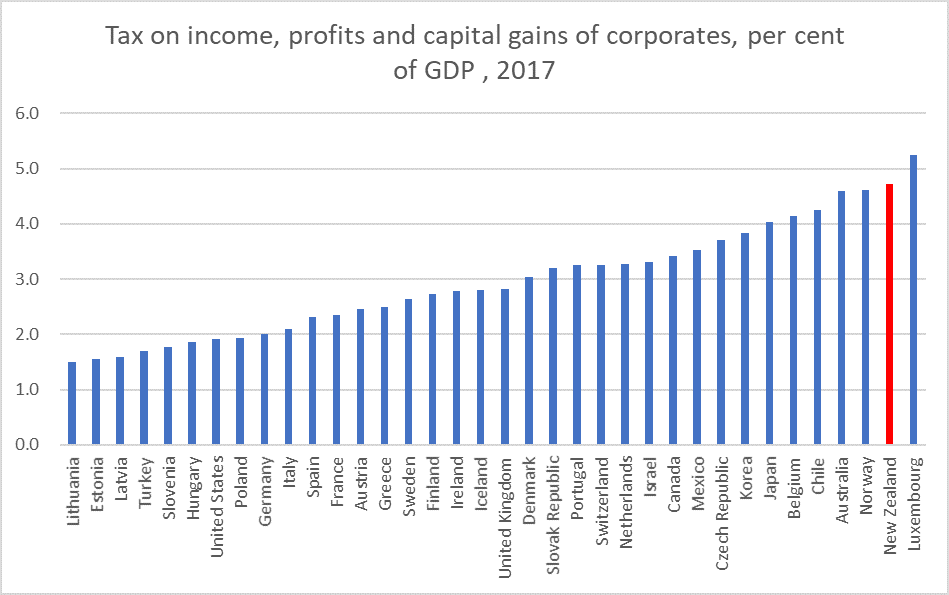
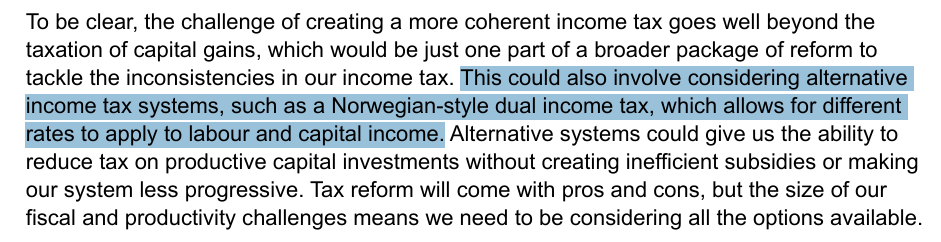


 croaking cassandra