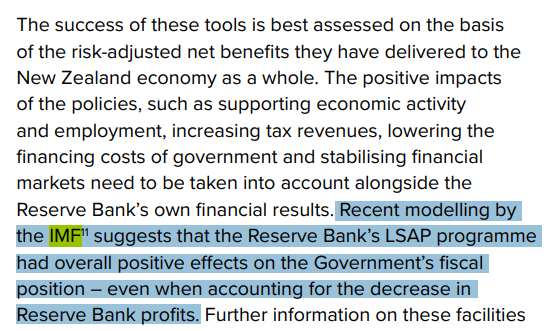
It was in mid-August that this particular bit of shameless Reserve Bank spin got going. From a post in late August
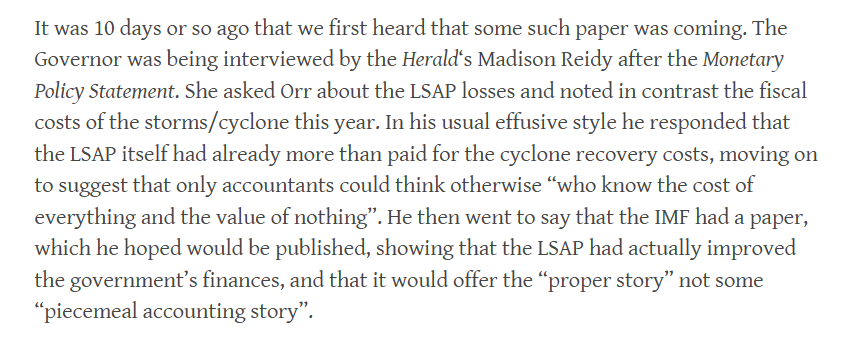
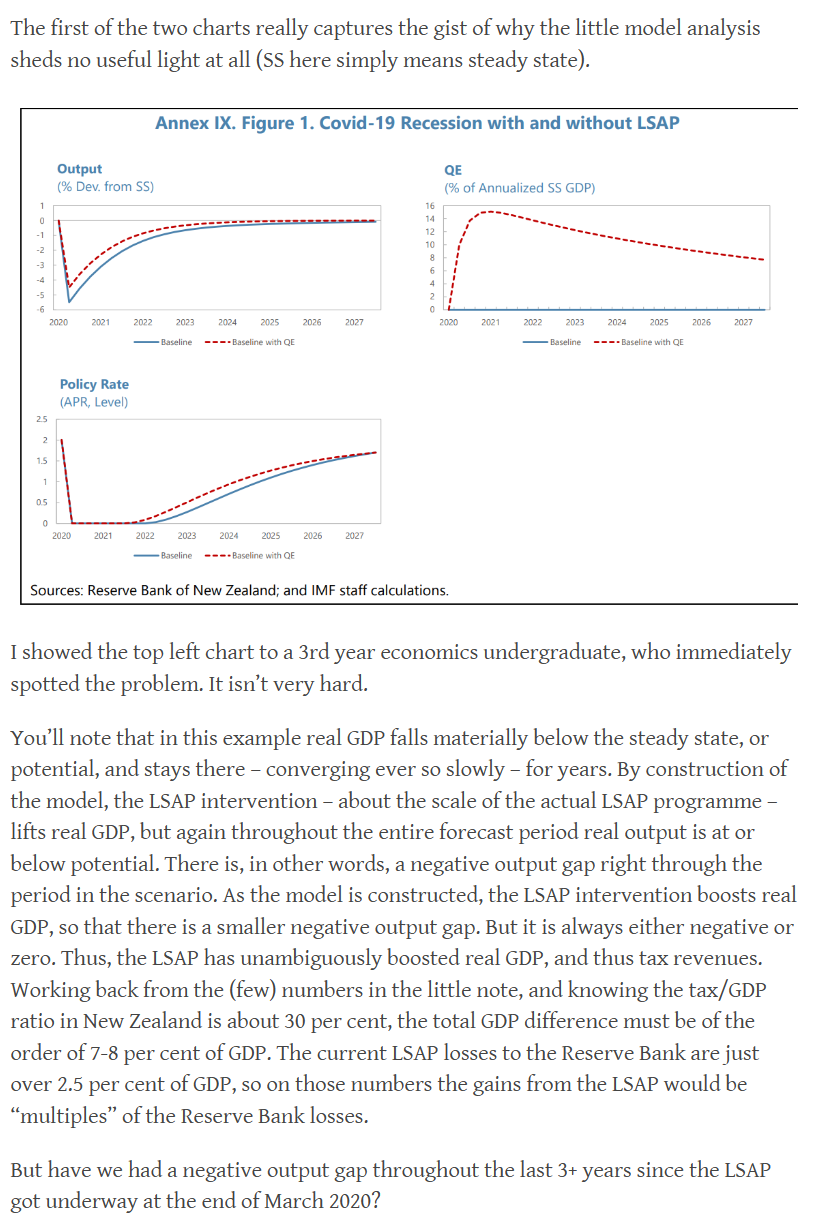
It proved to be nonsense of course. Once we had access to the short little IMF piece, published at the back of the Fund’s Article IV review, it was clear that it all amounted to a case of “if you assume big beneficial economic effects from the LSAP, then you get material tax revenue gains”, which might be set against the actual losses on the trade.
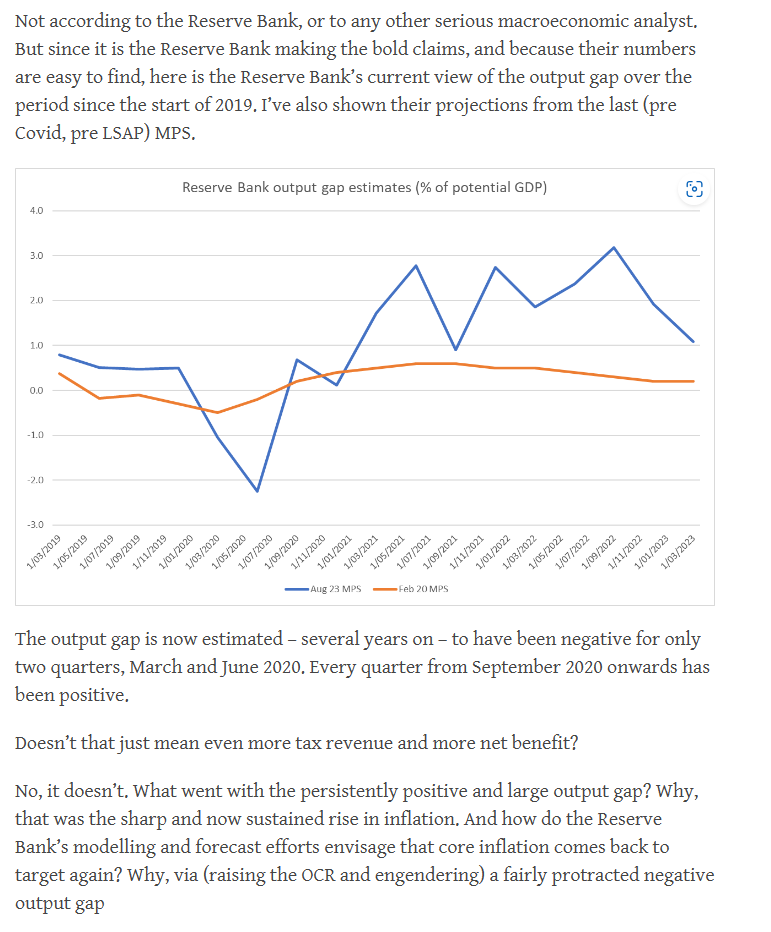
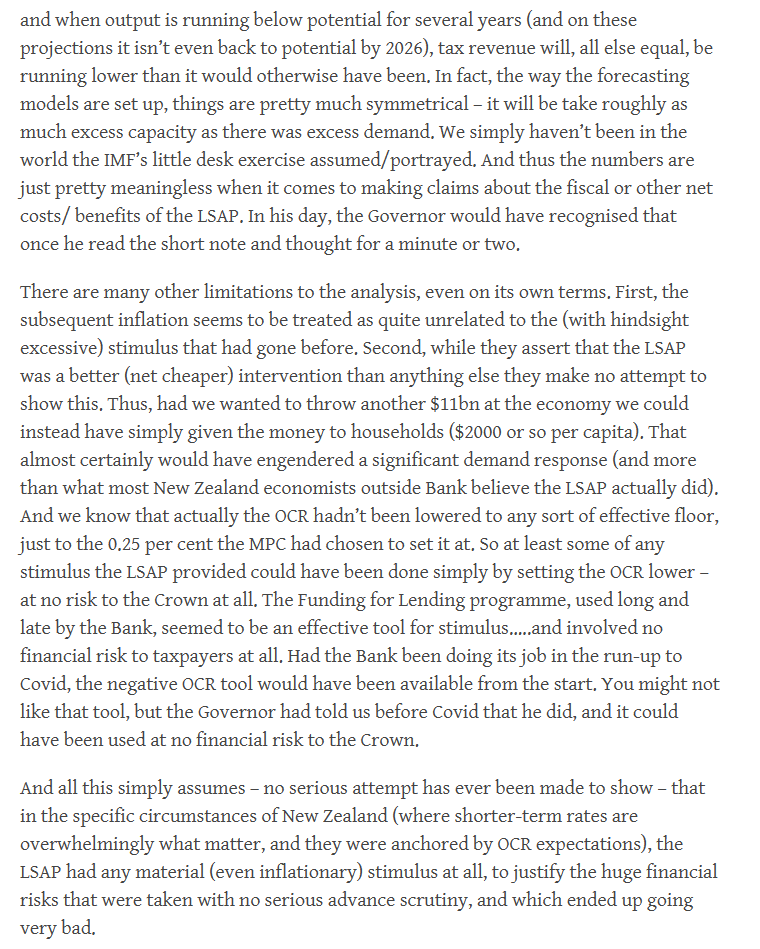
But the IMF’s picture bore not the slightest relationship to New Zealand reality through the LSAP period.
But none of that stops the Bank.
Here was their Annual Report, which will have been signed off by the Bank’s Board – the ones with little or no subject expertise.
And then this week their deputy chief executive responsible for monetary policy and markets – the one with no subject expertise at all – was at it in a speech given to investors etc in Sydney.

Now I have not seen any analyst endorse that little IMF exercise. And you can sort of tell that even the Bank knows it is shonky (but convenient). Note that both in the Annual Report and Silk’s speech they are careful not themselves to claim that the LSAP was profitable for the taxpayer, just to report (what is factually accurate) that the IMF – or at least a couple of back office researchers, given a couple of hours to play with a toy model – said it was. Silk herself only claims that the losses (they aren’t just “accounting losses” but real ones for taxpayers) are offset “to some extent” by other fiscal benefits to the Crown (and there might be even some very slight extent to which that is so, but it is by no means guaranteed). And the Annual Report text takes a similar approach – citing the IMF, without actually endorsing its work, but leading the casual reader to assume they did. The Bank knows better and simply choose egregious spin – the sort of dishonesty we might have got used to from politicians, but shouldn’t have to put up with from independent technocrats.
But here we are dealing with Quigley and Orr, who know better but seem to have a tenuous relationship with truth and serious analysis whenever something otherwise suits. And Silk, who may know no better – but can surely read, if she were at all curious – who is the senior manager with overall responsibility for the Bank’s macro and monetary policy analysis.
None of them should be in their roles (Silk should simply never have been appointed to hers). But will the new government care enough to do anything about this situation, or will spin and dishonesty continue to characterise our central bank, while those with the power to do anything about the situation get on with simply holding office?
 croaking cassandra