The quarterly GDP data were out on Thursday. Quite how one reads them probably depends on bit on where your focus lies. To the extent that the focus is on squeezing out inflation then any data that points to excess demand dissipating a bit faster is mostly a good and welcome thing. The sooner inflation is back to around 2 per cent, after three years away, the better.
On the other hand, real GDP per capita is the average real incomes of New Zealanders. And since not only did real per capita GDP fall in the September quarter but some other recent quarters were revised down there is the gloomy side to the story as well.
I put this chart on Twitter on Thursday
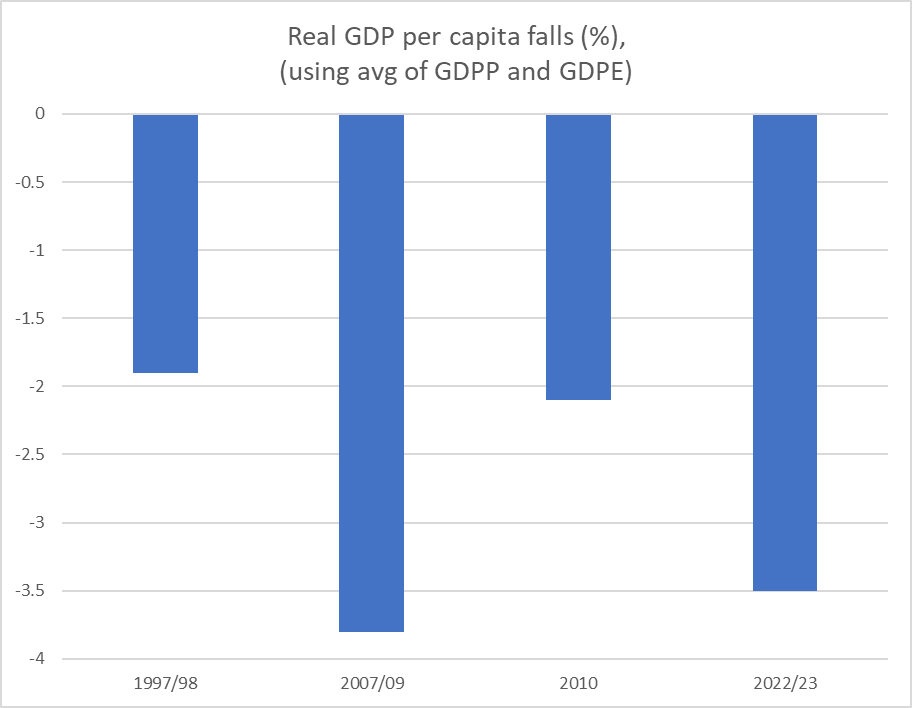
Looking back over recent recessions in New Zealand, real GDP per capita has already fallen by almost as much as it did in the 2008/09 recession. It isn’t that headline GDP is plummeting, but record non-citizen immigration inflows means the population has been growing at a rate not seen since 1947. This chart is from a BNZ report.

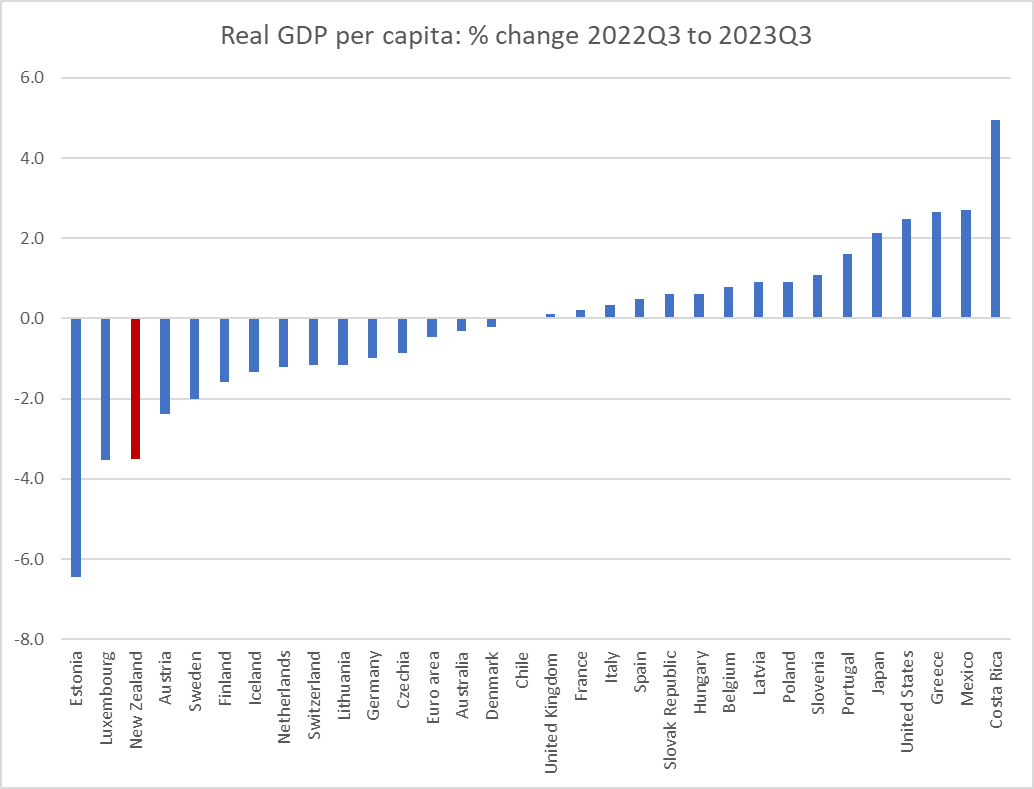
But how has per capita real GDP growth (or lack of it) here compared to the experiences of other OECD countries? The OECD doesn’t yet have quarterly per capita data for all member countries, but here is what they do have.
This chart shows the increase/decrease in real per capita GDP from 2022Q3 to 2023Q3. About half the countries have experienced falls in real GDP, but New Zealand’s has been the second largest fall (I’m guessing Estonia is an energy-shock effect).
And here is the cumulative change for the same group of countries from just prior to Covid (2019Q4) to now (2023Q3)
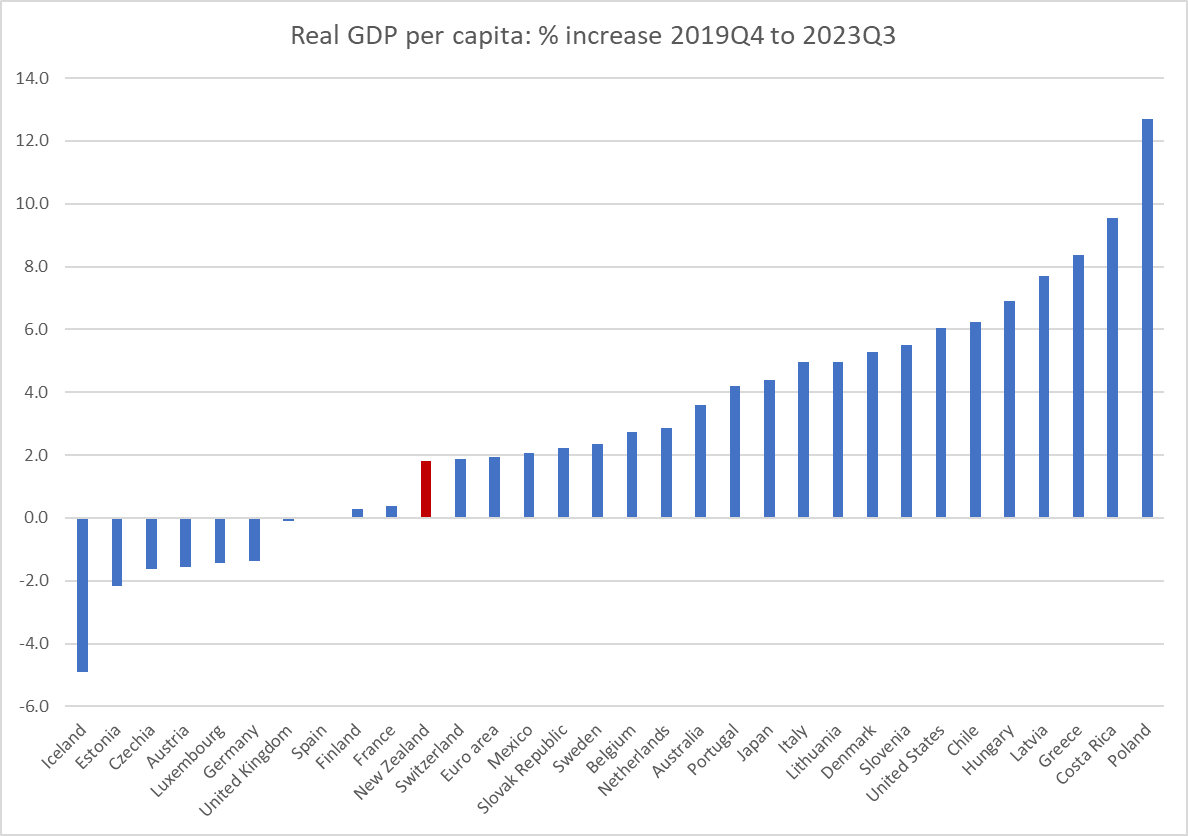
Less bad of course, but (a) less growth than the median country, and (b) bar Iceland, all the countries with a worse performance than New Zealand were severely hit by the gas price/supply shock after the invasion of Ukraine (I’m not sure what the Iceland story is, but I checked the Icelandic statistics office website and the numbers appear to be correct).
It is a far cry from the stories we used to hear - backed by data - a year or two back about the initial post-Covid rebound having been fairly strong, by international standards, in New Zealand.
 croaking cassandra